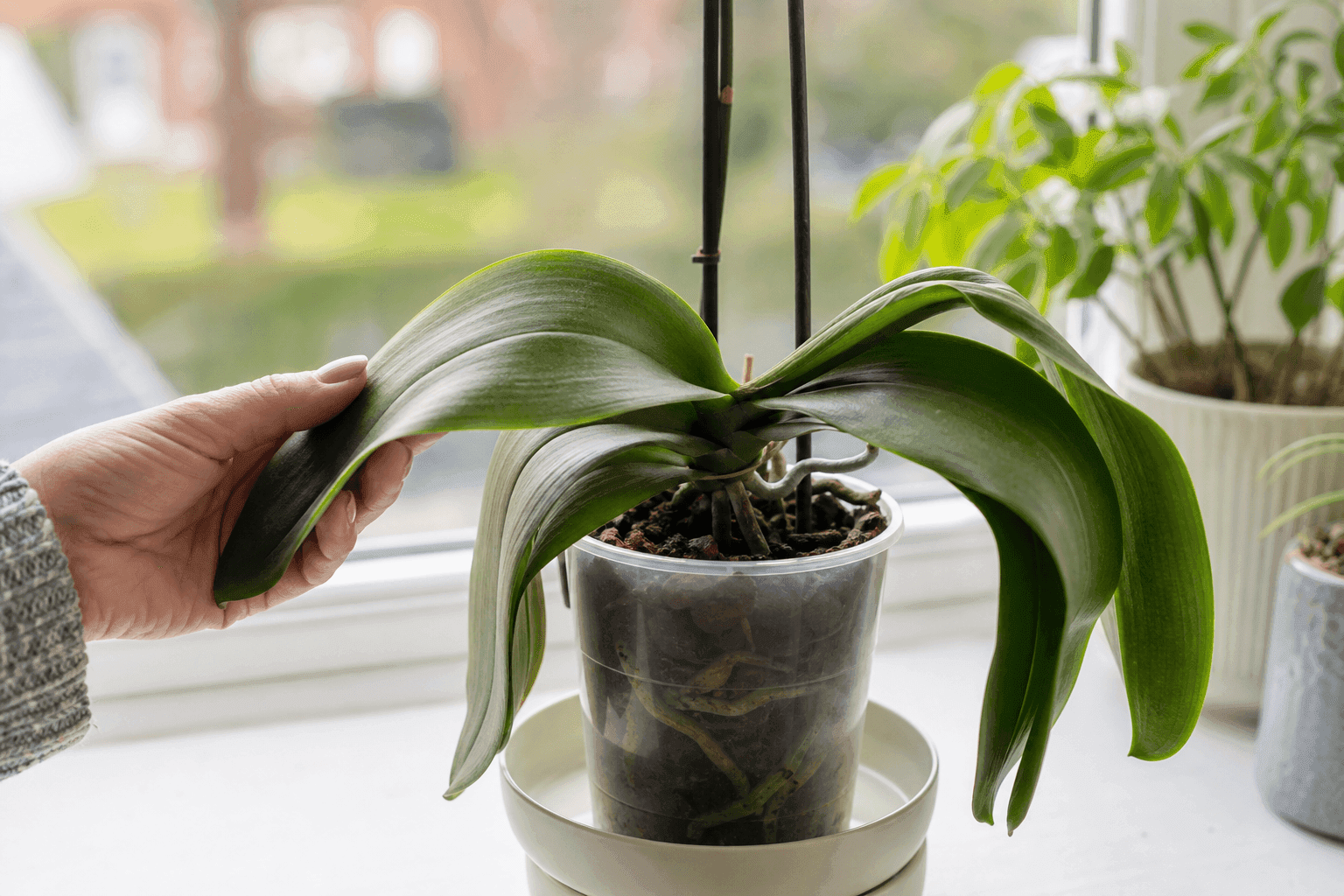
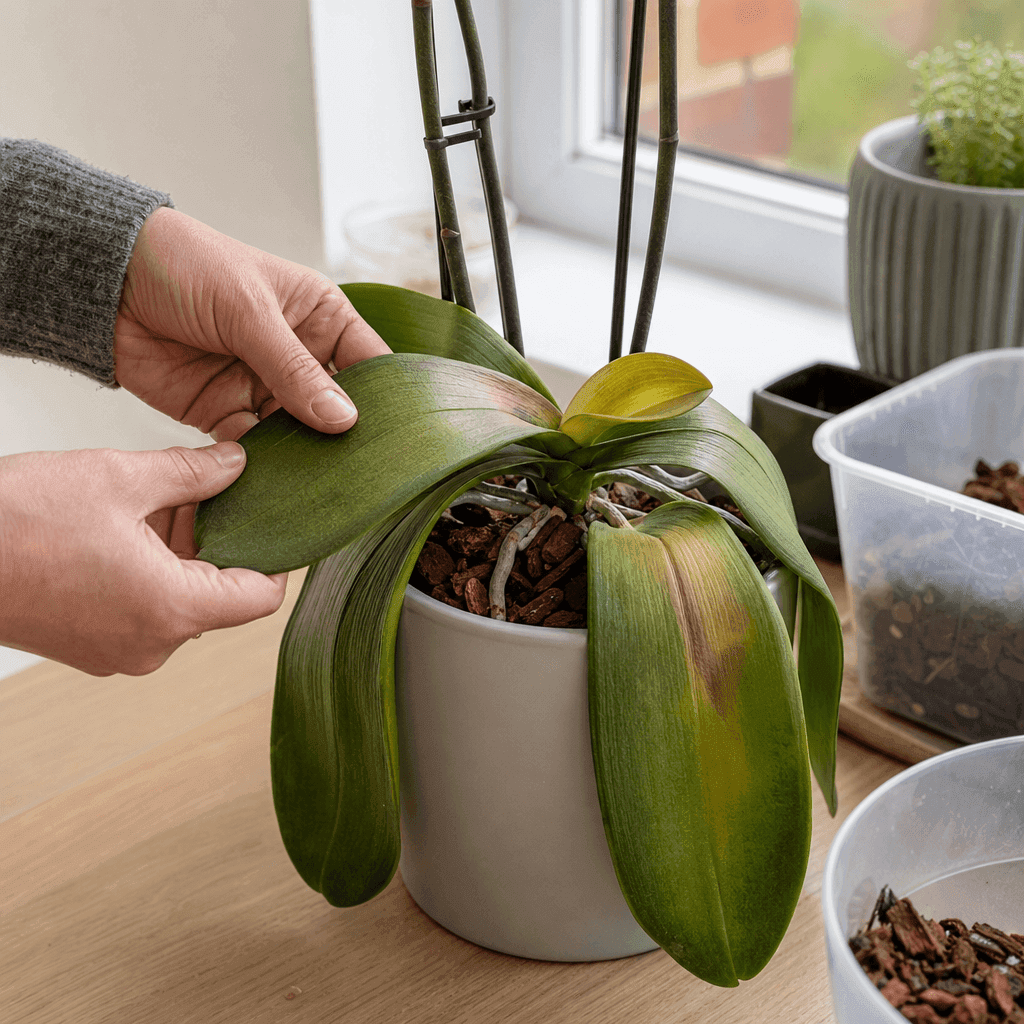
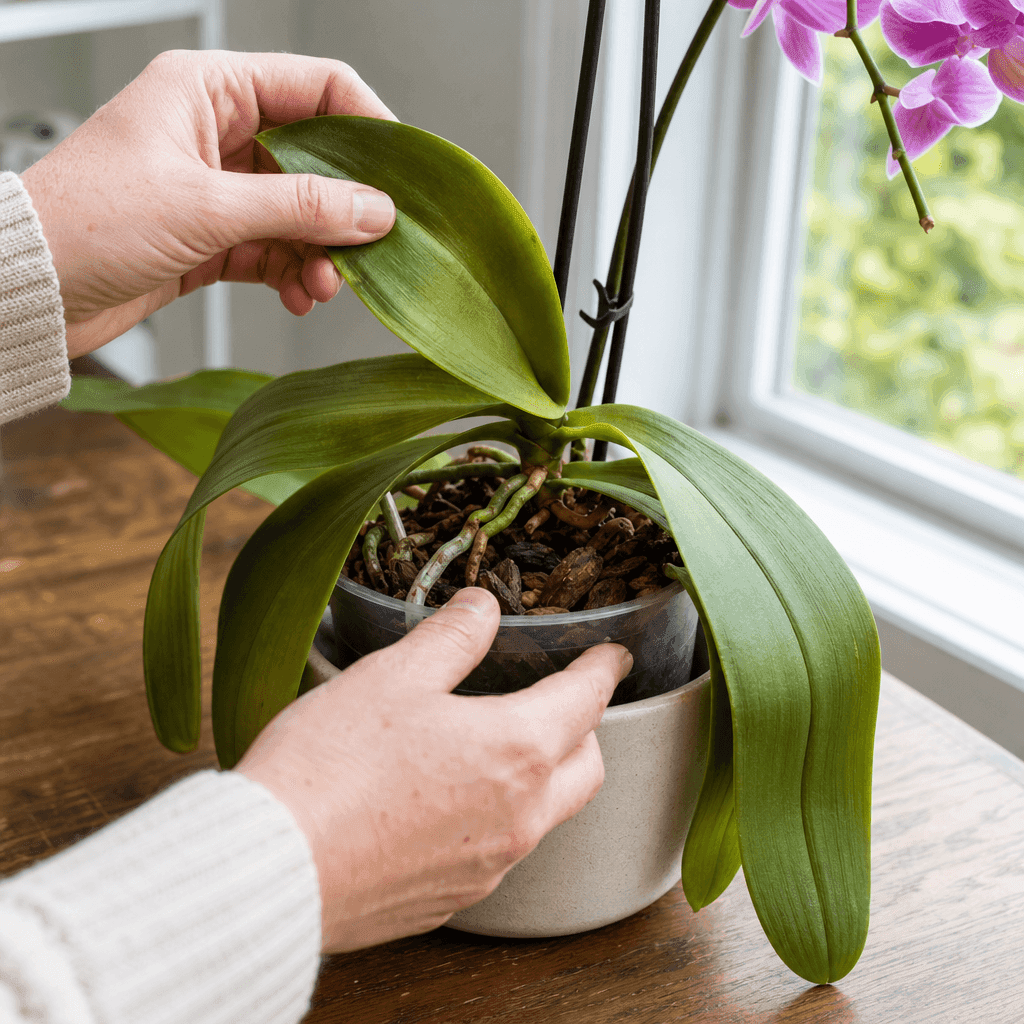
Quick diagnosis
Match the row to what you’re seeing, then jump to the fix.
| What you see | Likely cause | Confidence | How to confirm | What to do now | Urgency |
|---|---|---|---|---|---|
| Leaves limp and soft; potting medium is wet; roots brown or mushy | Overwatering and root rot | High | Roots through the pot wall are brown, black or slimy; medium smells sour. | Stop watering; remove from decorative pot; let medium dry; repot if most roots are rotten. | High |
| Leaves limp and wrinkled or leathery; pot very light; roots silvery-grey and shrivelled | Underwatering or dry roots | High | Roots look silver-grey or white and are shrivelled rather than firm and plump. | Soak the pot in lukewarm water for 20–30 minutes; drain thoroughly; resume regular watering. | Medium |
| Leaves limp after repotting or after root inspection showed many dead roots | Root loss or root damage | Medium | Many roots were cut away during repotting; or roots are rotten and few healthy ones remain. | Keep conditions stable; avoid feeding; pot into bark rather than compost; wait for new root growth. | Medium |
| Leaves curl or droop; plant is near a radiator, south-facing window or in hot sun | Heat stress or low humidity | Medium | Leaves droop in the warmest part of the day; medium is moist; improving by moving the plant. | Move away from radiators and direct sun; mist leaves or place on a tray of pebbles and water. | Medium |
| Drooping started suddenly after the plant was moved or after a cold draught | Temperature shock or cold draught | Medium | Plant was near a cold window, outside briefly in cold weather, or moved to a significantly cooler spot. | Move to a stable, draught-free position between 18–24°C; avoid windowsills that get very cold at night. | Medium |
The causes, in detail
Overwatering and root rot
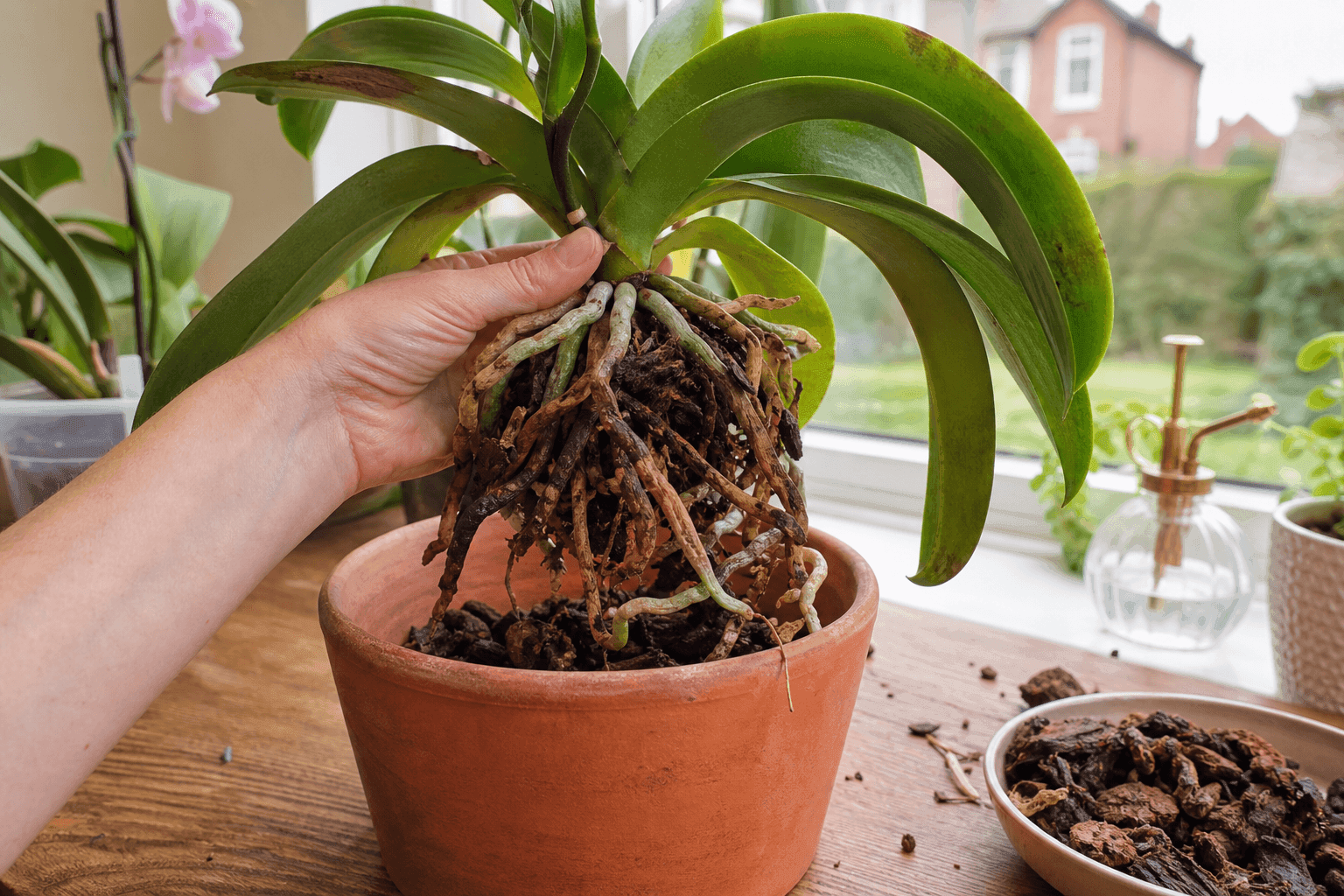
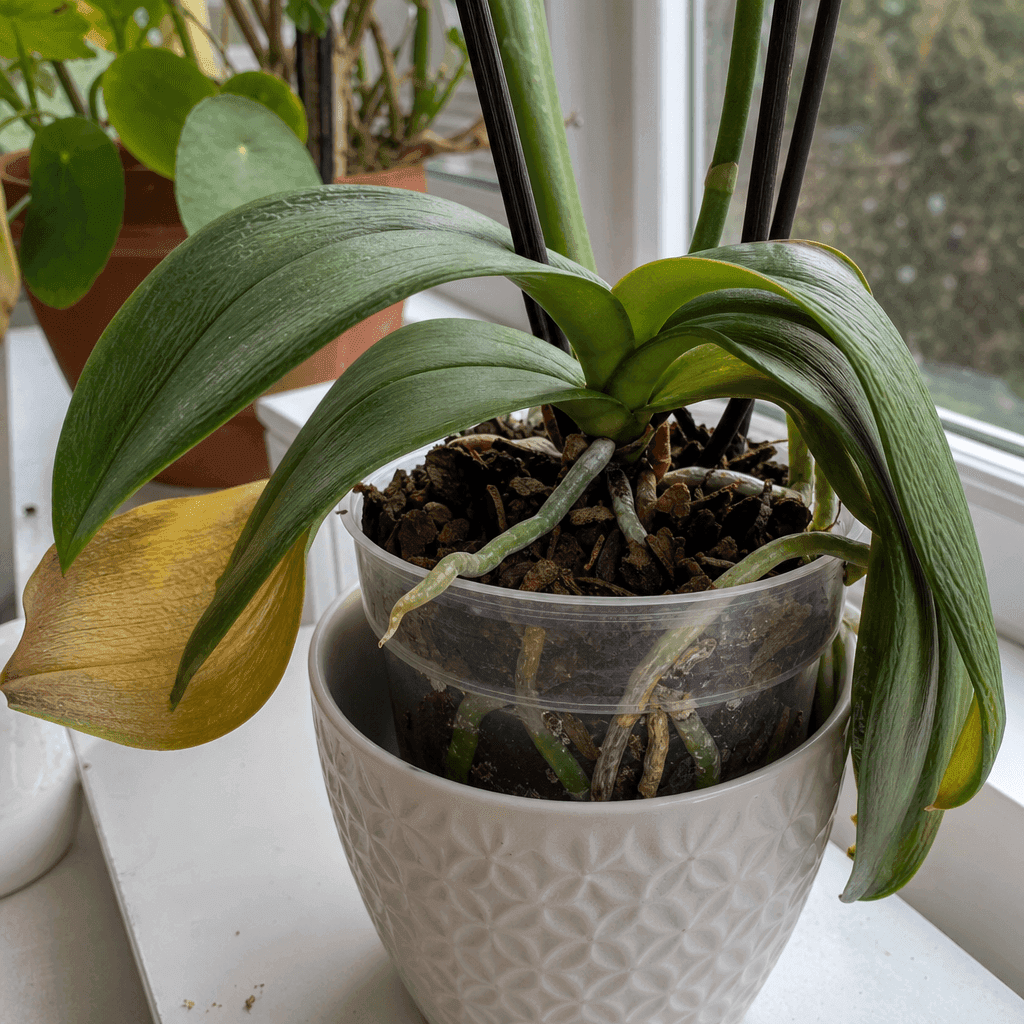
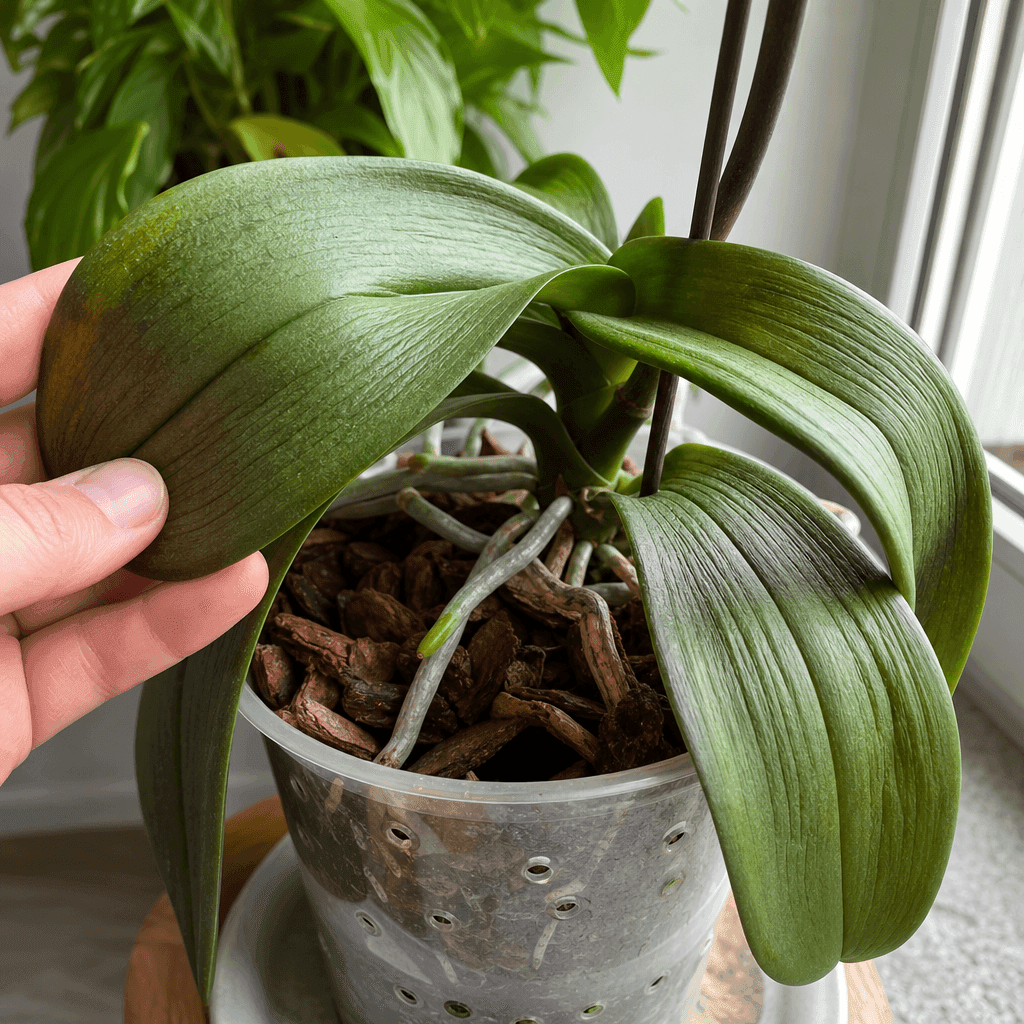
Most likelyOverwatering is the most common reason orchid leaves droop in the UK, and it is part of a wider pattern of over-watering and nutrient problems that affect houseplants. When orchid roots sit in wet conditions for too long, they lose oxygen and begin to rot. Rotten roots cannot supply water to the leaves — so the plant droops despite the medium being wet. The RHS advises always removing the inner plastic pot from any decorative outer pot and checking whether water is pooling at the bottom. Overwatered roots appear brown, black or grey and feel mushy or slimy; healthy roots are firm and green (when wet) or silver (when dry).
- The potting bark or medium has been wet for more than a week.
- Roots visible through the pot wall are brown, black or slimy rather than firm and green or silver.
- The medium may smell slightly sour or stale.
- Leaves may be soft and limp rather than crisp.
- Stop watering immediately and remove the orchid from any decorative outer pot.
- Let the potting bark dry out completely — usually one to two weeks.
- If many roots are rotten, follow the steps in our root rot treatment guide: remove the orchid from its pot, cut away all dead or mushy roots with clean scissors, dust cut ends with cinnamon (a natural antifungal) and repot into fresh orchid bark.
- Use a clear pot so you can monitor root colour and water only when most roots turn silver-grey.
- Resume watering by soaking the pot in lukewarm water for 20 minutes, then draining thoroughly.
Stop it coming back:Recovery depends on how many healthy roots remain. If a few firm green or silver roots survive, the orchid can recover — but it may take several months for new roots and leaves to develop.
water on a fixed weekly schedule regardless of the medium — always check root colour before watering an orchid.
Underwatering and dry roots
Most likelyWhen orchid roots dry out completely, they can no longer supply water to the leaves, causing the leaves to become limp, wrinkled or leathery. This is the opposite of root rot but can look similar. The key difference is that dry roots appear silver-grey and shrivelled rather than firm and plump; the pot feels very light; and the potting medium is completely dry. Moth orchids in bark dry out faster than those in moss and need more frequent watering in heated UK homes in winter.
- The pot feels very light when lifted.
- Roots visible through the pot appear silver-grey and shrivelled rather than plump.
- The potting medium is dry throughout.
- Leaves may be limp and wrinkled rather than simply floppy.
- Submerge the pot in a bowl of lukewarm water for 20–30 minutes so the bark and roots rehydrate fully.
- Lift out and drain thoroughly for 15–20 minutes before returning to the outer pot.
- Repeat after a few days if the leaves have not lifted.
- Going forward, water when most roots appear silver-grey rather than green.
- In centrally heated rooms in winter, check every 7–10 days rather than relying on a fixed schedule.
Stop it coming back:Leaves may recover within a day or two after rehydration if root damage is not severe. Wrinkled leaves may not fully recover if roots were very dry for a long time.
leave an orchid sitting in water to rehydrate it — fill the pot to soak for 20–30 minutes then drain; standing water promotes root rot.
Root loss after repotting or root rot
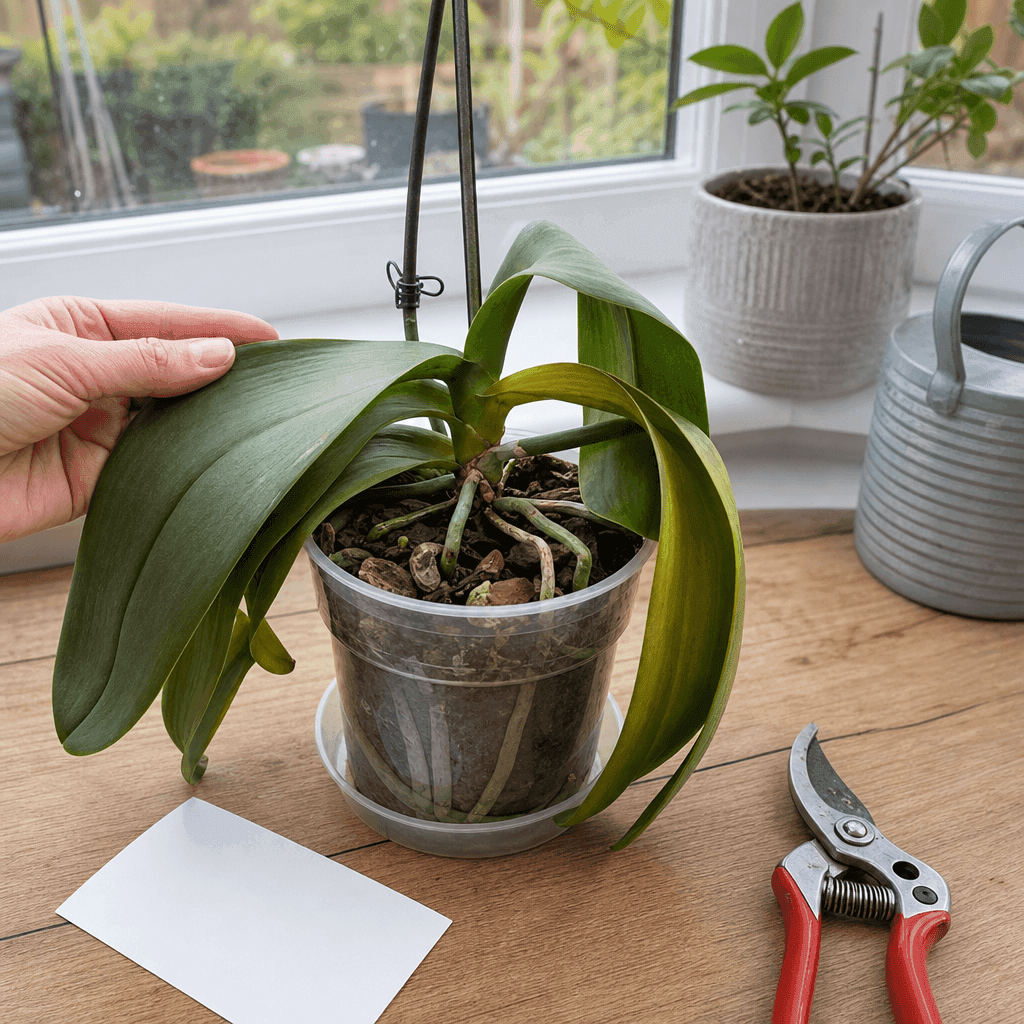
PossibleAn orchid may droop after repotting if many roots were damaged or removed, or if most roots were already rotten and needed cutting away. Without enough healthy roots, the plant cannot absorb enough water to keep leaves turgid. This is not a sign of further deterioration if you can see at least a few firm, healthy roots — the plant will regrow roots slowly, but it takes patience.
- Drooping started after repotting or after cutting away rotten roots.
- Only a few firm, healthy roots remain in the pot.
- The medium is neither wet nor very dry.
- Do not feed the orchid until it shows new root or leaf growth.
- Keep it in stable conditions at 18–24°C out of direct sun and away from draughts.
- Water very sparingly — just enough to prevent complete desiccation of remaining roots.
- In a clear pot, wait until you can see new root tips (bright green growing tips) before resuming normal watering.
Stop it coming back:Recovery is slow — expect several months before the plant looks vigorous again. Do not give up on an orchid that has even two or three healthy roots.
feed a root-damaged orchid to 'give it energy' — fertiliser applied to damaged roots causes further root burn.
Heat stress and low humidity
PossibleMoth orchids prefer temperatures of 18–24°C and moderate humidity (40–60%). Central heating in UK homes can drop humidity to 20–30% in winter, causing leaves to lose water faster than the roots can supply it. Orchids placed near radiators, on south-facing windowsills in summer, or in direct sun can show leaf drooping from excess transpiration. Moving the plant and increasing humidity around it often resolves the problem without any change to watering.
- The plant is near a radiator, heat vent, or in direct sun.
- Leaves droop or curl in the warmest part of the day but may improve slightly at night.
- The potting medium is moist and roots look healthy.
- Move the orchid away from radiators and direct sunlight.
- Place the pot on a tray filled with pebbles and water — as the water evaporates, humidity around the plant increases.
- Mist the air around the plant (not the leaves or crown) in the morning.
- Aim for bright, indirect light such as an east- or north-facing windowsill in summer.
Stop it coming back:Leaves often look better within a few days of being moved to a cooler, more humid position.
mist the crown or the centre of the orchid where water can pool and cause crown rot — mist the air around the plant instead.
Temperature shock and cold draughts
PossibleMoth orchids are tropical plants and dislike sudden temperature changes. A brief exposure to cold air — from an open window in winter, a cold car journey, or a windowsill that drops below 10°C at night — can cause leaves to droop, blacken at the edges or develop cold patches. UK windowsills are a common problem in winter: temperatures behind closed curtains can drop significantly below the room temperature.
- Drooping started suddenly after the plant was moved, placed near a cold window, or exposed to a draught.
- The medium moisture level is normal.
- Leaf edges may be slightly darkened or show cold damage patches.
- Move the orchid to a stable position between 18–24°C, away from cold windows and draughts.
- In winter, pull curtains in front of orchids on windowsills to trap them against cold glass — or move them away from the glass at night.
- Remove any leaves that are fully blackened or rotting at the base.
Stop it coming back:Leaves affected by cold may not fully recover, but the plant can produce healthy new growth once returned to the correct conditions.
place an orchid in a warm room beside a radiator as a remedy for cold damage — dry heat from a radiator causes its own problems.
Still not sure?
Work down these branches — the first one that matches is your answer.
What not to do
- Water on a fixed schedule without checking root colour — always look at the roots before watering an orchid.
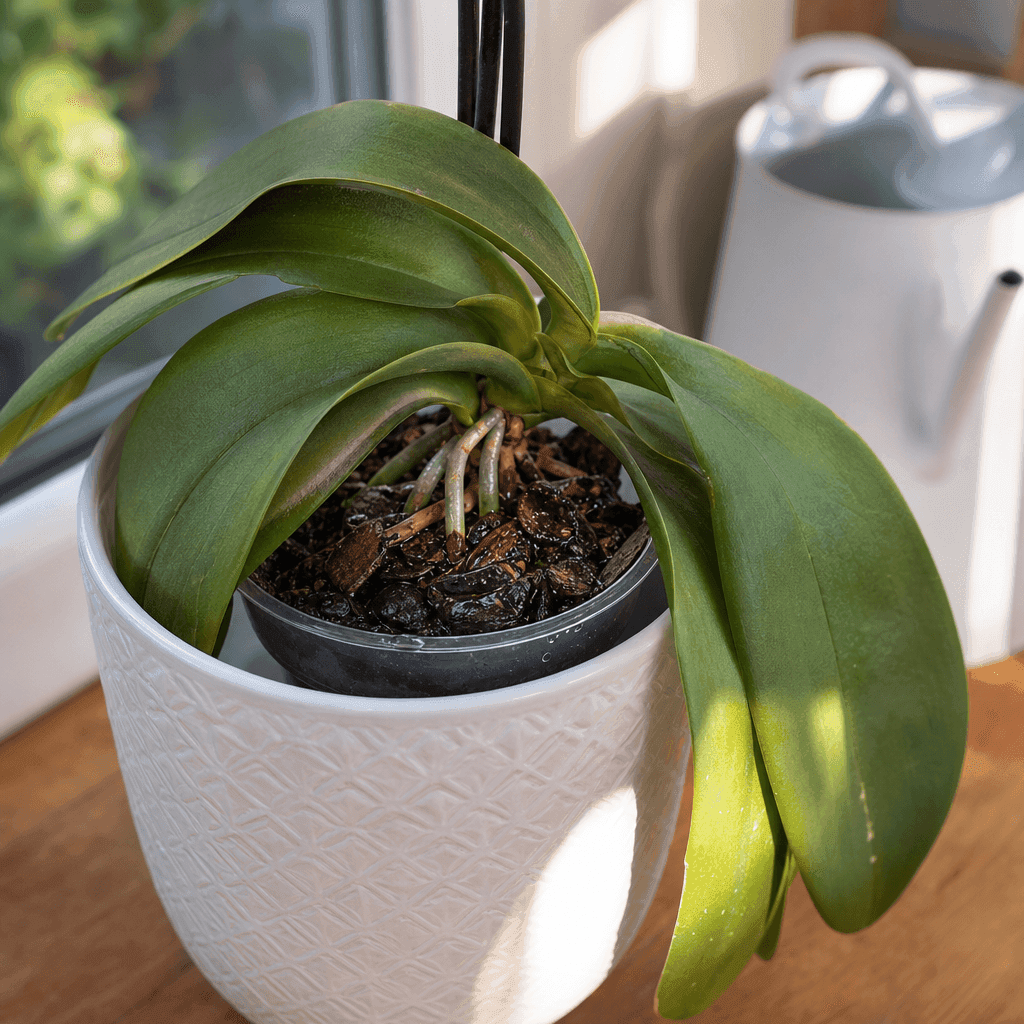
- Leave the plastic inner pot sitting in water inside a decorative outer pot — root rot develops quickly when water pools unseen.
- Mist the crown or centre of the plant — water trapped in the crown causes crown rot.
- Feed a drooping orchid to 'give it a boost' — fertiliser applied to stressed or rotten roots causes further damage.
- Give up on an orchid that has lost most of its leaves — as long as a few healthy roots remain, recovery is possible.
Common questions
Why are my orchid leaves floppy and limp?
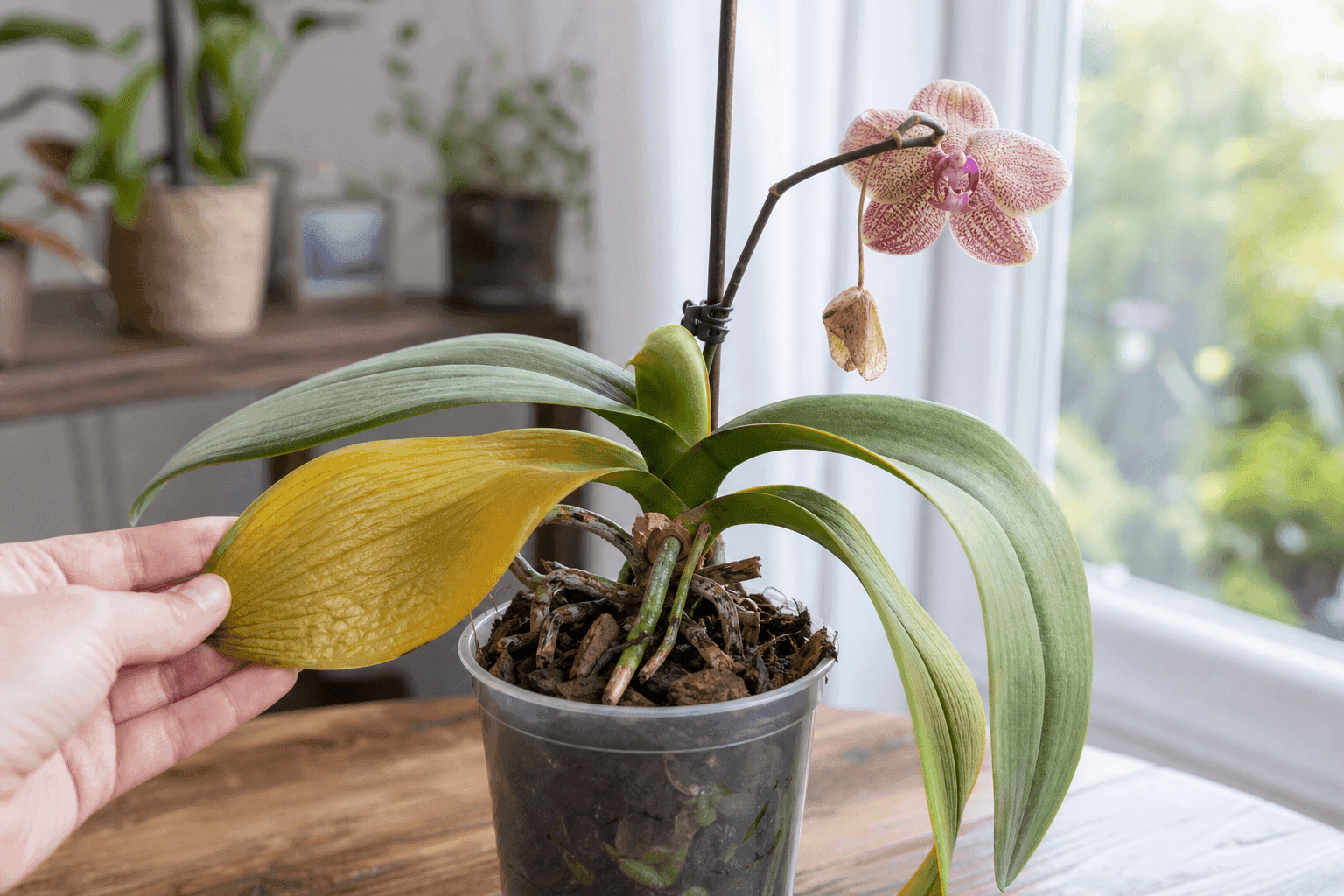
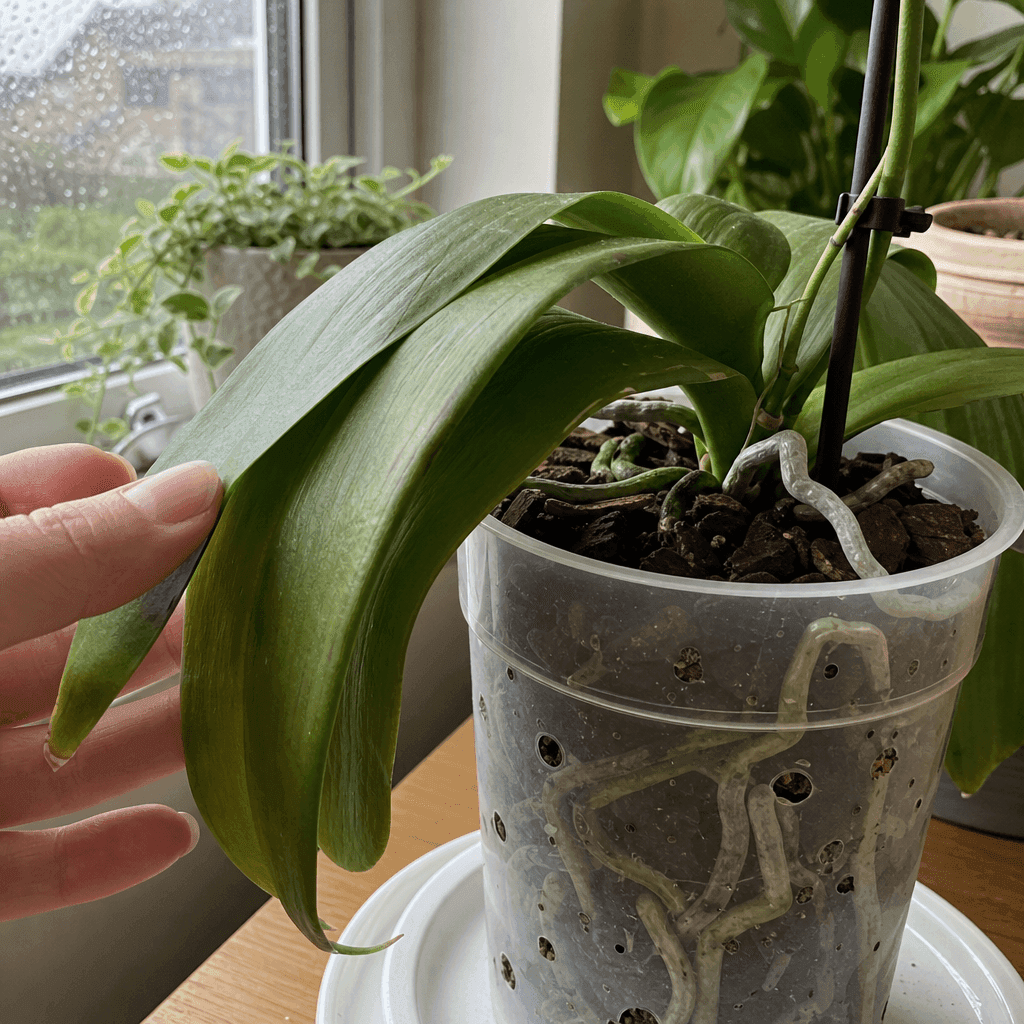
Floppy orchid leaves are almost always a root problem. Check the roots: if they are brown or mushy, you have overwatering and root rot; if they are silver-grey and shrivelled, the orchid is underwatered. Both look similar from above but need opposite responses. For other symptoms on the same plant, see our orchid care and problem guides.
How do I revive a drooping orchid?
First check the roots. If overwatered, remove from any outer pot, let the bark dry out completely, cut away dead roots and repot into fresh bark. If underwatered, submerge the pot in lukewarm water for 20–30 minutes, drain thoroughly, and resume regular checking of root colour before watering.
How often should I water a moth orchid in the UK?
Roughly once a week in summer and every 10–14 days in winter, but always based on root colour rather than a fixed schedule. Water when most roots have turned silver-grey. Soak the pot for 20 minutes in lukewarm water and drain thoroughly — never leave it sitting in water.
What do healthy orchid roots look like?
Healthy orchid roots are firm and green when recently watered, turning silver-grey or white as they dry out. They have a smooth, slightly velvet-like texture. Rotten roots are brown, black or slimy and crush easily between your fingers.
Can I save an orchid with no roots?
Possibly, but it is difficult. An orchid with no roots at all will need emergency measures — some growers have success hydrating leafless or root-less crowns in a contained humidity environment. If even two or three firm roots remain, recovery is much more likely with correct care.
Should I repot my orchid if the leaves are drooping?
Only if you have confirmed root rot — brown, mushy or slimy roots. If the problem is underwatering, temperature or humidity, repotting adds unnecessary stress. Repotting into fresh bark is the right response to confirmed root rot, not to drooping leaves alone. If the leaves are also discolouring, check our guide to orchid leaves turning yellow to rule out a separate cause.
Why are my orchid leaves drooping after repotting?
Drooping after repotting is common because some healthy roots are always disturbed during the process. Keep conditions stable — 18–24°C, indirect light, no feeding — and do not water until the new bark is approaching dryness. New roots should appear within a few months.