Quick diagnosis
Match the row to what you’re seeing, then jump to the fix.
| What you see | Likely cause | Confidence | How to confirm | What to do now | Urgency |
|---|---|---|---|---|---|
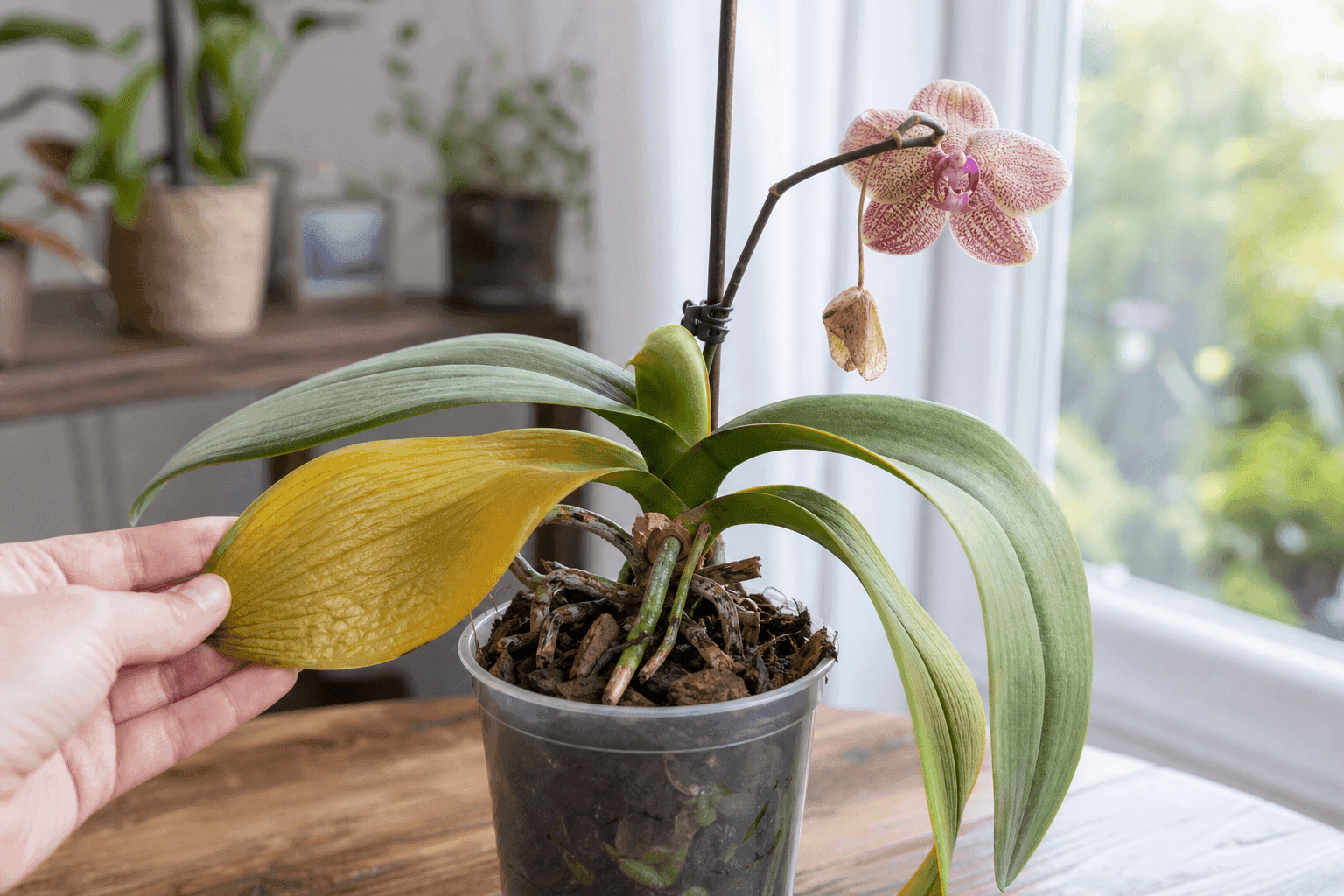
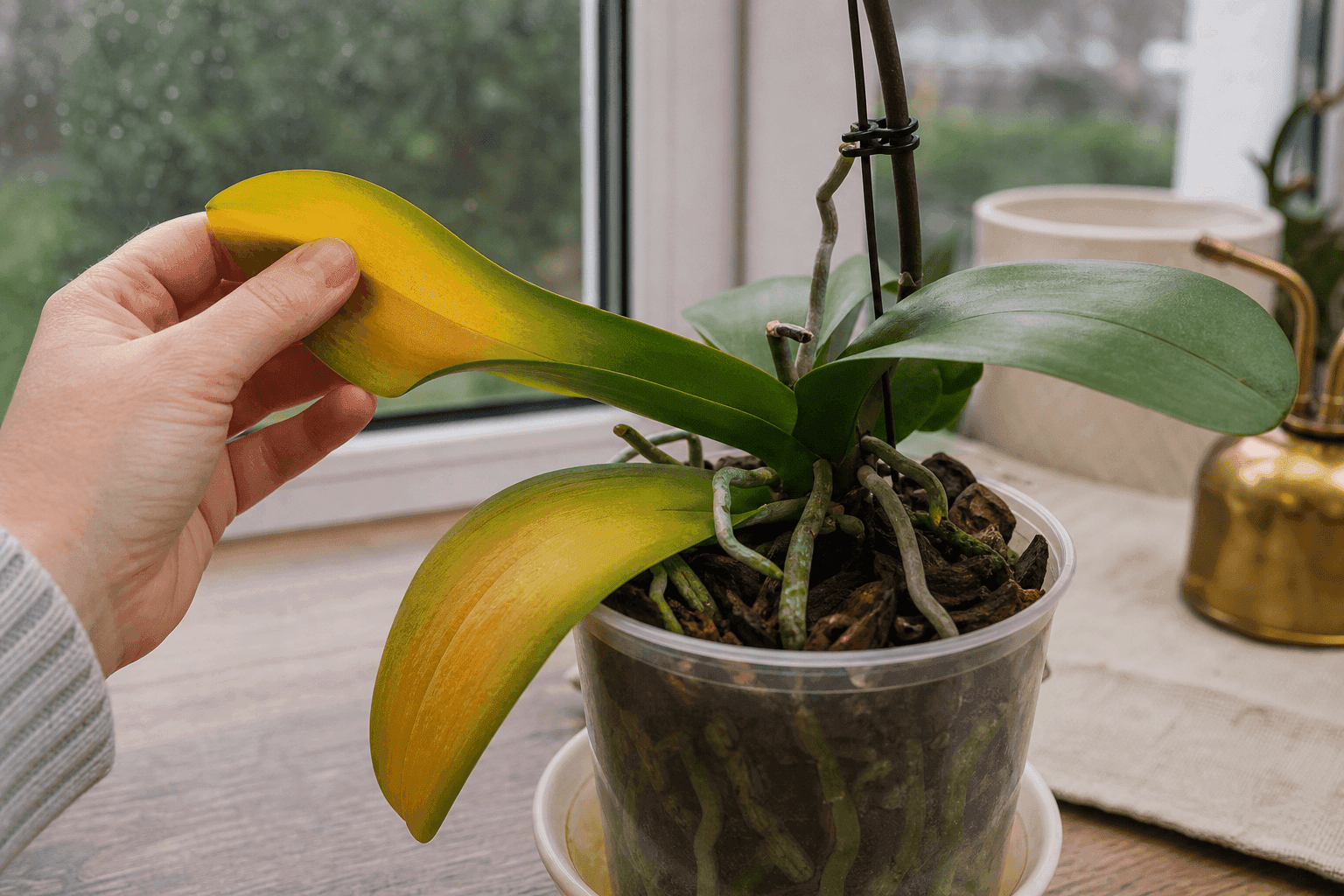
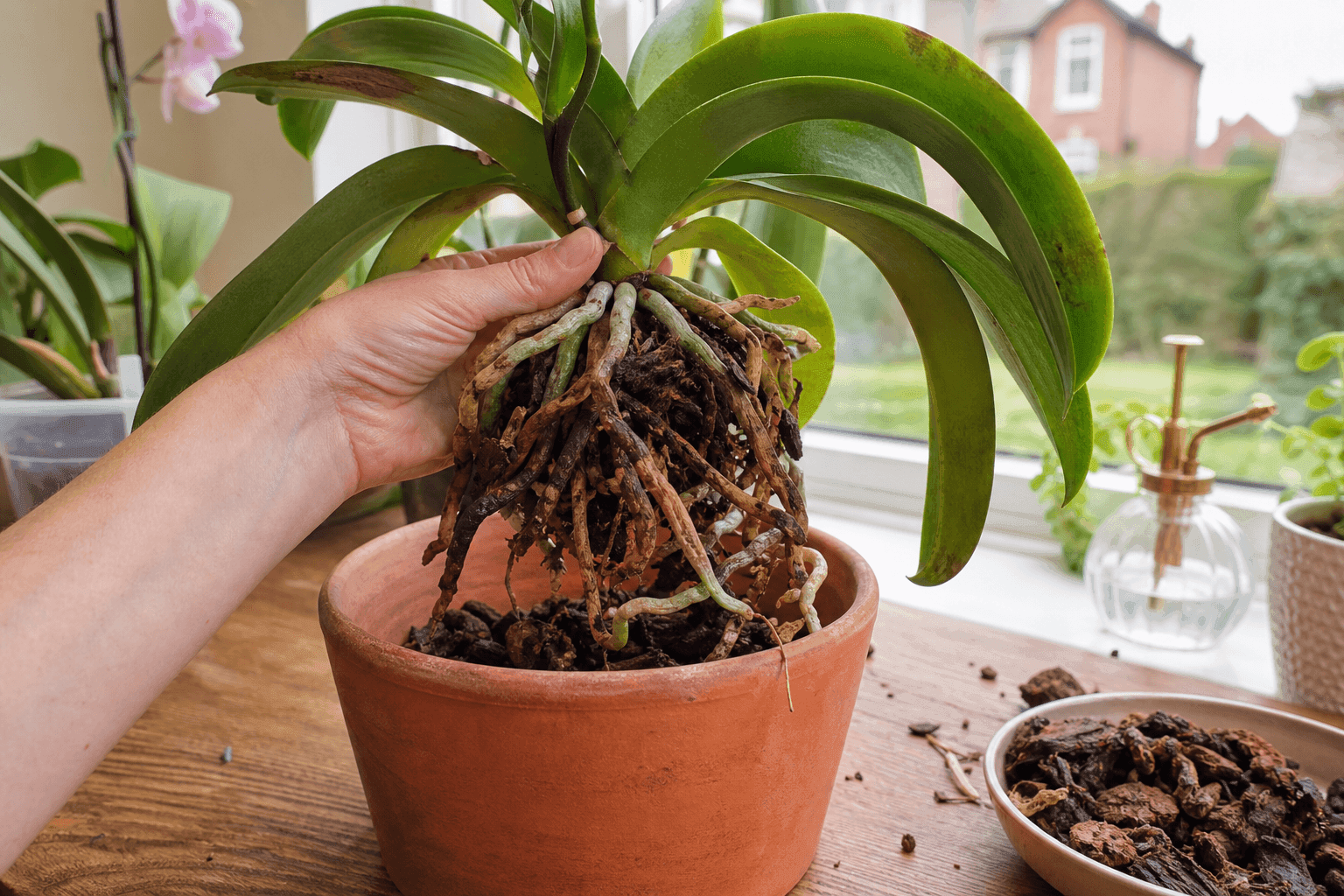
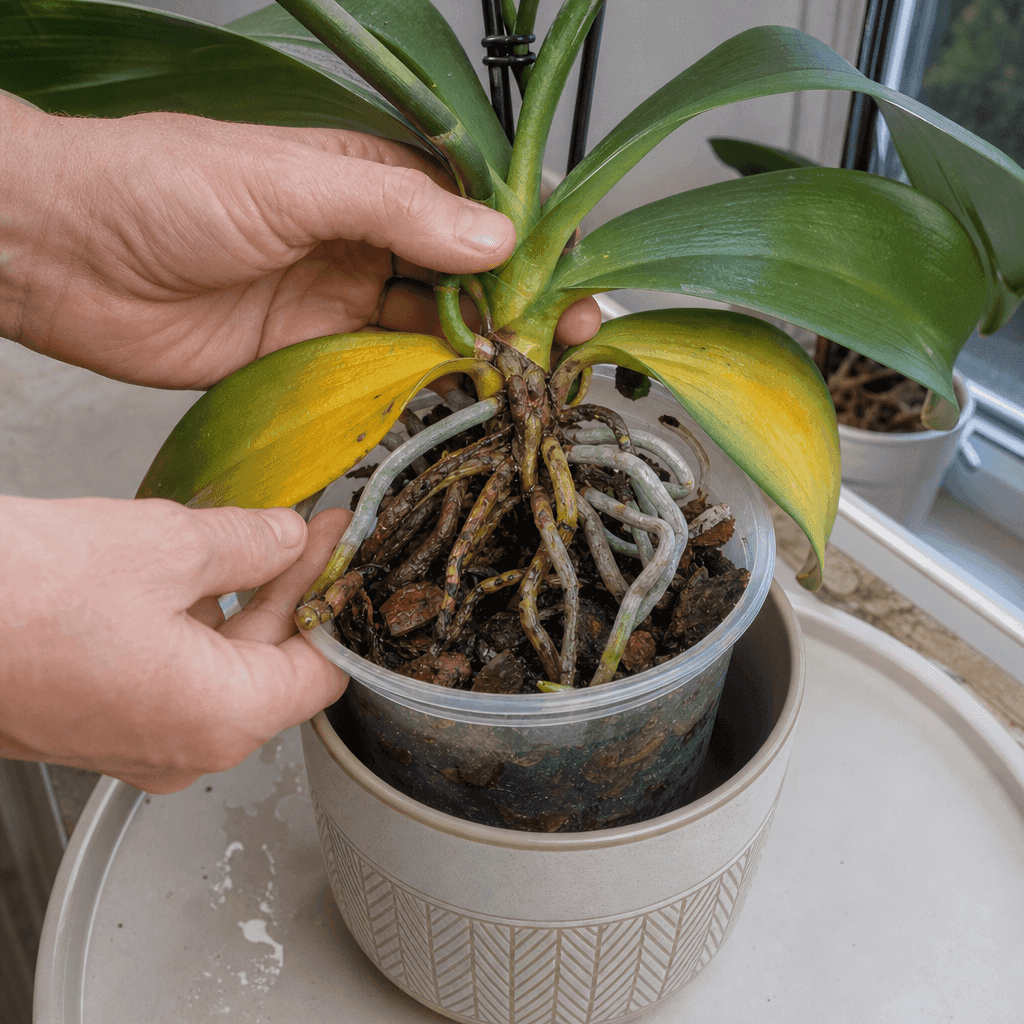
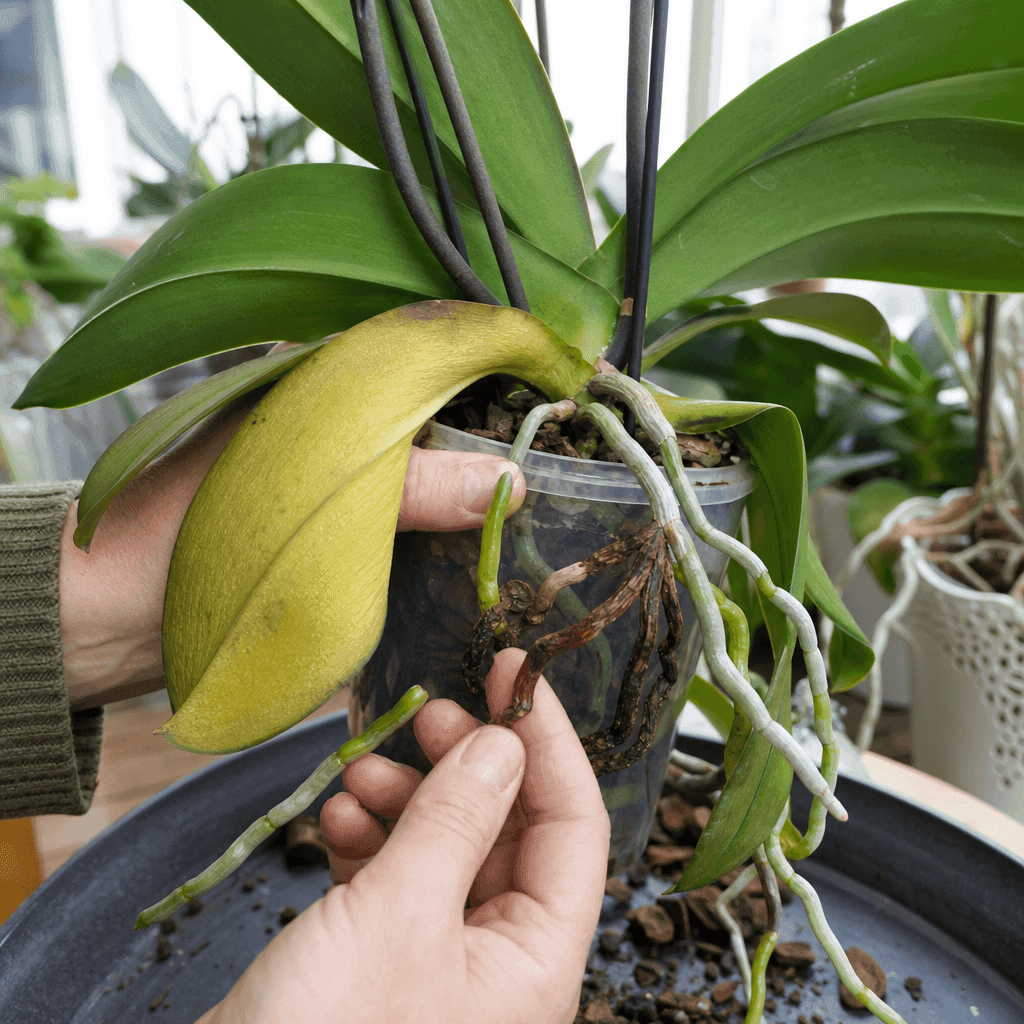
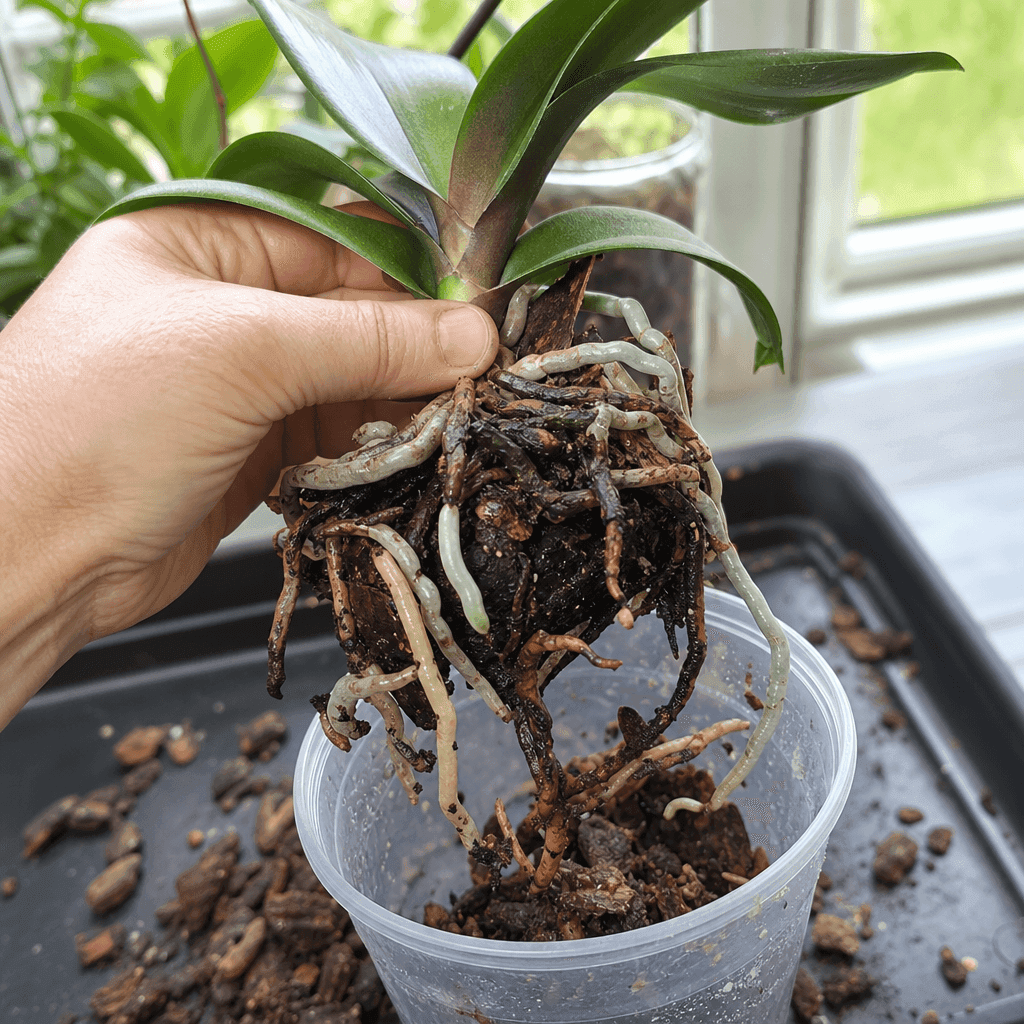
| Brown, mushy or black roots; limp or yellowing leaves; wet or dense bark compost | Overwatering and root rot (most common) | High | Remove from pot: roots are soft, brown or black rather than firm and white or green; compost smells sour. | Cut away all rotten roots; repot into fresh dry bark; withhold water for 1–2 weeks. | High |
| Roots packed into pot with no airflow, water sits around base | Compacted or inappropriate potting medium | High | Compost is dense or has broken down into fine particles; drainage holes blocked or missing; water does not flow freely. | Repot into coarse orchid bark mix; use a pot with clear drainage holes. | High |
| Centre of the plant (between leaves at the base) is soft, brown or black and wet | Crown rot | Medium | Rot is at the growing centre between the leaves, not just the roots; may smell unpleasant; caused by water sitting in the crown. | Remove rotted tissue with a sterile blade; dust with cinnamon; keep crown dry. | High |
| Rapid collapse of roots and leaves; dark streaks in stem tissue | Fungal infection (Pythium or Phytophthora) | Medium | Rot spreading rapidly beyond visible damaged tissue; dark streaks in the pseudobulb or stem when cut. | Remove all infected tissue; repot with sterilised tools; use a hydrogen peroxide solution on remaining roots. | High |
| Limp leaves after repotting; healthy-looking but sparse roots | Root loss from repotting or physical damage | Medium | Plant was recently repotted; roots were damaged or many removed; leaves are limp but new roots are forming. | Keep in a humid, warm position; mist roots if exposed; water sparingly until new roots establish. | Low–medium |
The causes, in detail
Overwatering and root rot
Most likelyOverwatering is the primary cause of orchid root rot in UK homes, and the same step-by-step root rot treatment applies across most houseplants. The gardeningetc guide on orchid root rot confirms that most orchid root rot problems come down to too much water and not enough airflow around the roots. Phalaenopsis orchids are epiphytes adapted to drying out between waterings. In UK centrally heated homes, roots trapped in bark that stays moist for weeks rather than days become oxygen-deprived, and then vulnerable to Pythium and Phytophthora water moulds which thrive in waterlogged conditions. The RHS notes these oomycetes are difficult to control once established and prevention through good drainage is by far the most effective approach.
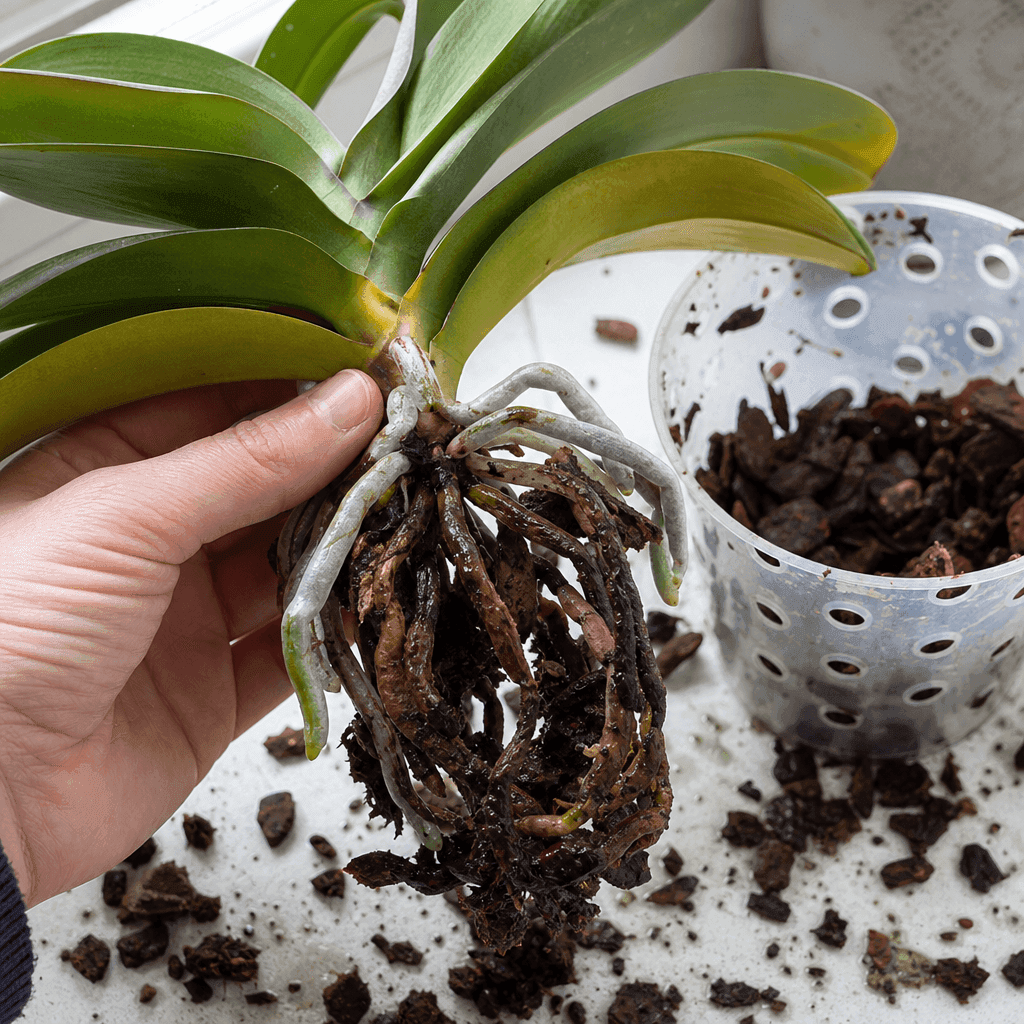
- Roots are brown, black or grey and soft or mushy when pressed gently.
- The compost smells sour, musty or unpleasant.
- The compost is still wet or damp when you water again — orchid bark should dry noticeably between waterings.
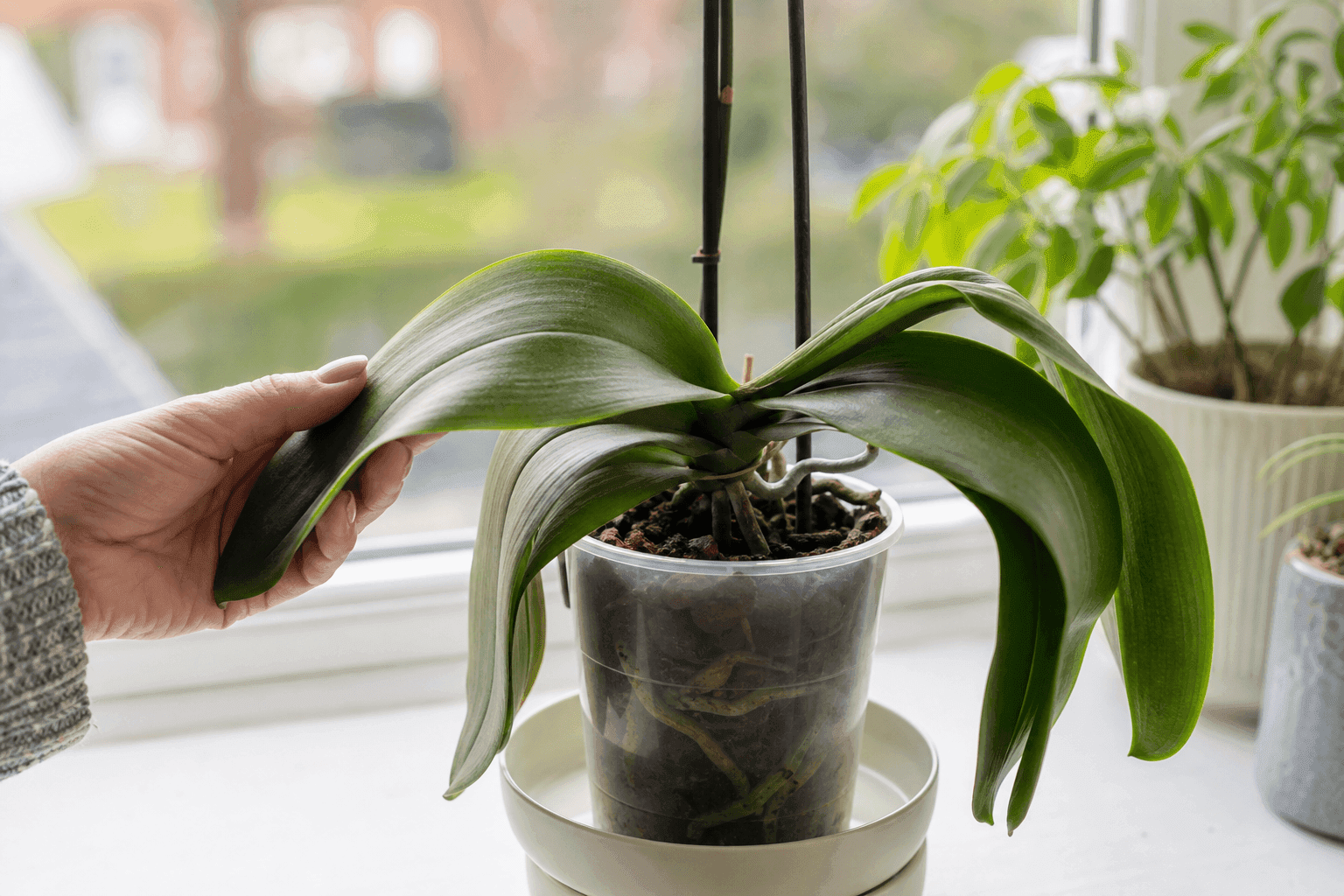
- Leaves are limp or wrinkled despite the compost being moist — a classic sign that damaged roots cannot absorb water.
- The pot feels heavy.
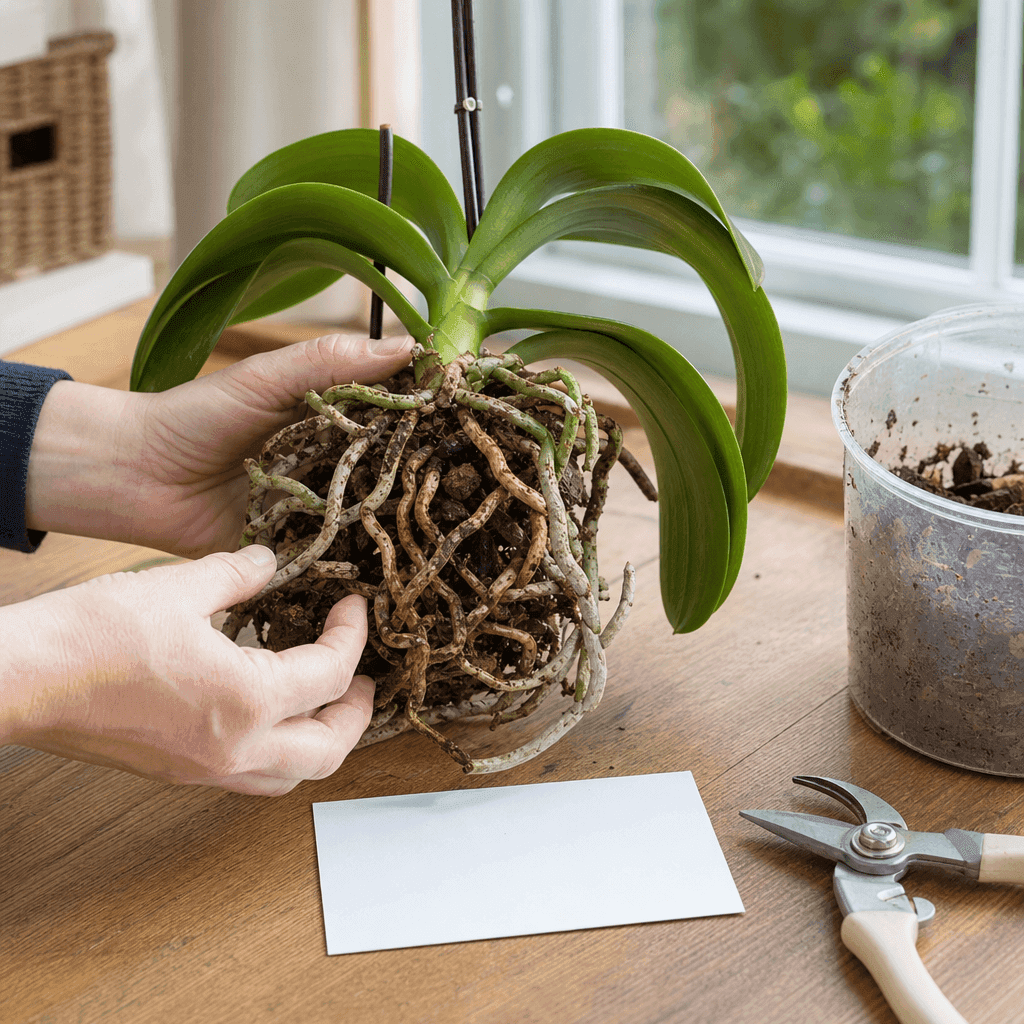
- Remove the orchid from its pot and shake off all the old bark compost.
- Inspect every root: firm, white or green roots are healthy; soft, brown, black or hollow roots are rotten.
- Cut away all rotten roots using clean, sharp scissors. Disinfect the scissors with isopropyl alcohol or dilute bleach between cuts.
- Dust all cut surfaces with powdered cinnamon (a natural antifungal) or activated horticultural charcoal.
- Repot into fresh, dry coarse orchid bark in a pot with good drainage holes — use a transparent pot to monitor roots.
- Do not water for one to two weeks after repotting to allow cut surfaces to callus.
- Resume watering by submerging the pot briefly in water then allowing it to drain completely — never let it sit in water.
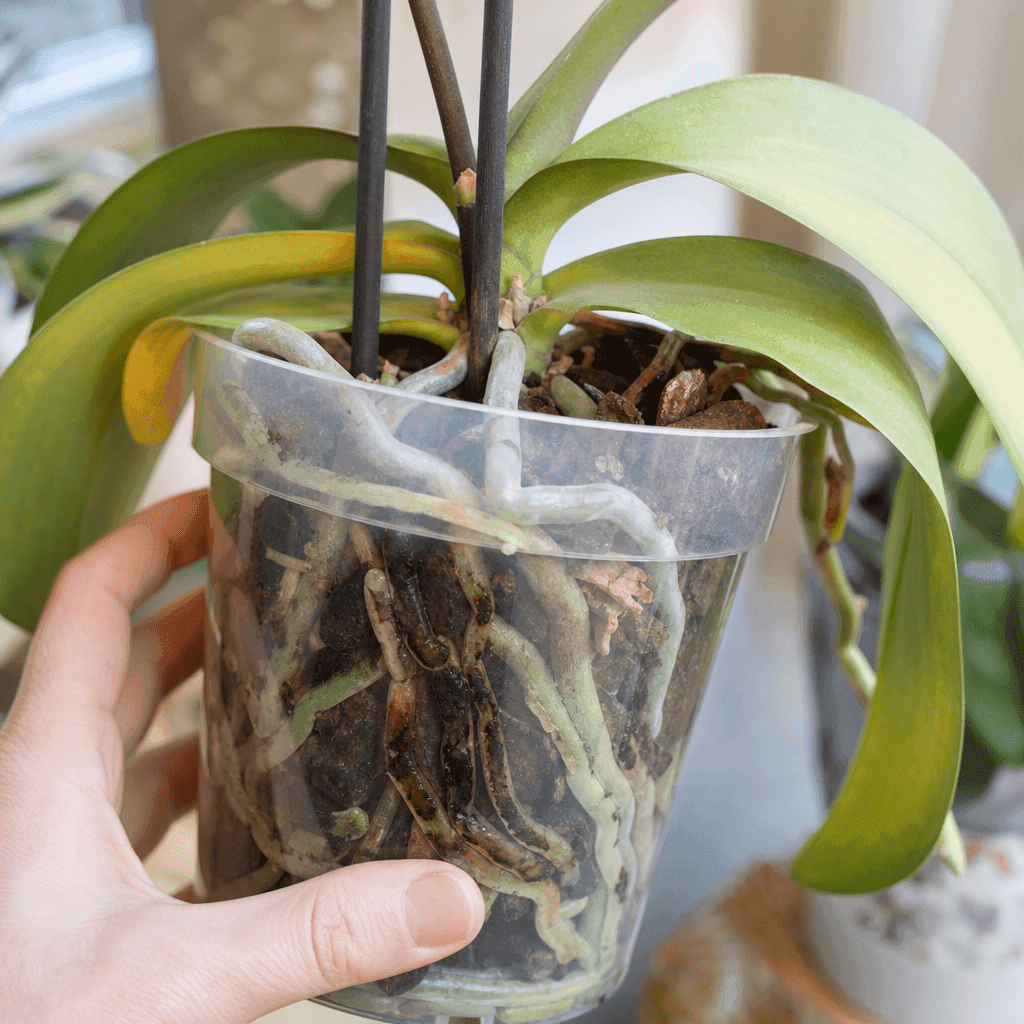
Stop it coming back:Water Phalaenopsis orchids approximately once a week in summer and once every two weeks in winter — but always check by looking at the roots through the pot. Grey or silver roots need water; green roots do not. Never allow the pot to sit in a saucer of water.
water an orchid whose roots are already brown and mushy — more water accelerates the rot.
Compacted or inappropriate potting medium
Most likelyOrchid bark breaks down over time into finer and finer particles that compact together and hold water like soil. After 18–24 months in the same compost, many orchids sit in dense, wet material with almost no air circulation around the roots. In UK homes, some orchids are also sold in poor growing media — sometimes dense moss or mixed compost that retains too much moisture. A further issue is ceramic or decorative outer pots without drainage: many UK shoppers place the plastic orchid pot inside a decorative pot, where water collects unseen at the base.
- The orchid has been in the same pot and compost for more than 18 months.
- The compost feels dense, fine-textured or muddy rather than chunky and open.
- Water takes a long time to drain through the pot.
- The orchid is sitting inside a solid decorative pot with no drainage hole.
- Roots that are not visibly rotten are still pale white or grey with no green tips — indicating they are not actively growing.
- Remove the orchid from its pot and all old compost.
- Trim any rotten or dead roots and repot into fresh coarse orchid bark.
- Use a clear plastic pot with multiple drainage holes — this allows root health to be monitored visually.
- If using a decorative outer pot, always check and empty it after watering — never allow standing water inside.
- Repot Phalaenopsis orchids every 18–24 months or sooner if the compost has clearly broken down.
reuse old orchid bark — breakdown products of old bark can harbour pathogens; always use fresh material.
Crown rot
PossibleCrown rot occurs when water collects at the base of the leaves, in the growing centre (crown) of the plant, and is not able to drain or evaporate. It is most common after watering from above, particularly if leaves are spread wide and trap water. The crown becomes soft, brown or black and may smell unpleasant. Crown rot is often caused by the same pathogens as root rot — Pythium and Phytophthora — but it attacks the stem tissue rather than the roots, and can be fatal if the growing point is destroyed.
- The centre growing point between the leaves is soft, discoloured (brown or black) or wet-looking.
- An unpleasant smell comes from the crown area.
- Leaves may begin to pull away from the crown or feel unstable.
- Water has been applied directly to the leaves and crown during watering.
- Act immediately — crown rot spreads rapidly.
- Remove the orchid from its pot and assess whether any healthy green tissue remains at the crown.
- Using a sterile blade or scalpel, remove all discoloured, soft tissue until you reach firm, healthy growth.
- Dust the cut surfaces with powdered cinnamon or activated charcoal.
- Allow to dry in a warm, bright position before repotting.
- Water in future by submerging the pot base in water rather than pouring water over the plant, to keep the crown dry.
leave water sitting in the crown after watering — always blot it dry with a tissue or cotton wool.
Fungal root rot (Pythium and Phytophthora)
PossibleWhile overwatering creates the conditions for root rot, specific water mould pathogens — principally Pythium and Phytophthora species — are usually the organisms actually doing the damage. The RHS has detailed advice on Phytophthora root rot and notes that no chemical treatments are currently available to home gardeners to cure it once established. These organisms thrive in waterlogged, oxygen-poor conditions and can spread via contaminated water, tools or potting material. Infection spreads rapidly through root systems and sometimes into stem tissue.
- Rot is spreading rapidly beyond areas of visible damage.
- Dark streaks in the pseudobulb or stem when carefully cut — indicating vascular tissue is affected.
- Multiple plants in the same location are affected (suggesting contaminated water or tools).
- The pattern of damage suggests a disease rather than simple root suffocation.
- Remove all rotten roots and any affected stem tissue with sterilised tools.
- Dip remaining healthy roots briefly in a solution of 3% hydrogen peroxide diluted 1:1 with water — this kills surface pathogens.
- Allow roots to dry completely before repotting into fresh, sterile orchid bark.
- Disinfect all pots, tools and surfaces that came into contact with the infected plant.
- Do not propagate from infected material.
- Isolate recovered plants from others for several weeks to monitor for recurrence.
Stop it coming back:Use clean, fresh potting material; sterilise tools between plants; avoid overwatering. There are no fungicides available to UK home gardeners for Phytophthora — prevention is essential.
water recovered orchids with water collected from drainage saucers — this water may carry pathogen spores.
Root loss and repotting stress
PossibleOrchid roots often attach firmly to their pots, and removing them during repotting can break or tear healthy roots. The result is a plant with fewer functioning roots, which may struggle to supply water to the leaves, causing them to look limp or wrinkled despite adequate watering. This is a temporary condition if enough healthy roots remain and the plant is kept in stable, warm and slightly humid conditions while it regrows.
- Plant was recently repotted and roots were damaged during the process.
- Leaves are limp but the remaining visible roots are firm and healthy-coloured.
- The pot is not excessively wet and there is no rot smell.
- New green root tips are beginning to emerge.
- Keep the orchid in a warm, bright position out of direct harsh sunlight.
- Mist the exposed aerial roots lightly every day or two rather than watering the compost heavily.
- Water sparingly until new roots are established and actively growing.
- Increase ambient humidity if the plant is in a very dry, centrally heated room.
- Do not feed until healthy roots are growing actively.
force roots off a pot during repotting — if roots are attached, cut the old pot away to avoid root damage.
Still not sure?
Work down these branches — the first one that matches is your answer.
What not to do
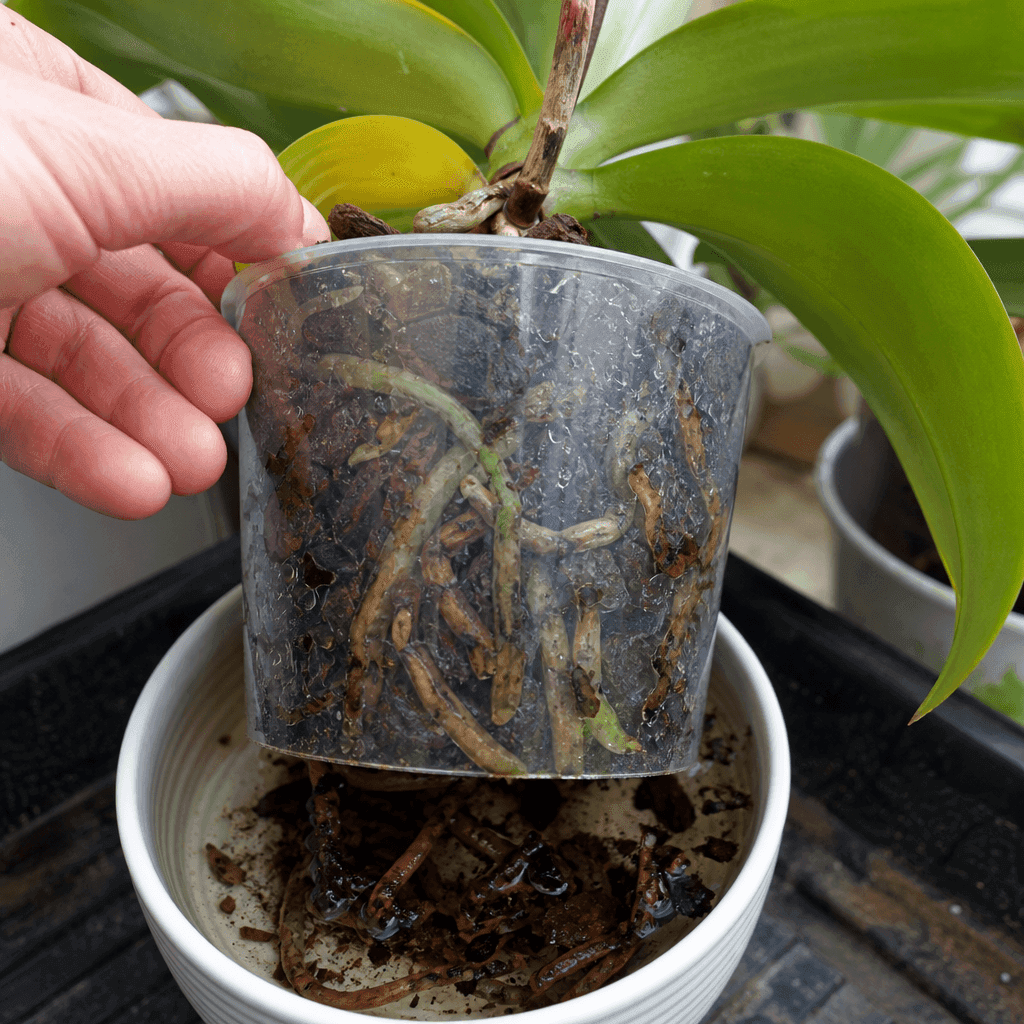
- Water an orchid whose roots are already brown and mushy — more water makes root rot worse, not better.
- Leave the orchid in a solid decorative pot with no drainage, where water collects unseen.
- Reuse old orchid bark when repotting — broken-down bark harbours pathogens.
- Pour water over the leaves and crown rather than watering the root zone only.
- Feed a root-rotted orchid to try to 'revive' it — fertiliser will burn already-damaged roots.
Common questions
How do I know if my orchid has root rot?
Remove the orchid from its pot and look at the roots. Healthy roots are firm and white (dry) or bright green (recently watered). Rotten roots are brown, black or grey and soft or hollow when gently pressed. A sour smell from the compost is another reliable sign. Limp leaves with wet compost are a warning sign even before you look at the roots.
Can an orchid survive root rot?
Yes, if enough healthy root tissue remains — much like recovering a monstera with root rot, the principle is the same. Cut away all rotten roots with sterilised scissors, dust the cuts with cinnamon, and repot in fresh dry orchid bark. Plants with only a few healthy roots can recover slowly if kept in a warm, bright, humid position. Plants where the crown (growing point) has also rotted are much harder to save.
How often should I water a Phalaenopsis orchid in the UK?
Approximately once a week in summer and once every ten to fourteen days in winter — but always check the roots through the clear pot rather than watering on a fixed schedule. Grey or silver roots are dry and need water; green roots still have moisture. Water by submerging the plastic pot briefly then allowing it to drain completely; never leave it standing in water.
What is the best compost for orchids?
Coarse orchid bark (pine bark) is the standard growing medium for Phalaenopsis and most other common orchids grown in the UK. It provides the open, well-aerated structure orchid roots need to dry between waterings. Replace it every 18–24 months as it breaks down into finer particles that retain too much moisture.
Should I cut off dead orchid roots?
Yes — dead (brown, mushy or hollow) roots should be removed with clean, sterile scissors. They will not recover and their presence encourages further fungal growth. Leave any roots that are still firm even if they appear pale or brown-tipped — these may still be functional. Dust all cut surfaces with powdered cinnamon.
Why are my orchid leaves limp even though I'm watering regularly?
Limp leaves on a well-watered orchid almost always indicate root damage, and the same pattern often shows up as drooping orchid leaves. When roots are rotten, they cannot absorb water even when it is available. Check the roots immediately — if they are brown and mushy, stop watering, cut away the rotten roots and repot. Do not water more.
Can I use normal potting compost for orchids?
No — standard potting compost retains too much moisture and will suffocate orchid roots. Always use a specific orchid bark mix or make your own from coarse pine bark chips, perlite and a little horticultural charcoal. Some orchids (such as terrestrial types like Cymbidium) use a slightly different mix, but Phalaenopsis always need coarse, open bark.