Quick diagnosis
Match the row to what you’re seeing, then jump to the fix.
| What you see | Likely cause | Confidence | How to confirm | What to do now | Urgency |
|---|---|---|---|---|---|
| Dark grey to black patches inside a firm potato | Internal black spot bruising | High | Skin is mostly intact, flesh is firm, no bad smell | Cut out the dark bits and use the rest if sound | Low |
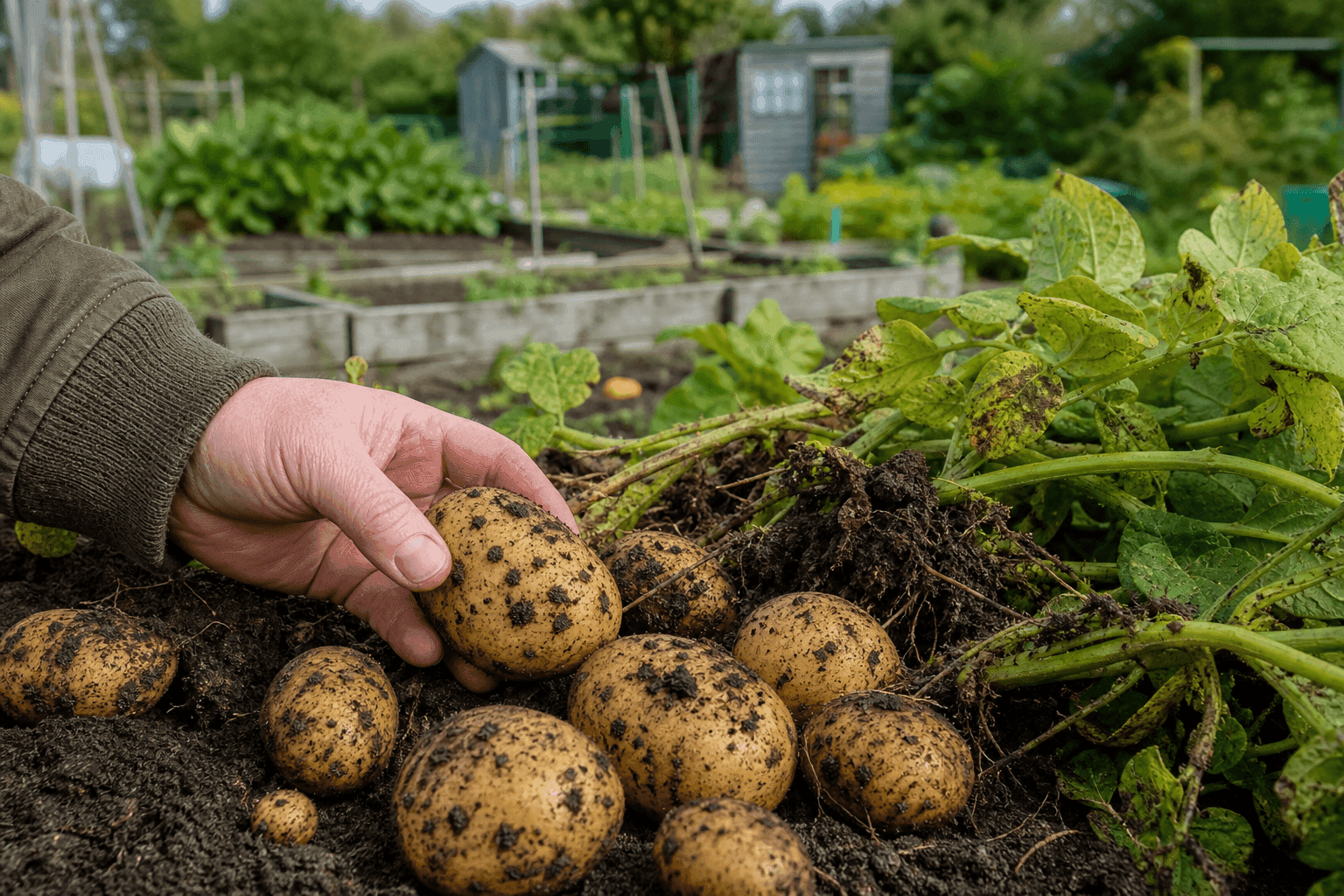
| Black, hard, soil-like crusts on tuber skin | Black scurf, caused by Rhizoctonia | High | Marks do not wash off easily but can be peeled away | Peel affected skin; improve rotation and avoid planting infected seed | Low–medium |
| Dark centre or hollow black middle | Blackheart | Medium | Centre is discoloured, often after poor storage or lack of ventilation | Discard badly affected tubers; improve storage airflow | Medium |
| Soft, wet, smelly black areas | Rot | High | Tubers are mushy, leaking, mouldy or sour-smelling | Discard; check stored potatoes nearby | High |
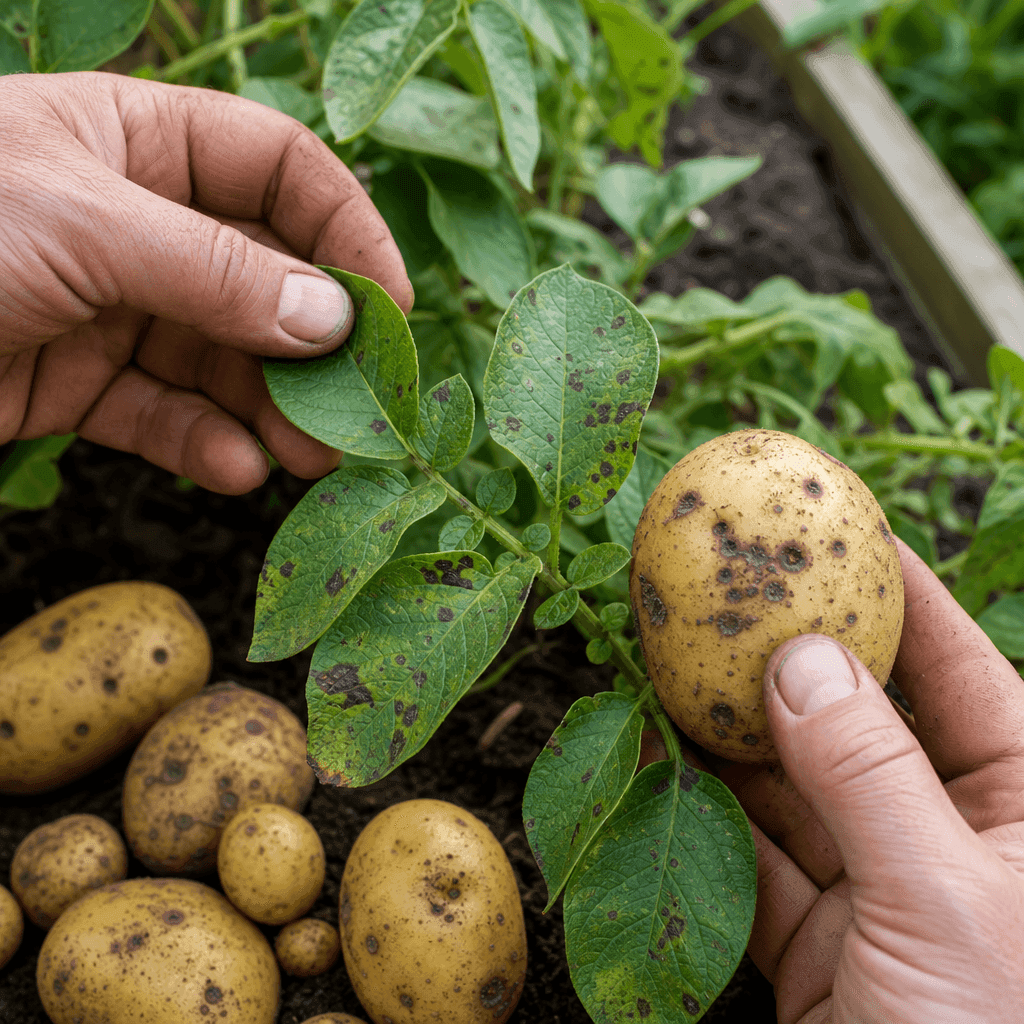
| Brown or black lesions on leaves, spreading fast in warm wet weather | Potato blight | High | Leaf patches may have pale edges or white growth underneath in humid weather | Remove affected haulms if severe; do not compost infected foliage | High |
| Yellowing lower leaves late in season, plants otherwise healthy | Natural dieback before harvest | High | Plants are flowering or finished flowering, leaves yellow from bottom up | Reduce watering, wait for skins to set, harvest carefully | Low |
| Yellow leaves early, weak growth, small plants | Nutrient shortage, drought or waterlogging | Medium | Soil is dry, compacted, cold, poor or saturated | Correct watering and feeding; improve drainage | Medium |
| Brown rings or spots with target pattern on older leaves | Early blight or leaf spot | Medium | Spots have concentric rings and yellow halo | Remove worst leaves, improve airflow, water at soil level | Medium |
The causes, in detail
Internal black spot bruising
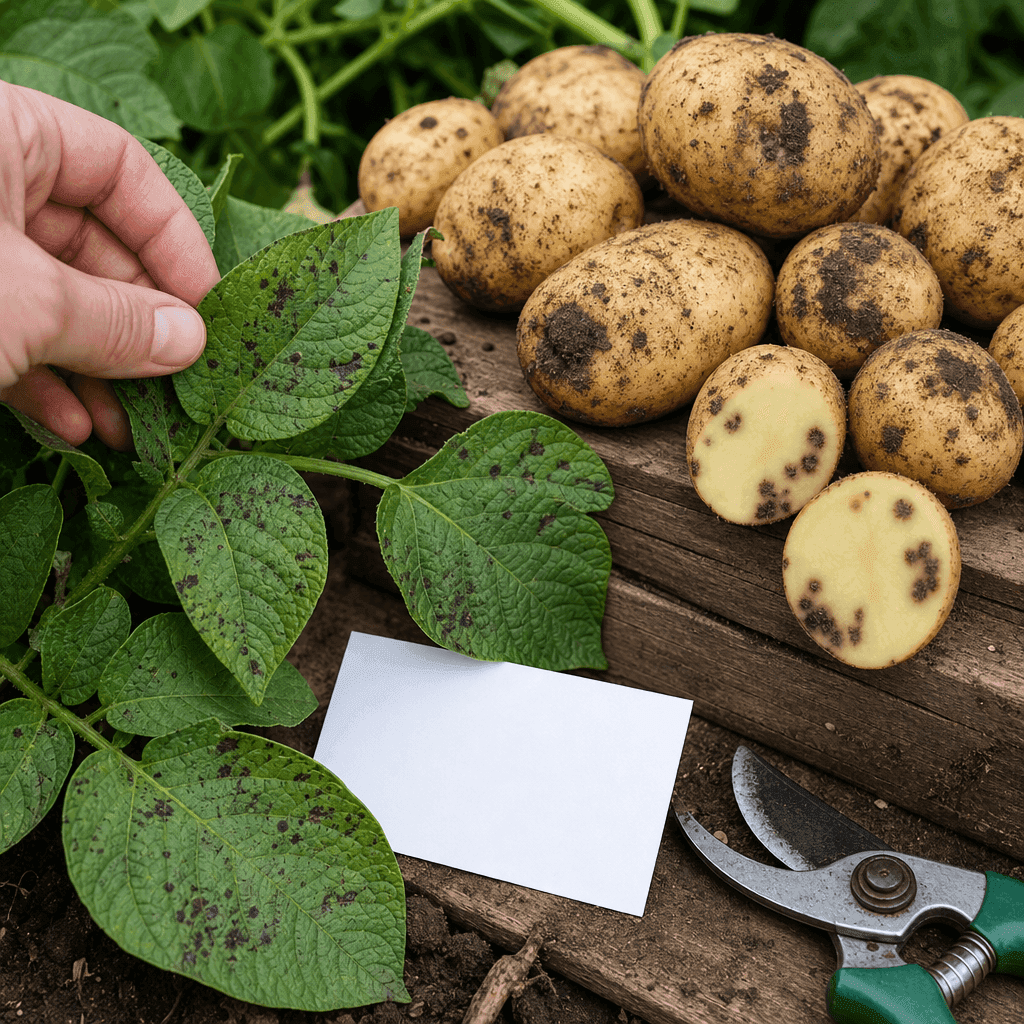
Most likelyInternal black spot bruising appears as dark grey, blue-black or black patches under the skin or within the flesh after peeling or cutting. The skin may look normal. The potato is usually firm, with no mould, slime or bad smell. The Pacific Northwest Pest Management Handbook describes internal black spot as a physiological disorder associated with bruising. Bruising is more common after rough handling, digging with a fork, dropping potatoes into a trug, or storing tubers too cold.
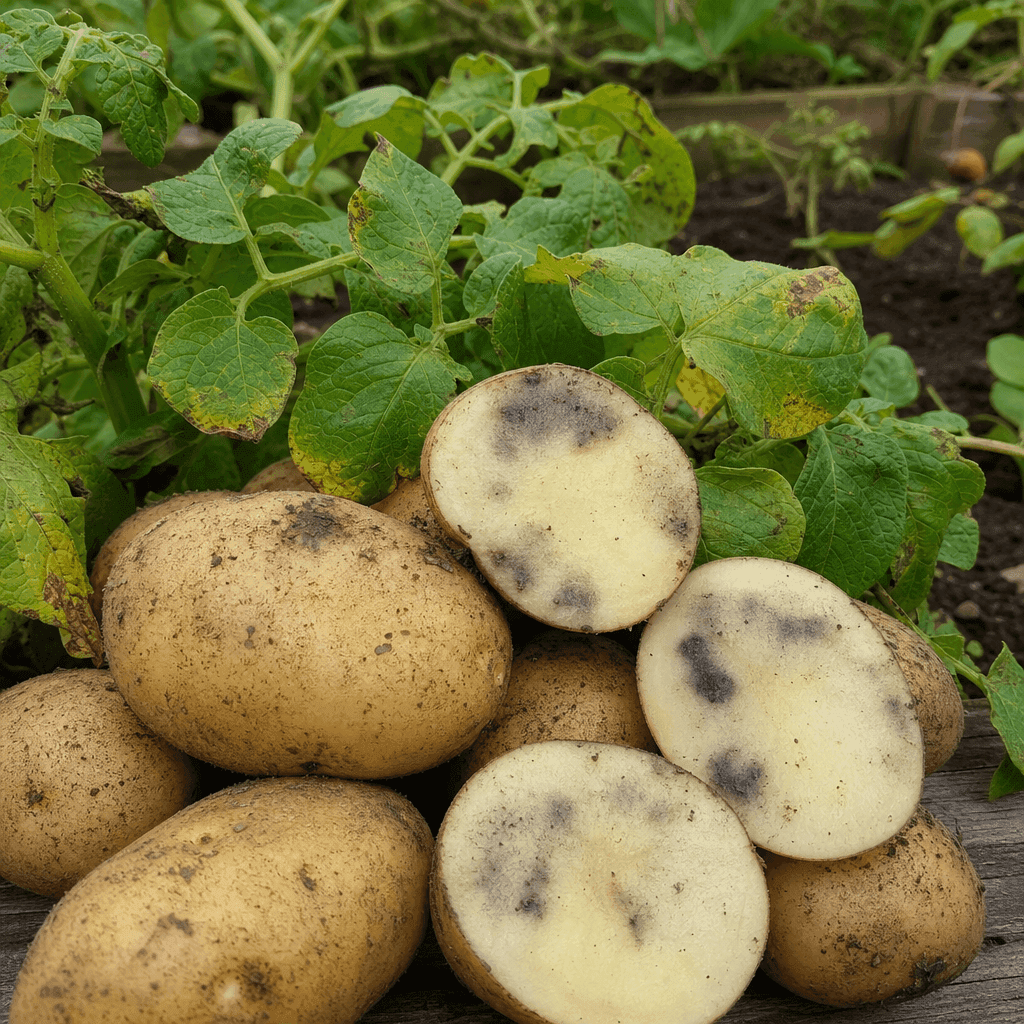
- Cut into the tuber — if the dark area is localised, dry, firm and not spreading through soft tissue, bruising is likely.
- No bad smell and the potato is otherwise firm and healthy-looking.
- Trim away the dark patch generously and cook the rest if the potato is firm and smells normal.
- For homegrown potatoes, handle tubers gently and avoid dropping them.
- Cure before storage where appropriate.
- Store in a cool, dark, ventilated place.
Stop it coming back:Bruising does not heal in the kitchen. Prevention happens at harvest, transport and storage. Stored potatoes should be checked regularly so one rotting tuber does not spoil others.
assume every black mark is mould. Do not eat a potato if the dark area is wet, sunken, smelly or accompanied by mould. Do not store potatoes in sealed plastic bags.
Black scurf on the potato skin
Most likelyBlack scurf looks like hard black specks or crusts stuck to the tuber skin. They can look like dry soil, but they do not wash off easily. The RHS describes potato black scurf and stem canker as a fungal disease caused by Rhizoctonia solani, producing hard black growths on tubers and sometimes causing stem canker in growing plants.
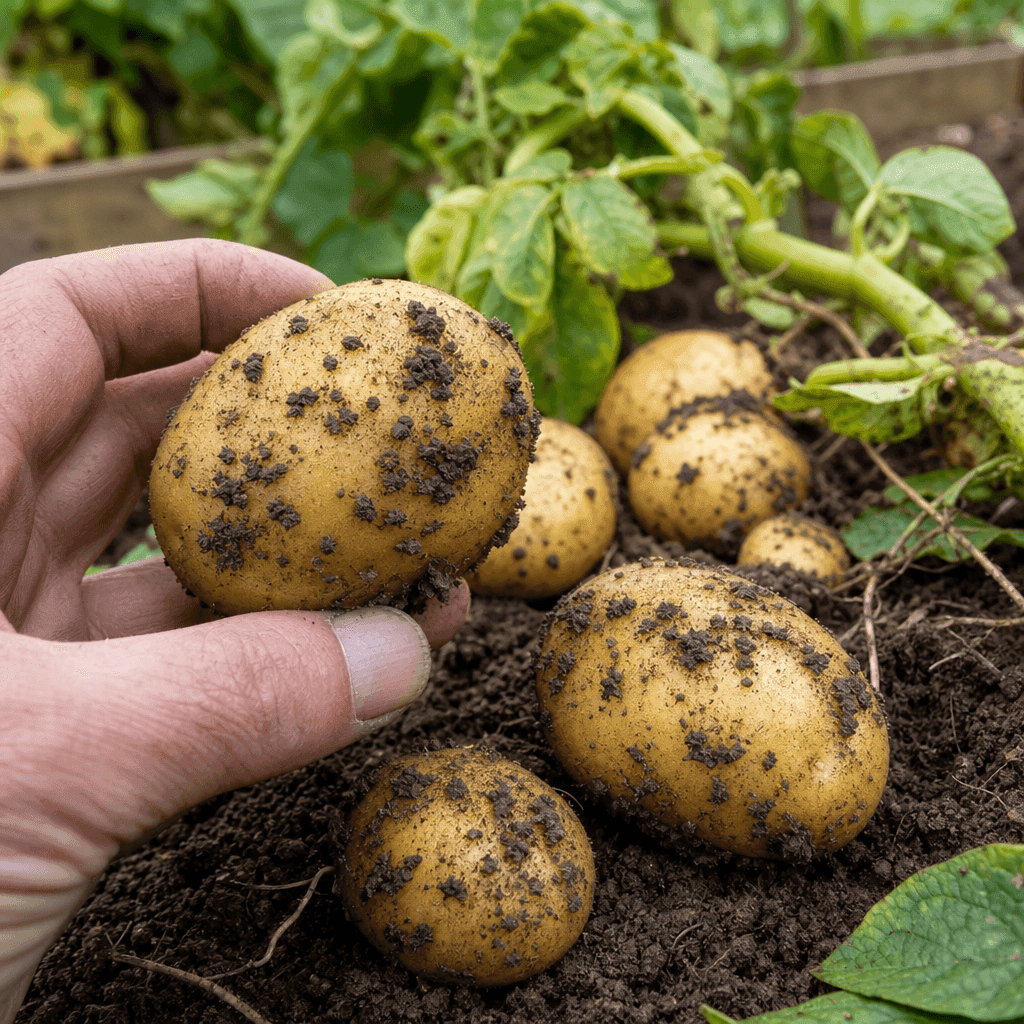
- Wash the potato — if the black bits remain attached like small scabs and are on the surface only, black scurf is likely.
- Peel one affected area — if the flesh underneath is sound, it is mainly a skin defect.
- For eating, peel away affected skin and use sound flesh.
- For growing, do not save badly affected tubers as seed potatoes.
- Buy certified seed potatoes where possible.
- Rotate the crop and remove volunteer potatoes.
- Avoid planting into cold, wet soil that delays emergence.
Stop it coming back:Existing scurf on a tuber will not disappear. Good hygiene and rotation reduce future risk over several seasons.
plant supermarket potatoes with black scurf as seed. Do not compost badly diseased haulms or tubers if you are trying to reduce disease carry-over.
Blackheart inside potatoes
PossibleBlackheart is internal darkening, often in the centre of the tuber. It may be a dark, irregular area or a hollow dark centre. AHDB identifies blackheart as an internal defect linked with low oxygen and high carbon dioxide levels in the tuber.
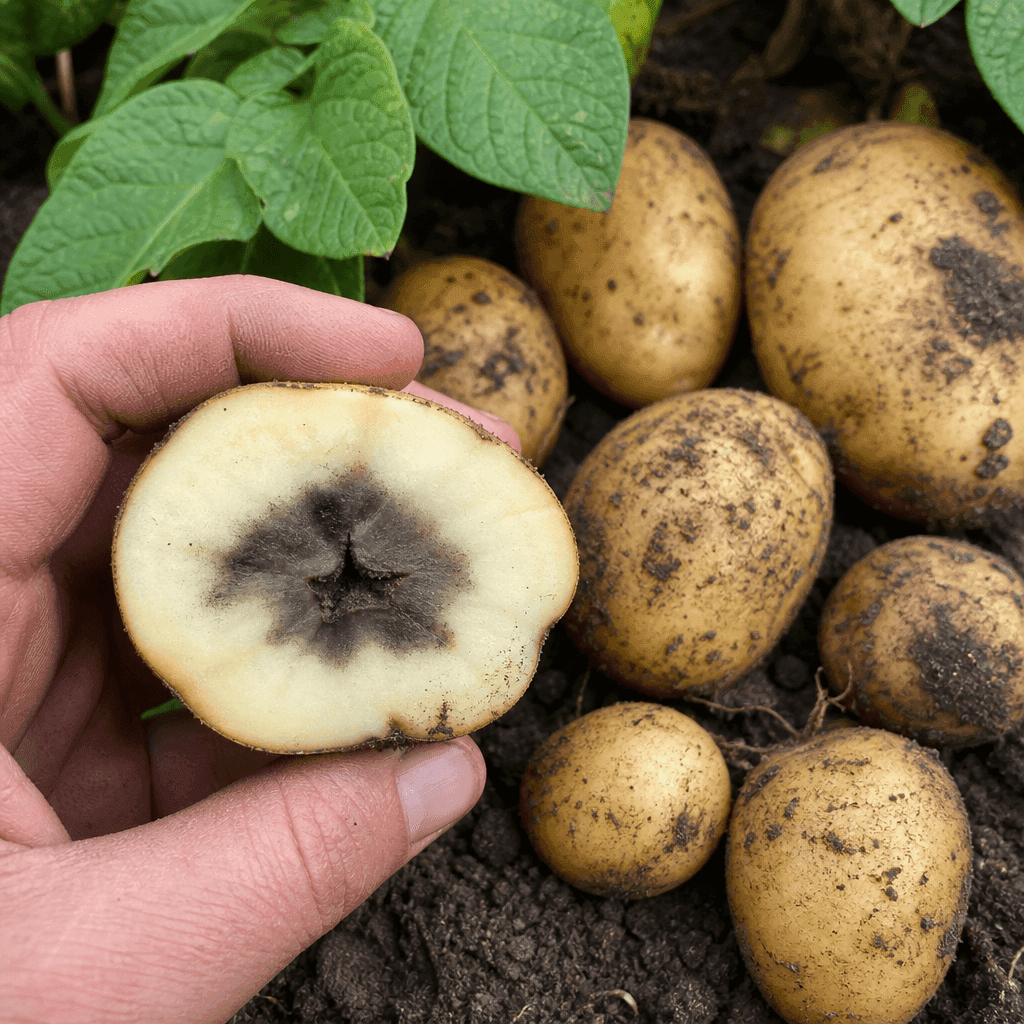
- Cut lengthways through several potatoes from the same batch.
- If the darkening is central rather than bruised near the edge, and several tubers are affected, storage or ventilation stress may be involved.
- Discard badly affected tubers.
- Improve storage by keeping potatoes cool, dark, dry enough to prevent condensation and well ventilated.
- Do not pile them so deeply that air cannot move.
- Remove any soft or rotting tubers immediately.
ignore a whole batch if several have black centres — check the rest soon. Do not store potatoes near heat sources or in airtight boxes.
Soft rot, mould and unsafe black spots
Most likelyRot looks wet, soft, sunken, slimy, mouldy or smelly. The black areas may merge with brown, grey or white mould. The potato may leak fluid or collapse when pressed.
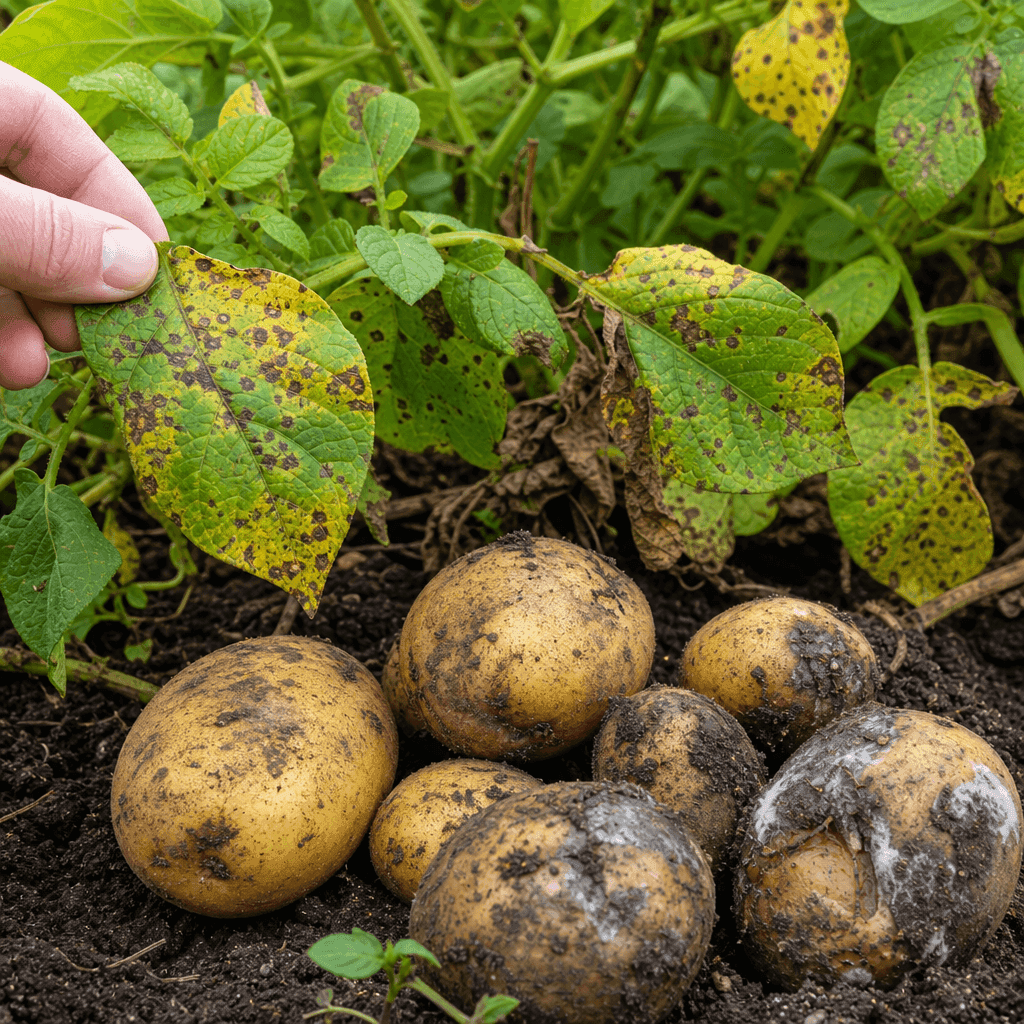
- Use smell and texture — a safe-to-trim bruise is firm and dry; rot is soft, wet or sour.
- If unsure, discard the tuber.
- Throw away rotten potatoes.
- Check neighbouring stored tubers and remove any that are soft or damp.
- Clean the storage container before refilling it.
- Keep future crops dry on the surface before storage — do not wash potatoes before long storage unless you can dry them thoroughly.
cut mould from a badly rotten potato and use the rest. Do not feed rotten potatoes to pets or livestock unless you have species-specific food safety advice.
Brown or black spots on potato plant leaves from blight
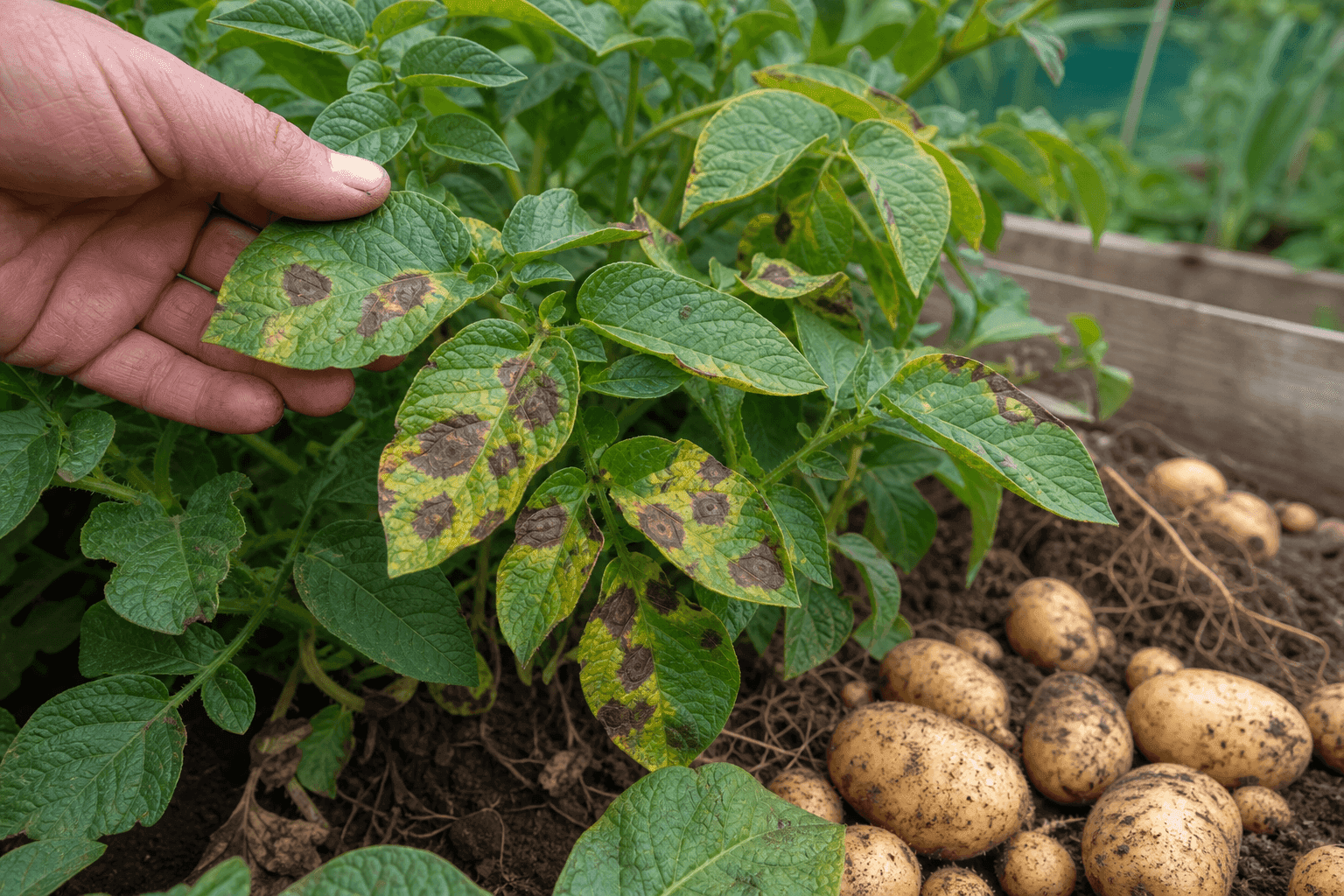
Most likelyOn living plants, dark lesions can mean potato and tomato blight, early blight, leaf spot, nutrient stress, pest damage or physical scorch. Blight is the most urgent because it can destroy foliage quickly in warm, humid weather and can infect tubers. Late blight often starts as watery brown patches that expand rapidly. In humid conditions, pale or white fungal growth may appear around lesions on leaf undersides.
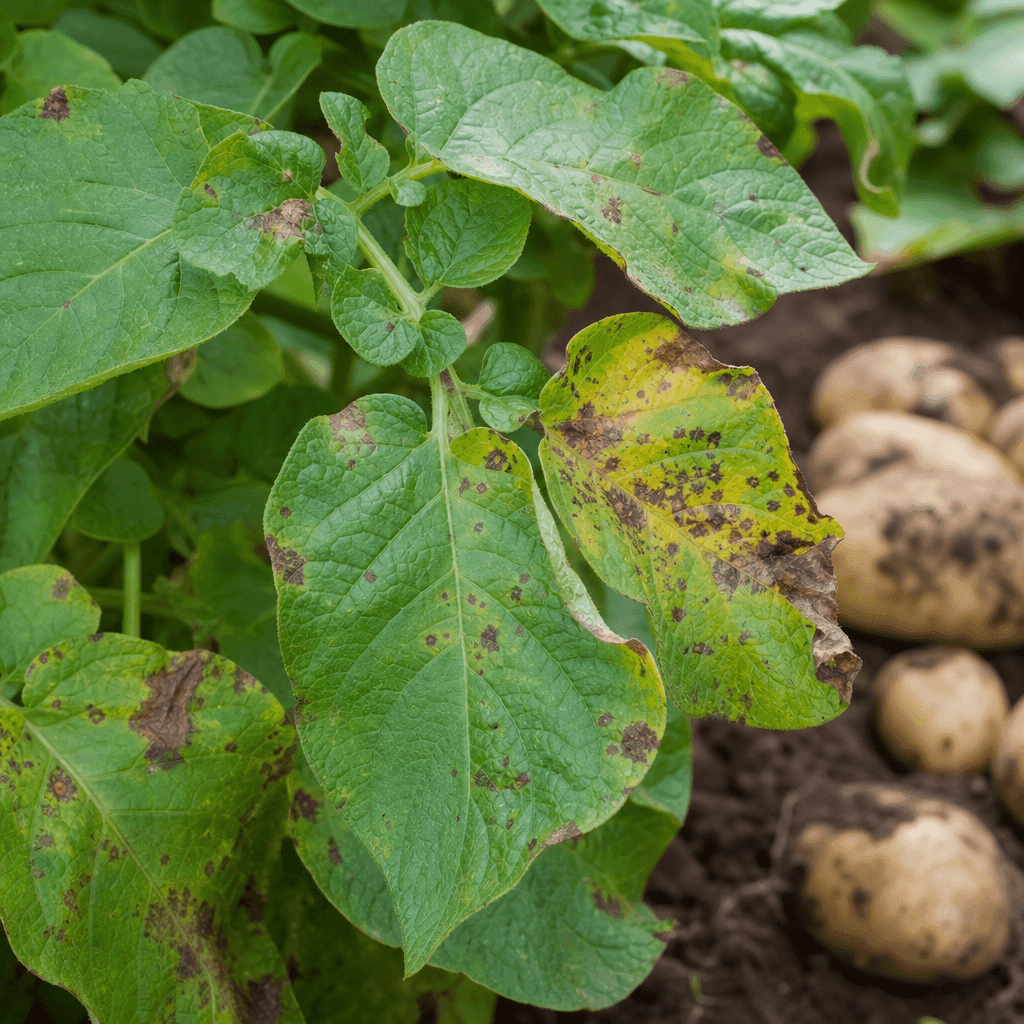
- Check weather, speed and pattern — fast-spreading patches after warm wet weather are more suspicious for blight.
- White growth under lesions in humid weather strongly suggests late blight.
- Target-like rings on older leaves suggest early blight.
- Remove a few affected leaves if disease is limited and conditions are dry.
- If blight is widespread, cut down and remove the haulms to reduce tuber infection risk.
- Wait around two weeks before lifting tubers so skins can firm.
- Water at soil level, space plants well and avoid brushing wet foliage.
Stop it coming back:Scorched or diseased leaves do not turn green again. A lightly affected plant may continue cropping, but severe blight ends productive growth for that season.
compost blighted foliage in a slow, cool home compost heap. Do not leave infected volunteer potatoes in the ground. Do not overhead-water potatoes during humid weather.
Yellow leaves on potato plants: natural dieback
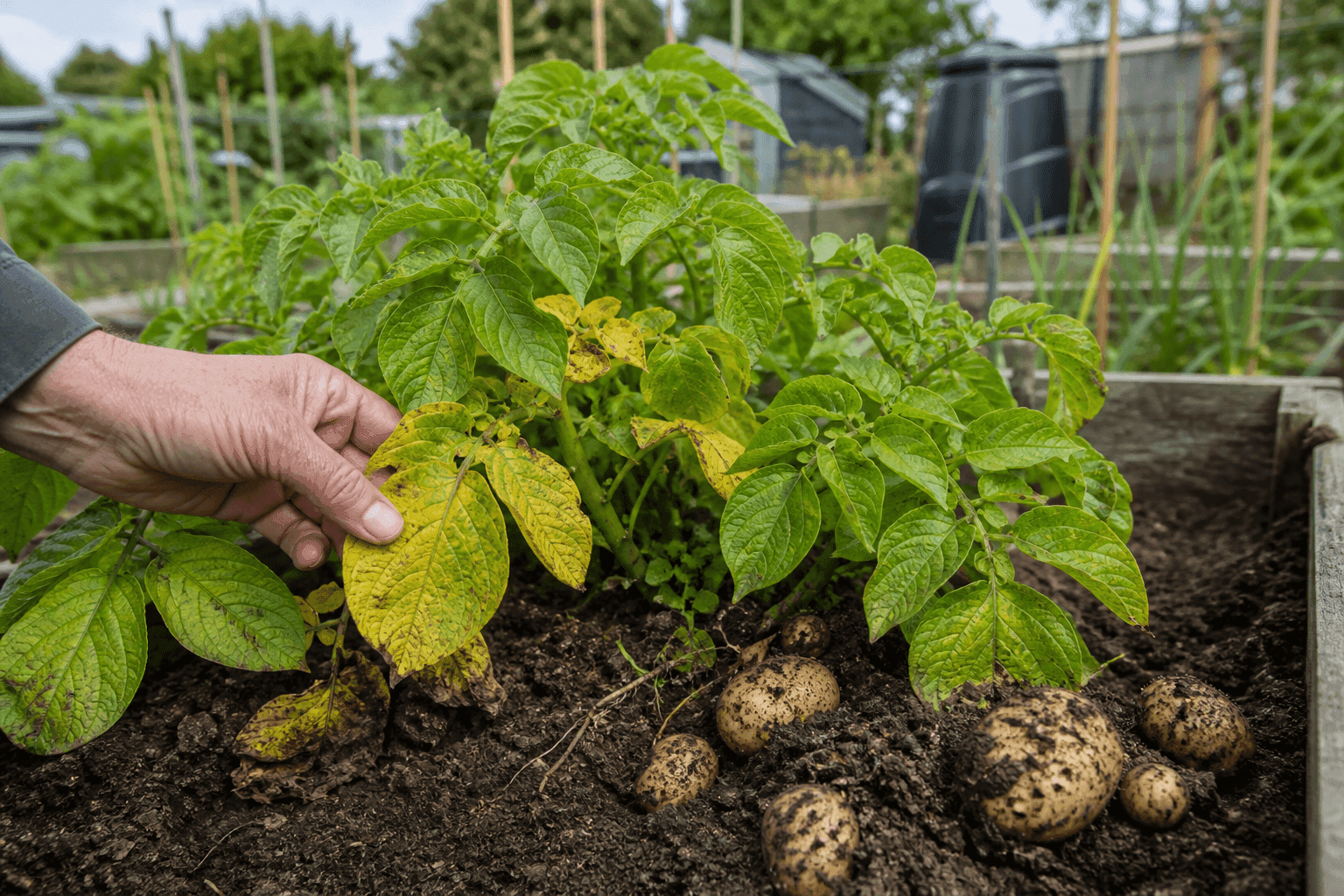
Most likelyLate in the season, potato foliage naturally yellows and dies back as tubers mature. This is normal and expected after flowering is complete. Earlier yellowing can signal a problem.
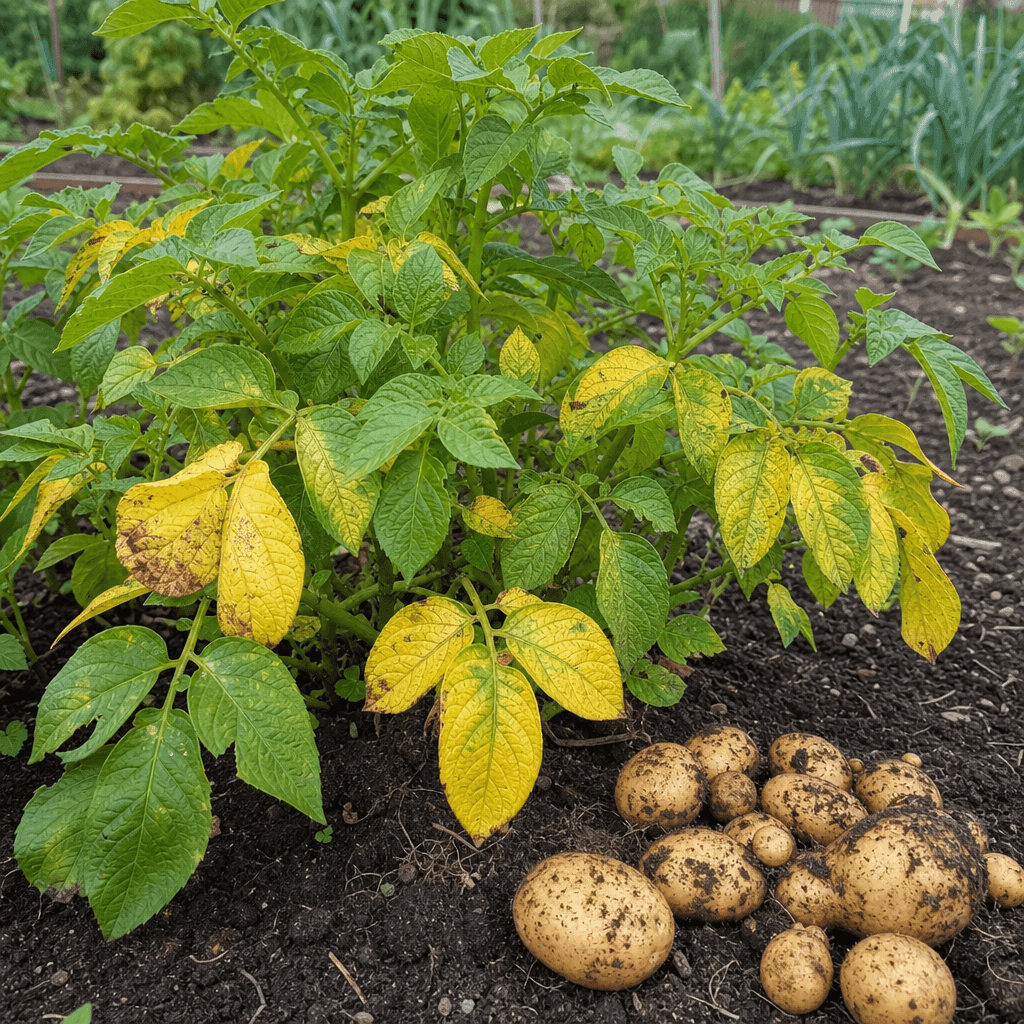
- Plants have flowered, growth has slowed, and lower leaves yellow evenly.
- No widespread disease spots, pests or unexpected wilting.
- Stop pushing leafy growth and prepare for harvest.
- Reduce watering and wait for skins to set before digging.
- Harvest carefully to avoid bruising.
automatically feed yellowing mature potato plants — late feeding can encourage soft growth rather than better tubers.
Nutrient shortage, drought or waterlogging
PossibleEarlier yellowing, especially with poor growth, can mean lack of water, waterlogging, low nutrients, compacted soil, virus, pests or disease. Dig carefully near one plant and check soil moisture, root health and tuber development to distinguish these from natural dieback.
- Young plants are yellow, stunted or wilting.
- Soil is dry, compacted, cold, poor or saturated.
- For drought, water deeply.
- For waterlogging, improve drainage and avoid repeated watering.
- For nutrient shortage, use a suitable potato or balanced vegetable feed at label rates.
Stop it coming back:Water-stressed plants can improve within days. Nutrient correction may show in new growth, not old yellow leaves.
use excessive nitrogen late in the season — it can encourage soft growth rather than better tubers.
Early blight and leaf spot
PossibleEarly blight on potatoes tends to make brown spots with concentric rings, often on older leaves first. Dry crispy edges after drought or wind may be scorch rather than disease. Early blight differs from late blight in its slower, more localised spread and its distinctive target-ring spots.
- Spots have concentric rings and yellow halos — target-ring pattern is characteristic.
- Conditions are warm and damp but not the rapid collapse typical of late blight.
- Remove worst leaves and improve airflow.
- Water at soil level rather than overhead.
- Disinfect tools after handling diseased material.
Stop it coming back:Marked leaves will not heal. Better airflow and watering hygiene should slow spread on new growth.
compost diseased leaf material in a cool home heap. Do not ignore spreading spots in warm wet weather.
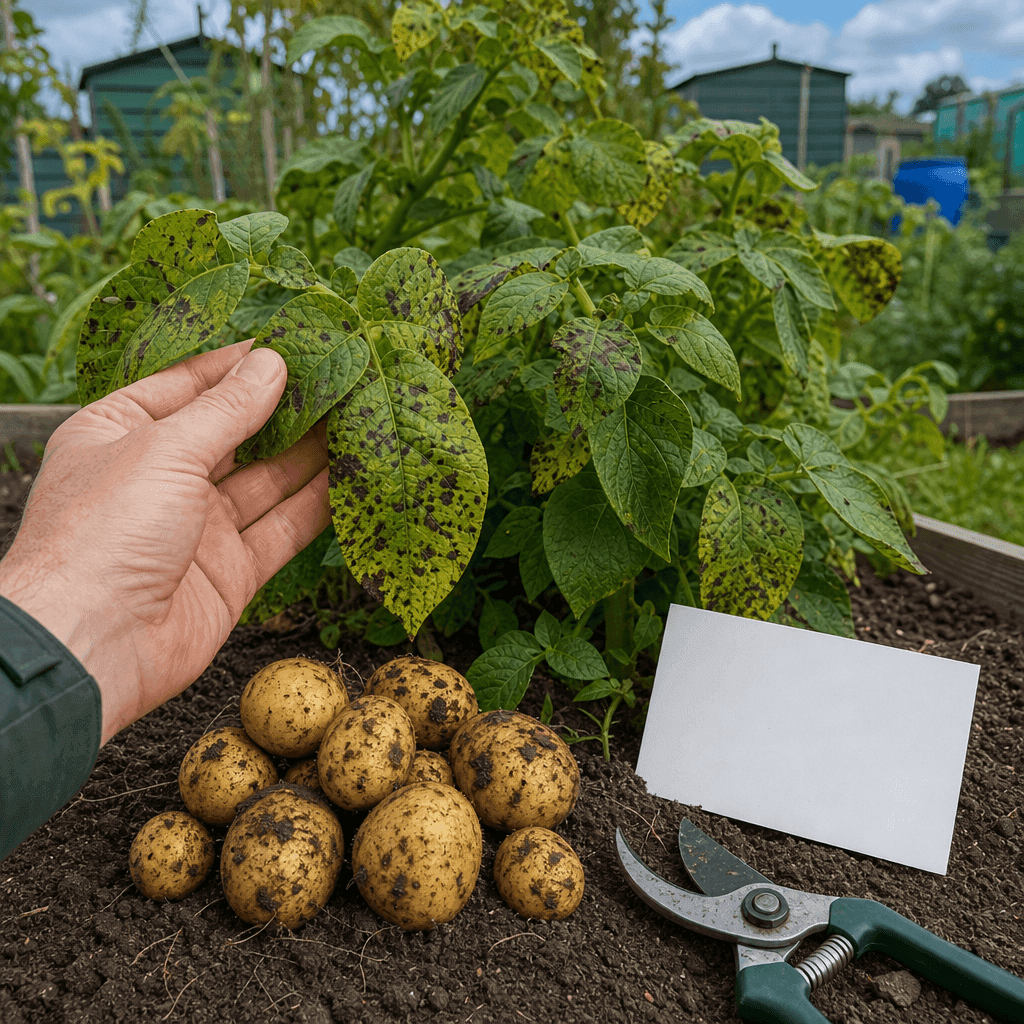
Still not sure?
Work down these branches — the first one that matches is your answer.
Common questions
Is it safe to eat potatoes with black spots?
Often, yes, if the potato is firm, smells normal, and the black spot is a dry localised bruise. Cut the mark away. Discard potatoes that are soft, mouldy, smelly, green, leaking or rotten.
What causes black spots inside potatoes?
Common causes include internal bruising from handling, cold or poor storage, and blackheart linked with poor ventilation or low oxygen. Disease or rot is more likely if the tissue is soft, wet or smelly. Other vegetables show similar marks — compare with black spots on tomatoes if you grow both.
Can I eat potatoes with black scurf?
If the tuber is otherwise sound, black scurf is usually a surface problem and can be peeled away. Do not use badly affected tubers for seed potatoes.
Are brown spots on potato leaves blight?
They can be, especially if patches spread quickly in warm wet weather. Brown spots with target rings may be early blight. Dry edge scorch, nutrient stress and pest damage can look different, so check the pattern and weather. For wider help across the crop, see our guide to common potato growing problems.
Why are my potato leaves turning yellow?
Late in the season it is often natural dieback before harvest. Early yellowing can mean drought, waterlogging, nutrient shortage, disease or pests.