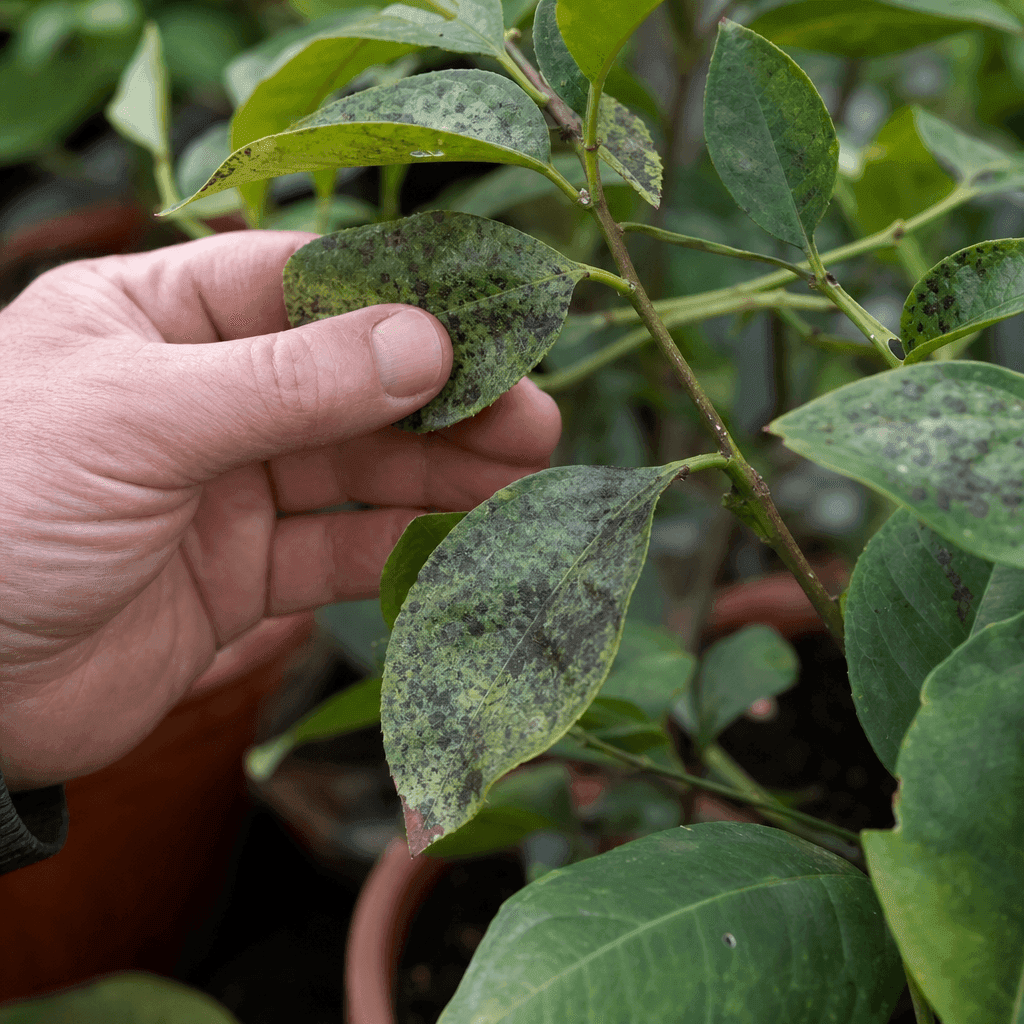

Quick diagnosis
Match the row to what you’re seeing, then jump to the fix.
| What you see | Likely cause | Confidence | How to confirm | What to do now | Urgency |
|---|---|---|---|---|---|
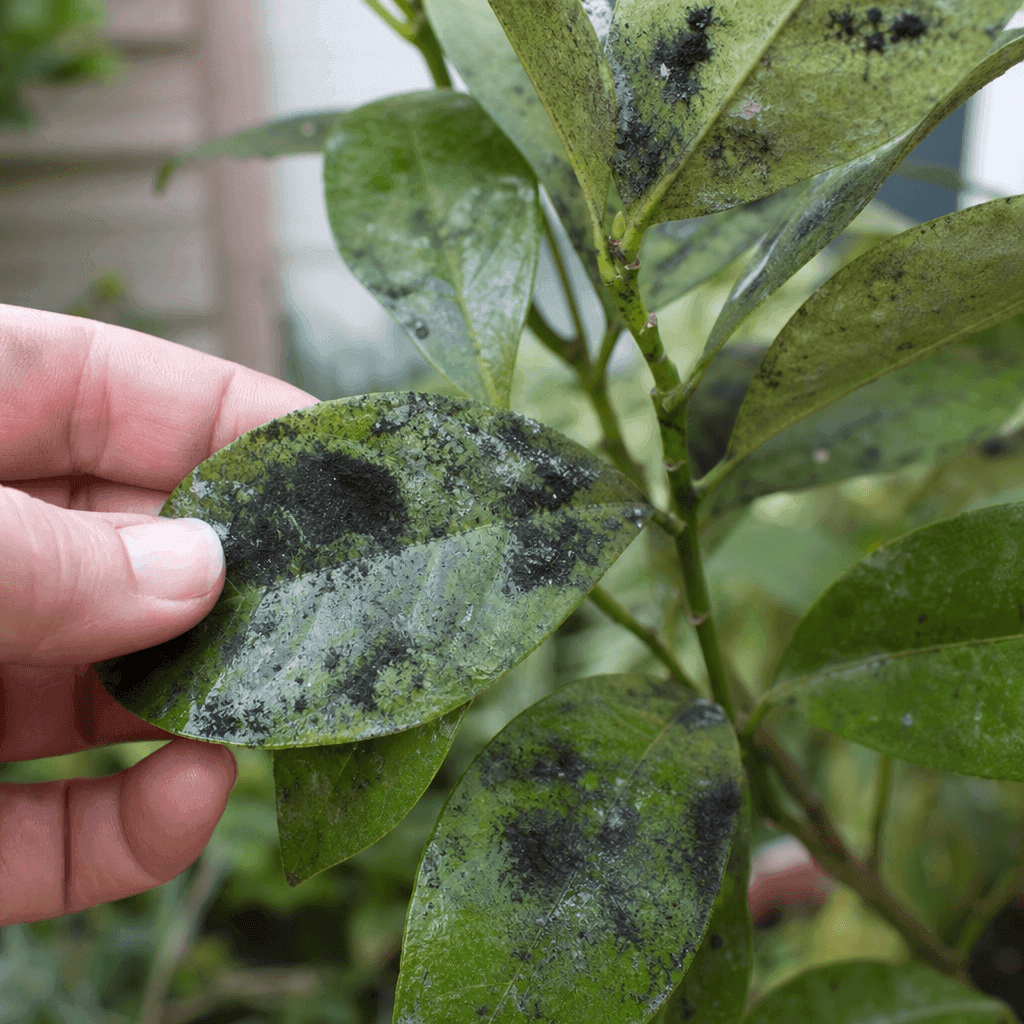
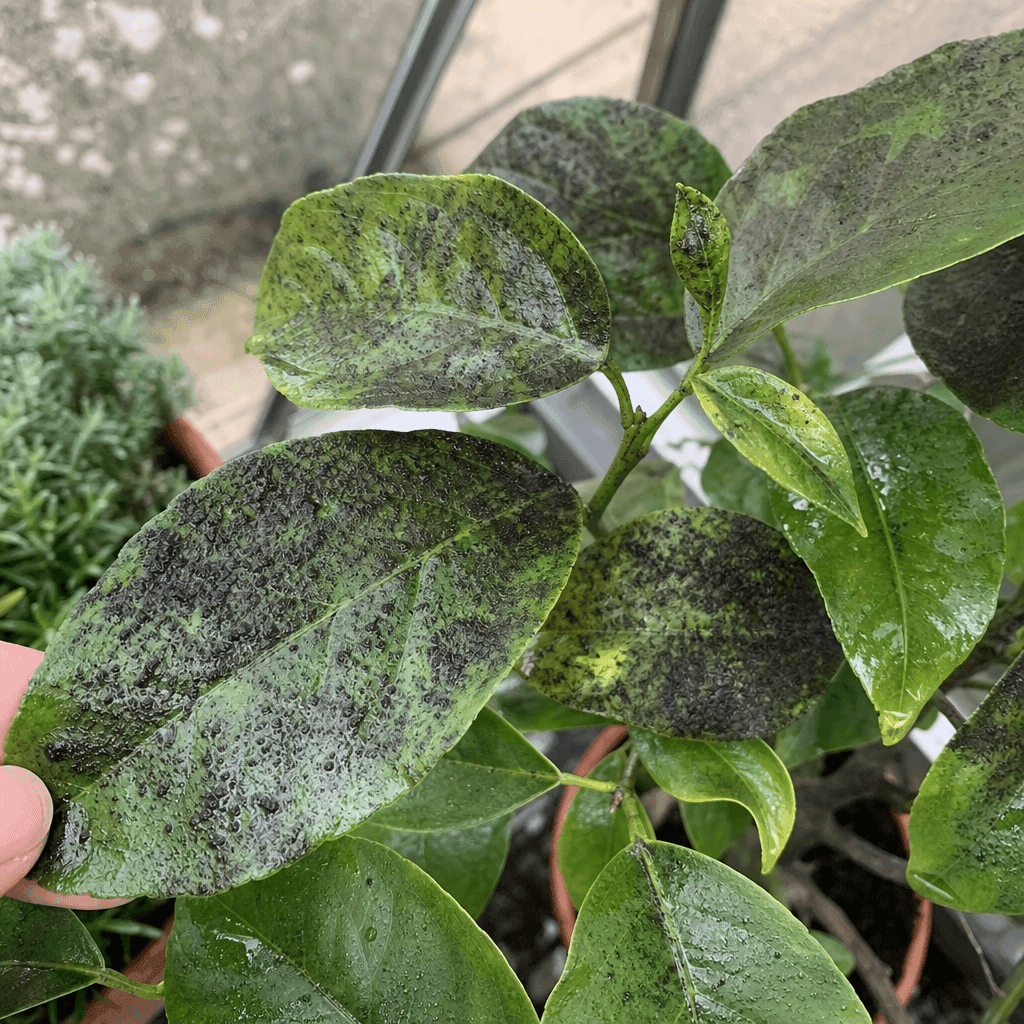
| Black or dark brown powder on upper leaf surfaces, sticky residue, insects above | Sooty mould from sap-sucking insects | High | Look for aphids, scale, mealybugs or whitefly above the affected area; honeydew feels sticky. | Control the insect infestation first; wipe mould from leaves with damp cloth. | Medium |
| White-grey dusty or powdery coating on upper leaf surfaces, sometimes distorting young leaves | Powdery mildew (fungal) | High | Rub gently — the coating smears and sits on the surface rather than being inside the leaf tissue. | Remove worst affected leaves, improve airflow, keep roots consistently moist. | Low–medium |
| Fluffy grey-brown mould on dead flowers, damaged stems or soft tissue after wet weather | Grey mould (Botrytis cinerea) | High | Grey spore masses visible on affected tissue; follows damage, dead material or cool wet conditions. | Remove all dead and dying material promptly; improve airflow; avoid overhead watering. | Medium |
| Yellow patches on upper leaf surface with grey-purple fuzzy growth on the underside | Downy mildew (distinct from powdery mildew) | Medium | The fuzzy coating is on the leaf underside, not the top; wet cool conditions preceded it. | Remove affected leaves, improve airflow and avoid overhead watering or wetting foliage. | Medium |
| Black coating below a tree or shrub, on outdoor furniture or pavement under the plant | Heavy sooty mould from large insect colony | Medium | Scale insects or heavy aphid infestation on the plant above; mould does not rub off cleanly. | Treat the insect source; wipe affected surfaces with soapy water. | Medium |
The causes, in detail
Sooty mould
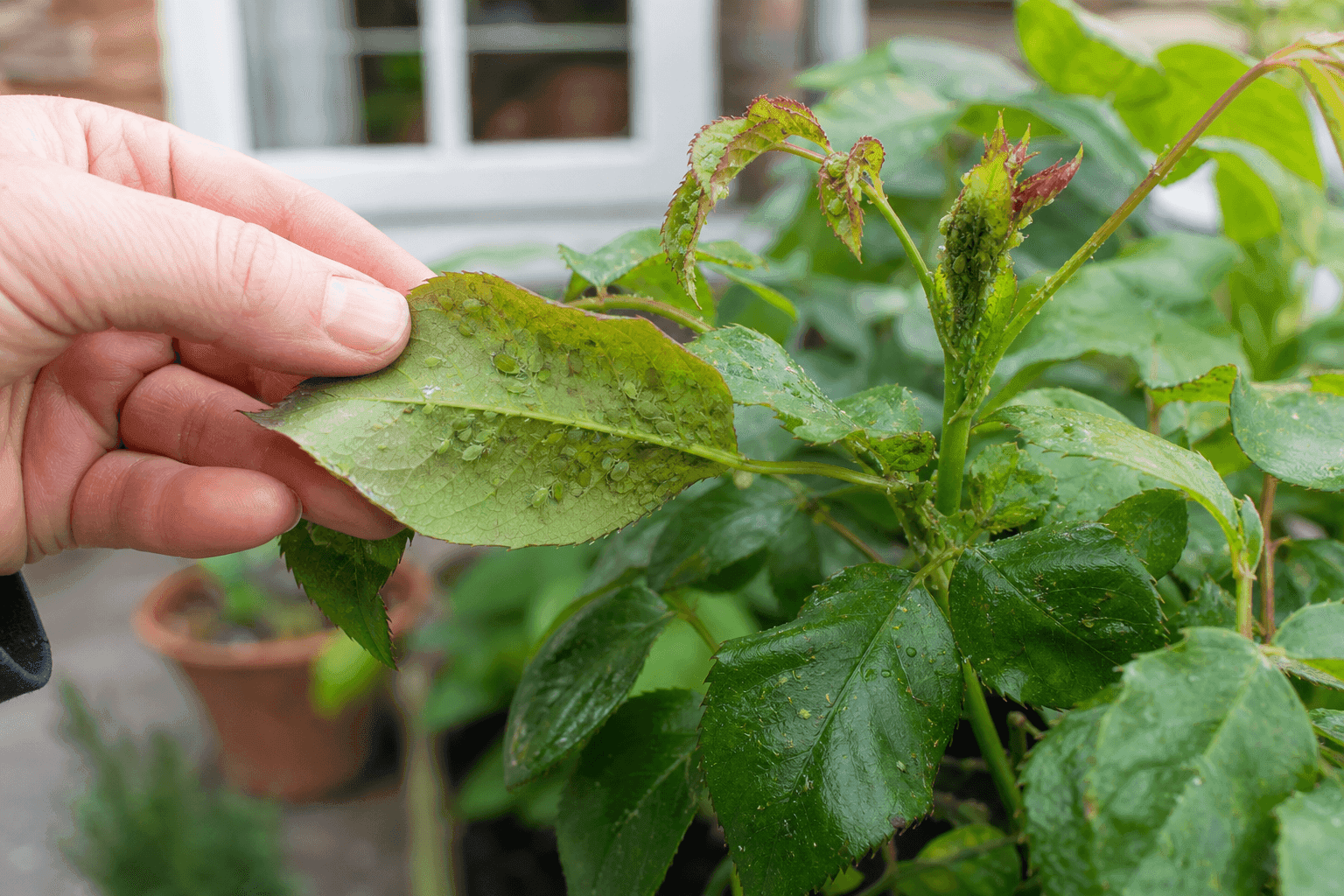
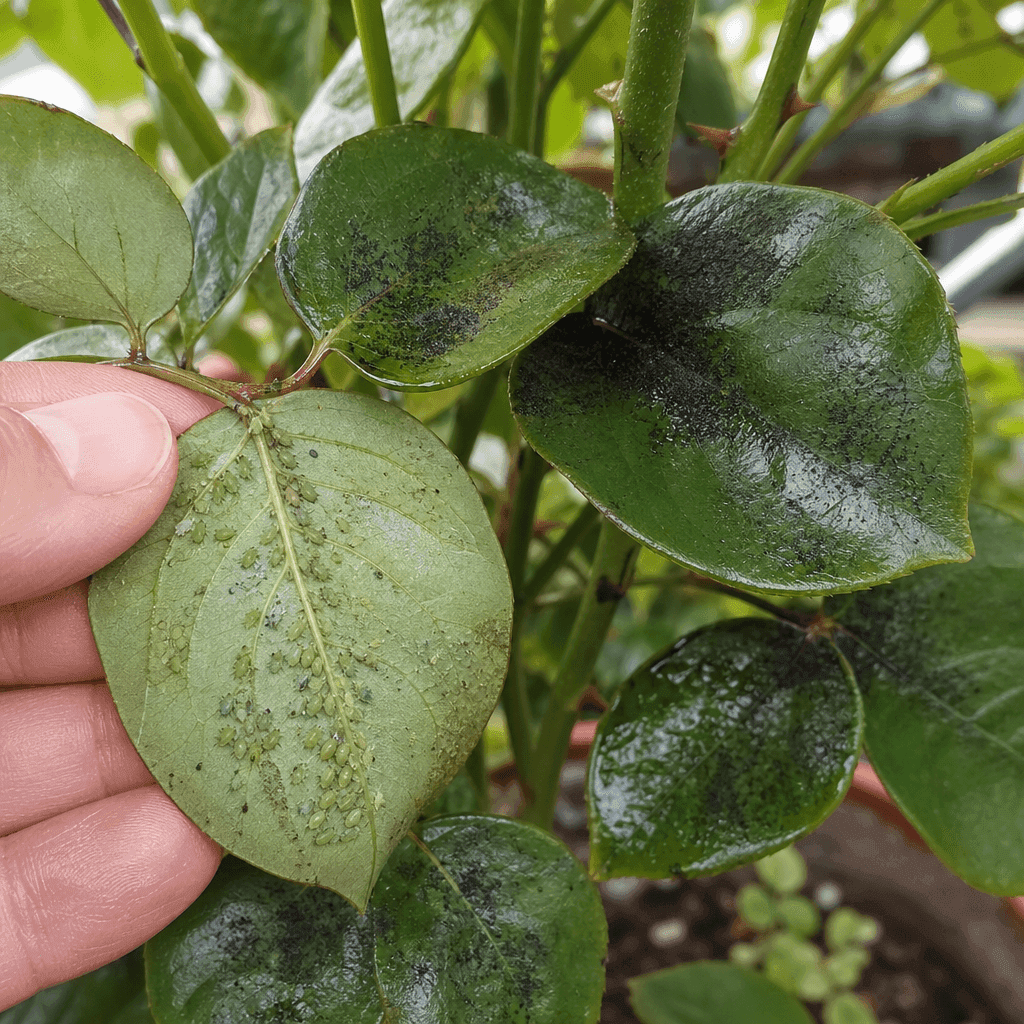
Most likelySooty mould is one of the most misunderstood plant problems: it looks like a disease but it is actually a sign of a pest. The RHS explains that sooty moulds are dark-coloured fungi that grow on the sugary honeydew produced by sap-sucking insects such as aphids, scale insects, mealybugs and whiteflies. The mould does not attack plant tissue directly, but a heavy coating reduces photosynthesis and can weaken the plant. The insects that produce the honeydew are usually found on the stems or leaf undersides above the black coating.
- Look for sap-sucking insects on stems and leaf undersides above the sooty patches.
- The surface feels sticky before mould develops — this is the honeydew itself.
- The black coating sits on the leaf surface and may be wiped off (unlike blight or leaf spot which are inside the tissue).
- Scale insects appear as flat waxy brown or white blobs; aphids are soft-bodied green, black or grey clusters.
- Identify and control the insect source — the mould cannot persist without fresh honeydew.
- For aphids and soft-bodied insects, blast affected shoots with water or use an insecticidal soap approved for UK use.
- For scale insects, scrape off physically and treat with a licensed plant oil or fatty acid product in summer.
- Wipe affected leaves and stems with a damp cloth wrung out in clean water to remove the sooty coating.
- Encourage natural predators (ladybirds, lacewings, parasitic wasps) by avoiding broad-spectrum insecticides.
- Once the pest is under control, new growth should emerge clean.
Stop it coming back:Check plants regularly under leaves and around growing tips in spring and early summer, when aphid populations build fastest. Sooty mould on outdoor trees often originates from aphids in the canopy above.
try to wash off sooty mould without addressing the pest — it will return within weeks on fresh honeydew.
Powdery mildew
Most likelyPowdery mildews are a large group of related fungi, each species attacking a specific range of host plants. The RHS notes they are among the most common and widespread plant diseases in UK gardens, affecting apples, roses, courgettes, peas, cucumbers, gooseberries, grapes and many ornamentals. The classic symptom is a white or grey powdery or dusty coating on the upper surfaces of leaves, sometimes extending to stems and flowers. The coating is made up of fungal threads and spores and can be rubbed off cleanly. Heavily infected young leaves may be curled or distorted. Powdery mildew is favoured by warm days, cool nights and dry roots — a very common UK summer condition.
- White or grey powder rubs off the leaf surface cleanly with a finger.
- Affects the upper leaf surface primarily, though some species also affect undersides.
- Young, soft new growth is often most severely affected.
- The plant's roots have been allowed to dry out before the outbreak — dry roots combined with humid air are the classic trigger.
- Check the plant species: most powdery mildews are host-specific, so a mildew on a courgette will not spread to a rose.
- Remove severely affected leaves and flower buds at once, binning rather than composting them.
- Water the roots consistently — keeping roots moist removes one of the main stress triggers.
- Improve airflow by thinning congested growth or spacing plants more widely.
- For edible crops, a spray of diluted potassium bicarbonate (if available) or a proprietary mildew spray approved for UK home use may slow spread.
- Avoid overhead watering, which splashes spores to new leaves.
- After a bad outbreak, choose mildew-resistant cultivars when replanting.
Stop it coming back:Established mildew on a leaf will not clear fully, but new growth on a well-watered, well-ventilated plant is usually clean. Plants in sheltered, warm spots and those under stress are highest risk.
assume powdery mildew on one plant species will spread to completely unrelated plants — each species of mildew has a narrow host range.
Grey mould (Botrytis cinerea)
Most likelyGrey mould (Botrytis cinerea) is an opportunistic fungal disease that rarely attacks healthy plant tissue but colonises dead, damaged or dying material very rapidly. In UK gardens it is most common in cool, wet or humid conditions — particularly in unheated greenhouses in autumn and spring, or on outdoor bedding after prolonged rain. The RHS identifies it as one of the UK's most widespread plant diseases. It produces a dense, fluffy grey-brown mass of spores on infected tissue, and in still, humid air those spores can drift onto nearby healthy plants and cause secondary lesions, especially on flowers.
- A fluffy grey or buff-brown mould (not a flat powder) is visible on stems, leaves or flowers.
- Affected tissue is soft, brown and collapsing — not hard and dry as in powdery mildew.
- Grey spore masses appear, especially if you disturb the affected area.
- Recent wet weather, high humidity or a period in a poorly ventilated greenhouse preceded the outbreak.
- Dead flowers, damaged stems or overcrowded foliage are common starting points.
- Remove all dead flowers, damaged stems and dying leaves promptly — do not leave debris in the bed or pot.
- Cut affected tissue back to clean, firm, healthy plant material using clean, sharp tools.
- Improve ventilation immediately — open greenhouse vents, space plants wider, remove overcrowded stems.
- Avoid wetting foliage with overhead watering, especially in the afternoon.
- In greenhouses, heat briefly in the morning to reduce overnight humidity.
- Bin or burn removed material; do not compost it as spores survive composting.
Stop it coming back:Grey mould spreads fastest in still, humid air and on plants weakened by stress. Good airflow is the single most effective preventive measure.
leave dead flowers and damaged leaves on plants in autumn and winter — they become ideal entry points for Botrytis in the damp UK climate.
Downy mildew
PossibleDowny mildews are caused by a different group of organisms from powdery mildews (they are oomycetes, related to Phytophthora, rather than true fungi). The RHS distinguishes them clearly: downy mildew causes pale yellow or brown patches on the upper leaf surface and a grey, purple or white fuzzy growth on the underside. They thrive in cool, wet, humid conditions — the opposite of powdery mildew, which prefers warm dry air. Common UK hosts include onions, lettuce, brassicas, impatiens, roses, pansies and spinach.
- Yellow or pale brown patches appear on the upper leaf surface.
- The underside of the same patches shows a grey, purple or whitish furry or mealy growth.
- Cool, wet weather or high greenhouse humidity preceded the outbreak.
- Check the plant species — downy mildew is specific to its host plant group.
- Remove and bin all affected leaves promptly.
- Improve airflow and reduce humidity by ventilating greenhouses and spacing plants more widely.
- Avoid overhead watering and wetting foliage.
- Rotate vegetable crops so that host plants do not return to the same soil for at least two to three years.
- Choose resistant cultivars where available — particularly for lettuce, onion and brassica crops.
confuse downy mildew with powdery mildew — they have opposite environmental triggers and different management strategies.
Black spot and other fungal leaf spots
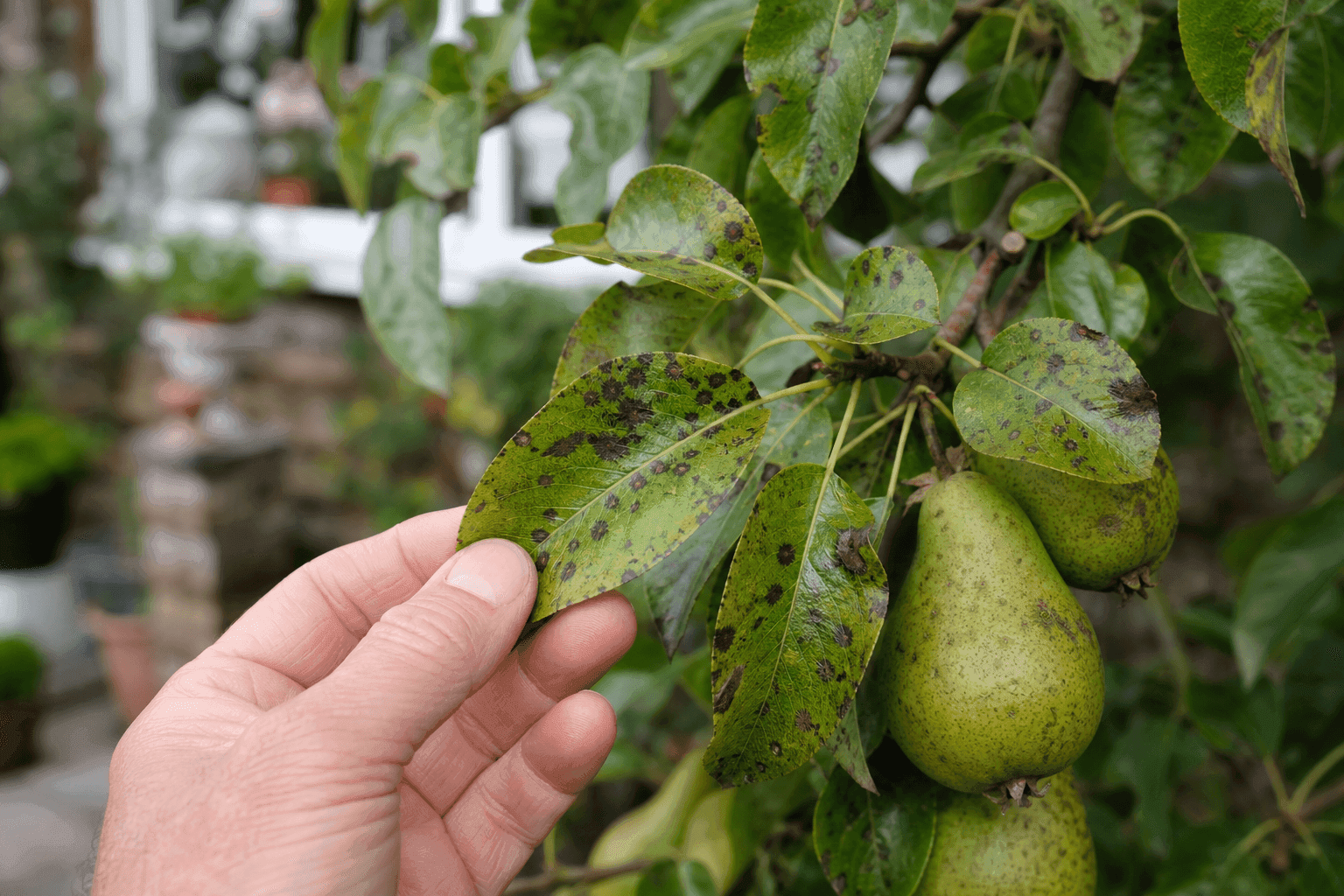
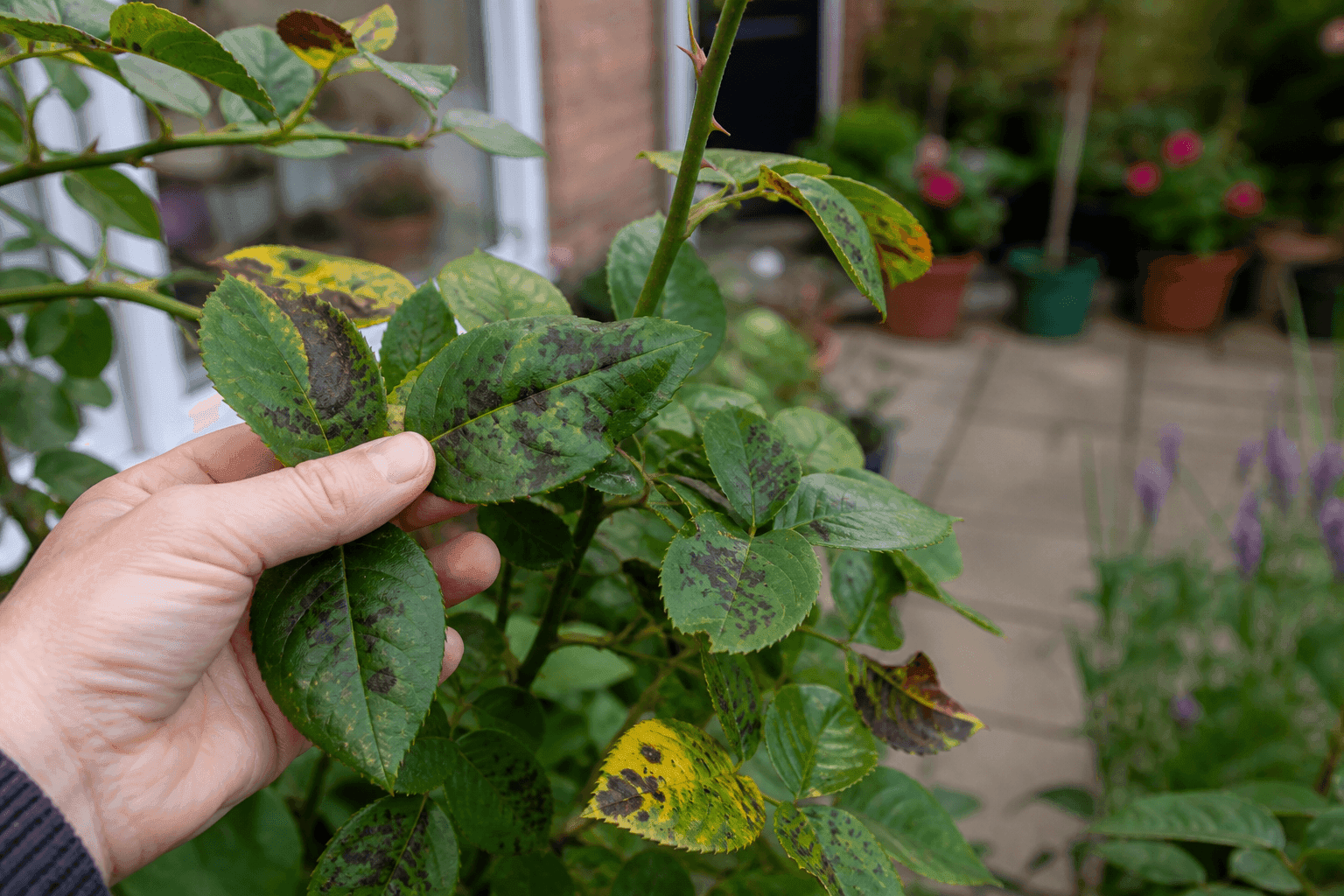
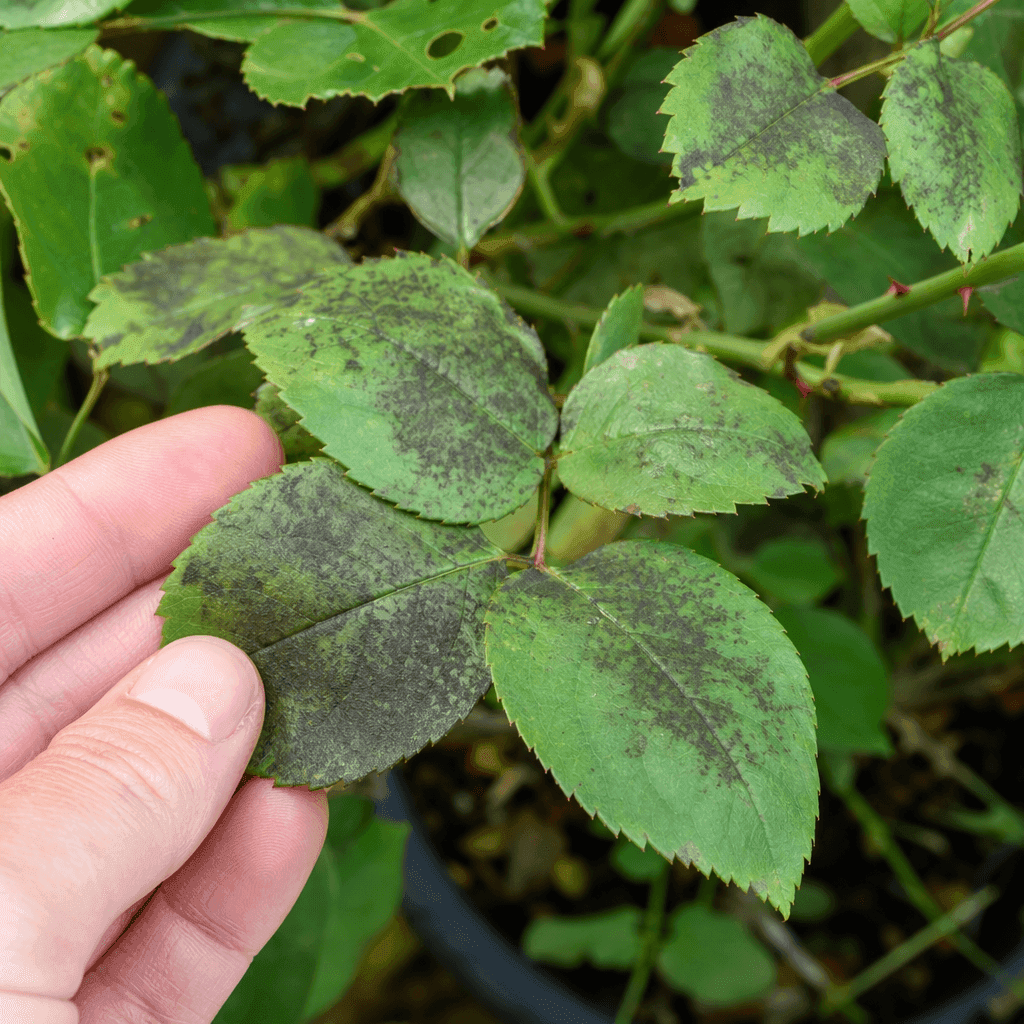
PossibleBlack spot (Diplocarpon rosae) is the most familiar fungal leaf spot in UK gardens and specifically affects roses, causing circular black blotches on rose leaves with feathery or fringed edges on the upper leaf surface, followed by yellowing and leaf drop. Other plants have their own species of leaf spot fungi, which may produce black, brown or dark purple spots with or without yellow halos. Most leaf spot diseases spread by rain splash in wet weather and overwinter in fallen leaf debris.
- On roses: circular black spots with irregular or fringed edges on upper leaf surfaces, usually starting on lower leaves.
- Affected leaves turn yellow around the spots and then drop.
- Outbreak followed wet or overcast humid weather in late spring or summer.
- Fallen leaves at the plant base often carry the same markings.
- Collect and bin all fallen leaves — do not compost them as the fungus overwinters in debris.
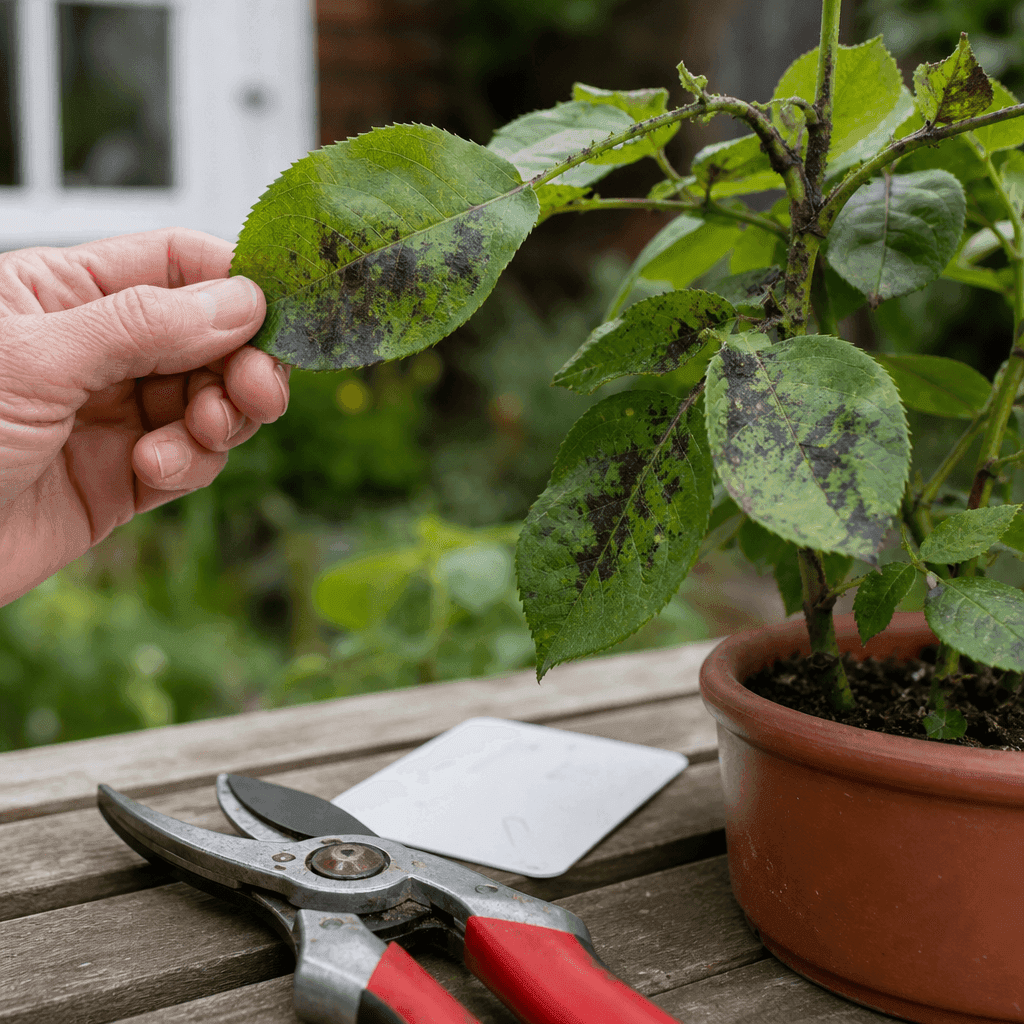
- Remove badly spotted leaves from the plant cleanly.
- Improve airflow around the plant and avoid overhead watering.
- For roses, apply a fungicide approved for black spot control in the UK, starting as new leaves emerge in spring.
- In subsequent years, mulch the soil beneath roses in early spring to cover overwintering spores.
- Switch to more resistant rose varieties when replacing plants.
expect spotted leaves to regain their colour — remove them and look for improvement in new healthy growth instead.
Still not sure?
Work down these branches — the first one that matches is your answer.
What not to do
- Try to wash off sooty mould without finding and treating the insect that is producing the honeydew.
- Assume powdery mildew will spread to every other plant in the garden — each species is largely host-specific.
- Leave dead flowers, damaged stems or fallen spotted leaves in the bed — they harbour spores for next season.
- Spray a fungicide as the first response without confirming which disease is actually present.
- Ignore a black mould on an edible crop without checking for scale insects or aphids on the stems above.
Common questions
What is the black powder on my plant leaves?
The most common cause is sooty mould — a dark fungus growing on sticky honeydew left by aphids, scale insects, mealybugs or whiteflies. It sits on the leaf surface and is not directly attacking the plant. Look for insects on stems and shoot tips above the affected area and tackle the pest first.
Is black mould on plants dangerous to humans?
Garden sooty mould and Botrytis grey mould are not the same as the 'toxic black mould' sometimes discussed in buildings. Handling affected plants is generally safe, but wash hands after handling diseased material. Do not eat badly mould-covered produce.
What is the difference between powdery mildew and downy mildew?
Powdery mildew creates a white dusty coating mostly on the upper leaf surface and is favoured by warm dry conditions. Downy mildew produces yellow patches on the upper surface with a grey or purplish furry growth on the underside, and is favoured by cool, wet conditions. They need different treatments.
How do I get rid of powdery mildew on plants UK?
Remove the worst affected leaves, water the roots consistently (dry roots are a key trigger), and improve airflow around the plant. For persistent cases on edibles or roses — see our guide to powdery mildew on roses — a UK-approved mildew fungicide applied early gives the best results. Mildew on existing leaves will not clear up, but healthy new growth should be clean.
Why does my plant have black spots but no bugs?
If there are no insects, the most likely cause is a fungal leaf spot disease such as black spot on roses, or a splash-spread fungus. Sooty mould without visible insects is possible if the pest colony has been washed away or is hidden higher up the plant. Downy mildew can also create dark patches. Check the leaf underside for clues.
Can sooty mould kill a plant?
Sooty mould alone rarely kills a plant, but a very heavy coating reduces photosynthesis and weakens it. The more serious threat is the underlying pest infestation, which can deplete the plant's sap. Tackling the insects promptly prevents both problems escalating.
How do I stop grey mould in my greenhouse?
Grey mould (Botrytis) thrives in still, humid air. Ventilate your greenhouse daily, heat briefly in cold mornings to lower humidity, space plants to allow airflow, remove dead flowers and dying leaves promptly, and avoid overhead watering in the afternoon.