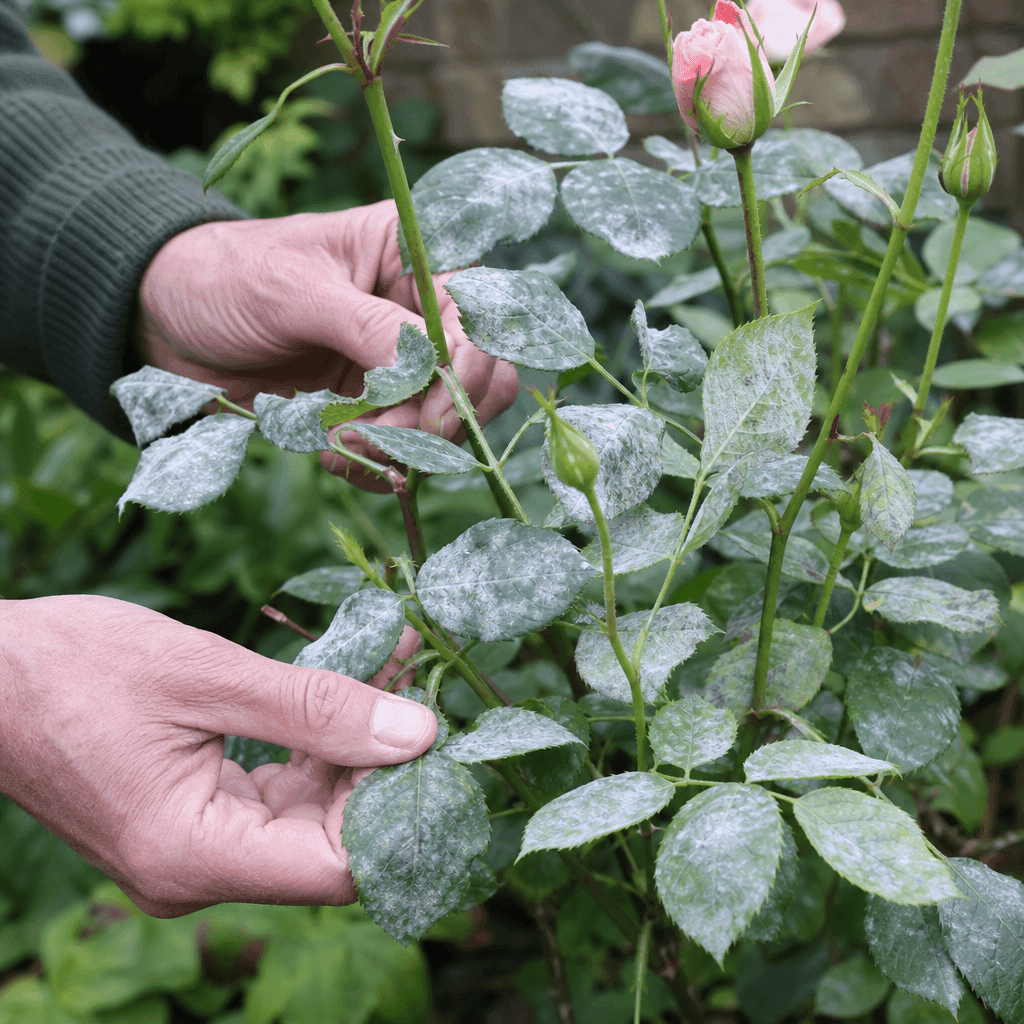
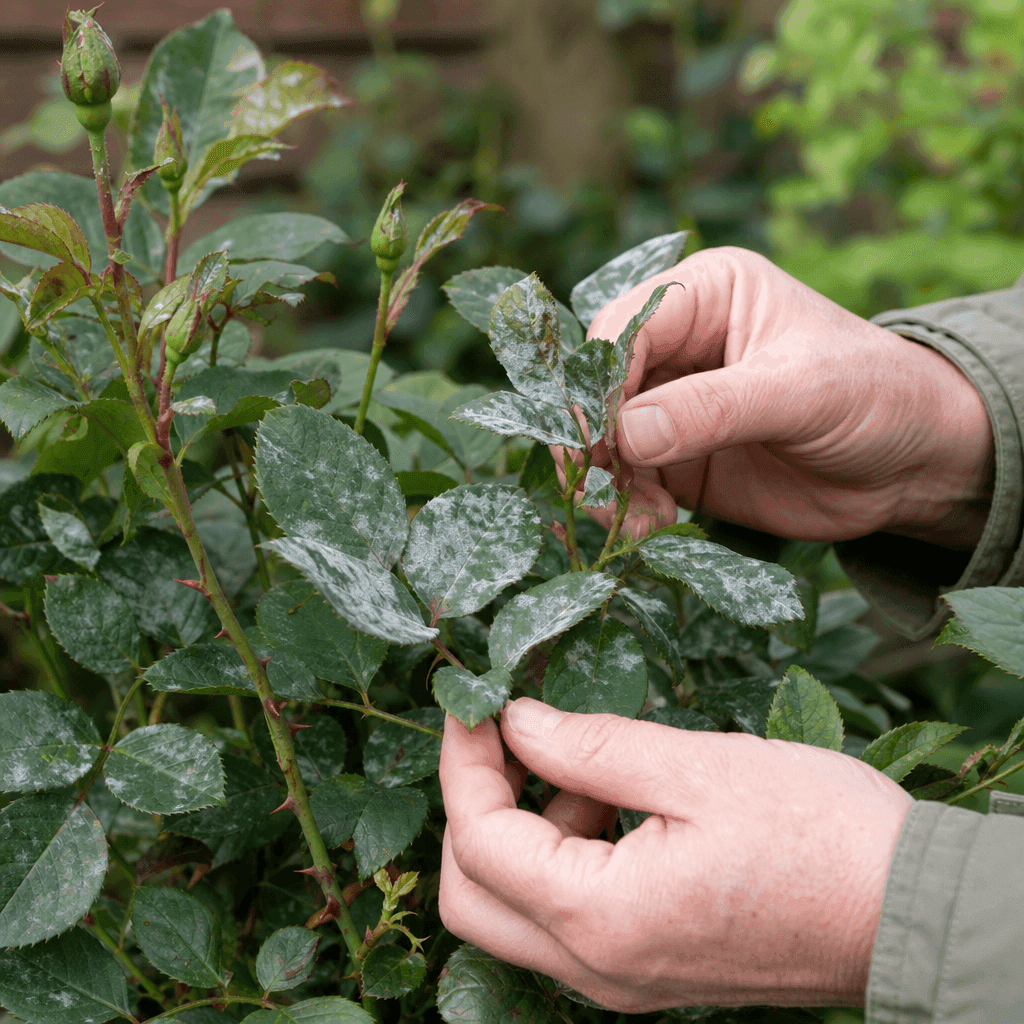
Quick diagnosis
Match the row to what you’re seeing, then jump to the fix.
| What you see | Likely cause | Confidence | How to confirm | What to do now | Urgency |
|---|---|---|---|---|---|
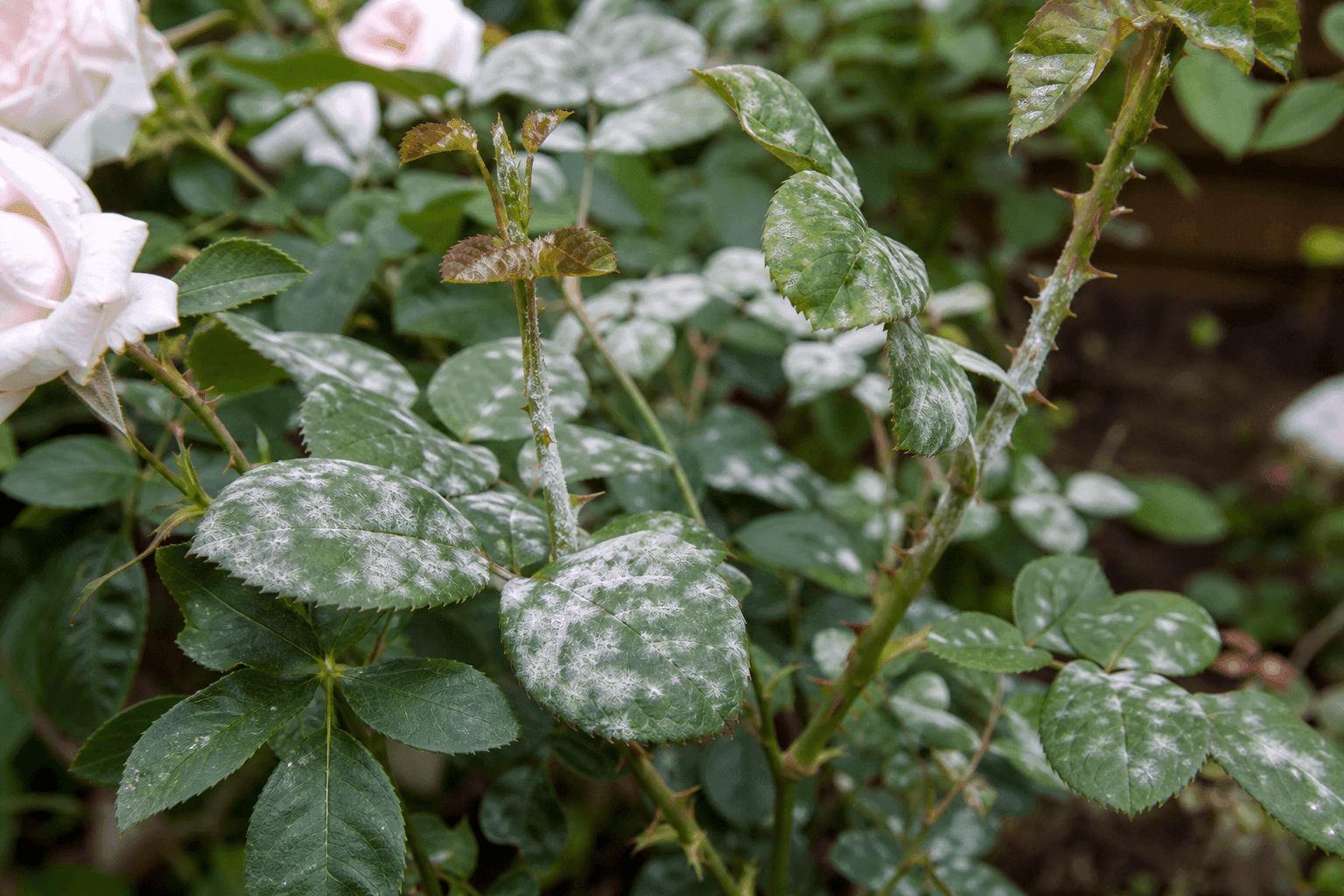
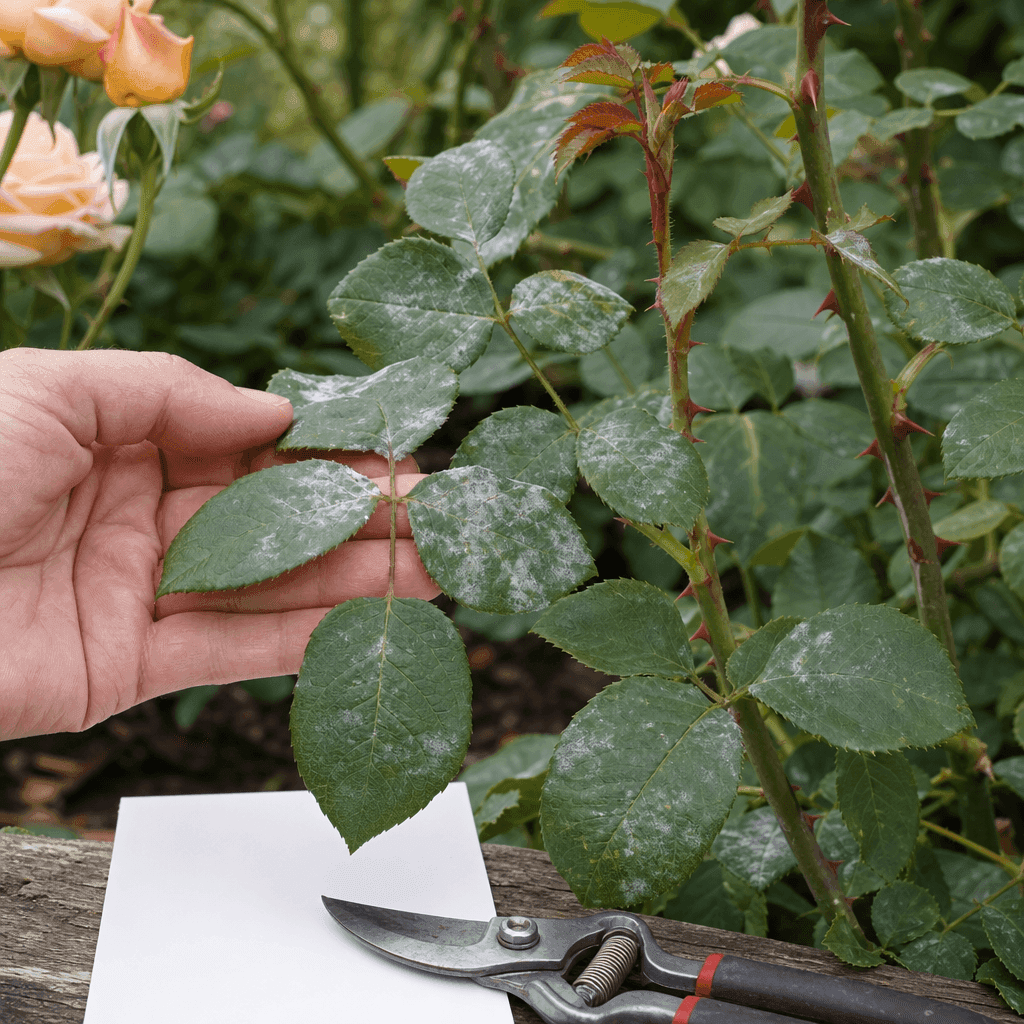
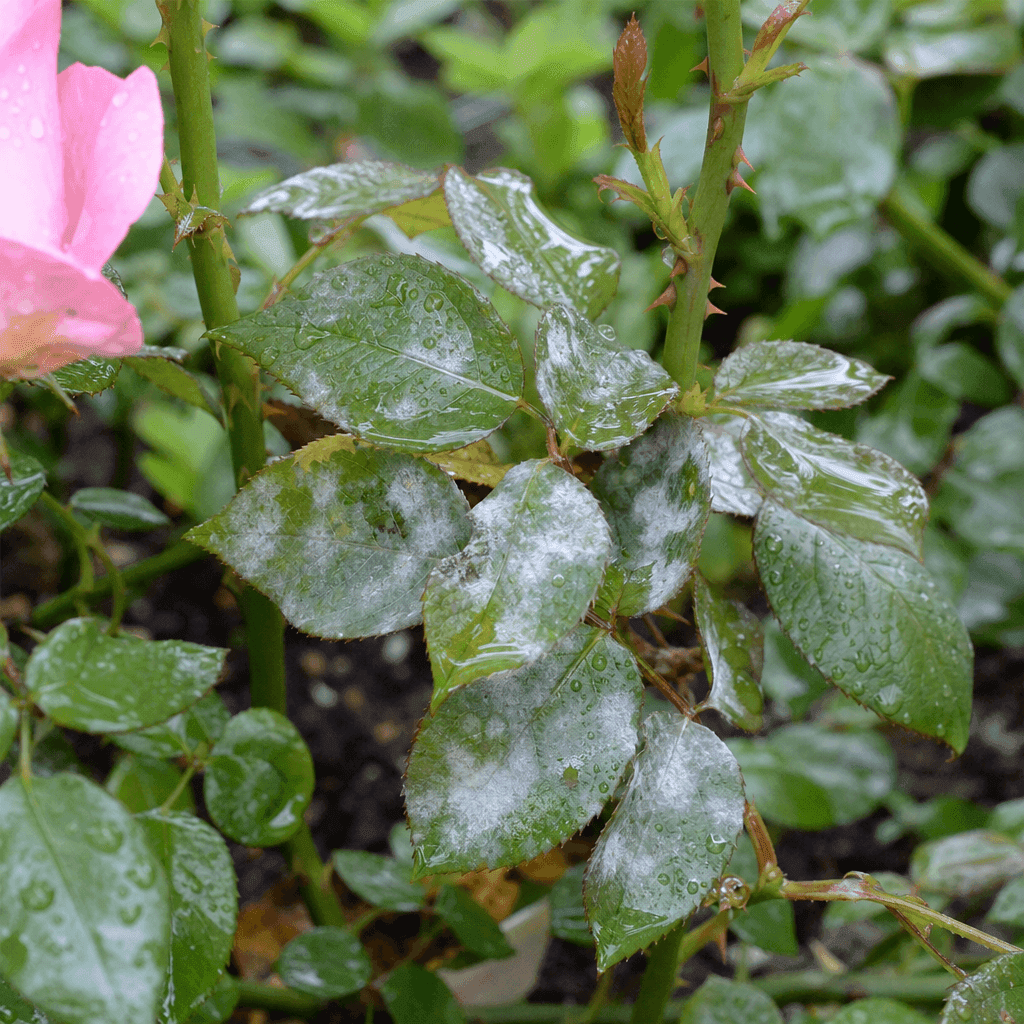
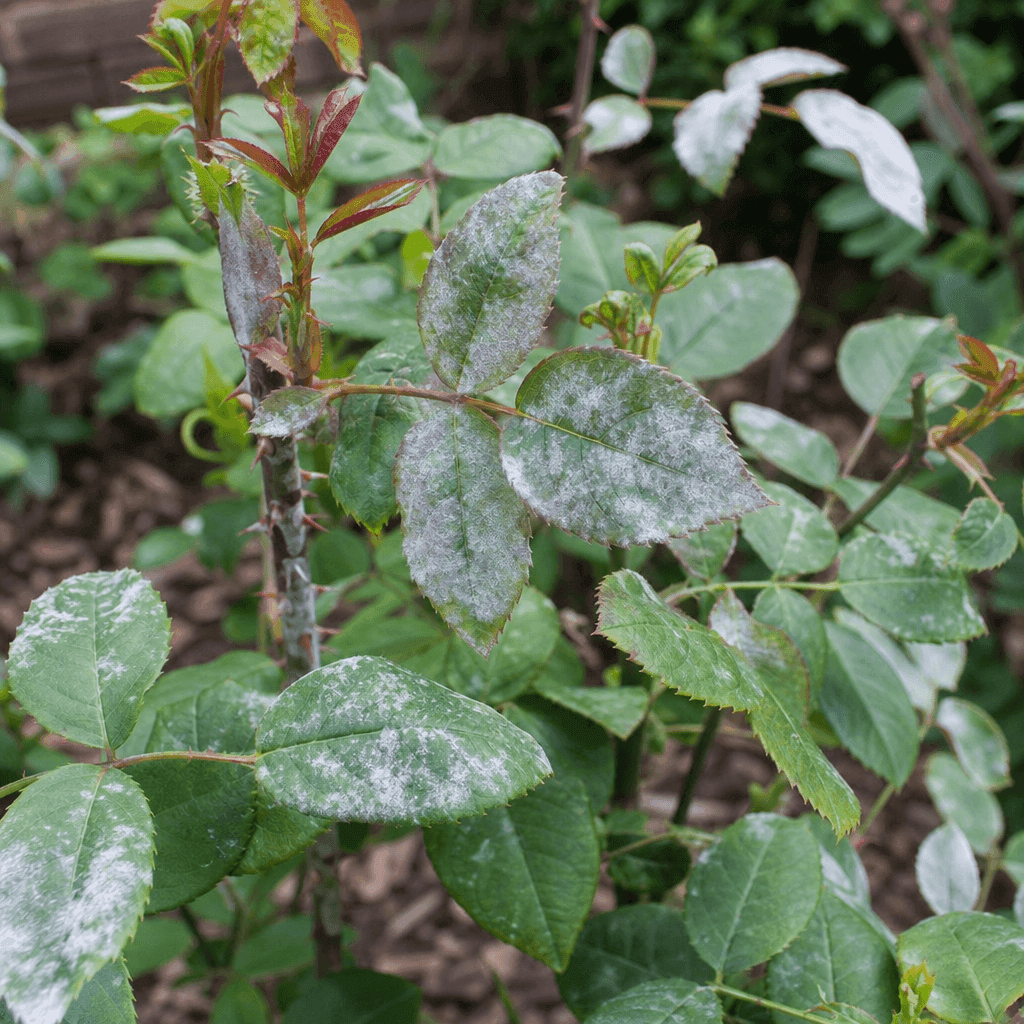
| White, powdery or floury coating on upper leaf surface and young shoots | Rose powdery mildew (Podosphaera pannosa) | High | Coating is on the upper leaf surface and young growth; it rubs off; no yellow halos. | Prune out infected shoots; keep roots moist; improve airflow around the plant. | Medium |
| Mildew worse near a wall, fence or in a dry bed; soil is dry | Dry root zone encouraging infection | High | Soil is dry at 5–8cm depth; plant is in a rain shadow (against a wall or under eaves). | Water deeply at the base; mulch with 5–8cm of organic material; check roots are moist during dry spells. | High |
| Mildew concentrated on inner crowded stems; little problem on outer growth | Poor air circulation from overcrowded growth | High | Inner branches are dense; little air movement at the centre of the plant. | Open up the centre by removing crossing, inward-growing and rubbing stems. Prune to an open goblet shape. | Medium |
| Mildew returns every year despite good care; neighbours' roses less affected | Susceptible rose variety | Medium | The variety is not listed as mildew-resistant by the RHS or a reputable rose nursery. | Consider replacing with a mildew-resistant variety; maintain scrupulous hygiene in the meantime. | Low |
| Mildew worst on very lush, soft new growth after heavy feeding | Soft growth from excess nitrogen | Medium | Heavy feeding with a high-nitrogen fertiliser; very soft, pale new growth. | Switch to a balanced rose feed low in nitrogen during summer; avoid feeding after mid-August. | Low–medium |
| Mildew appears very early in spring on new buds as they break | Overwintered infection on stems and buds | Medium | Mildew visible as buds open in April or May; the rose had mildew the previous autumn. | Prune out infected shoots in autumn; remove and bin fallen leaves; do not compost. | Low–medium |
The causes, in detail
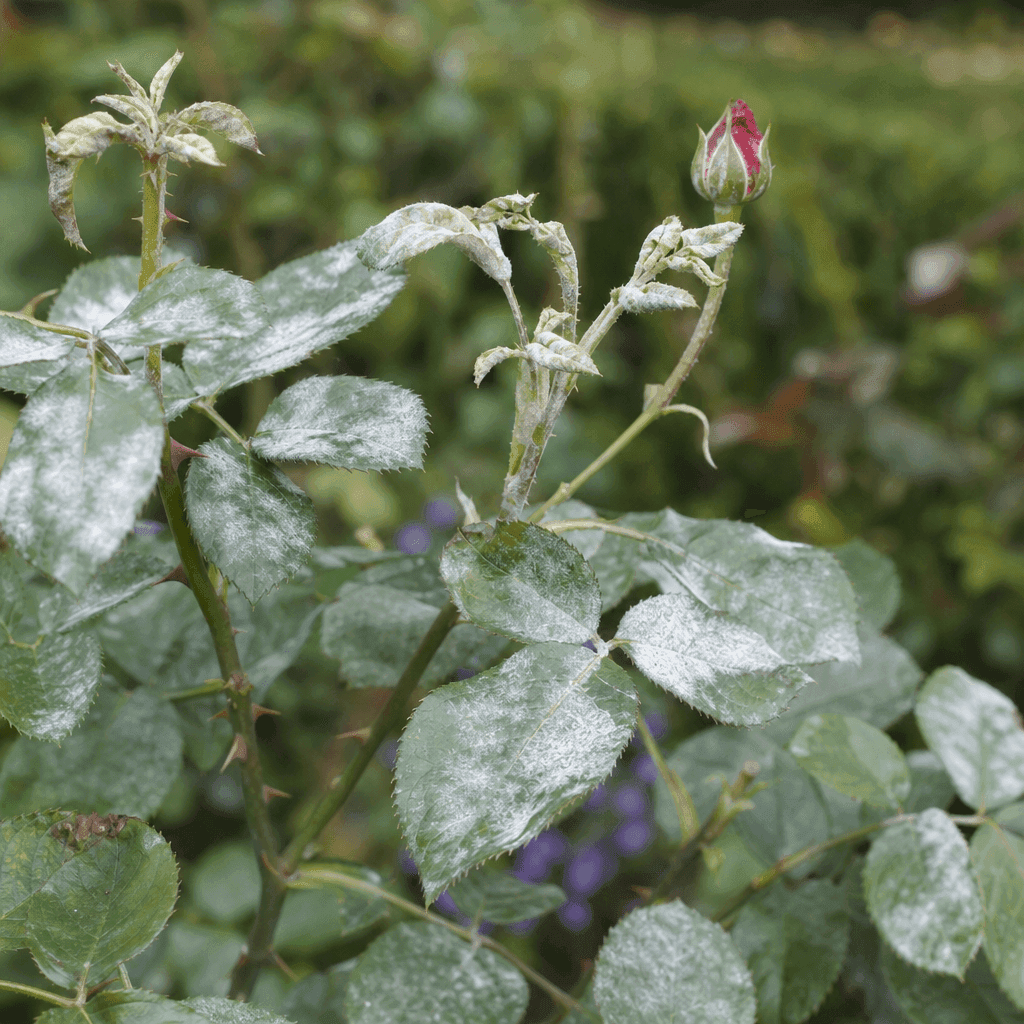
Rose powdery mildew (Podosphaera pannosa)
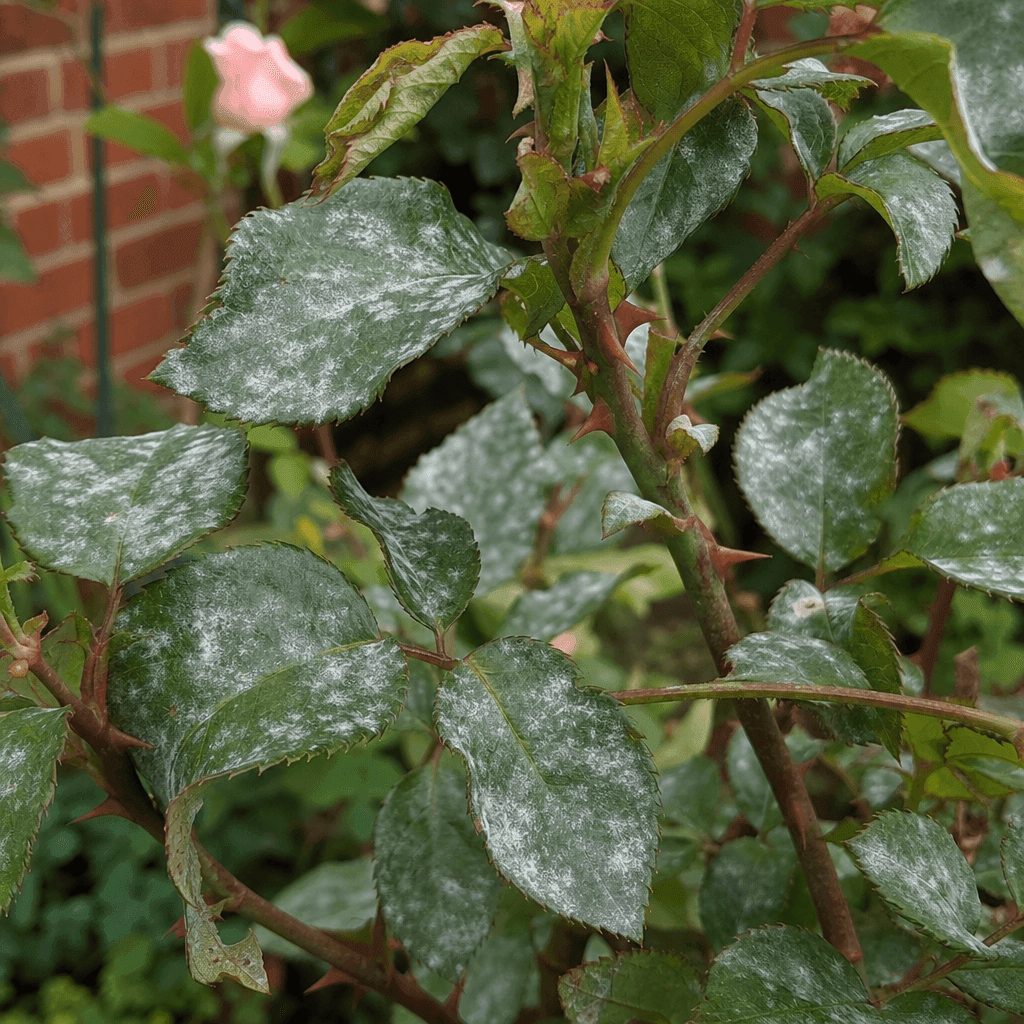
Most likelyRose powdery mildew is caused by the fungus Podosphaera pannosa, which is specific to roses and closely related plants. Unlike downy mildew and most other fungal diseases, it spreads via airborne spores that do not need wet leaf surfaces to germinate. In fact, free water inhibits spore germination — which is why powdery mildew peaks in dry, warm summers rather than wet ones. The white coating is a dense mat of fungal mycelium and spores growing on the leaf surface. Infected tissue does not recover. The RHS advises against fungicide use and recommends removing infected shoots, keeping roots moist and improving airflow.
- White, powdery or mealy coating on the upper surface of leaves, shoots and buds.
- Coating rubs off between fingers, leaving no lesion.
- Young leaves and shoot tips affected first — they may curl, distort, or show a pinkish flush before the white coating appears.
- No dark halos or water-soaked areas, which would suggest a different disease.
- Prune out badly infected shoots as soon as symptoms appear — cut back to healthy wood.
- Bin all prunings and fallen infected leaves; do not compost them.
- Do not use fungicides — the RHS does not recommend them for rose powdery mildew in gardens.
- Water at the base to keep roots consistently moist, as dry roots predispose the plant to infection.
- Mulch to reduce moisture fluctuation.
Stop it coming back:Infected leaves and stems do not recover. Focus on preventing new infections by keeping roots moist and removing infected material promptly. New healthy growth will emerge from clean pruning cuts.
compost prunings or fallen leaves from a mildewed rose — the spores will persist and re-infect next season.
Dry roots predisposing to infection
Most likelyThe single most consistent predisposing factor for rose powdery mildew in UK gardens is dry roots. The disease thrives in the exact conditions created when soil is dry at the root zone but the air around the foliage is warm and humid — a combination found commonly in UK summer: dry sunny days, warm nights, and roses planted against walls or under eaves where rainfall cannot reach the roots. Gardeners' World confirms that keeping the soil around the roots moist is the key cultural preventive. This does not mean waterlogging — just consistent moisture at 5–10cm depth.
- Soil is dry 5–8cm below the surface near the rose's root zone.
- The rose is planted against a wall, fence or under eaves that intercept rainfall.
- Mildew is worse in dry spells and improves after rain or irrigation.
- Water deeply at the base — allow a slow trickle to soak the whole root zone.
- Apply 5–8cm of organic mulch (garden compost, bark, leaf mould) kept clear of the main stem.
- In a rain shadow, manual watering is needed even during rain — check soil moisture at the base regularly.
- Water in the morning to allow foliage to dry during the day.
wet the foliage when watering — water on leaves does not cause powdery mildew but can encourage other rose diseases such as black spot.
Poor air circulation from overcrowded growth
Most likelyRoses with dense, overlapping growth create a still, humid microclimate at the centre of the plant that encourages powdery mildew spores to settle and germinate. Annual and seasonal pruning that opens up the centre of the plant to light and airflow is one of the best long-term controls. The traditional goblet or open-vase pruning shape for hybrid teas and floribundas was developed partly for this reason: it lets light and air into the heart of the plant.
- Mildew is concentrated on inner crowded stems rather than outer growth.
- Little air movement is felt at the centre of the plant.
- The plant has not been pruned to open it up in recent seasons.
- Remove crossing, rubbing, and inward-pointing stems.
- Aim for an open, airy centre — the classic goblet shape for bush roses.
- Remove any stems thinner than a pencil, as they are unlikely to support good growth.
- Do not crowd roses at planting — follow RHS spacing guidelines for the variety.
prune in autumn in frost-prone areas — main structural pruning of hybrid teas and floribundas is best done in spring, with light thinning in summer.
Susceptible rose variety
PossibleNot all varieties of rose are equally susceptible to powdery mildew. Some older varieties — particularly some hybrid teas and certain climbers — are notoriously vulnerable. Many modern bred roses and English Roses (David Austin) have been selected for significantly improved disease resistance. The RHS advises choosing mildew-resistant varieties when replanting. Reputable rose nurseries rate varieties for disease resistance and this information is included in RHS Plant Finder listings.
- The variety is not rated as mildew-resistant by the RHS or the nursery from which it was purchased.
- The rose gets mildew reliably each year despite good cultural care.
- Neighbours' roses of different varieties are less affected.
- Maintain good cultural controls (moist roots, airflow, hygiene) to reduce severity.
- Consider replacing with a mildew-resistant variety when the rose reaches the end of its productive life.
- Check the RHS Plant Finder or contact the Royal National Rose Society for variety resistance ratings.
assume an old favourite variety will perform well without extra care if it has a history of mildew — susceptible varieties need more consistent management.
Soft growth from excess nitrogen feeding
PossibleRoses fed heavily with high-nitrogen fertilisers produce soft, lush growth that is more vulnerable to powdery mildew because the cell walls of the new tissue are less robust. The RHS recommends using balanced rose feeds and avoiding feeding after mid-August in the UK, as late-season feeding encourages soft growth that cannot harden before winter and is highly susceptible to both mildew and frost damage.
- The rose has been fed with a high-nitrogen fertiliser such as a lawn feed or a grow-phase plant food.
- New growth is particularly soft, pale and lush.
- Mildew appears primarily on the new growth immediately after a flush of feeding.
- Switch to a balanced proprietary rose food, applied according to the label.
- Do not feed roses after mid-August in the UK.
- If using a granular feed, water it in well so it reaches the roots without burning the surface.
apply lawn fertiliser or any high-nitrogen feed to a rose during summer — it promotes the soft growth most vulnerable to mildew.
Overwintered infection on stems and buds
PossiblePowdery mildew overwinters as mycelium in infected bark, dormant buds and shoot tissue. In spring, as new growth breaks, those sites release fresh spores onto the developing foliage. This is why roses with a history of mildew tend to get it earlier each season and why autumn hygiene — removing and binning infected prunings and fallen leaves rather than composting them — is an important part of the management cycle. Raking up fallen leaves and disposing of them reduces the inoculum available to infect next year's growth.
- Mildew visible very early in spring as buds break.
- The same rose had mildew the previous year.
- Infected buds or shoot bases visible in late winter before leaf break.
- In autumn, prune out infected shoots after the last flush of flowers.
- Rake up and bin all fallen leaves from beneath the rose.
- Do not compost infected material.
- In spring, prune back to healthy wood before new growth fully opens.
leave infected prunings on the ground around the rose — they are a direct source of spring re-infection.
Still not sure?
Work down these branches — the first one that matches is your answer.
What not to do
- Use fungicide sprays — the RHS does not recommend them for rose powdery mildew; cultural controls are more effective and less harmful to garden ecology.
- Compost infected prunings or fallen leaves — this recycles spores back into the garden.
- Feed with high-nitrogen fertilisers after midsummer — this promotes the soft growth most vulnerable to mildew.
- Water overhead — keep water at the root zone, not on the foliage.
- Ignore dry soil under roses against walls — the root zone there rarely receives adequate rainfall.
Common questions
What causes powdery mildew on roses?
Rose powdery mildew is caused by the fungus Podosphaera pannosa. Unlike most fungal diseases, it thrives in warm, dry conditions — especially when the roots are dry but the air is humid. It does not need wet leaves to spread, which is why it is often worst in summer and near walls or fences that keep rain away from the roots.
Should I use fungicide on rose powdery mildew?
The RHS does not recommend fungicides for rose powdery mildew in UK gardens. Cultural controls — pruning out infected shoots, keeping roots moist, improving airflow, and removing fallen leaves — give better long-term results without harming beneficial garden insects.
How do I get rid of powdery mildew on roses?
Prune out infected shoots back to healthy wood and bin all prunings and fallen leaves. Keep the root zone consistently moist — dry roots are the main predisposing factor. Improve airflow by removing crowded inner growth. Avoid high-nitrogen feeds that promote soft, vulnerable new growth.
Why does my rose get powdery mildew every year?
Powdery mildew overwinters on infected stems and buds, releasing spores onto new growth in spring. If the rose is a susceptible variety, the cycle will repeat unless you improve hygiene (removing infected material in autumn), keep roots moist, and consider replacing the rose with a resistant variety.
What are the most mildew-resistant roses for UK gardens?
Many modern varieties have been bred for improved disease resistance. David Austin English Roses such as Olivia Rose, Gentle Hermione and Darcey Bussell have good resistance ratings. Check the RHS Plant Finder for specific resistance ratings or ask at a specialist rose nursery.
Does rose powdery mildew spread to other plants?
Rose powdery mildew (Podosphaera pannosa) is specific to roses and close relatives. It will not spread to other garden plants. However, other powdery mildew species affect different plants, and conditions that favour rose mildew (dry roots, warm humid air) may simultaneously favour mildew on other susceptible plants nearby. If your rose is showing several symptoms at once, our guide to diagnosing common rose problems can help you separate mildew from other issues.
Can I prevent rose powdery mildew by watering correctly?
Yes — keeping the root zone consistently moist is the most important cultural prevention. Water deeply and infrequently rather than lightly and often. Apply a thick mulch (5–8cm) of organic material to retain moisture. Roses against walls or fences need manual watering even during rainy periods because the structure intercepts rainfall.
When should I prune out mildewed rose shoots?
Remove infected shoots as soon as you see them throughout the season. Do a thorough clearance in autumn after the last flush of flowers, removing all infected material. Do not compost prunings or fallen leaves — bin them. In spring, prune back to healthy wood before growth opens fully.