Quick diagnosis
Match the row to what you’re seeing, then jump to the fix.
| What you see | Likely cause | Confidence | How to confirm | What to do now | Urgency |
|---|---|---|---|---|---|
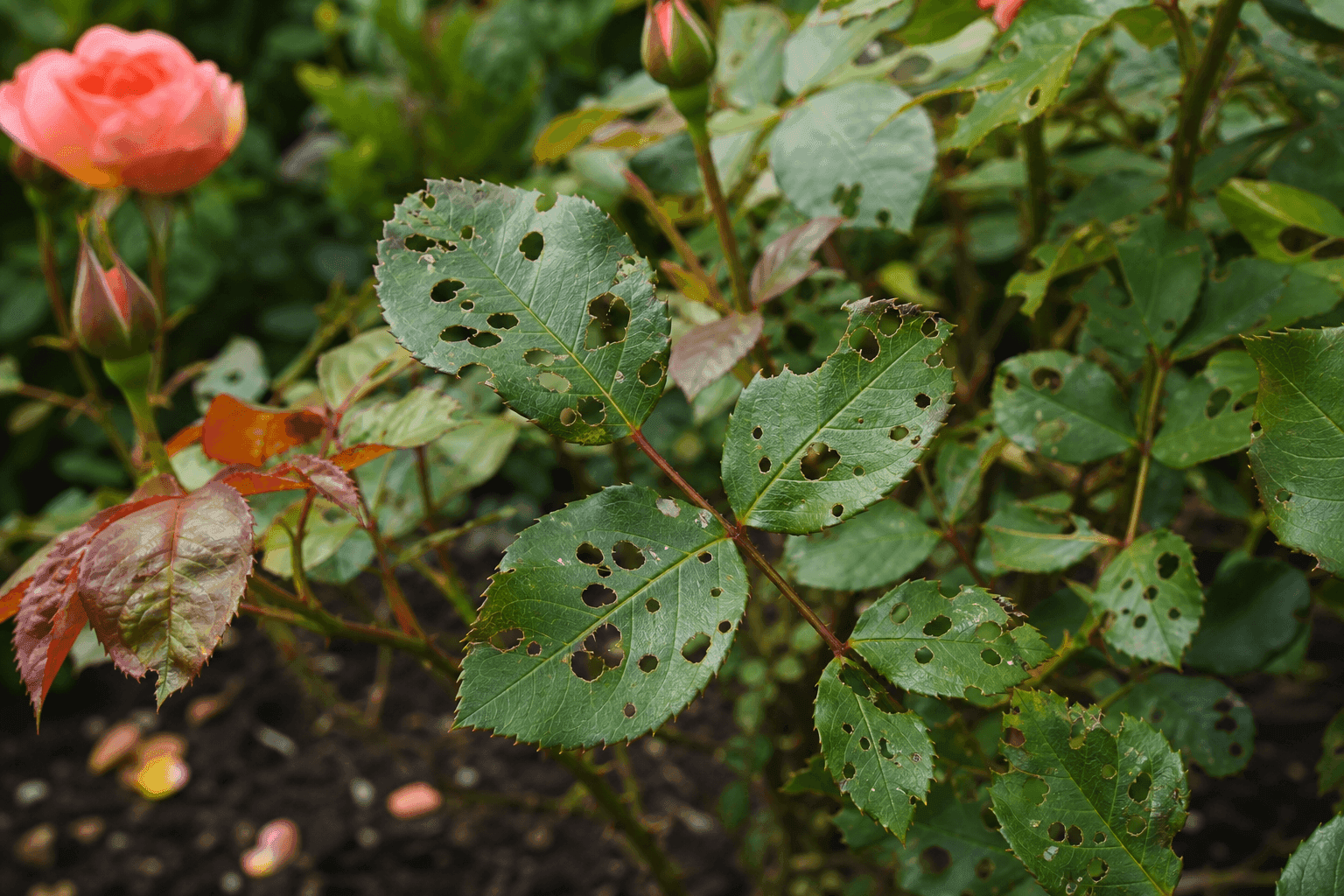
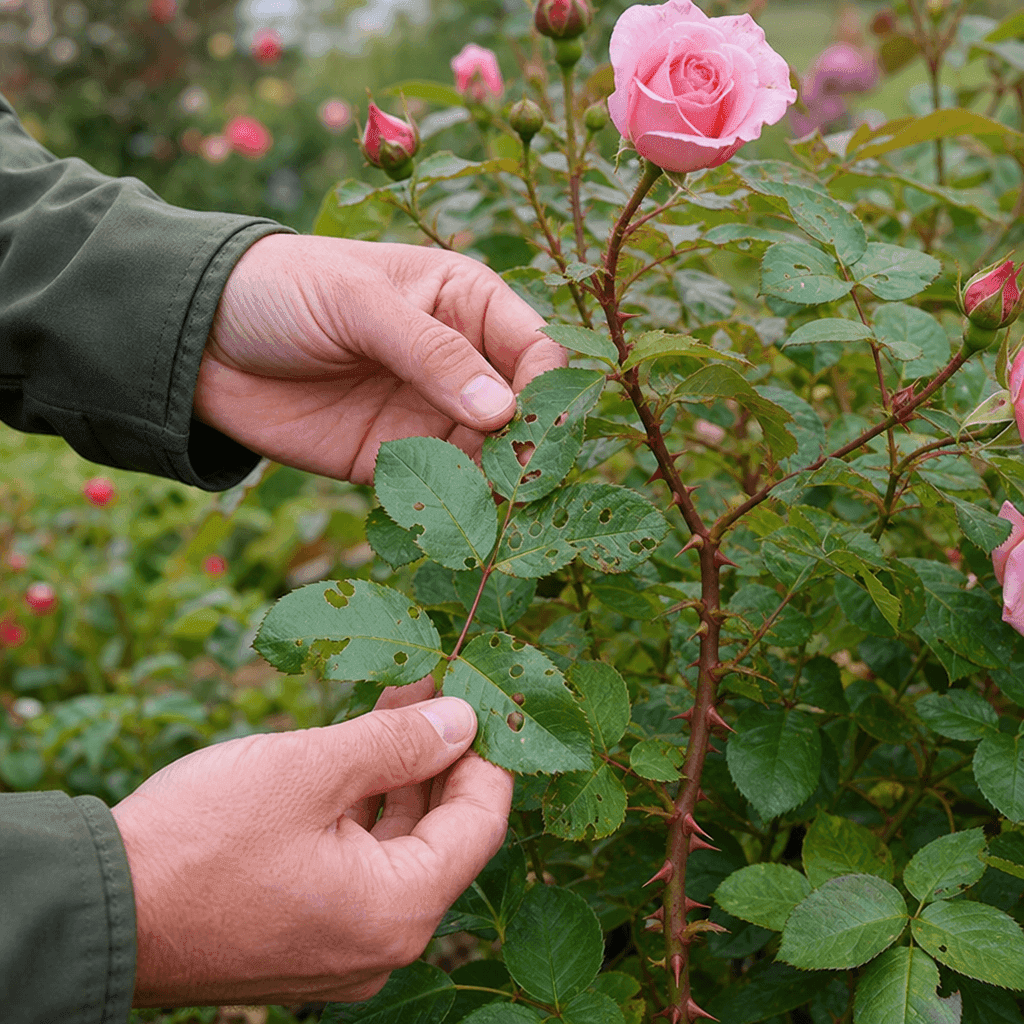
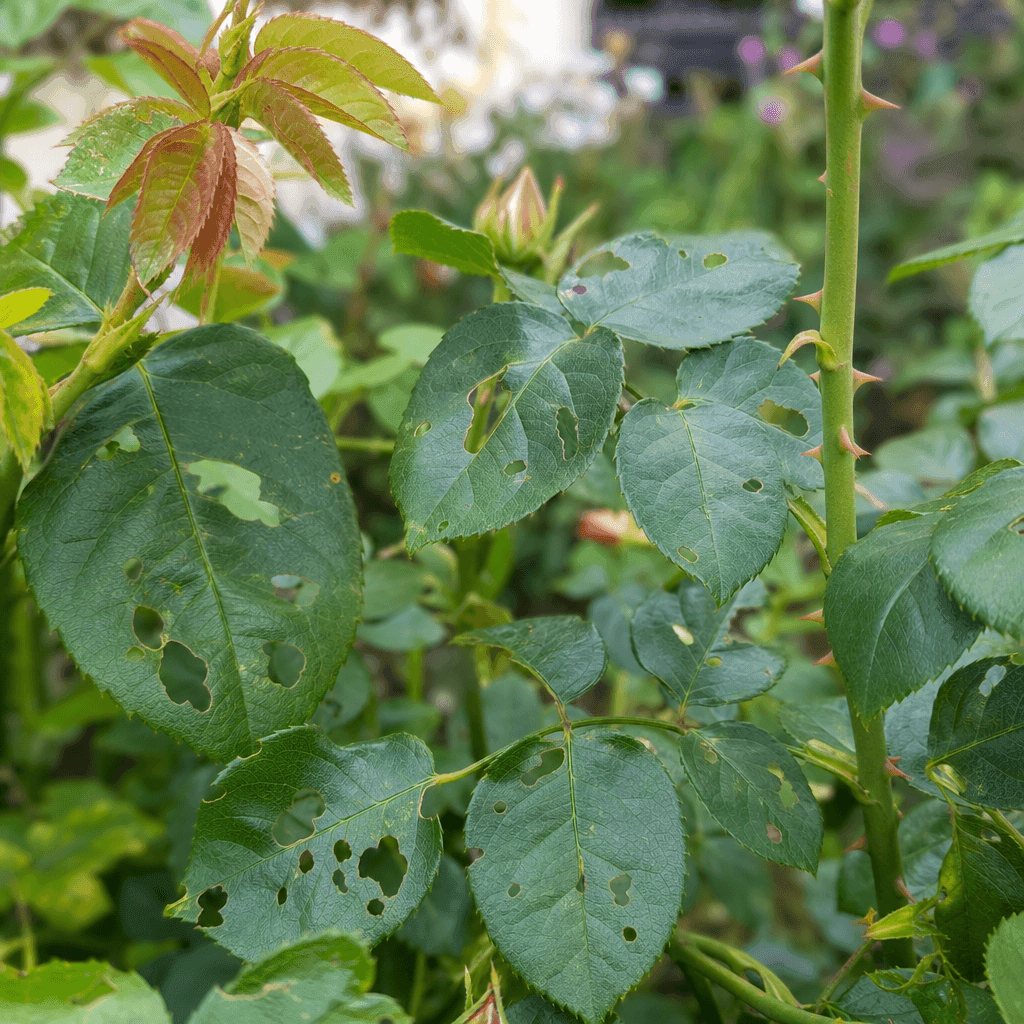
| Neat, clean-edged semicircular pieces removed from leaf margins | Leaf-cutter bee | High | Cuts are precise, semicircular and uniform in size. No insects present on the plant. | No action needed — leaf-cutter bees are valuable native pollinators and damage is cosmetic. | Low |
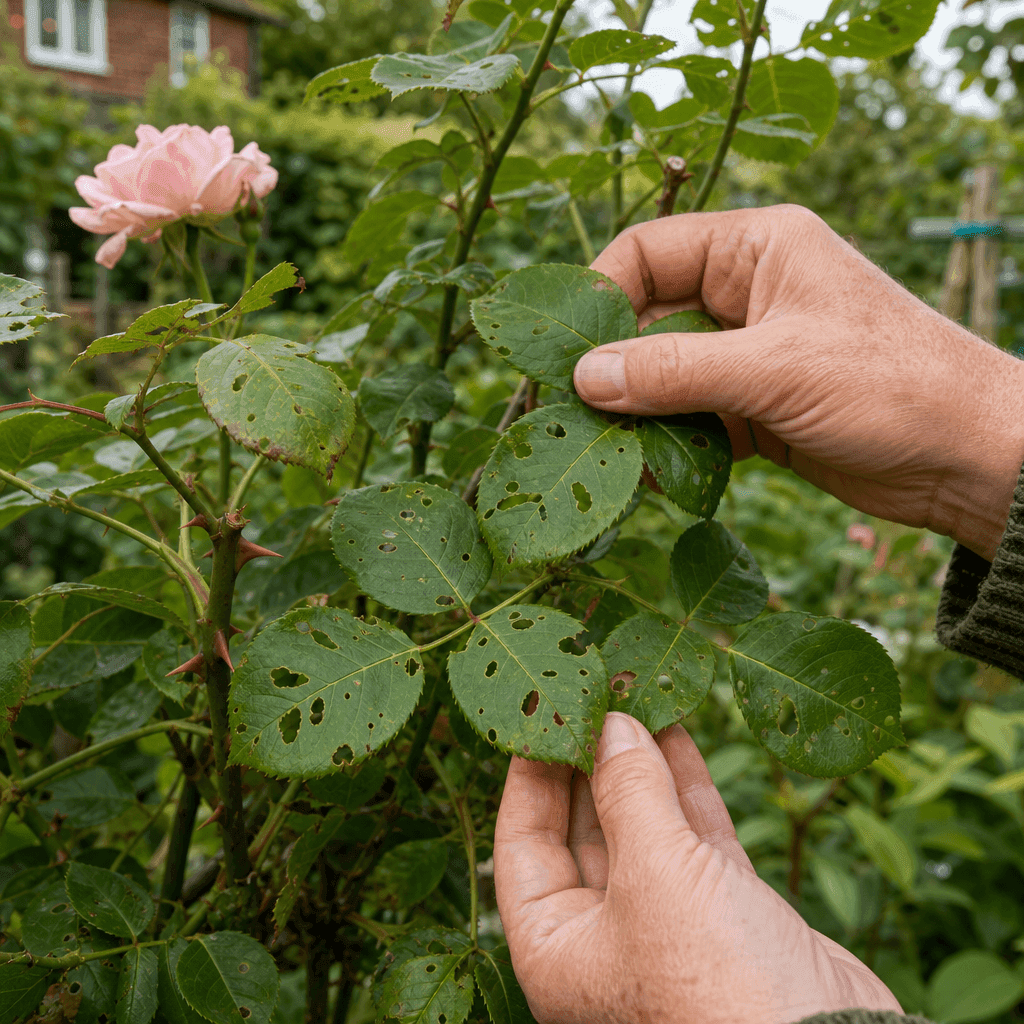
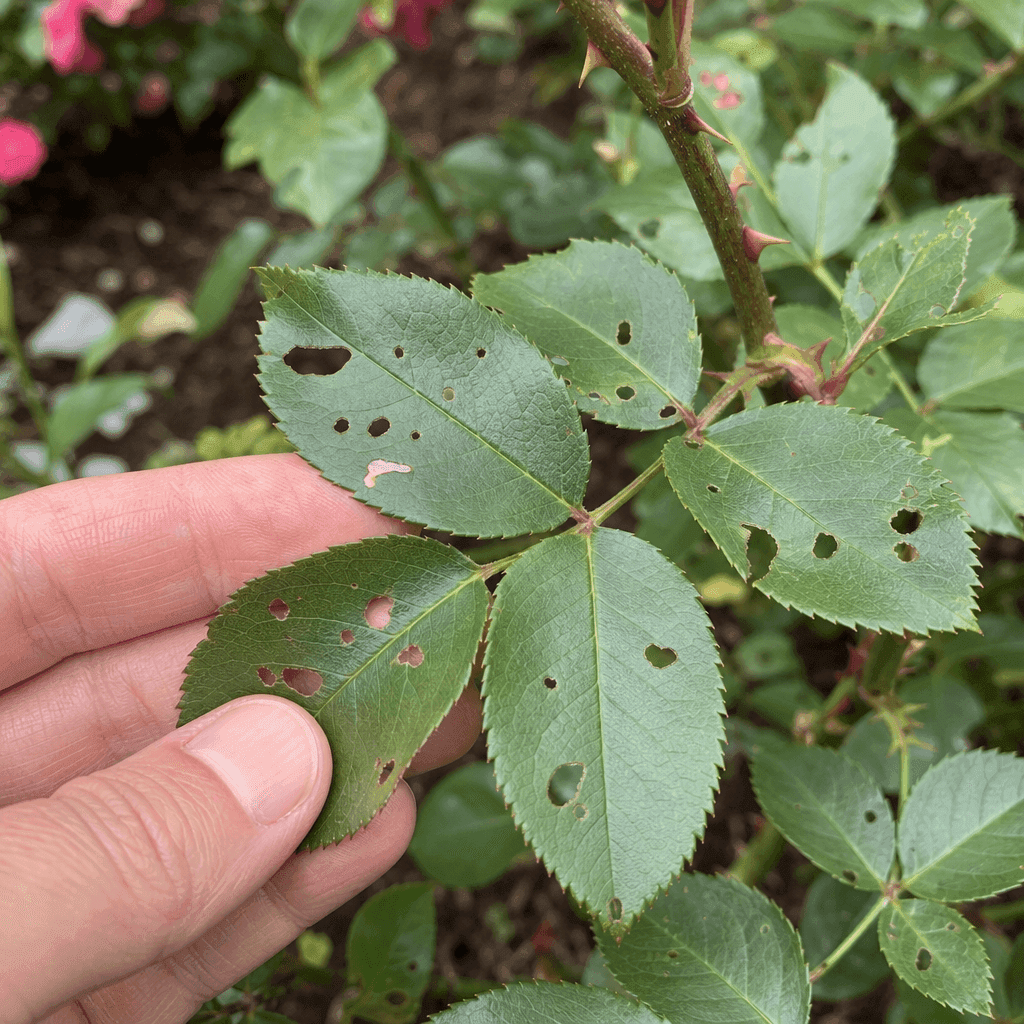
| White or pale dried patches on the leaf surface; leaf tissue skeletonised from one side | Rose slugworm (rose sawfly larva) | High | Pale, papery, window-like patches where surface was grazed away; small green or orange-headed larvae on leaf undersides. | Pick off larvae by hand; squash or drop in soapy water; check weekly. | Medium |
| Groups of pale green larvae; leaves eaten from the edges; rapid defoliation | Large rose sawfly larvae | High | Multiple caterpillar-like larvae feeding together; can strip a shoot within days. | Remove larvae by hand; wash off with water jet; check daily while infestation persists. | Medium |
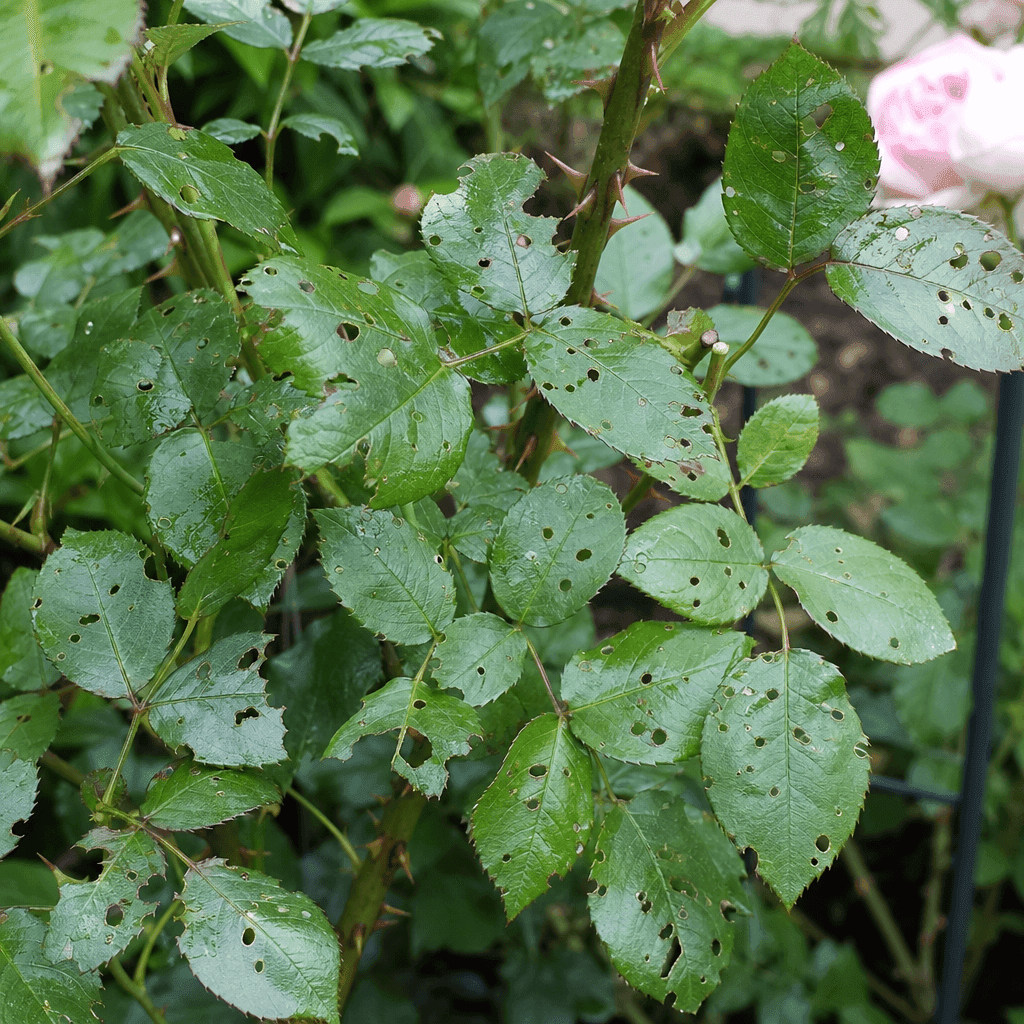
| Irregular jagged holes in leaves; rolled or tied leaves containing a caterpillar | Caterpillar (tortrix moth or other species) | Medium | Check rolled leaves and shoot tips for caterpillars hiding inside silk webbing. | Unroll affected leaves and remove caterpillars by hand. | Medium |
| Leaves tightly rolled lengthways into narrow tubes; no holes but leaves unusable | Rose leaf-rolling sawfly | Medium | Leaves are rolled tightly around a larva from late spring; rolling occurs within hours of egg-laying. | Remove and dispose of rolled leaves; on large plants tolerate minor infestations. | Low–medium |
The causes, in detail
Leaf-cutter bee
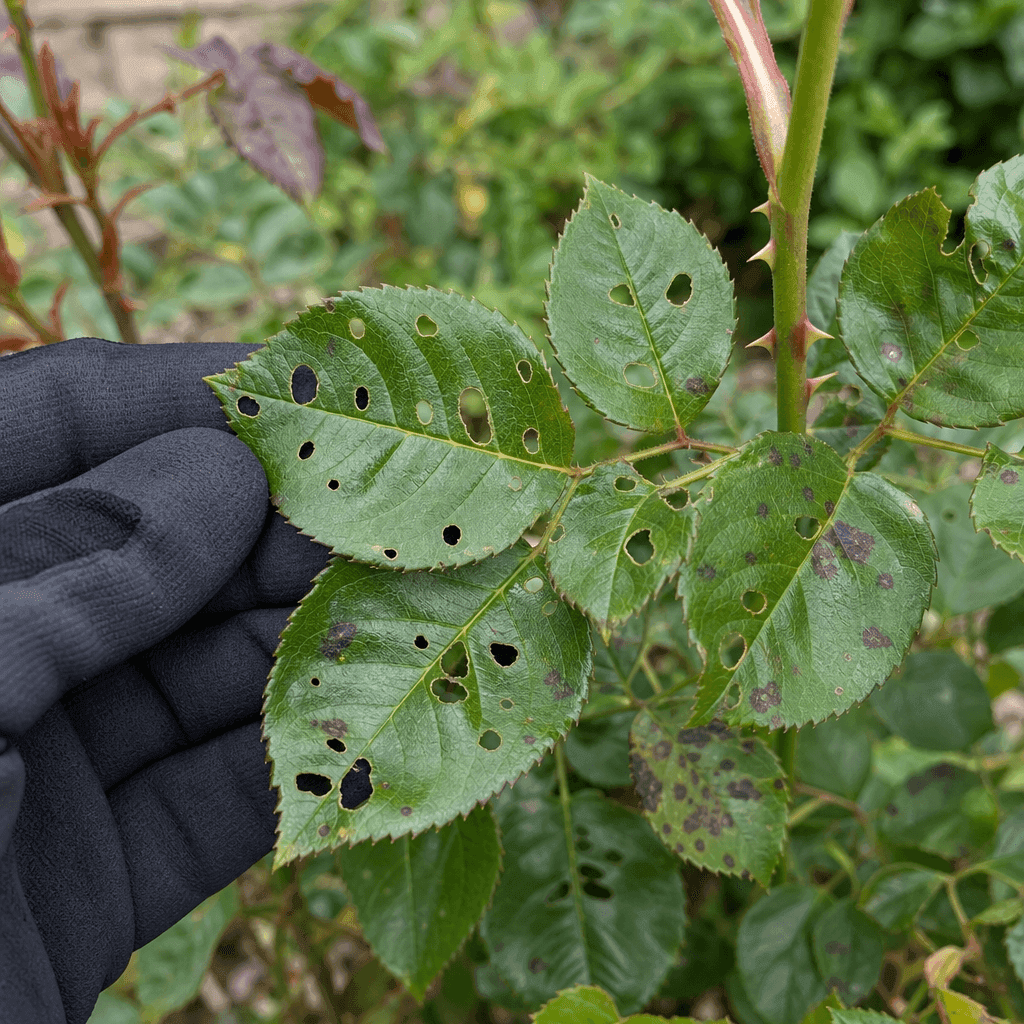
Most likelyLeaf-cutter bees (Megachile species) are solitary native bees that cut neat, curved sections from rose leaves to line their nest cells. The RHS advises that damage is purely cosmetic and that these bees are valuable native pollinators and should not be controlled. They do not feed on the leaves — they carry the cut pieces away. The cuts are distinctive: clean-edged, semicircular, and consistent in size, usually 1–2 cm across. They appear from late spring to late summer when bees are active.
- Cuts are clean-edged, semicircular, and uniform in size.
- Pieces of leaf are missing entirely — they have been carried off to the nest.
- No insects or larvae are visible on the plant during or after cutting.
- Damage is most common from May to August.
- No action is needed or recommended — leaf-cutter bees are beneficial native pollinators protected by law.
- The plant will continue to grow normally; new leaves will replace any that are cut.
- Provide a bee hotel nearby to give them an alternative nesting site if you prefer.
try to deter or kill leaf-cutter bees — they are valuable native pollinators and the cosmetic damage they cause does not harm the rose.
Rose slugworm (sawfly larva)
Most likelyThe rose slugworm is the larva of a sawfly (Endelomyia aethiops) and is one of the most common causes of leaf damage on UK roses. The RHS describes its damage as 'window paning' — the larvae graze away the upper or lower surface of the leaf without eating right through it, leaving pale, dried, papery patches. Affected areas shrivel and turn white or brown. Larvae are small (up to 12mm), green or yellowish with an orange head, and are found on leaf undersides. They are active from late spring.
- Pale, white or papery patches where the leaf surface has been grazed away, not eaten through.
- The remaining tissue is transparent or dried and brown.
- Small green or yellowish larvae on the underside of affected leaves.
- Damage is most common on leaves from May to July.
- Check leaf undersides and pick off larvae by hand, dropping them into soapy water.
- Wash larvae off with a strong jet of water directed under the leaves.
- Encourage natural predators by avoiding insecticides — birds, wasps and ground beetles all feed on sawfly larvae.
- Remove badly affected leaves to tidy the plant and inspect the rest.
- Repeat checks weekly during the active season as there may be multiple generations.
Stop it coming back:Established roses recover quickly from rose slugworm damage. New growth will replace grazed leaves within a few weeks.
spray the whole plant with insecticide as a first response — this kills the natural predators of sawflies and may cause secondary pest problems.
Large rose sawfly
Most likelyThe large rose sawfly (Arge pagana) has caterpillar-like larvae that feed in groups and can strip rose shoots bare within a few days. The RHS notes this is one of the few sawfly species that can cause significant defoliation. Larvae are pale green with black spots, up to 20mm long, and often arch their bodies when disturbed. They are usually found in groups on the outer parts of shoots from late spring to summer. Unlike rose slugworms, they eat right through the leaf.
- Groups of caterpillar-like larvae (pale green, black spots, up to 20mm) feeding together.
- Leaves eaten from the edges inward, with rapid defoliation of affected shoots.
- Larvae arch their bodies in a characteristic way when disturbed.
- Remove larvae by hand as soon as groups are spotted — wearing gloves if preferred.
- Wash off with a strong jet of water directed at the affected shoot.
- Check the plant daily while an infestation persists, as larvae move between shoots.
- Encourage birds and ground beetles by avoiding insecticide use.
Stop it coming back:Check roses regularly from May onwards and act as soon as groups of larvae are seen. Early removal prevents the rapid defoliation that occurs if they are left unchecked.
assume defoliation is permanent — healthy roses almost always produce new growth after sawfly damage, particularly if action is taken quickly.
Caterpillars (tortrix moth and others)
PossibleVarious caterpillars feed on rose leaves, including the larvae of tortrix moths that spin leaves together and feed inside the rolled leaf. Holes from caterpillars tend to be larger and more irregular than sawfly damage. Some species feed only at night and hide in leaf rolls or at the soil surface during the day. The damage may look alarming but rarely kills established roses.
- Irregular, jagged holes in leaves — often larger than sawfly damage.
- Rolled or tied leaves bound with silk webbing containing a caterpillar.
- Check shoot tips and the underside of leaves for caterpillars hiding during the day.
- Unroll affected leaves and remove caterpillars by hand.
- Check at dusk for caterpillars that are only active after dark.
- Remove the most heavily damaged leaves.
- Encourage birds and wasps, which are significant natural predators of caterpillars.
spray with insecticide without checking what is causing the damage — many caterpillars are the larvae of moths that do not cause problems at other life stages, and insecticide will harm other beneficial insects visiting the flowers.
Rose leaf-rolling sawfly
PossibleThe rose leaf-rolling sawfly (Blennocampa phyllocolus) causes a distinctive symptom: leaves roll tightly lengthways into narrow tubes within hours of a female laying eggs. The rolling is triggered by a chemical injected with the eggs and happens before the larva has even hatched. The RHS notes that damage is mainly cosmetic on vigorous roses. On smaller or weaker plants it can reduce photosynthesis significantly if many leaves are affected.
- Leaves are rolled tightly lengthways into narrow cylindrical tubes from late spring.
- Rolling occurs quickly — a leaf that was flat in the morning may be rolled by evening.
- Inside the rolled leaf there may be a small larva.
- Pick off and dispose of rolled leaves where the infestation is heavy.
- On vigorous roses with only a few rolled leaves, no action is necessary.
Stop it coming back:Once a leaf is rolled, the rolling cannot be reversed. New leaves will replace affected ones as the season progresses.
unroll the leaves and try to straighten them — the tissue is damaged by the rolling process and will not recover.
Still not sure?
Work down these branches — the first one that matches is your answer.
What not to do
- Try to deter leaf-cutter bees — they are native pollinators and their damage is purely cosmetic.
- Spray insecticide as a first response — it kills the natural predators that regulate sawfly and caterpillar populations, and harms the many beneficial insects that visit rose flowers.
- Panic if leaves look ragged after sawfly feeding — healthy roses produce new growth quickly once larvae are removed.
- Confuse leaf-cutter bee cuts (neat, semicircular) with sawfly grazing (papery surface patches) — the cause determines the response.
Common questions
Why do my rose leaves have semicircular holes cut out of the edges?
Neat, clean semicircular cuts from rose leaf edges are the work of leaf-cutter bees. These are native solitary bees that carry the cut pieces to line their nests. They do not harm the rose, which will grow new leaves. The RHS advises leaving them alone.
What is eating my rose leaves but leaving no insects?
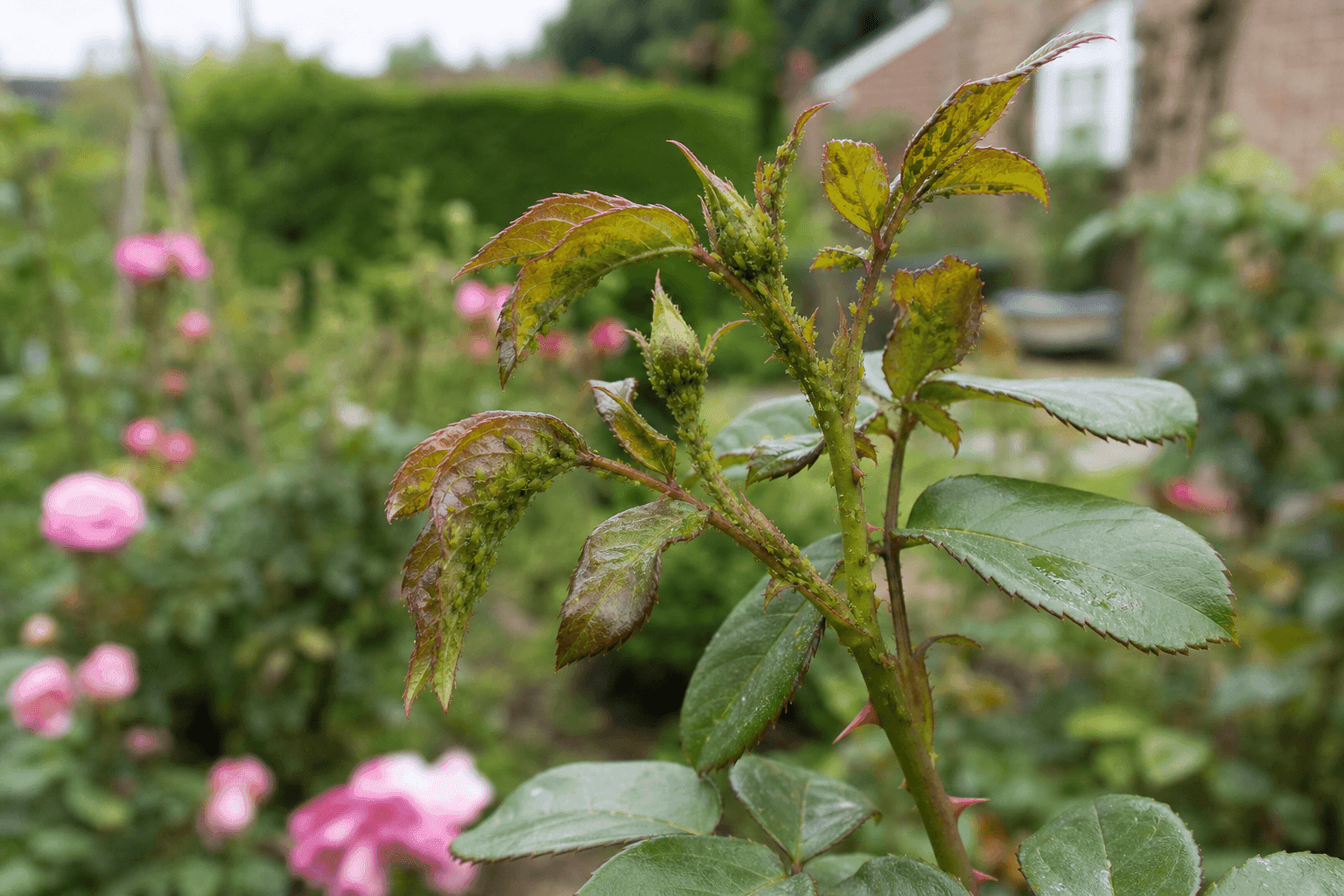
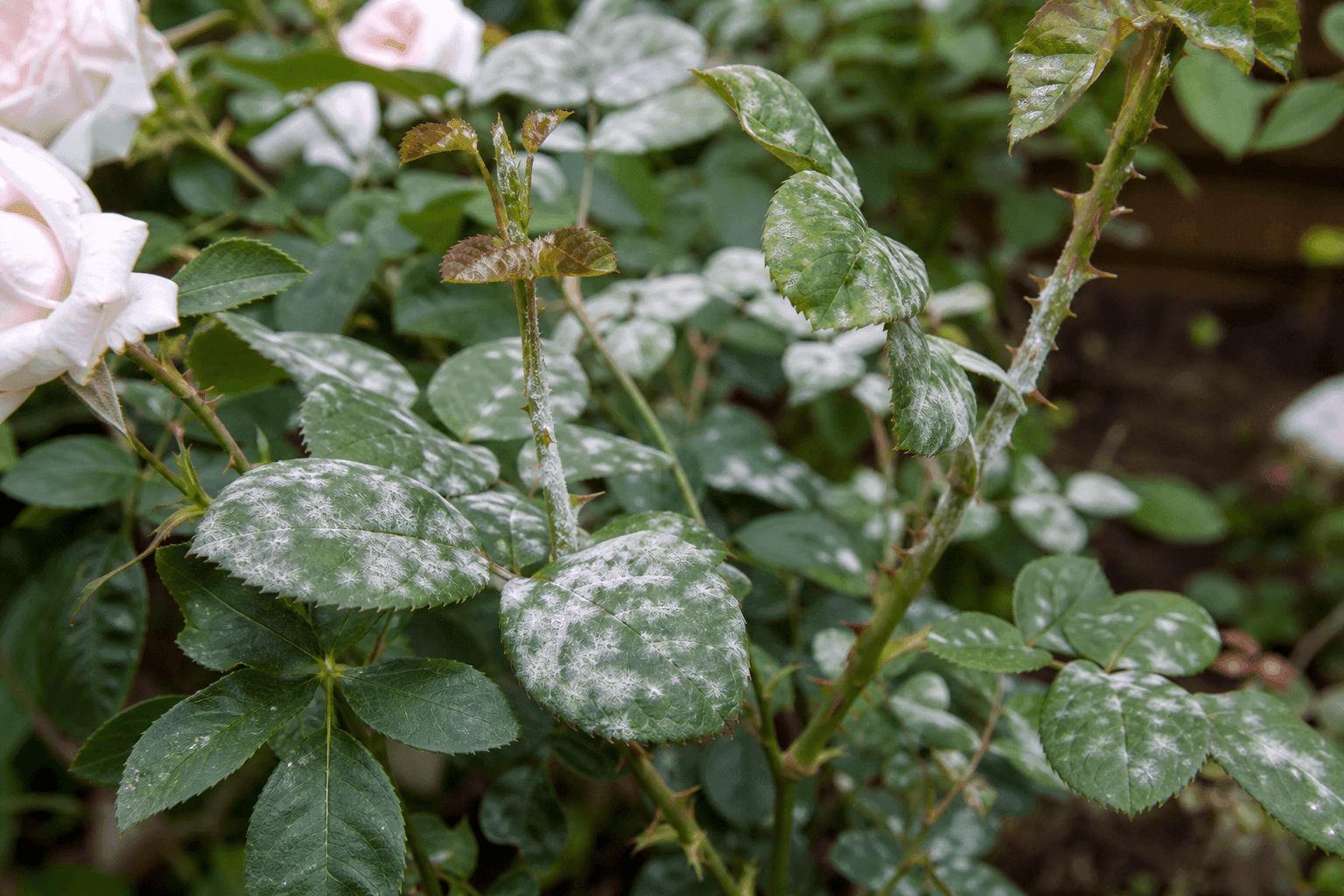
If the damage is pale, papery patches on the surface, it is likely rose slugworm — tiny green larvae on the leaf undersides that are easy to miss. If cuts are neat and semicircular with no larvae, it is leaf-cutter bees. Caterpillars may hide inside rolled leaves or at the soil base during the day. If you see no holes at all but find sticky leaves, fine webbing or clustered insects, the cause is more likely sap-sucking pests such as aphids on roses or spider mites on roses rather than the leaf-chewers covered here.
How do I get rid of sawfly on roses?
The most effective approach is to check leaf undersides regularly from May onwards and pick off larvae by hand, dropping them into soapy water. Washing them off with a strong water jet also works. Avoid insecticides, which kill the natural predators — birds, wasps and ground beetles — that help keep sawfly numbers down.
Are leaf-cutter bees harmful to roses?
No. Although the neat semicircular cuts they make can look alarming, the damage is purely cosmetic and does not harm vigorous roses. Leaf-cutter bees are beneficial native pollinators and should not be controlled. Keeping your plant vigorous with good rose care and growing conditions is the best way to shrug off this kind of minor leaf damage.
What caterpillars eat rose leaves in the UK?
Tortrix moth caterpillars are among the most common — they roll leaves together with silk webbing and feed inside. Various other moth larvae also feed on roses. Most can be controlled by unrolling affected leaves and removing caterpillars by hand.
Do roses recover from sawfly damage?
Yes, in almost all cases. Healthy established roses produce new growth to replace leaves damaged by sawfly. Acting quickly to remove larvae limits the damage, but even defoliated roses usually recover by late summer.