Quick diagnosis
Match the row to what you’re seeing, then jump to the fix.
| What you see | Likely cause | Confidence | How to confirm | What to do now | Urgency |
|---|---|---|---|---|---|
| One or two old leaves low inside the bush turn plain yellow, then drop | Normal old-leaf ageing | High | New growth is healthy; yellowing is slow and limited to the oldest leaves. | Remove fallen leaves and monitor for a week. | Low |
| Lower inside leaves yellow on the shaded side, especially in a dense rose | Shade inside the plant | High | Yellow leaves are hidden under the canopy; outer leaves are green. | Lightly thin congested growth at the next suitable prune and improve spacing. | Low |
| Lower leaves yellow, wilt, crisp at the edges, and soil is dry several centimetres down | Drought stress | High | Plant perks up after a deep soak; containers dry quickly in warm weather. | Water deeply at the base, then mulch. | Medium |
| Lower leaves yellow and fall, soil stays wet or smells sour, pot drains poorly | Overwatering or waterlogging | High | Soil is wet 24–48 hours after watering; roots may be brown or soft in pots. | Stop watering until the surface begins to dry; fix drainage. | Medium |
| Older lower leaves are pale yellow all over, growth is weak, flowering is poor | Nitrogen shortage or general underfeeding | Medium | Most yellowing is on older leaves first; the rose has not been fed or mulched. | Feed at the correct season and mulch with organic matter. | Low–medium |
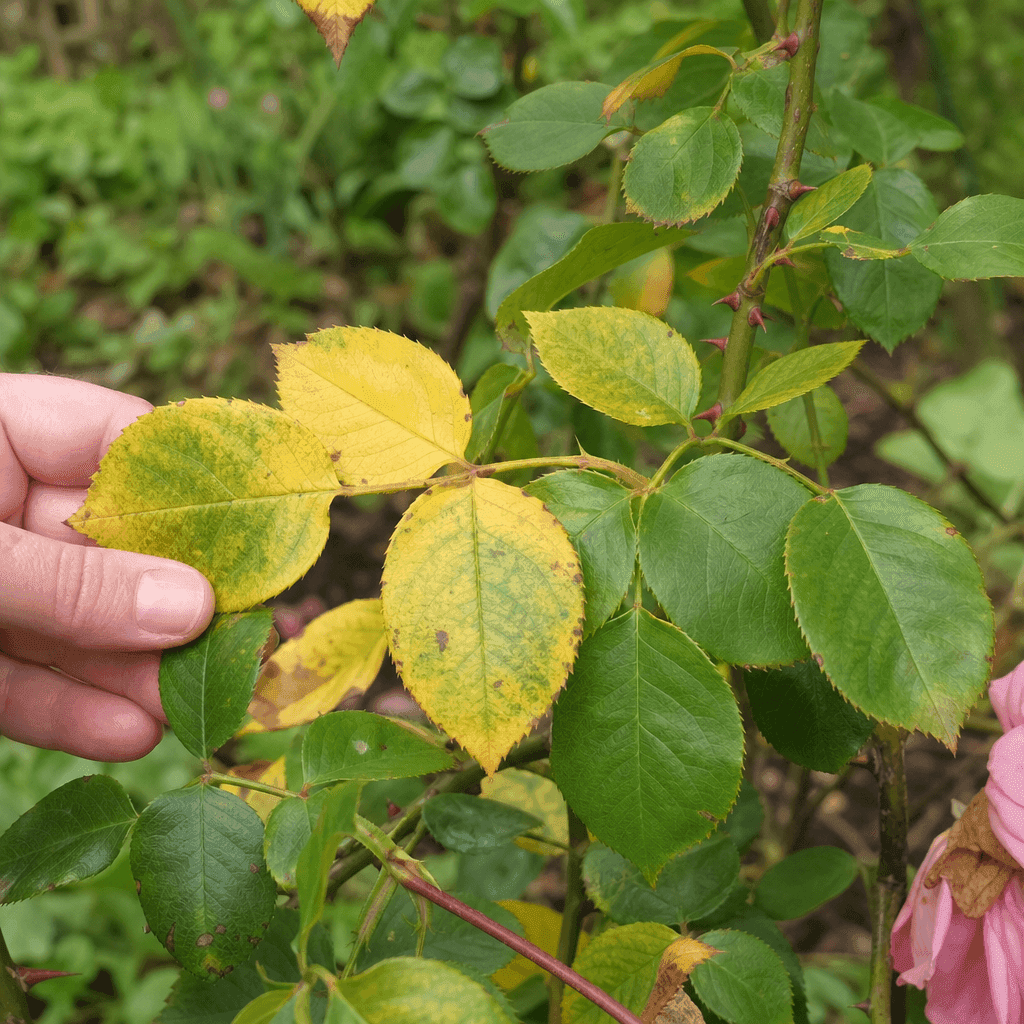
| Older leaves yellow between green veins, sometimes with brown patches | Magnesium deficiency or nutrient uptake problem | Medium | Interveinal yellowing on older leaves; common on light soils or after heavy potash feeding. | Correct feeding balance; consider magnesium only if symptoms fit. | Low |
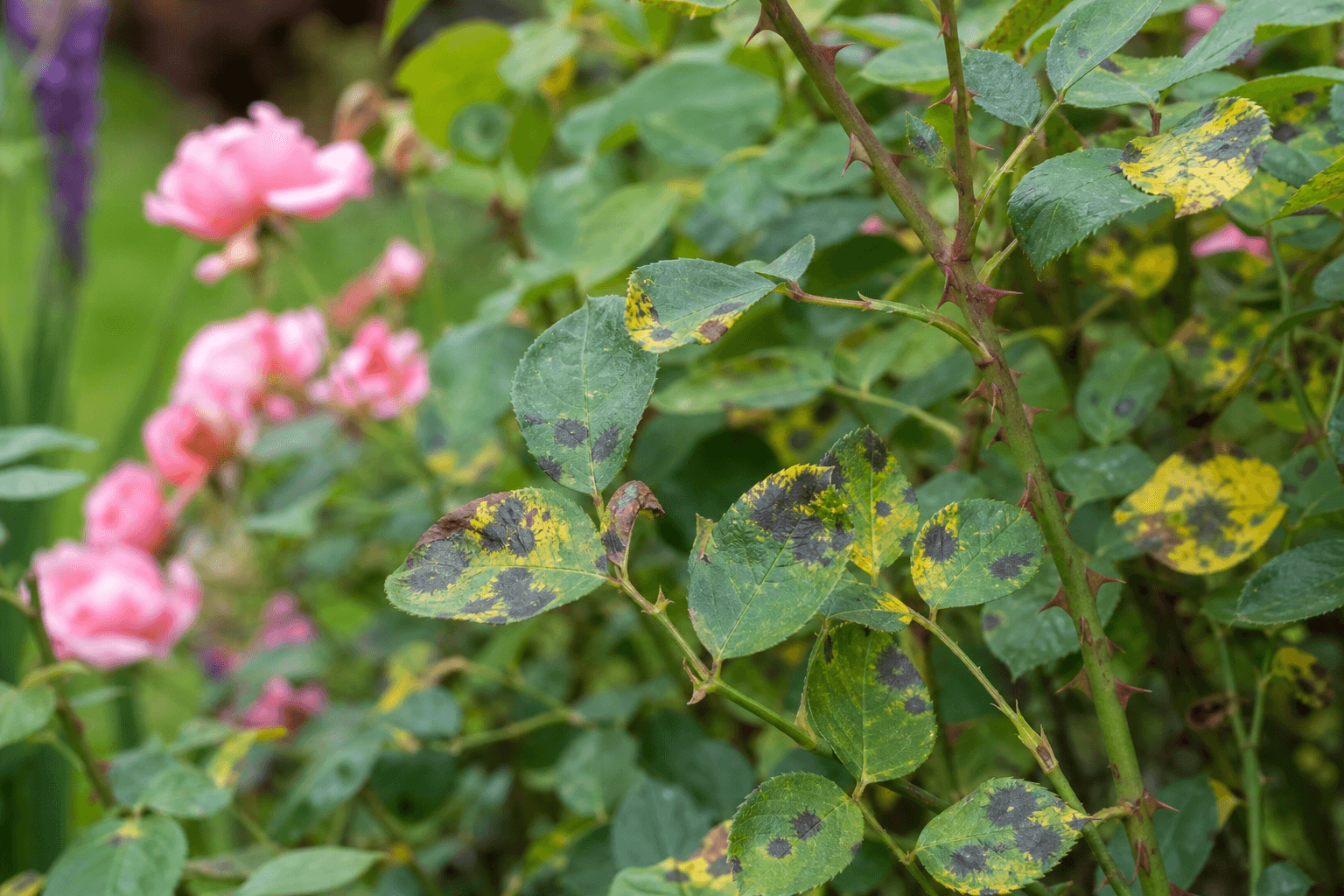
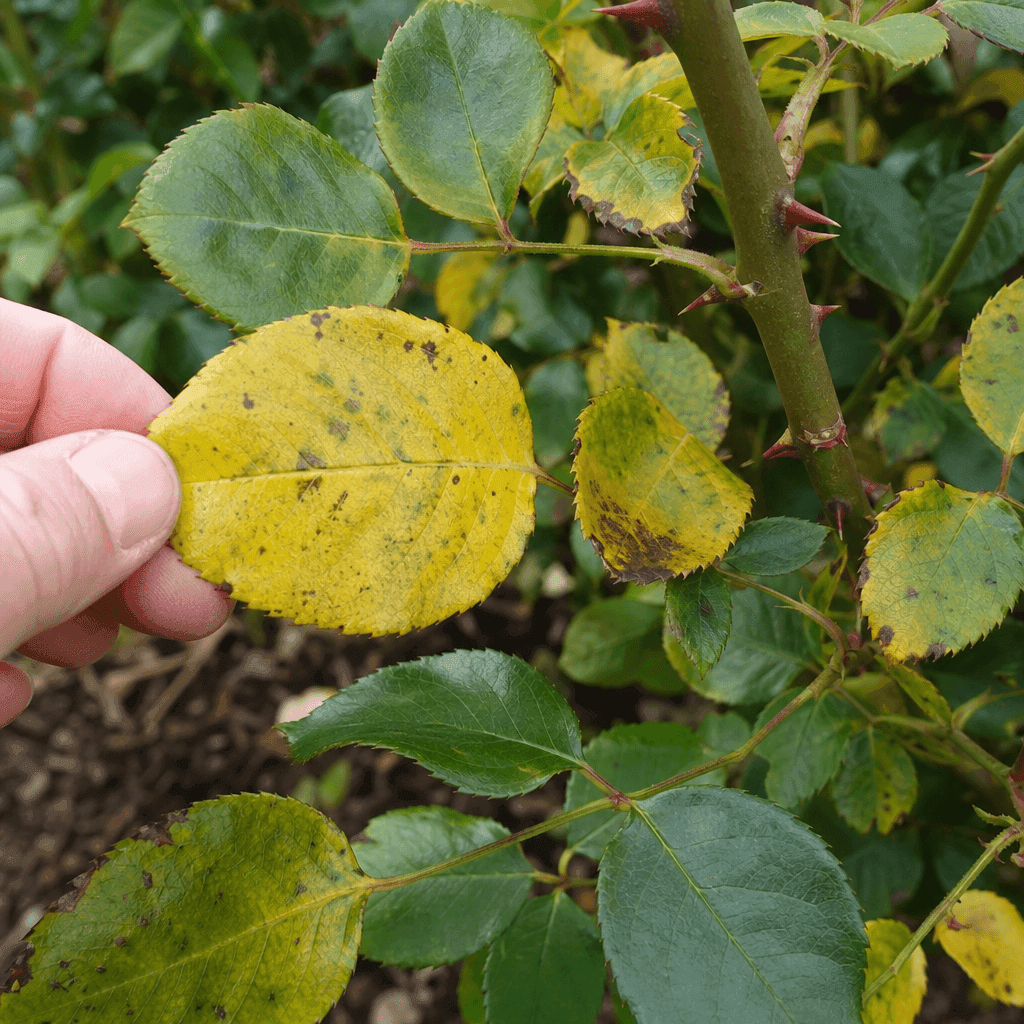
| Yellow lower leaves with black or purple-black spots, often after wet weather | Rose black spot starting low | High | Spots appear before or with the yellowing; leaves drop early. | Remove affected leaves, clear fallen leaves, improve airflow. | High |
| Yellow patches with orange pustules on leaf undersides | Rose rust | Medium | Orange dusty pustules under leaves, later black pustules. | Remove affected leaves and improve airflow. | Medium |
The causes, in detail
Normal old-leaf ageing
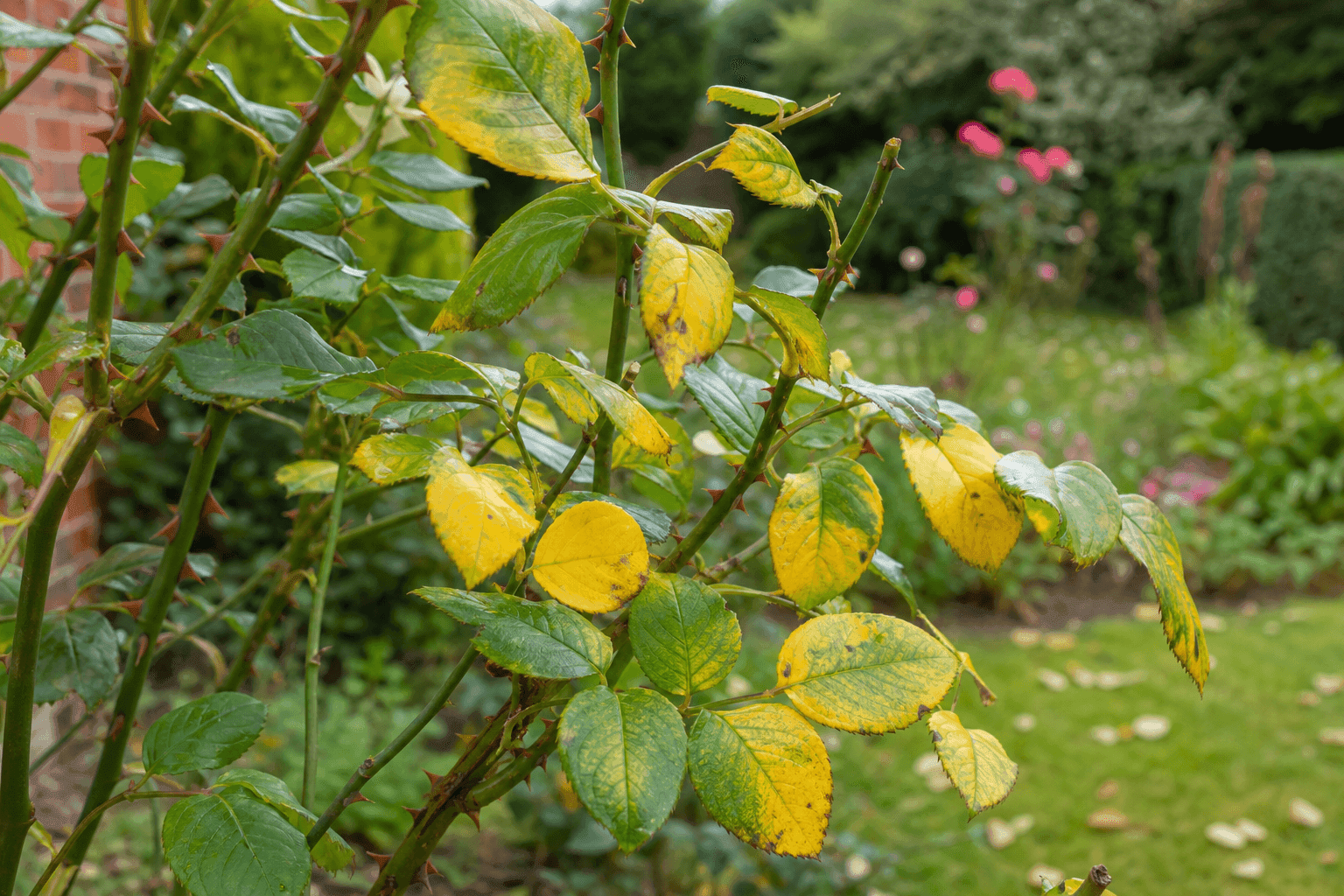
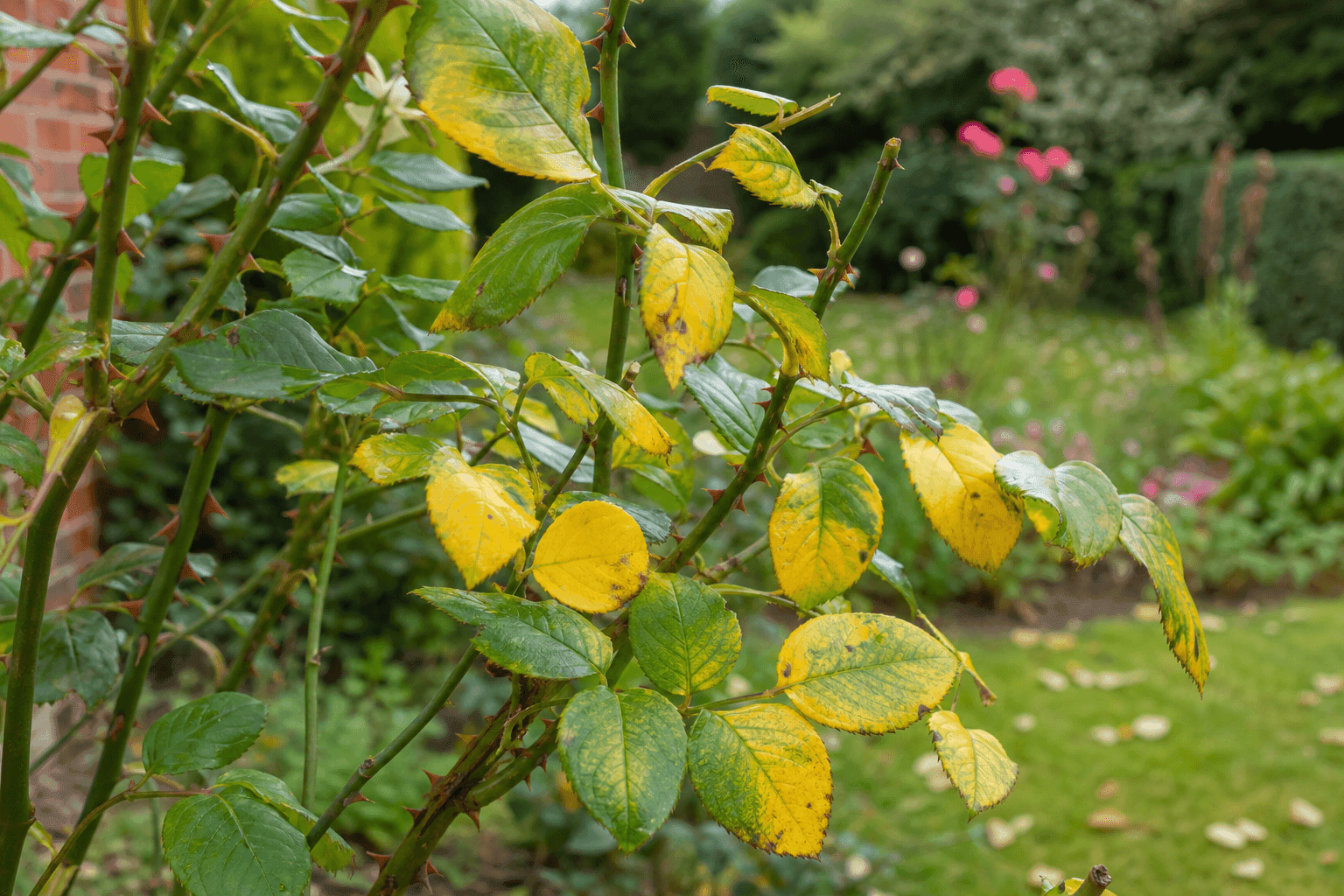
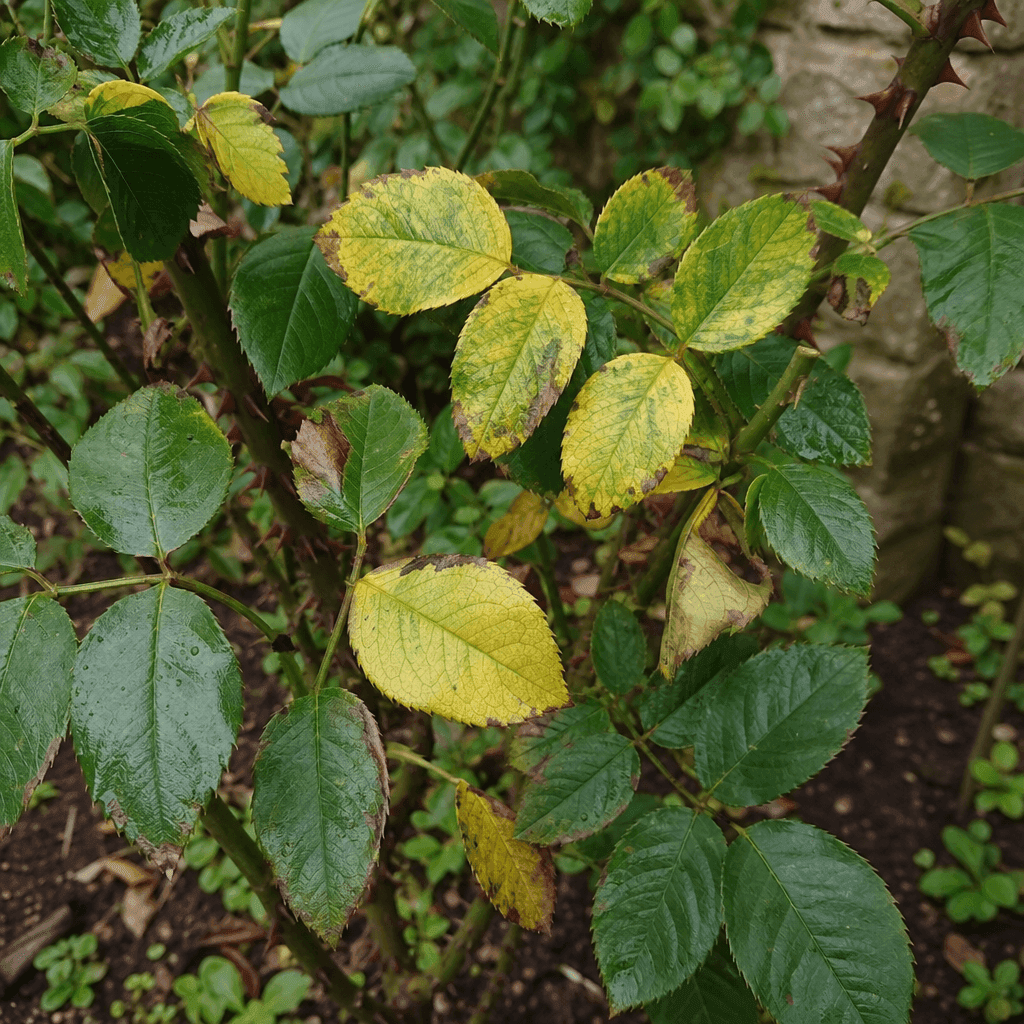
Most likelyLower yellow leaves are normal when they are the oldest leaves, especially on a vigorous rose with plenty of healthy new growth. Leaves do not last forever — once older leaves are shaded or no longer useful, the plant withdraws resources from them, they turn yellow, and they drop.
- Only a few lower leaves are affected.
- The yellow leaves are plain yellow, not spotted.
- New shoots and upper leaves are green and firm.
- The rose is still producing buds or flowers, and the yellowing is slow.
- Pick up fallen leaves and remove fully yellow leaves if they come away easily.
- Keep watching — you do not need to feed, spray or prune hard for two old leaves.
- Keep watering consistent during dry weather.
Stop it coming back:The yellow leaves will not turn green again. The sign of recovery is the rest of the plant staying healthy and producing normal new growth over the next 1–3 weeks.
treat normal ageing as disease — avoid extra fertiliser, daily watering or fungicide unless the leaf pattern points to a real problem.
Shade inside the plant
Most likelyRoses prefer sun, and the RHS advises at least four hours of sunlight a day. Even in a sunny border, lower inside leaves can be shaded by the rose's own canopy or by neighbouring plants, so they yellow and drop while the outer plant stays healthy. It is common on dense shrub roses, tangled climbers, and roses crowded by perennials. If you are still unsure which issue you are looking at, our rose problems diagnosis guide covers leaves, stems and flowers in one place.
- Yellow leaves are mostly inside the plant rather than on exposed outer shoots.
- They are on the side facing a wall, fence, hedge or taller plant.
- They sit under a heavy canopy of healthy green leaves.
- They are plain yellow without black spots or orange pustules.
- Remove fallen leaves from around the base.
- Tie in or reposition nearby stems that are shading the centre.
- Cut back neighbouring plants if they are crowding the rose.
- At the correct pruning time, remove dead, weak, crossing or congested growth to open the centre.
Stop it coming back:Shaded yellow leaves will drop. New leaves produced in better light should stay greener, but a full improvement may not show until the next flush of growth.
strip the rose bare in midsummer — removing too much healthy foliage reduces the plant's ability to feed itself; aim for light, sensible thinning.
Drought stress
Most likelyRoses are deep-rooted once established, but they still need help in hot, dry spells, sandy soils and containers. The RHS notes established border roses may need watering in high summer, while container roses need much more frequent watering. Drought can yellow lower leaves, wilt them, crisp the edges and cause early drop.
- The soil is dry below the surface when you push a finger or trowel 5–8cm down.
- Leaves are wilting as well as yellowing, with brown or crispy edges.
- Flower buds fail to open or shrivel.
- The rose improves within 24 hours after a deep soak.
- Water at the base, not over the leaves, giving a deep soak rather than a light sprinkle.
- For established border roses in high summer, RHS guidance is up to once a week with 5–10 litres per plant when needed.
- Apply a 5cm organic mulch, kept about 10cm clear of the stems.
- For pots, water until it runs from the drainage holes and check again next day in heat.
- Pot up into a larger container if a potted rose dries within hours.
Stop it coming back:Wilting may improve within a day after proper watering. Yellow leaves will not turn green and may drop — look for steadier new growth and firmer leaves over 1–2 weeks.
give tiny daily splashes — shallow watering encourages shallow roots and leaves the deeper root zone dry; and avoid overhead watering.
Overwatering or waterlogging
Most likelyToo much water can look surprisingly like too little. Waterlogged soil lacks air, roots struggle, and lower leaves yellow and drop. RHS rose advice warns that prolonged waterlogging can cause root rotting, and that container drainage problems can lead to waterlogging and root death. It is more likely on heavy clay, in pots without enough drainage, or with fixed-schedule watering.
- Soil is wet or sticky 24–48 hours after watering.
- The pot feels heavy and drainage holes are blocked.
- Leaves yellow and drop while stems may also wilt.
- Compost smells sour, or potted roots are brown, soft or sparse.
- For pots: remove any saucer water, raise the pot on feet, and check the drainage holes are open.
- Let the compost begin to dry before watering again; repot into fresh free-draining compost if it is sour and roots are suffering.
- For borders: stop routine watering until the soil needs it, and improve the soil with organic matter over time.
- Avoid compacting wet soil around the root zone.
- If the site stays waterlogged after rain, improve drainage or move the rose during dormancy.
Stop it coming back:Mild overwatering may improve over 2–4 weeks once watering is corrected. Serious root rot is slower and less certain — the key sign is fresh, firm growth, not the recovery of already-yellow leaves.
feed a waterlogged rose as the first fix — stressed roots cannot use fertiliser, and extra salts make things worse; fix drainage first.
Nutrient deficiency or underfeeding
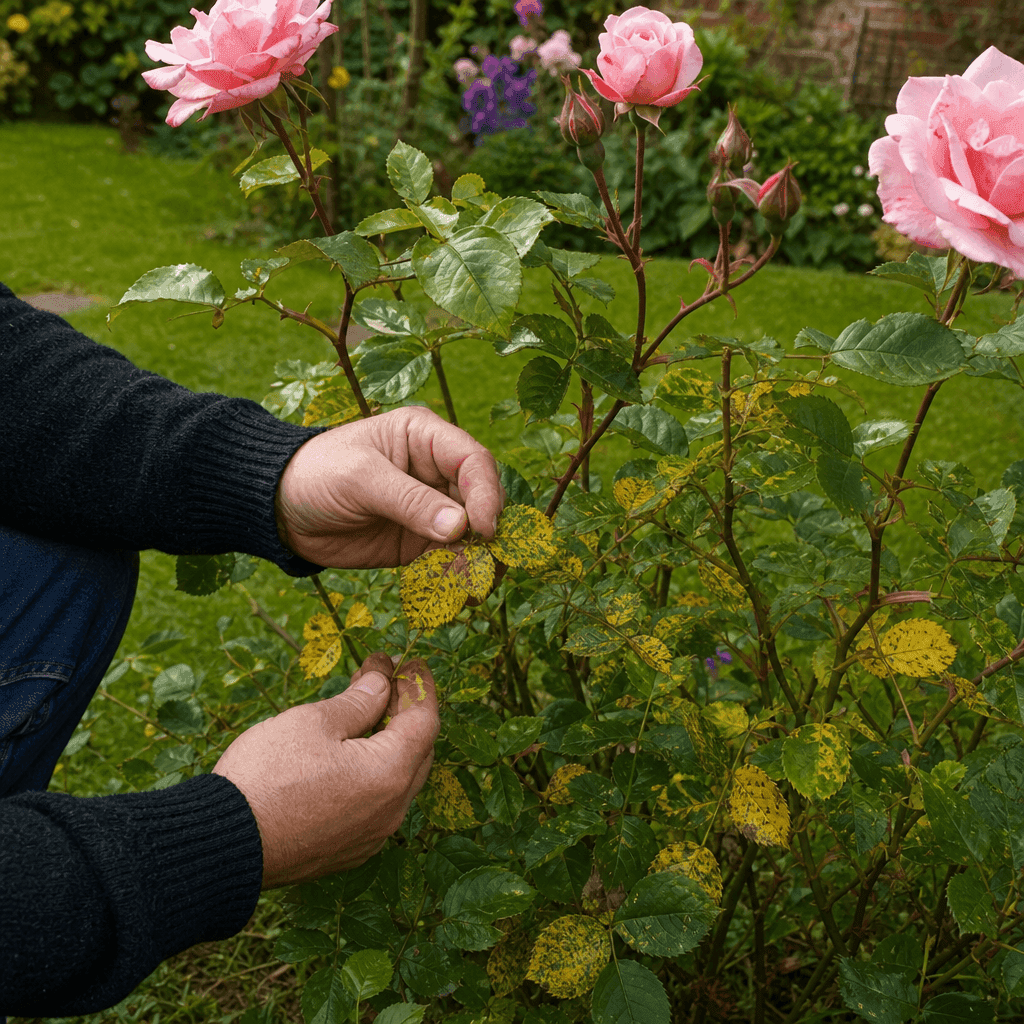
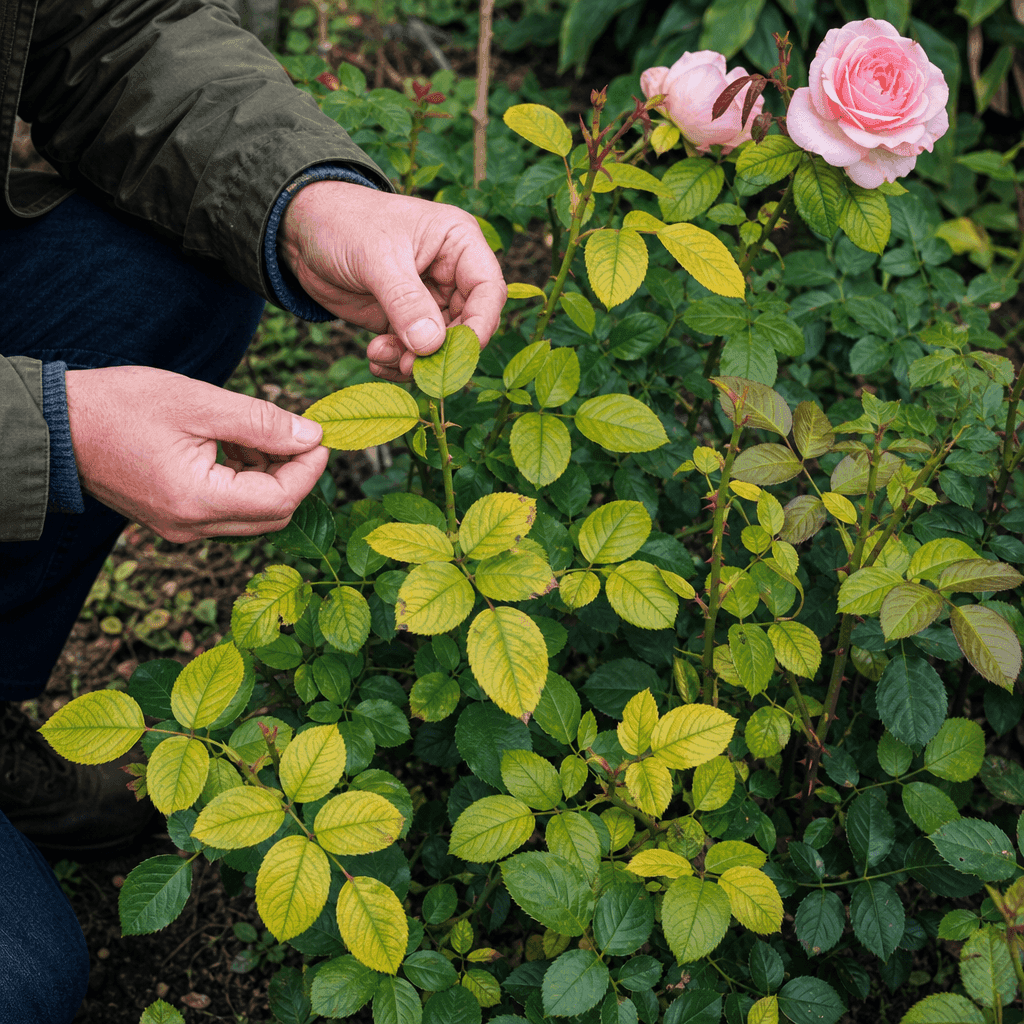
PossibleRoses are hungry plants, but not every yellow leaf is a deficiency. The RHS notes drought, waterlogging, light deprivation and poor establishment can mimic deficiencies, so rule out watering and shade first. Nitrogen shortage often pales older leaves first with weak growth; magnesium deficiency causes interveinal yellowing on older leaves, common on light sandy soils or where high-potassium feeds are overused.
- The rose has not been mulched or fed for a long time.
- Growth is weak across the whole plant, not just one shaded branch.
- Older leaves yellow first, and flowering is poorer than previous seasons.
- The soil is light or sandy, or the rose is in a container.
- Feed border roses in March or April, and again after the first flush for repeat-flowering roses (RHS gives 70g per sq m of general-purpose or rose fertiliser).
- Mulch with well-rotted manure or garden compost, leaving a gap around the stems.
- Feed container roses more often during the growing season, as nutrients wash out of pots faster.
- If magnesium deficiency genuinely fits, use magnesium sulphate only at recommended rates.
Stop it coming back:New growth should look healthier within 2–6 weeks in active growth. Existing yellow leaves usually stay yellow and may drop.
keep adding different feeds until the plant responds — overfeeding can damage roots and cause soft growth; avoid Epsom salts unless the symptoms fit magnesium deficiency.
Black spot starting low
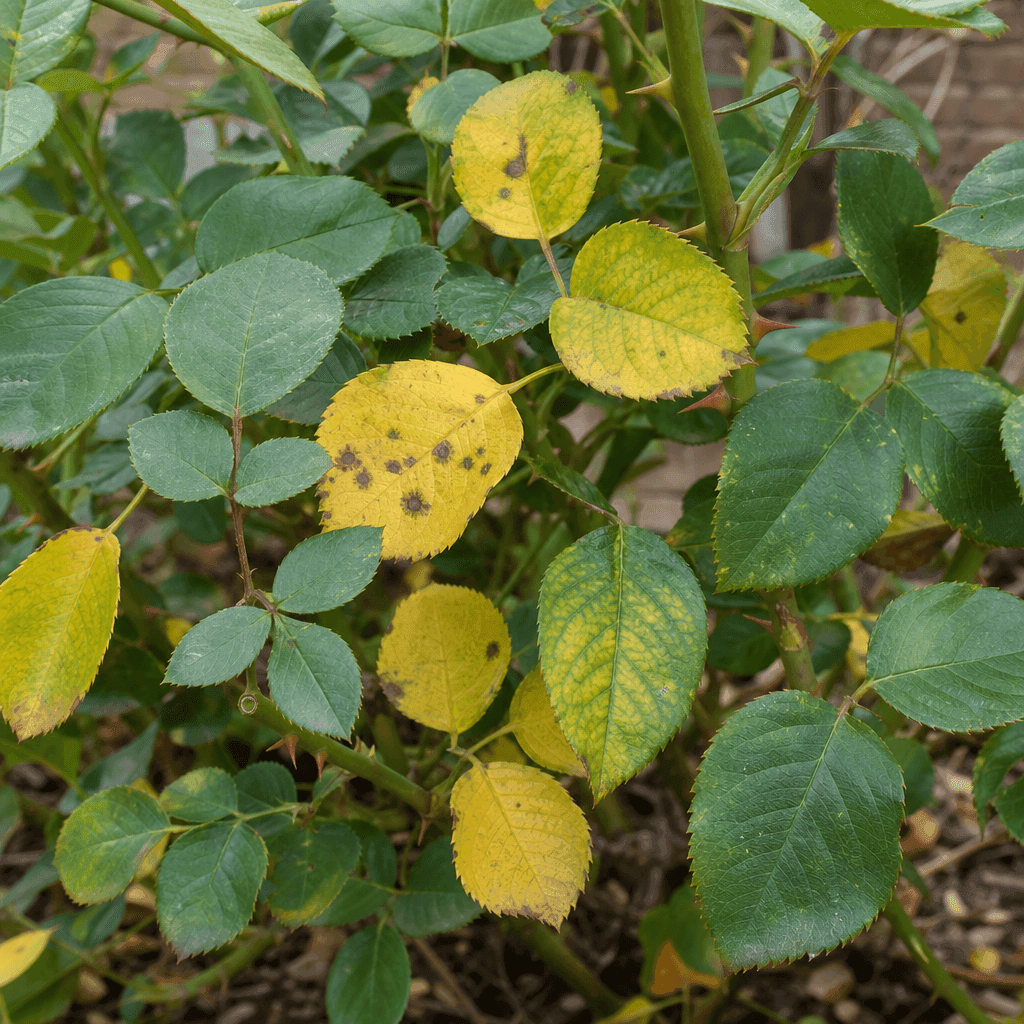
Most likelyBlack spot is the main disease to rule out when rose leaves yellow at the bottom. It often begins on lower leaves because spores splash up from fallen infected leaves and wet conditions help it spread. RHS describes it as a serious fungal disease with purple or black patches; surrounding tissue yellows and leaves often drop early.
- Purple, brownish-black or black blotches on the upper leaf surface.
- Yellowing around the spots, and early leaf drop before autumn.
- More spots after wet weather.
- Symptoms start on lower leaves and move upward.
- Pick off badly affected leaves if practical, and collect fallen leaves from the soil.
- Dispose of diseased leaves carefully rather than home-composting them.
- Water at soil level, not over the leaves, and improve airflow with correct pruning and spacing.
- In winter or early spring, prune out affected stems and refresh mulch to reduce splash.
Stop it coming back:Spotted leaves will not become clean again. Reduce further spread and keep enough healthy foliage for the rose to build strength; keep hygiene going through autumn and winter. (See the dedicated black-spot guide for full detail.)
ignore black spots because the plant is still flowering — repeated defoliation weakens roses — and do not spray homemade mixes of unknown strength.
Rose rust
PossibleRose rust is less common than black spot but can also yellow leaves and cause early drop. RHS describes it as small yellow spots on the upper surface with orange pustules underneath; later in summer the pustules may turn black.
- The top of the leaf has small yellow spots.
- The underside has orange, dusty pustules.
- Later-season pustules darken to black.
- Affected leaves drop early.
- Remove affected leaves, collect fallen leaves, and improve airflow.
- Prune out spring infections if you see orange pustules on young stems.
- If the same rose suffers badly every year, consider whether the cultivar is unusually susceptible.
Stop it coming back:Light rust may need only hygiene and monitoring. New leaves should be cleaner if conditions become drier and airflow improves.
confuse rust with general yellowing — it needs the underside check; if there are no orange pustules, look again at watering, shade, old leaves and black spot.
Still not sure?
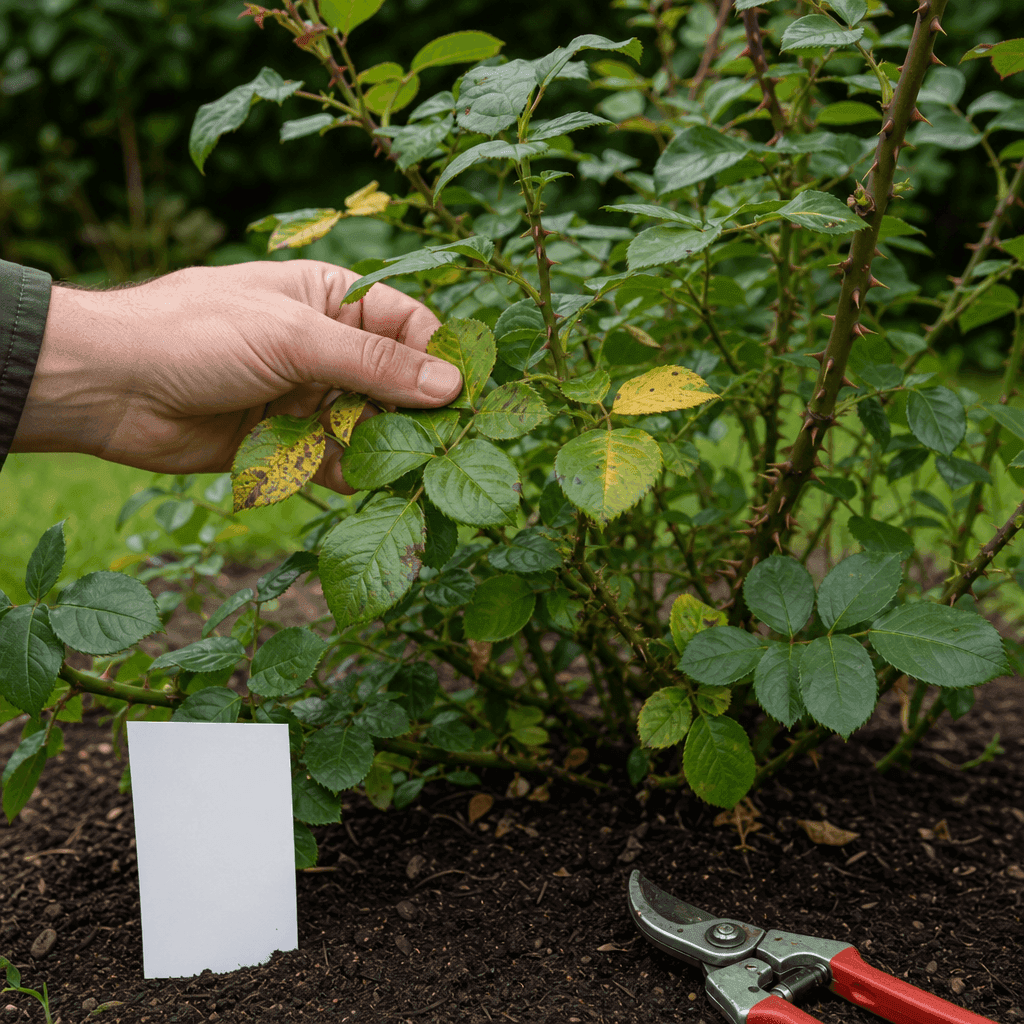
Work down these branches — the first one that matches is your answer.
What not to do
- Treat a few ageing lower leaves as a major disease outbreak.
- Strip off every partly green leaf — it is still feeding the plant.
- Feed a waterlogged rose before fixing drainage.
- Use Epsom salts as a general cure before checking water, drainage, shade and disease.
- Water overhead in the evening, which keeps leaves wet and favours fungal disease.
Common questions
Why are the bottom leaves on my rose turning yellow?
The bottom leaves are usually turning yellow because they are old, shaded, water-stressed, underfed, or affected by black spot. If only a few lower leaves are plain yellow and the top growth is healthy, it is often normal.
Are yellow leaves on rose bushes always a disease?
No. They can come from normal ageing, shade, drought, overwatering or nutrient issues. Disease is more likely when yellowing appears with black spots, orange pustules, powdery growth or rapid leaf drop.
What does an overwatered rose look like?
An overwatered rose may have yellowing lower leaves, leaf drop, wilting despite wet soil, and slow growth. In pots, compost may stay wet for days, smell sour, or contain brown soft roots.
How do I cure yellow leaves on roses?
First identify the cause. Water deeply if the soil is dry, improve drainage if it is wet, improve light if leaves are shaded, feed only if symptoms fit deficiency, and remove spotted leaves if black spot or rust is present.
Should I pull yellow leaves off roses?
Remove fully yellow, loose, fallen or diseased leaves. Do not strip off every partly yellow leaf if it is still mostly green and unspotted, because it can still help feed the plant.
Will yellow rose leaves turn green again?
Usually no. Once rose leaves have turned yellow, they rarely green up again. Recovery shows as healthy new leaves, firm stems, better flowering and no further rapid yellowing.
Do roses get yellow leaves in winter or autumn?
Yes. Roses are deciduous or semi-deciduous in UK gardens, so autumn yellowing and leaf fall can be normal. Sudden yellowing in spring or summer needs closer checking, especially for water stress or black spot. See our rose care and common problems hub for season-by-season guidance.
Does Epsom salt help rose leaves turning yellow?
Only if the problem is magnesium deficiency, which usually causes yellowing between the veins of older leaves. Epsom salt is not a general cure and should not be used before checking water, drainage, shade and disease.