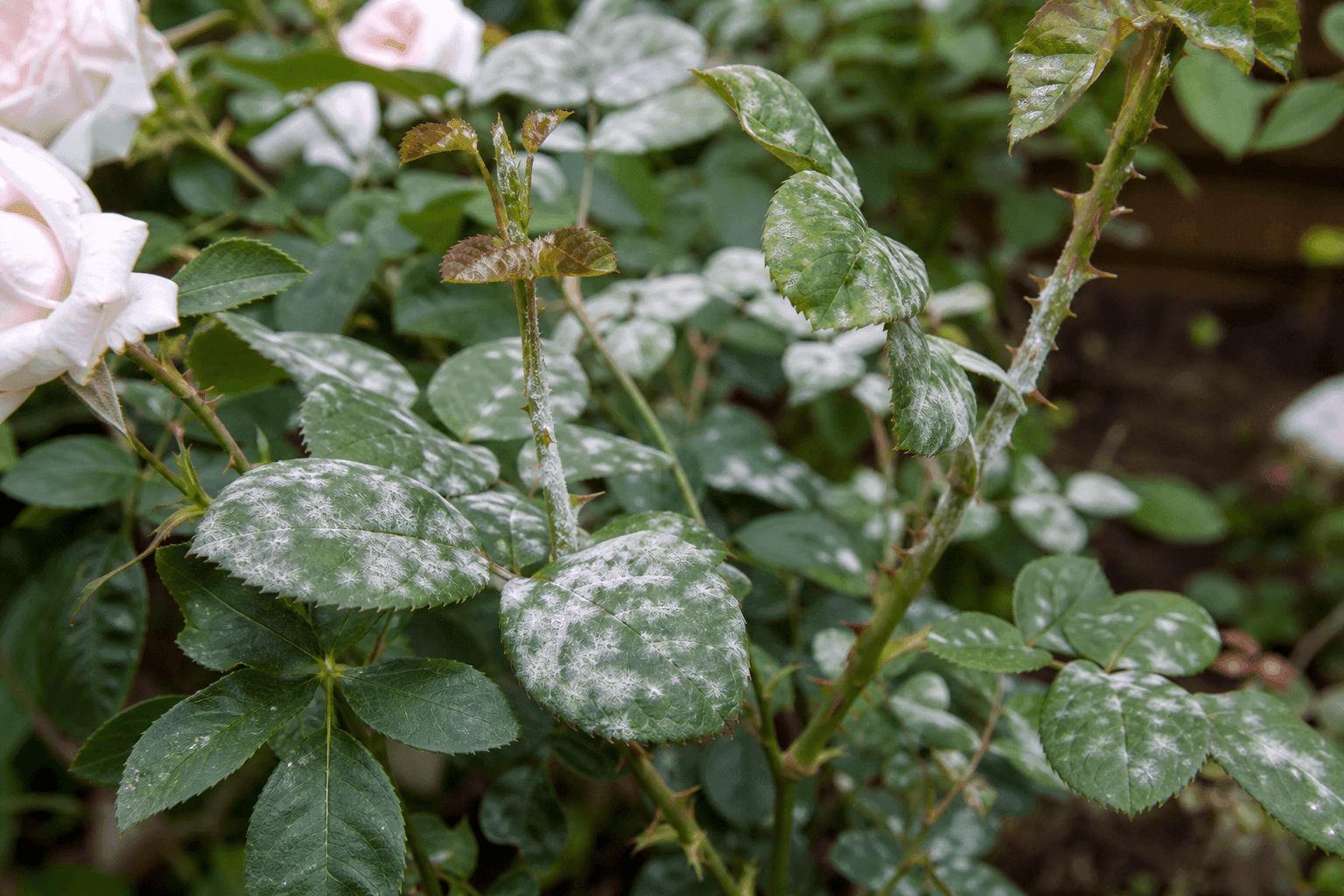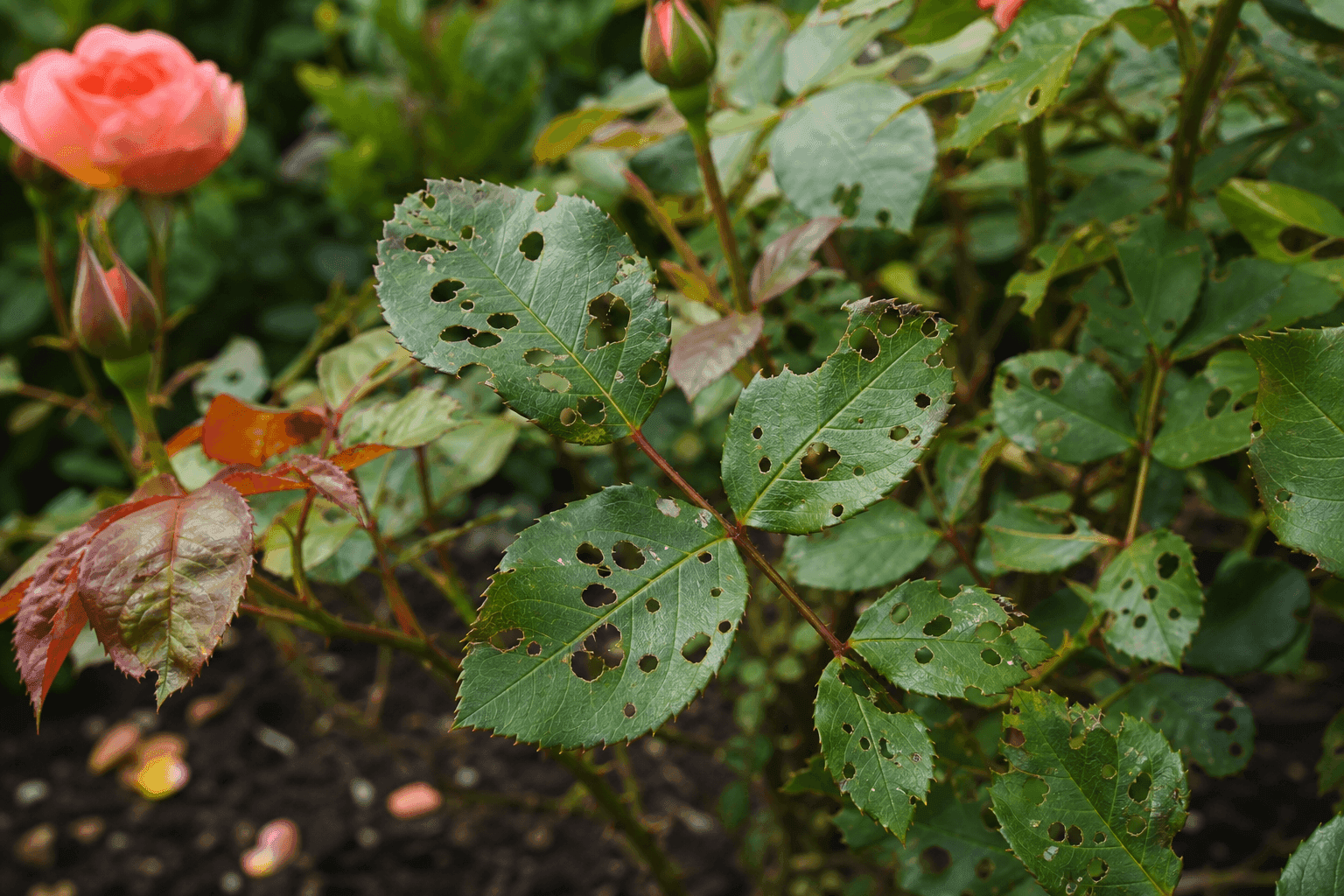
Quick diagnosis
Match the row to what you’re seeing, then jump to the fix.
| What you see | Likely cause | Confidence | How to confirm | What to do now | Urgency |
|---|---|---|---|---|---|
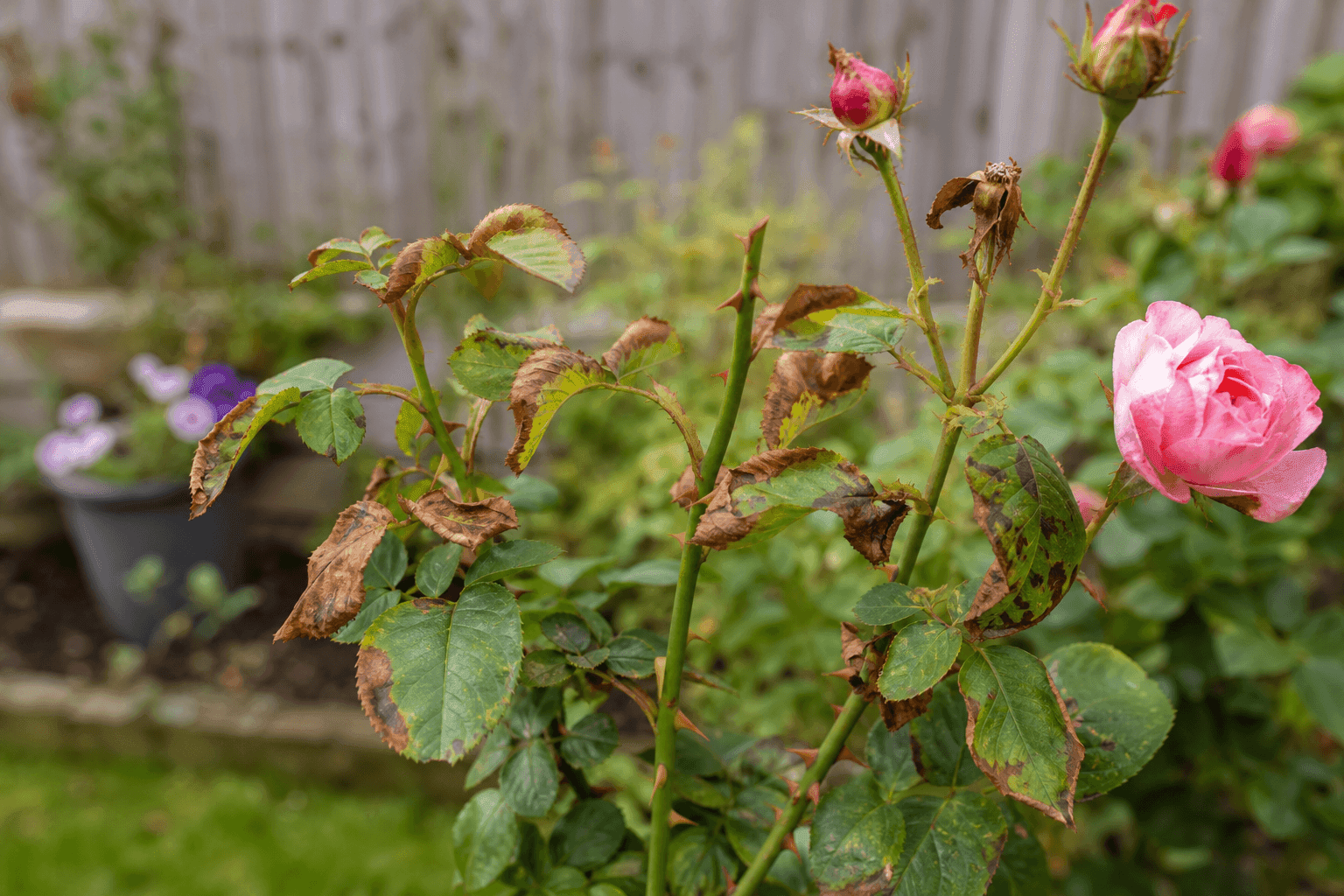
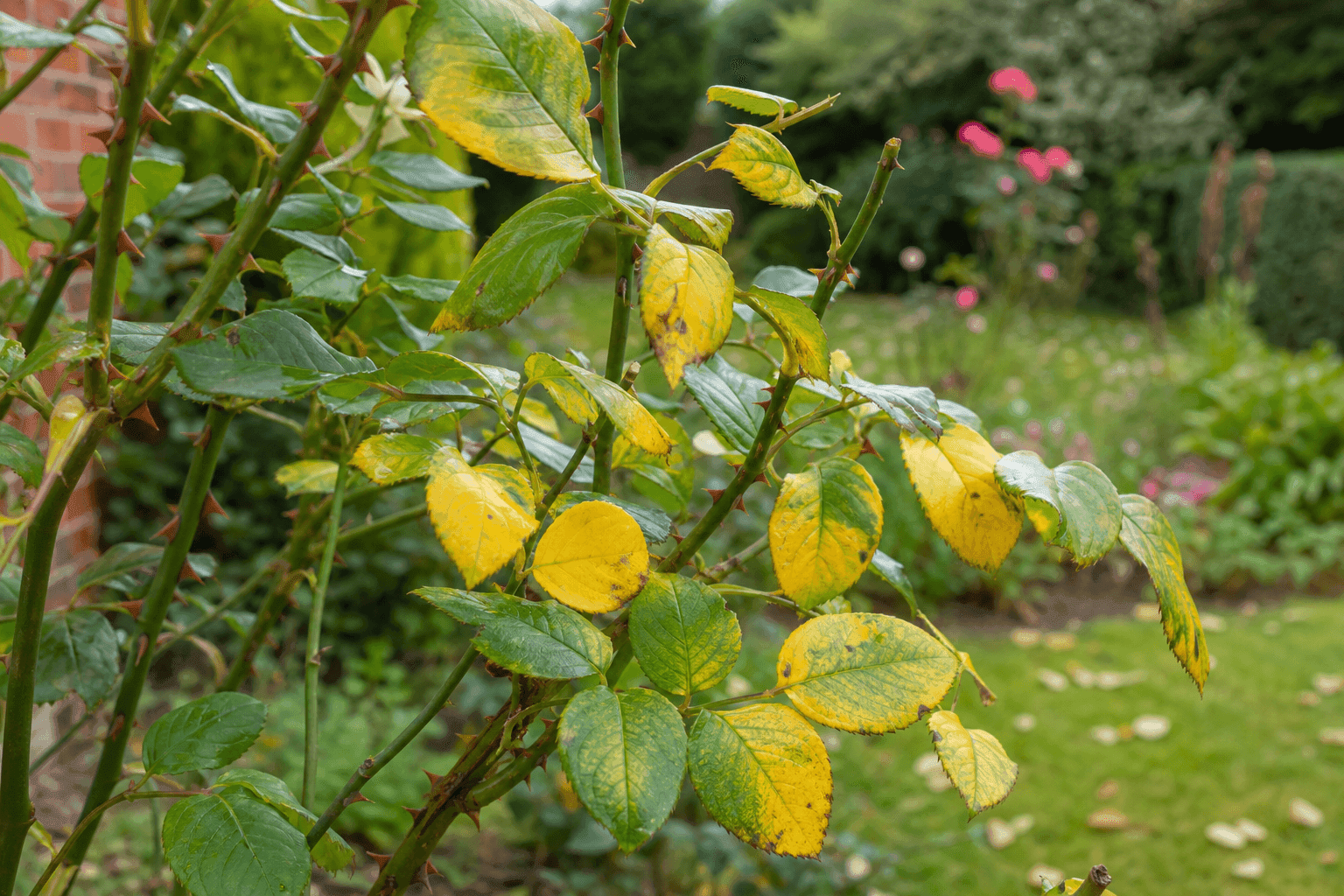
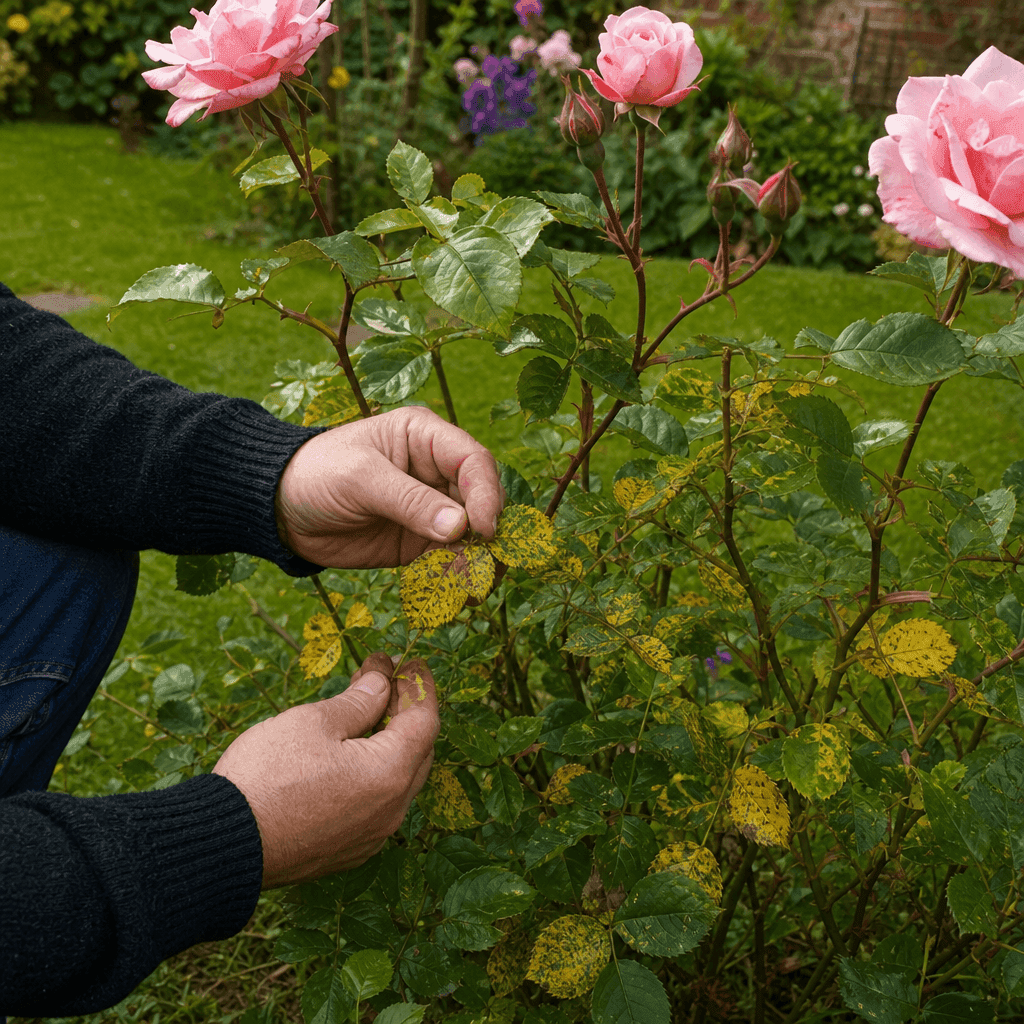
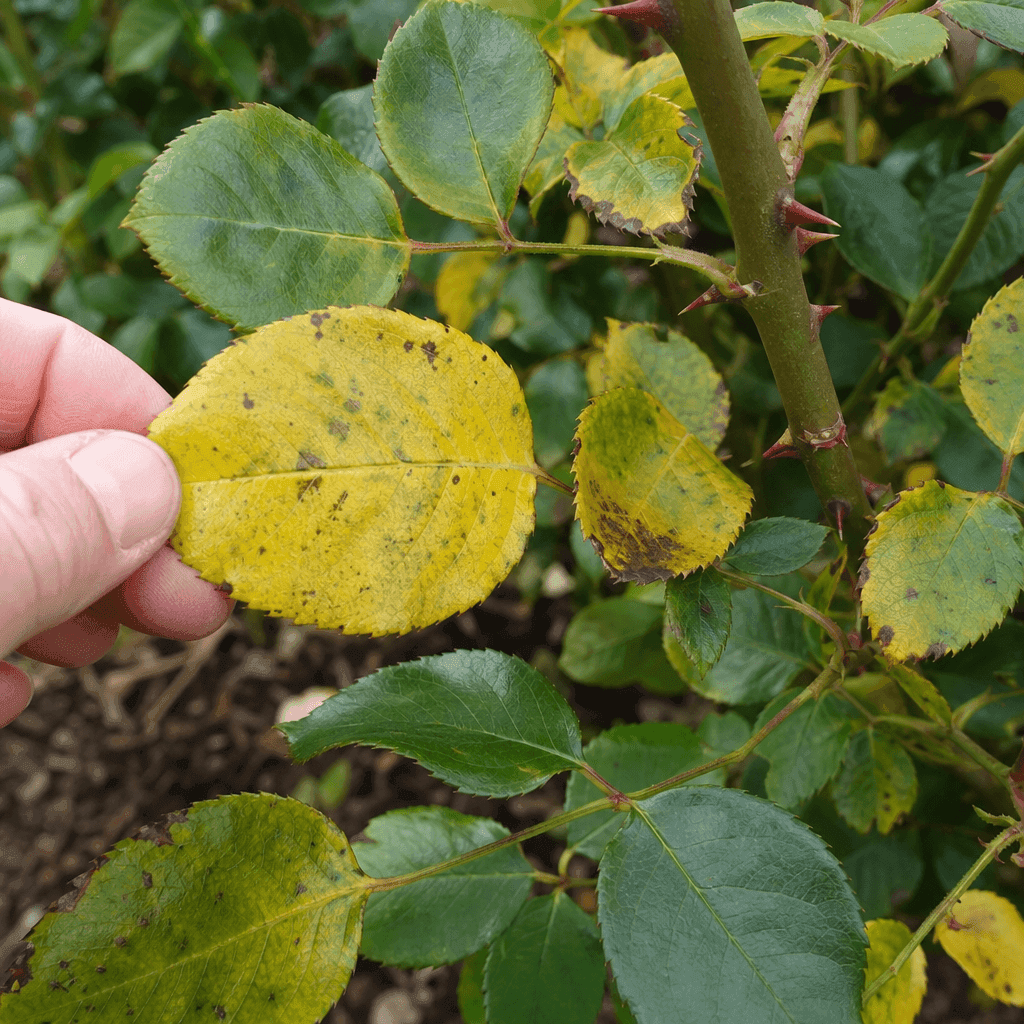
| Yellow leaves with purple-black spots, often falling early | Rose black spot | High | Spots are on the upper leaf surface; yellowing forms around them. | Pick off affected leaves, collect fallen leaves, improve airflow, avoid wetting foliage. | High |
| Small yellow spots on top of leaves with orange dusty pustules underneath | Rose rust | High | Rub the underside with a tissue — orange dust may transfer. | Remove infected leaves, prune spring stem infections, clear fallen leaves in autumn. | Medium |
| Lower leaves turn yellow and limp; the soil stays wet or the pot feels heavy | Overwatering or waterlogging | High | Push a finger 5cm into the soil; check drainage holes and standing water. | Stop watering until the top layer dries, improve drainage, lift pots onto feet. | High |
| Leaves yellow, wilt or crisp in hot, dry weather; soil is dry below the surface | Drought stress (worst in pots & new roses) | High | Soil is dry 5cm down; the pot is light; new shoots flag in heat. | Water deeply at the base, mulch after watering, watch newly planted roses. | Medium |
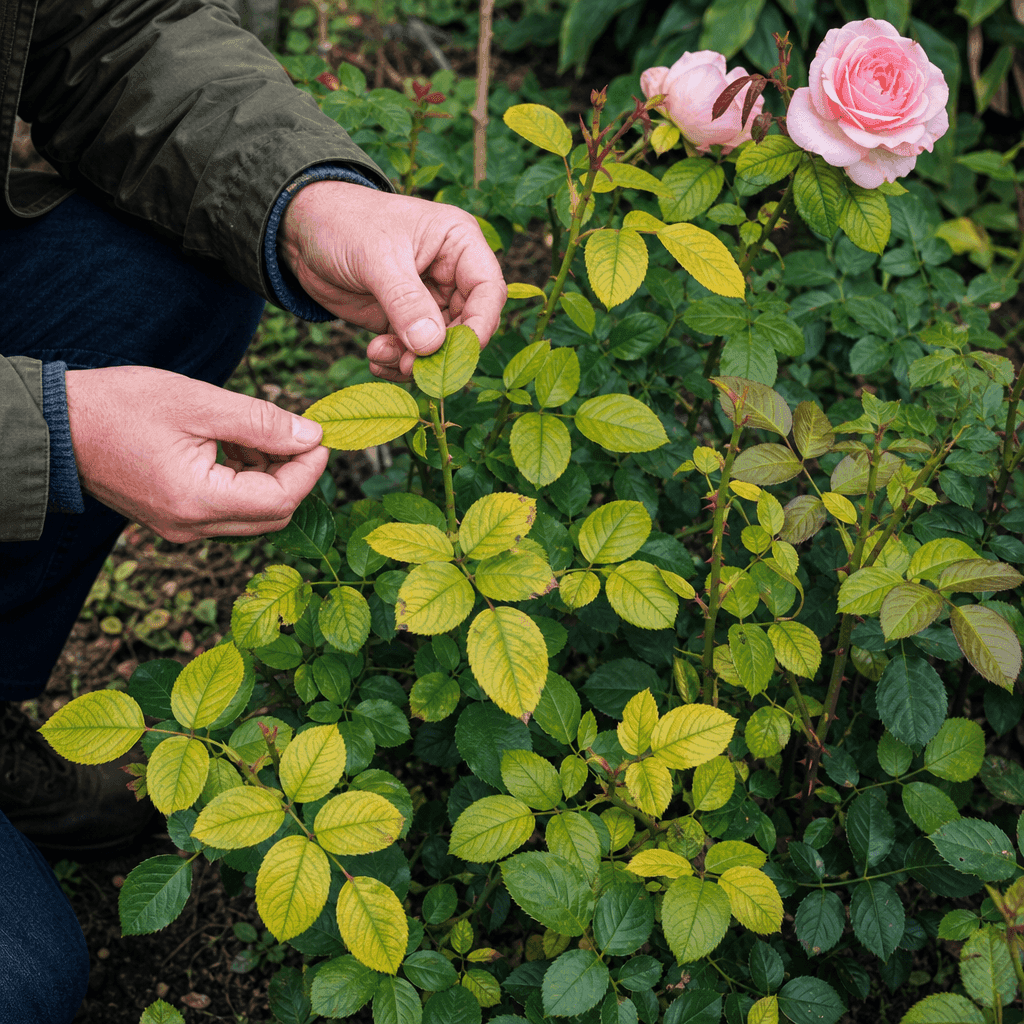
| Older leaves pale yellow first; the plant looks weak and hungry | Nitrogen shortage / low fertility | Medium | Yellowing begins on older foliage, with no spots or rust pustules. | Mulch with organic matter and use a balanced rose feed at label rate. | Low–medium |
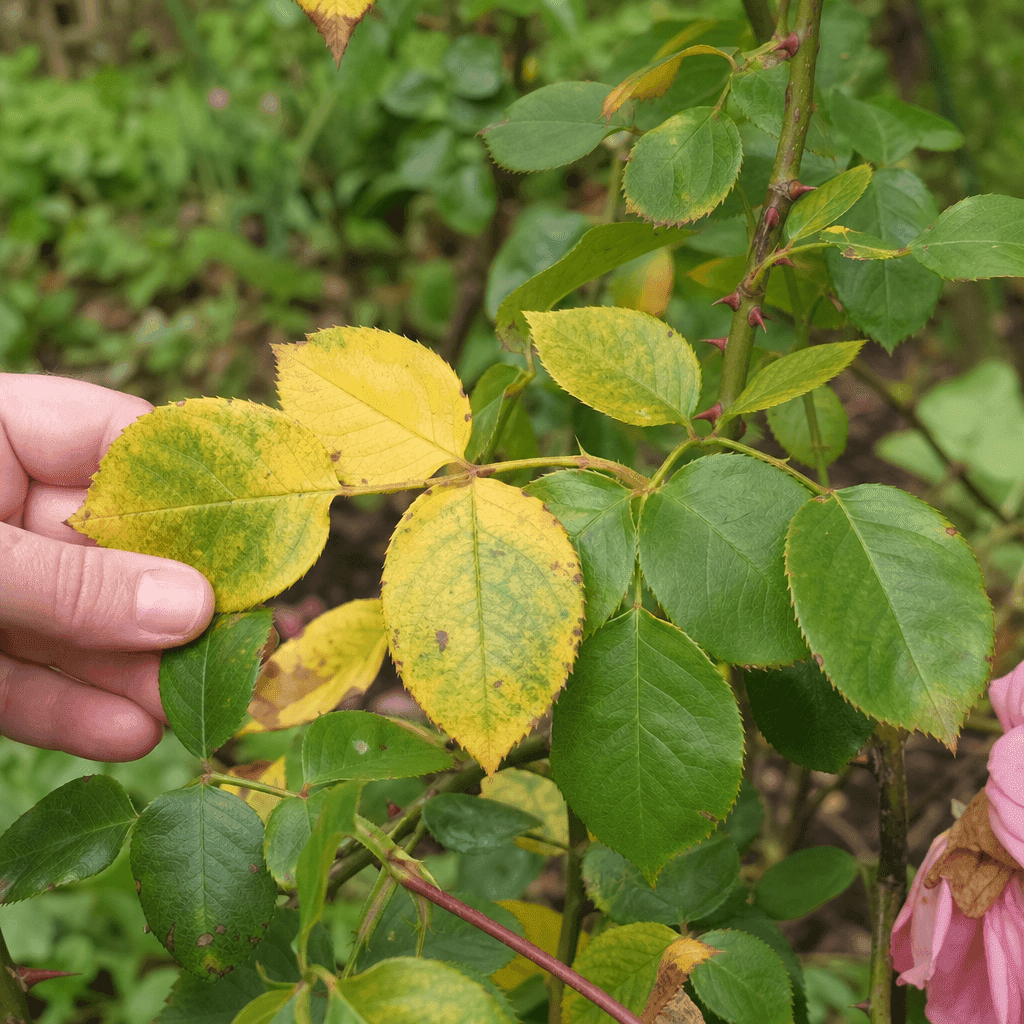
| Yellowing between the veins on older leaves, sometimes with brown dead patches | Magnesium deficiency | Medium | Veins stay greener than the tissue between them; usually older leaves. | Ease off high-potash feed; use a magnesium treatment if the pattern fits. | Low |
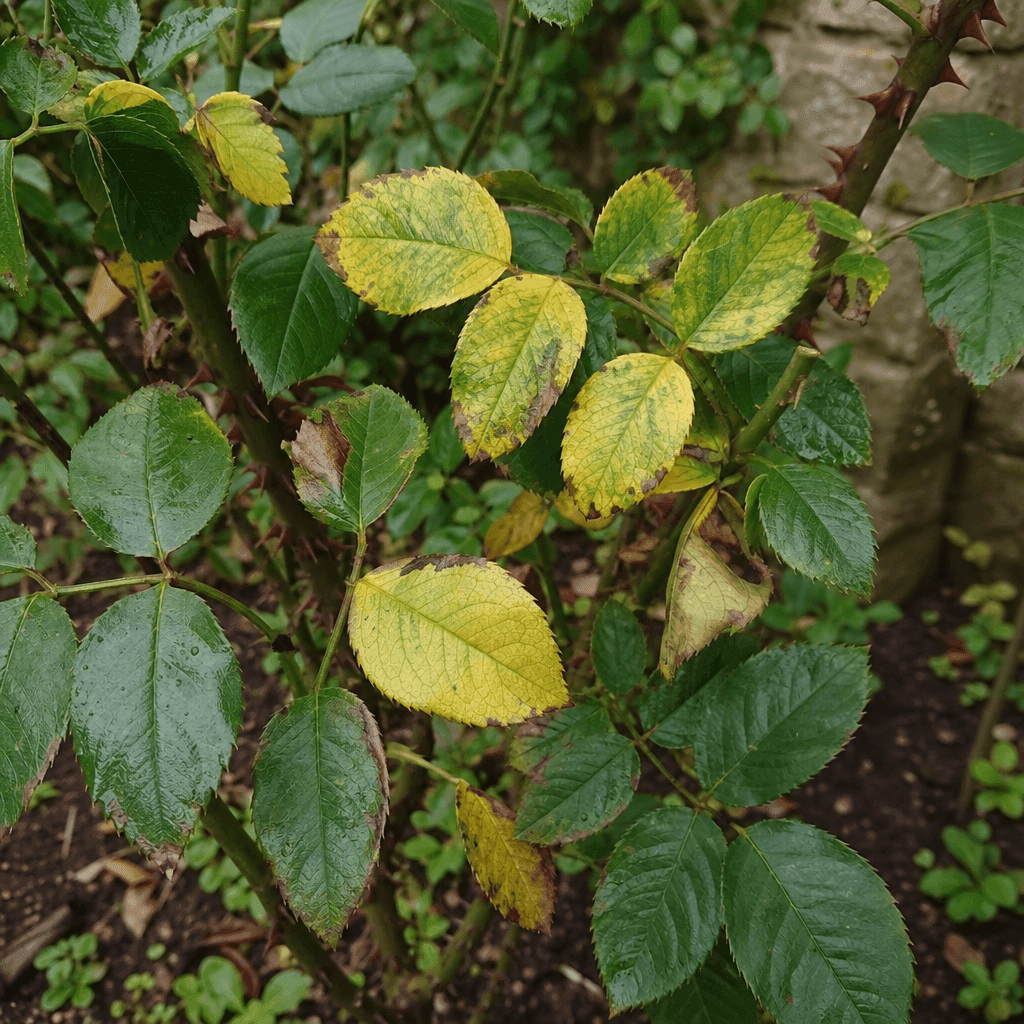
| Young leaves yellow between green veins, especially on chalky soil | Iron / manganese availability problem | Medium | Newest growth is affected first; the soil may be alkaline. | Test pH; improve conditions; use a chelated trace-element product if needed. | Low |
| Only a few old leaves inside the bush or near the base turn yellow | Natural ageing or shade | High | No spots or pests; the plant is growing and flowering well. | Remove fallen leaves if untidy; thin congested growth at pruning time. | Low |
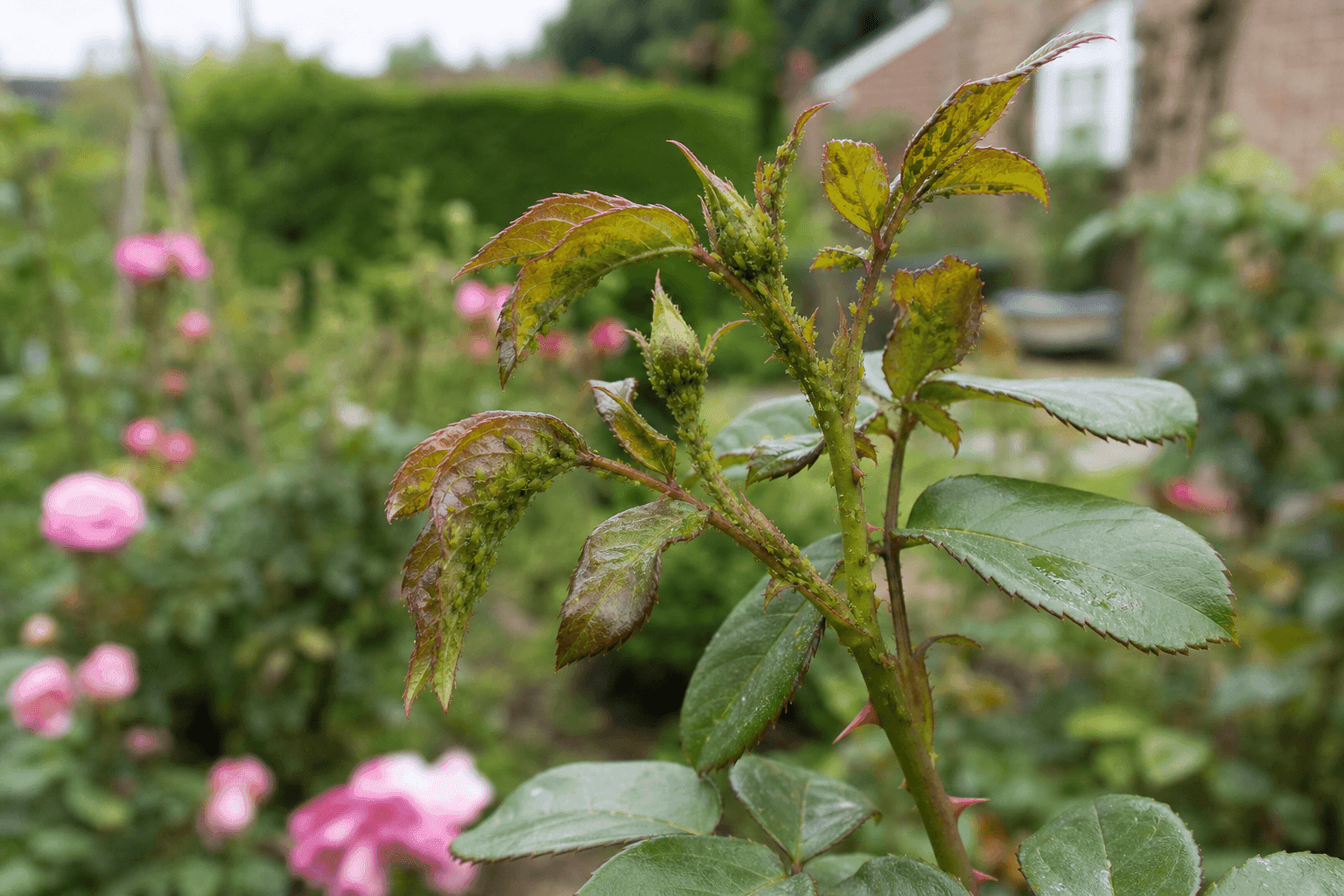
| Yellowing plus sticky residue, sooty mould, curled soft tips or visible insects | Aphids or other sap-sucking pests | Medium | Check the shoot tips and the undersides of the leaves. | Squash small colonies, use a water jet, encourage predators; avoid needless sprays. | Low–medium |
| Small, pale or distorted leaves after weedkiller use nearby | Weedkiller damage | Medium | New growth is strapped, pale, twisted or clustered, with no disease pattern. | Stop the drift or contamination, water, and wait; don't feed heavily. | Medium |
The causes, in detail
Rose black spot
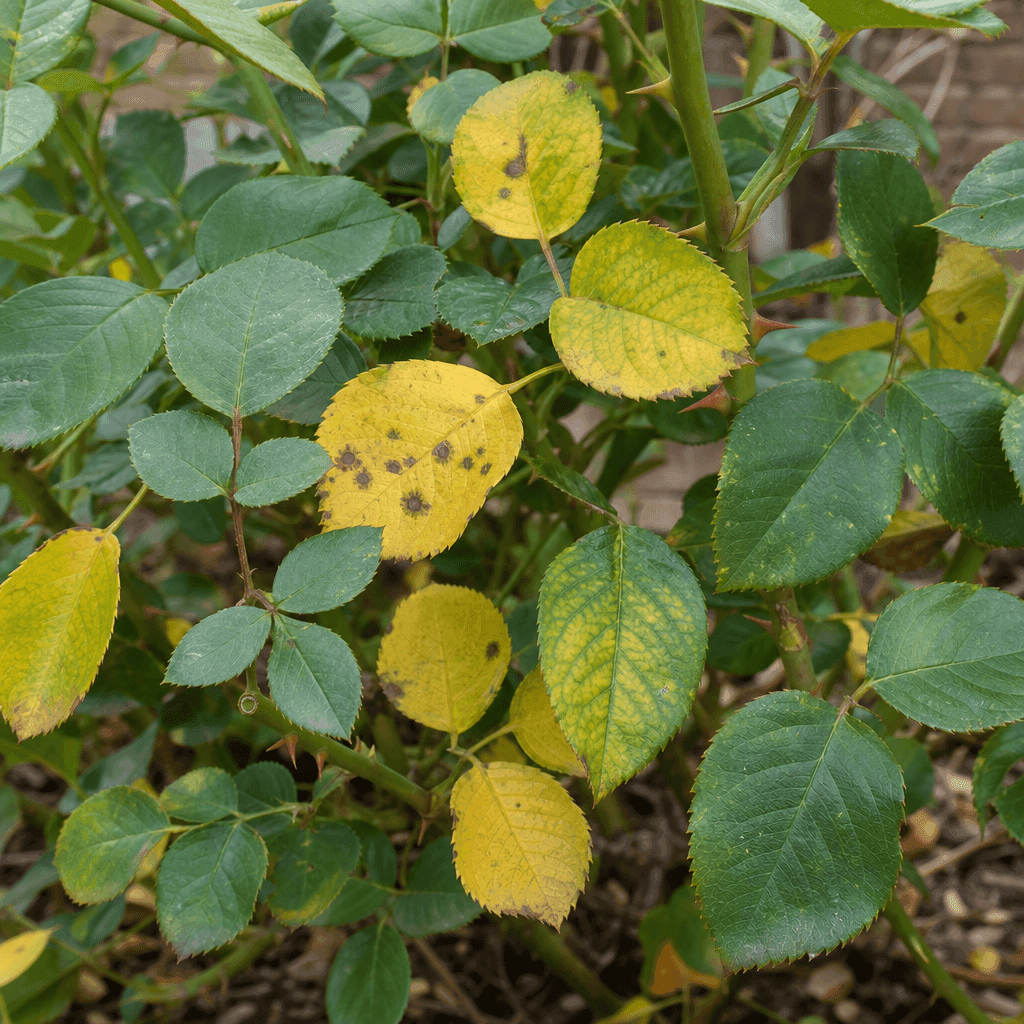
Most likelyBlack spot is the first disease to rule out when yellow leaves appear with dark markings. It's a fungal disease (Diplocarpon rosae) that throws purple-black patches across the upper leaf surface, yellows the tissue around them and drops leaves early — sapping a badly affected rose's vigour. Spotted leaves won't re-green, so judge recovery by clean new growth.
- Round or irregular purple-black patches on the upper leaf surface.
- Yellowing spreading around the spots (a hungry rose is pale without clear lesions).
- Leaves dropping before the rest of the plant looks autumnal.
- It builds from spring onwards, especially in wet weather.
- Old infected leaves lying under the bush.
- Pick off badly affected leaves — but only while the plant still has enough healthy foliage.
- Collect and bin fallen leaves from under the rose (don't compost diseased material unless your heap runs reliably hot).
- Open up congested growth at normal pruning time so air moves through the plant.
- Water at the base, never over the leaves.
- In autumn and winter, clear old leaves — the fungus survives on fallen foliage and dormant stem infections.
Stop it coming back:Grow disease-resistant varieties, keep the centre open for airflow, water at the base, and clear every fallen leaf in autumn — black spot overwinters on debris.
strip a small rose bare in one session, or rely on unregulated homemade fungicide recipes — the RHS notes they're untested. Prioritise hygiene, base watering and mulching over panic-pruning.
Rose rust
Most likelyRose rust (Phragmidium species) also yellows leaves and drops them, but the pattern differs: yellow spots on the upper surface line up with orange, dusty pustules underneath, which darken to black late in summer. It's generally less serious than black spot, but it persists through the season and overwinters on fallen leaves and stems.
- Turn the leaf over — rust is most obvious on the underside.
- Orange, dusty pustules underneath that line up with yellow spots on top.
- Later in summer, the pustules darken to black.
- It comes back on the same susceptible cultivar year after year.
- Remove affected leaves where practical.
- Prune out obvious spring stem infections as you spot them.
- Clear fallen leaves in autumn to break the cycle.
- If one cultivar gets rust badly every year while its neighbours stay clean, replace it with a more resistant rose rather than fighting it indefinitely.
Stop it coming back:Good airflow, autumn leaf clearance and resistant cultivars are the long game. Existing yellow leaves won't repair — the aim is to protect the next flush of foliage.
Overwatering or waterlogging
Most likelyWaterlogged soil is one of the most common non-disease reasons for yellow rose leaves — common in pots, heavy clay, compacted borders, or after repeated rain. The RHS explains that waterlogging fills the soil's air spaces so roots can't get oxygen; the damaged roots then can't move water, so the rose looks both yellow and thirsty at once.
- In a pot, lift it — a heavy pot usually means saturated compost.
- Push a finger 5cm into the soil and it's still wet.
- Water is sitting in saucers, decorative outer pots, or blocked drainage holes.
- A sour, stagnant smell near the roots.
- Lower leaves yellow first and feel limp rather than crisp.
- Stop routine watering until the soil starts to dry.
- Empty saucers and lift containers onto pot feet.
- Repot a poorly draining container (at the right time) into one with clear holes and a loam-based compost.
- In the ground, avoid compacting wet clay; improve structure with organic matter over time.
- If the spot floods repeatedly, move the rose to a raised bed, mound or better position.
Stop it coming back:On heavy clay, plant roses in improved, free-draining soil or raised beds, and always use containers with working drainage holes. If roots are still healthy, yellowing may slow within a week or two of fixing drainage; rotted roots recover slowly.
add fertiliser to wet, suffocated roots — fix the drainage first. Roots short of oxygen can't use feed properly.
Drought stress
Most likelyRoses hate sitting wet, but they still need deep watering in dry spells. Pots, newly planted roses, roses against warm walls and roses competing with tree roots dry out fastest — yellowing, wilting and crisping at the edges.
- The soil is dry several centimetres down.
- The pot feels light.
- Leaves yellow, wilt, crisp at the edges or drop.
- Buds fail to open properly in severe stress.
- Water slowly at the base until the whole root zone is wet.
- For pots, water until it runs from the drainage holes, then let it drain freely.
- In the ground, give one deep soak rather than a daily sprinkle.
- Mulch over moist soil afterwards, keeping it off the stems, to even out moisture.
mist the leaves in full sun and count it as watering — it does little for the roots and can encourage leaf disease if the foliage stays wet.
Nitrogen shortage / low fertility
PossibleNutrient problems are real but often over-diagnosed — the RHS warns that drought, waterlogging, shade and poor establishment can all mimic them, so rule those out first. Nitrogen shortage shows on the older leaves first: the plant looks pale, weak and slow, and it's common in long-unfed containers and free-draining sandy soils.
- The oldest, lower leaves pale and yellow first.
- Overall growth is weak, pale and slow.
- No black spots or rust pustules.
- The rose has sat in the same pot or poor soil, unfed, for a long time.
- Apply a balanced rose feed at the label rate.
- Mulch with organic matter to feed the soil and hold moisture.
keep piling on nitrogen if the plant is already lush and soft — that just invites disease and aphids.
Magnesium deficiency
PossibleMagnesium deficiency yellows the tissue between the veins on older leaves, sometimes with reddish-brown tints and dead patches. The RHS notes it's commonly seen on roses and can be brought on by overusing high-potassium fertilisers.
- Yellowing between the veins, while the veins themselves stay greener.
- Older leaves affected first.
- Sometimes reddish-brown tints or dead patches.
- A history of heavy high-potash feeding.
- Use a magnesium treatment according to the instructions if the pattern fits.
- Ease off high-potassium fertilisers.
guess with repeated doses of Epsom salts — more is not better.
Iron / manganese availability problem
PossibleIron and manganese availability problems show as yellowing between the veins on the youngest leaves, typically where the soil is alkaline or chalky and the nutrients are locked up rather than genuinely absent.
- The newest growth is affected first (unlike nitrogen and magnesium, which hit old leaves).
- Veins stay green while the tissue between them yellows.
- The soil is chalky or alkaline.
- Test the soil pH before trying to change anything.
- Use a suitable chelated (sequestered) trace-element product if the pattern fits.
- On chalk, lowering pH in open ground is hard — the long-term answer is improving conditions and choosing roses suited to the soil.
Stop it coming back:Match plants to your soil; on chalk, grow roses in improved soil or large containers of suitable compost.
Natural ageing and shade
Most likelyA few yellow leaves low down or deep inside a dense bush can be completely normal. As the canopy thickens, old shaded leaves stop earning their keep, so the rose sheds them and carries on.
- The rose is otherwise growing, flowering and pushing healthy new leaves.
- No black spots, rust pustules, sticky residue or widespread wilting.
- The yellowing is limited to older, shaded leaves inside or at the base.
- Remove fallen leaves to keep the base tidy.
- At the proper pruning time, open the centre slightly so light and air reach the plant.
hard-prune in summer just because a few shaded leaves have yellowed.
Aphids and sap-sucking pests
PossibleAphids are common on roses in spring and summer, clustering on the soft shoot tips and buds. They usually cause distorted growth, sticky honeydew and sooty mould rather than plain yellowing on its own — but heavy sap-sucking can yellow and weaken foliage.
- Check the undersides of the leaves and the soft growing tips.
- Look for clusters of greenfly, sticky honeydew, sooty mould or ants.
- Distorted, curled new growth alongside the yellowing.
- Squash small colonies by hand or wash them off with a jet of water.
- Encourage ladybirds, hoverflies and other predators.
- Tolerate low numbers — the predators usually catch up.
reach for broad insecticides, especially while flowers are open and pollinators are active.
Weedkiller damage
PossibleIf new growth turns small, pale, strapped or twisted with no disease pattern — and especially after weedkiller has been used nearby — suspect herbicide drift or contamination. Roses can be hit by spray drift, or by hormone weedkiller residue carried in mulch or compost.
- The newest growth is strapped, narrow, pale, twisted or clustered.
- There's no black spot, rust or pest pattern to explain it.
- Weedkiller was sprayed nearby, or contaminated clippings or compost were used.
- Stop the source — no more spraying near the rose, and remove any suspect mulch or compost.
- Keep the rose watered and wait to see what the next growth looks like.
- Let it grow out rather than intervening hard.
feed heavily or prune hard in a panic — there's no spray that reverses herbicide injury, and clean new growth is the only real test.
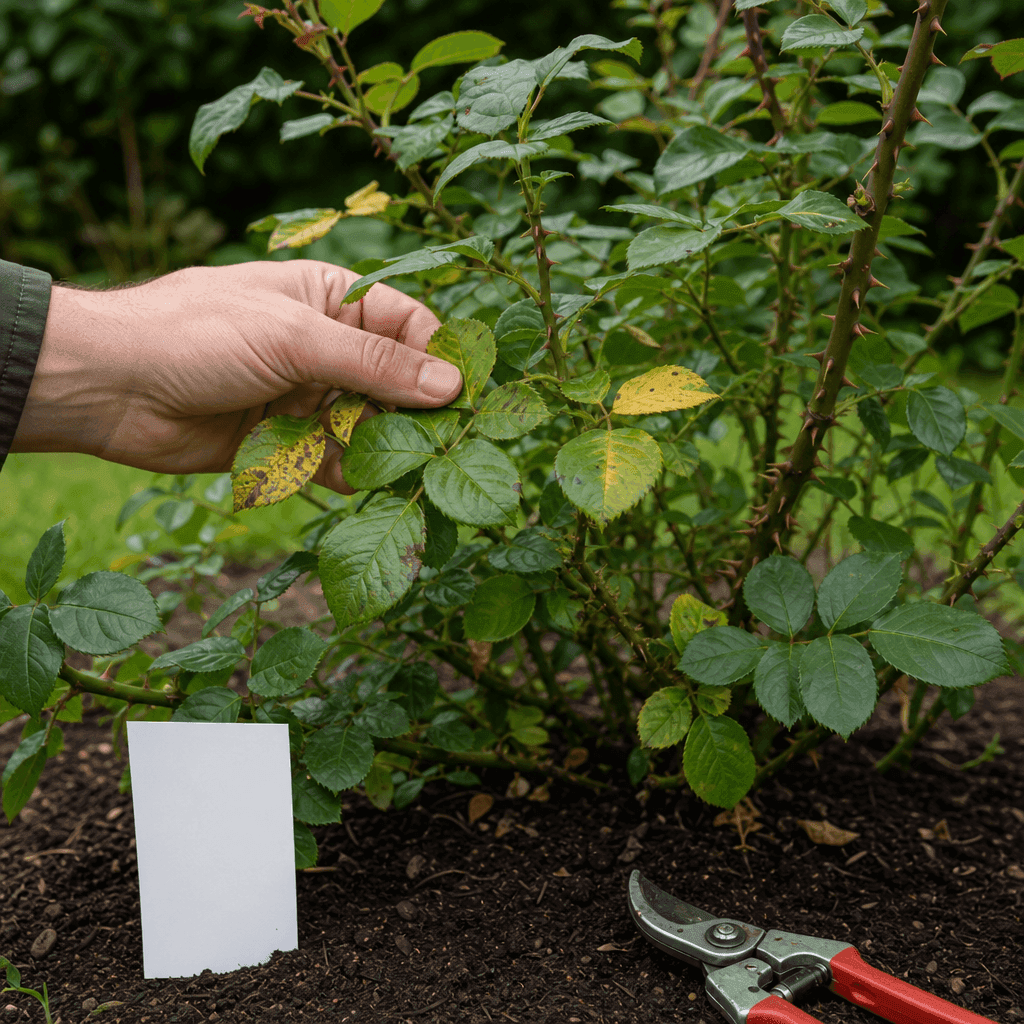
Still not sure?
Work down these branches — the first one that matches is your answer.
What not to do
- Feed, spray or prune hard before you've worked out which pattern you're seeing.
- Add fertiliser to wet, waterlogged roots — fix the drainage first.
- Strip a healthy rose of every yellow leaf; if they're just old or shaded, removal is only cosmetic.
- Rely on unregulated homemade fungicide recipes — the RHS notes they're untested.
- Compost leaves with black spot or rust unless your heap reliably runs hot; bin them instead.
- Keep dosing with Epsom salts or extra nitrogen on a guess — more is not better.
Common questions
How do you treat yellow leaves on roses?
First identify the pattern. Black spots need hygiene and black spot control. Orange pustules underneath mean rust. Wet soil needs drainage and less watering. Dry soil needs deep watering. Plain pale older leaves may need feeding — but only after water and disease problems are ruled out.
What does an overwatered rose look like?
An overwatered rose often has yellow, limp lower leaves and soil that stays wet. In pots, the container may feel heavy and water may sit in a saucer or decorative outer pot. Severe cases lead to root rot and dieback.
Should I remove yellow leaves from roses?
Remove yellow leaves if they show disease such as black spot or rust, and collect fallen leaves from under the bush. If only a few old, shaded leaves are yellow, removal is mostly cosmetic — they won't turn green again, but the plant doesn't need stripping.
Can yellow rose leaves turn green again?
Usually no. Once a rose leaf has turned fully yellow, it rarely becomes a useful green leaf again. Judge recovery by the health of the new growth, not by whether old yellow leaves recover.
Why are my rose leaves turning yellow with black spots?
Yellow rose leaves with black spots are most likely rose black spot, a common fungal disease. Remove affected leaves, clear fallen leaves, water at the base, improve airflow, and don't let infected debris sit under the plant.
Why are my rose leaves yellow with green veins?
Yellow leaves with green veins suggest chlorosis. On older leaves it may point to magnesium deficiency; on young leaves it may point to iron or manganese availability, often linked to alkaline soil or poor root function.
Are yellow leaves on roses normal in autumn?
Yes — some yellowing and leaf drop is normal as roses slow down for winter. The key is timing and pattern: autumn yellowing without spots, pests or wilting is far less worrying than yellow, spotted leaves in active growth.