Quick diagnosis
Match the row to what you’re seeing, then jump to the fix.
| What you see | Likely cause | Confidence | How to confirm | What to do now | Urgency |
|---|---|---|---|---|---|
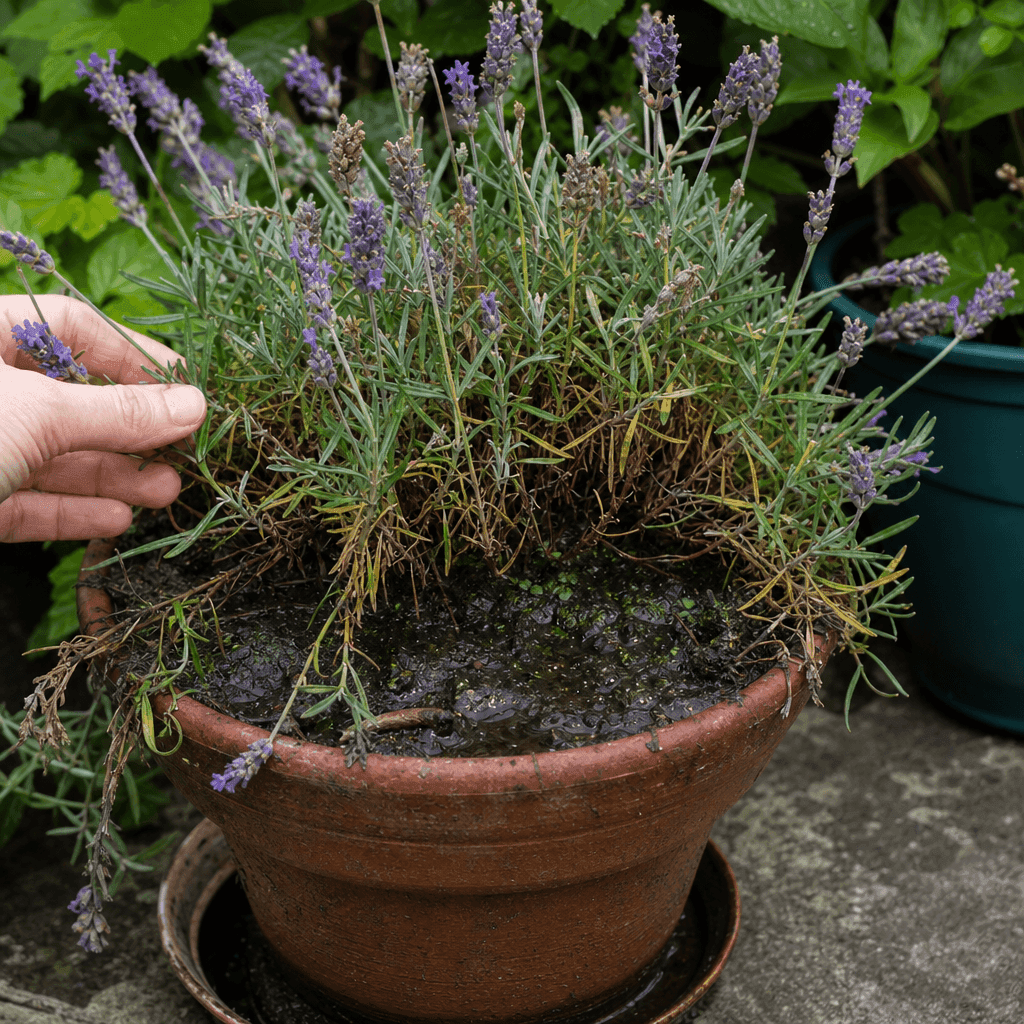
| Plant collapses or wilts; grey-brown from base; soil stays wet | Root rot from waterlogging (Phytophthora or Pythium) | High | Check drainage — does water sit on the surface for hours after rain? Roots are brown and mushy rather than white and firm | If caught early: improve drainage urgently, do not water. If roots are fully rotten: discard plant, improve drainage, and replace | High |
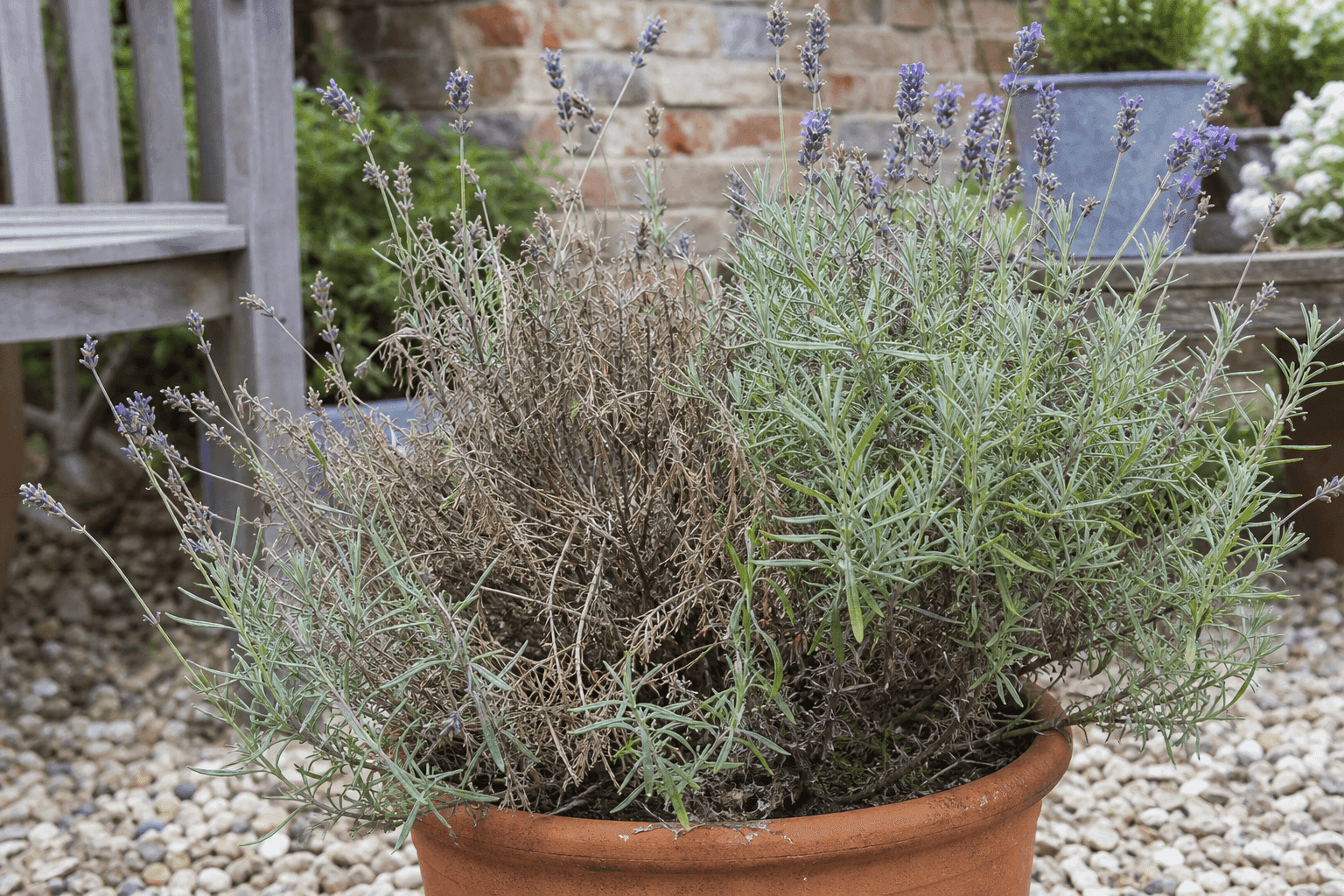
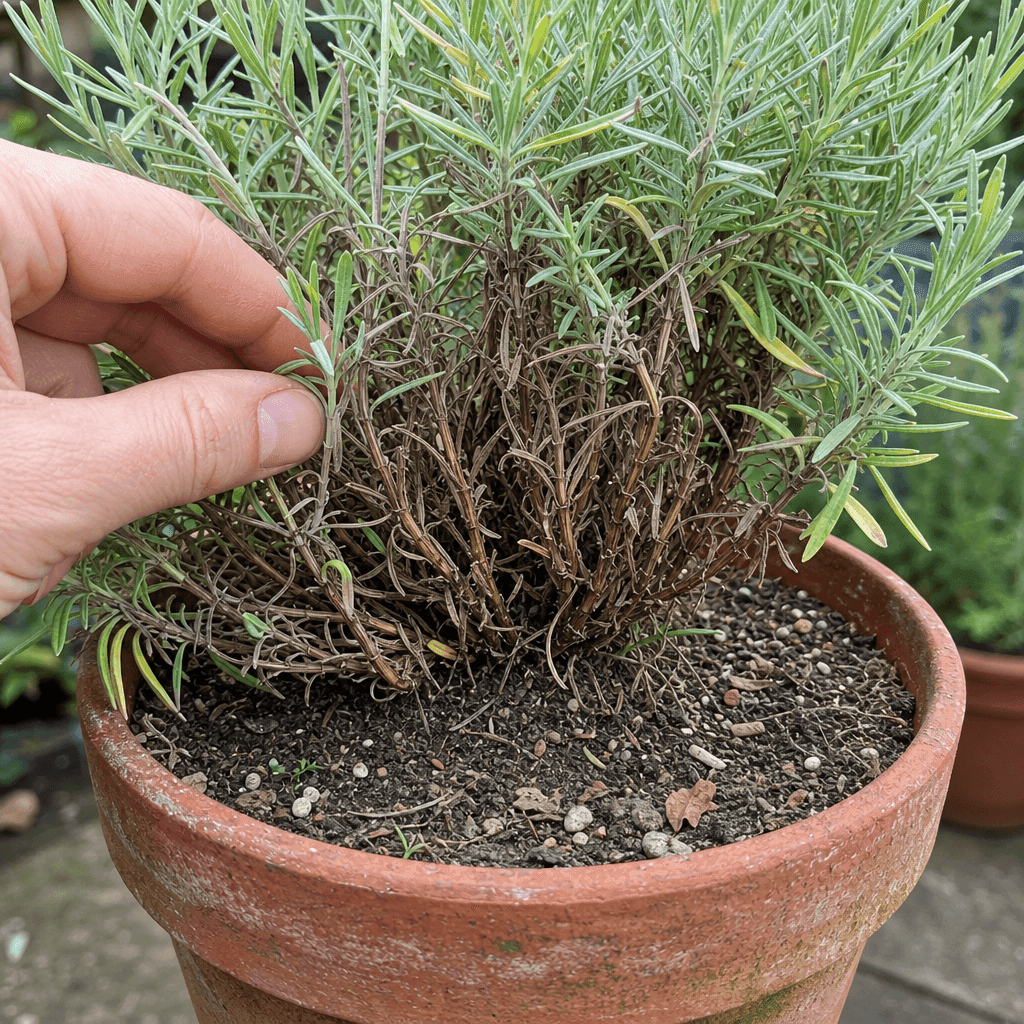
| Ring of bare brown woody stems with only small green tufts at tips | Over-woody growth from lack of pruning | High | No green shoots emerge from the main woody stems when scratched — only the tip growth is green | Prune back into green growth immediately after flowering; never cut into bare grey wood | Medium |
| Individual stems die back suddenly, turning grey then brown; rest of plant may look healthy | Shab disease (Phomopsis lavandulae) | Medium | Stem death is rapid and affects individual shoots; small dark fruiting bodies may be visible on dead stems under magnification | Cut out affected stems to healthy wood; disinfect tools; do not compost; improve airflow | High |
| Soft, limp growth; yellowing lower foliage; compost stays wet | Overwatering (especially in pots) | Medium | Compost is wet or soggy when pressed; drainage holes may be blocked; plant is in shade | Stop watering immediately; improve drainage or move to a sunnier, drier spot | Medium |
| Soft new growth blackens after a cold night in spring or late autumn | Frost damage on tender new growth | Medium | There was a recent sharp frost; only the newest soft growth is affected; woody older stems are fine | Wait until all frost risk has passed, then cut back to healthy buds; do not cut in late autumn | Low–medium |
| Plant is ten or more years old; minimal flowers; very woody throughout | Natural end-of-life | Medium | No green growth emerges from woody stems even in spring; plant has had declining flower production for several years | Replace with a new plant; improve drainage and dig in grit before replanting | Low |
The causes, in detail
Root rot from waterlogging
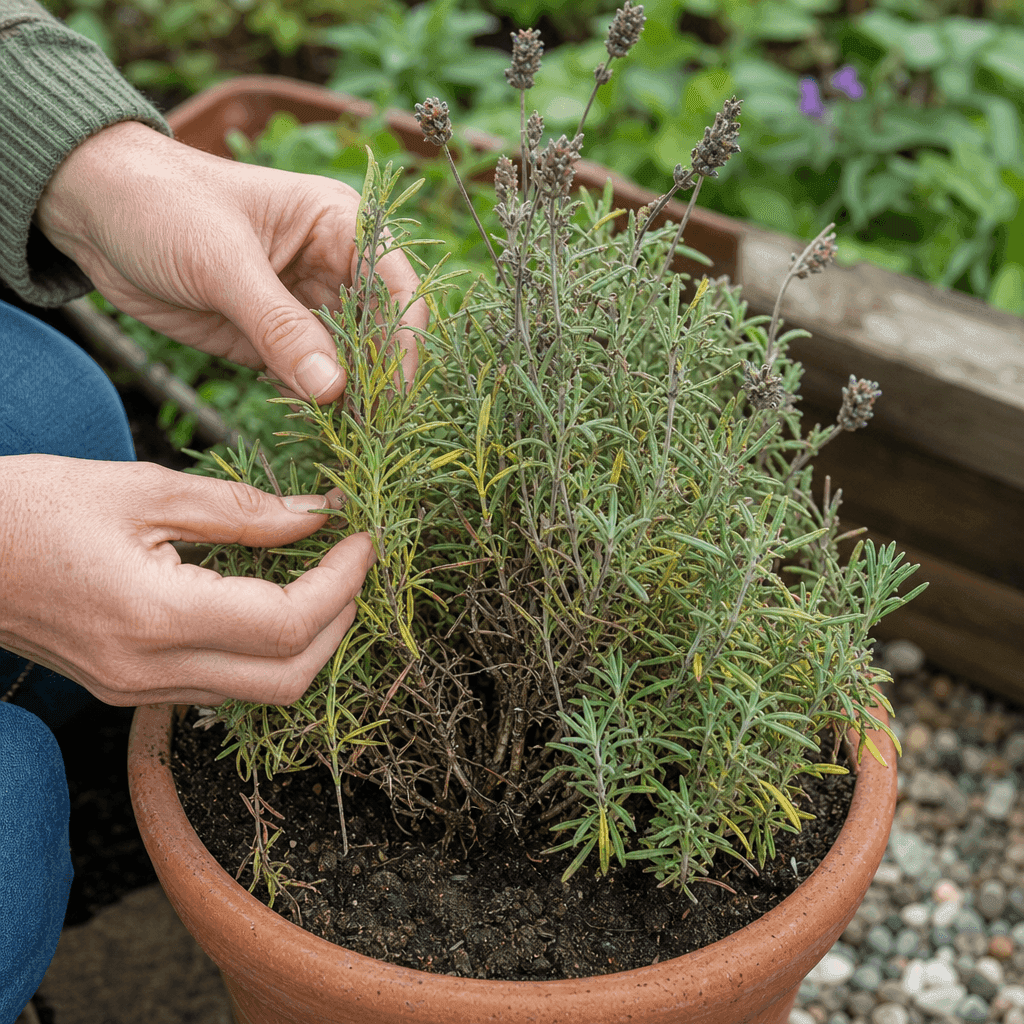
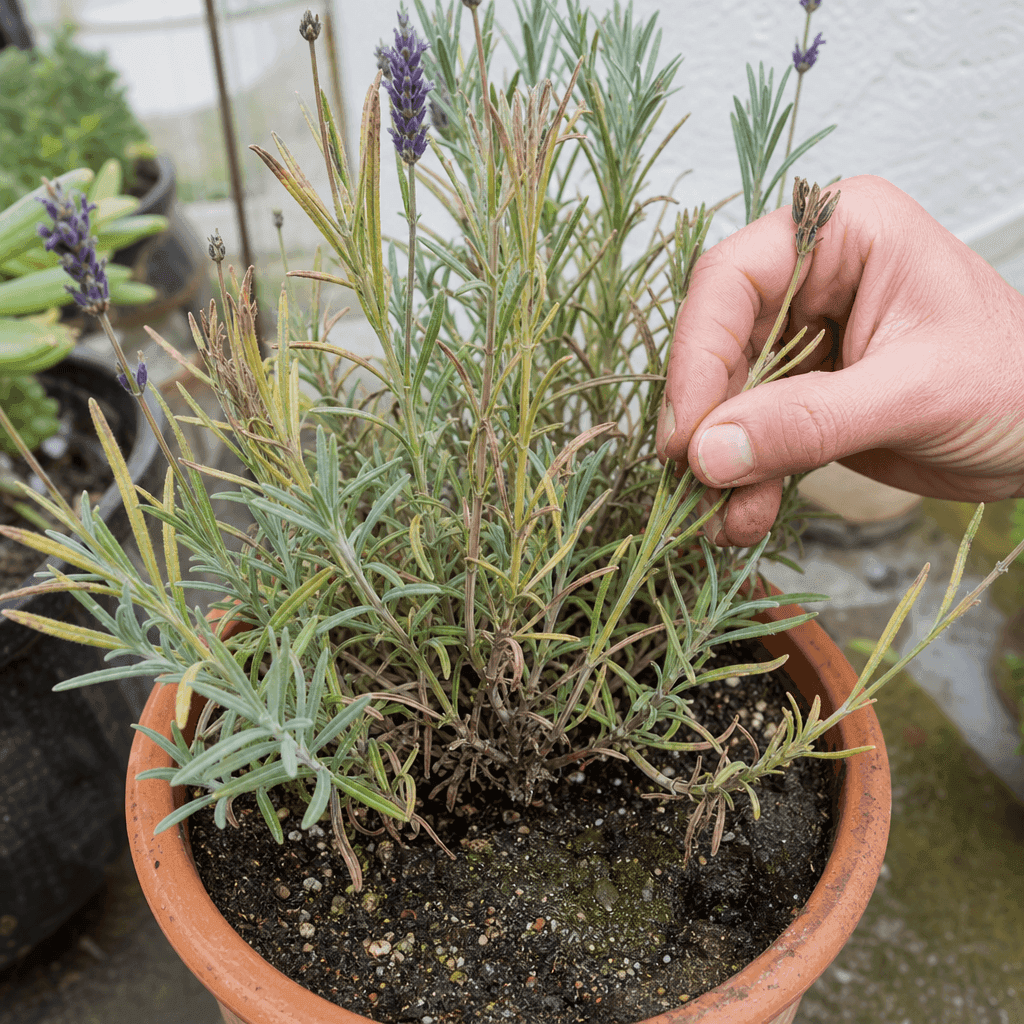
Most likelyRoot rot is caused primarily by the water mould pathogens Phytophthora and Pythium, which thrive in saturated, oxygen-starved soil. The RHS notes that Phytophthora root rot causes rapid wilting and brown-black discolouration of roots and the stem base. Lavender roots are particularly intolerant of sustained waterlogging and can begin to rot within two to three weeks in poorly drained soil. The problem is worst on heavy clay, in low-lying spots, under tree canopies, and in pots without drainage holes. Plants often appear to 'collapse' in early spring as the soil warms — in fact, the roots rotted over winter but the damage is only visible once growth is expected.
- Soil or compost remains wet for hours or days after rain or watering.
- Roots are brown, soft or mushy — healthy lavender roots are white and firm.
- The stem base is soft, discoloured brown or black at soil level.
- The plant does not recover after a period without rain.
- Heavy clay soil, low-lying site, or a pot with blocked drainage.
- If the plant is in a pot: check drainage holes, empty any saucer, raise on pot feet.
- If some roots are still white and firm: move to a well-drained, sunny spot or re-plant into a raised bed with added horticultural grit.
- Do not water further until the soil has dried sufficiently.
- If roots are completely brown and mushy, there is no recovery — discard the plant and improve drainage before replanting.
- Dig at least 30cm of grit or sharp sand into heavy clay before planting a replacement.
- The RHS recommends that affected soil should not be replanted with another Phytophthora-susceptible plant for several years.
Stop it coming back:Plant lavender on a slight slope, in raised beds, or with at least 30% horticultural grit mixed into the planting hole. In containers, use a gritty, free-draining compost and always ensure drainage holes are open.
water a lavender that is showing signs of root rot — even a small additional amount of water in an already saturated root zone can finish the plant off.
Over-woody growth from lack of pruning
Most likelyLavender produces new flowering growth from near the tips of established stems but cannot regenerate from old, woody grey wood. Garden Ninja and Blooming Expert both highlight that the most common reason lavender looks 'dead' in UK gardens is unpruned, overly woody growth — the plant is not necessarily dying, but its productive zone has migrated entirely to the tips. Without annual pruning to keep green growth near the base, the plant becomes a woody skeleton that is very difficult to restore.
- The main stems are thick, grey and woody with no green growth emerging from them.
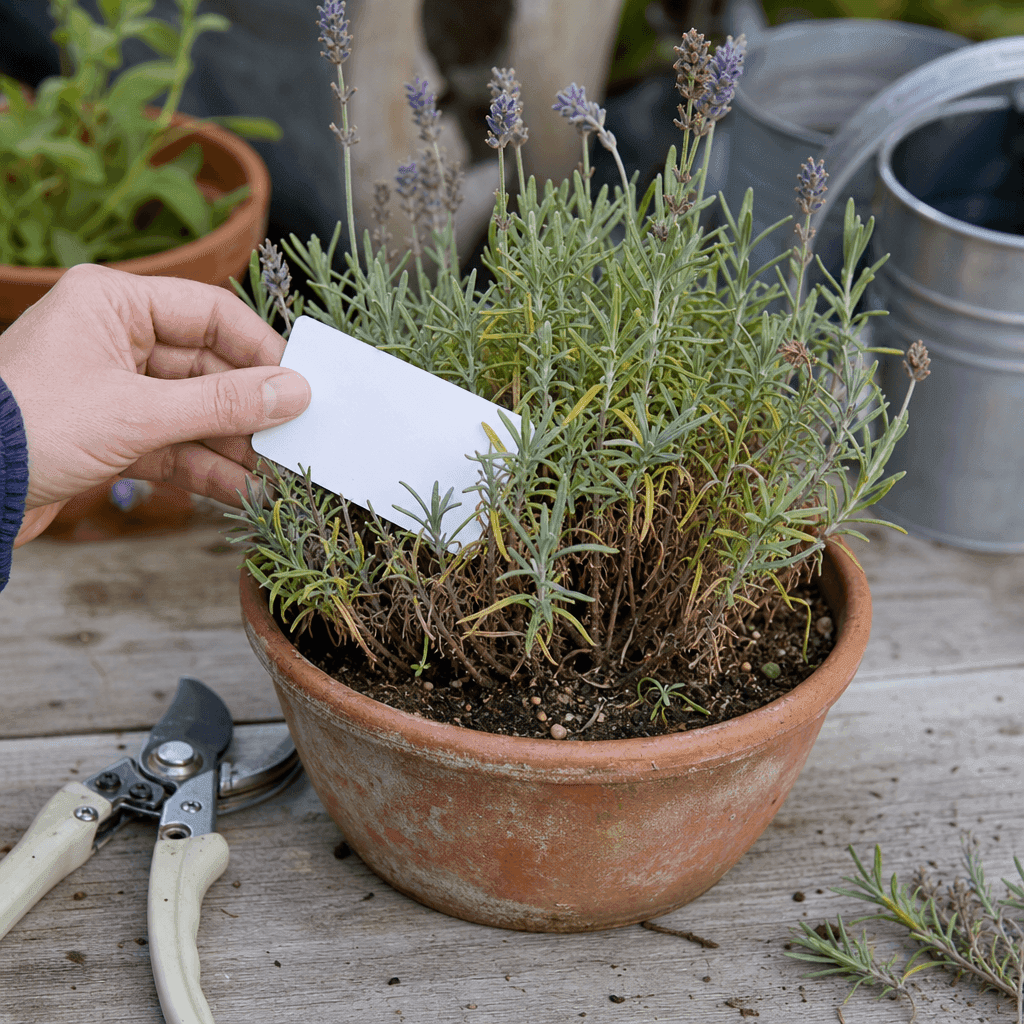
- Scratch the bark with a fingernail — if there is no green tissue beneath, the stem is truly dead wood.
- Only small tufts of green foliage are visible at the very tips.
- The plant has not been pruned for two or more years.
- Immediately after flowering (late summer for most English lavender and lavandin), cut back by about one third — cutting into green growth, not into bare grey wood.
- If some green growth exists near the base, cut back to just above those shoots.
- Do not cut into completely bare, leafless grey wood — lavender will not regenerate from old wood.
- If only the tips have green growth, consider taking cuttings from the healthy green tips, rooting them, and discarding the mother plant.
- Replace an entirely woody plant with a new one and begin pruning it from the first year.
Stop it coming back:Prune lavender lightly every year — once after the first flush of flowers in summer, and optionally a very light tidy in early spring (not in autumn or early winter). Regular light pruning keeps the plant bushy and extends its productive life.
hard prune lavender in autumn or winter — cold weather on fresh pruning cuts can kill the plant. The optimal pruning time is immediately after flowering in summer.
Shab disease (Phomopsis lavandulae)
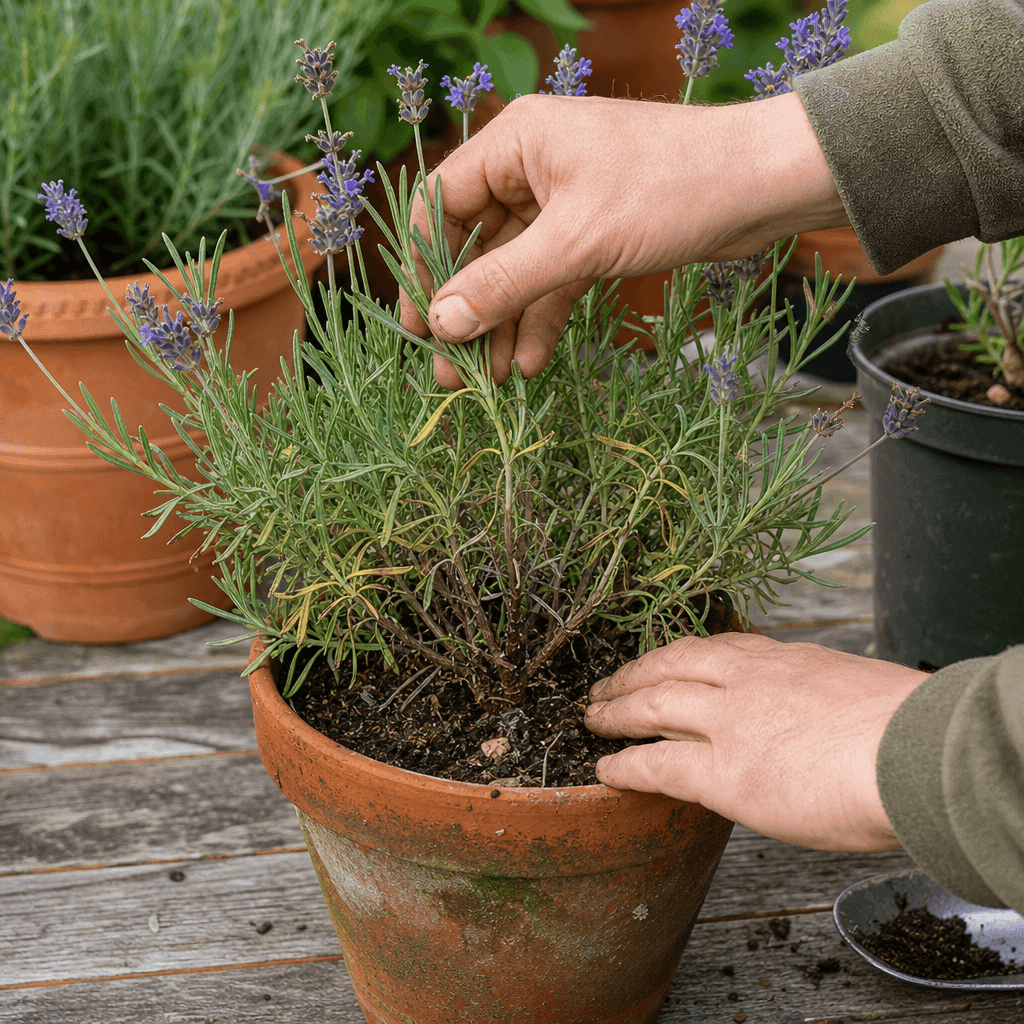
PossibleShab is a fungal disease specific to lavender caused by Phomopsis lavandulae. It typically enters through pruning wounds, frost damage or mechanical injury and causes sudden stem death that spreads rapidly from individual shoots to whole sections of the plant. Ashridge Trees and Island Lavender both describe shab as one of the most destructive lavender fungal diseases in the UK, with no effective fungicide available to amateur gardeners. Infected stems turn grey then brown, shrivelling rapidly, and small black fruiting bodies (pycnidia) may be visible on dead stems under a hand lens.
- Individual stems die suddenly, turning grey and then brown.
- The rest of the plant may initially look healthy.
- Damage appears after a wound — pruning, frost, or mechanical damage.
- Small black dots may be visible on dead stems under magnification.
- The disease can spread to engulf entire sections of the plant.
- Cut out every affected stem back to healthy, live wood — at least 5cm below the visible discolouration.
- Disinfect secateurs with methylated spirit or a garden disinfectant between every cut.
- Do not compost affected material.
- Improve airflow around the plant — shab spreads faster in humid conditions.
- If more than 50% of the plant is affected, consider discarding it and starting with a disease-free plant.
- Do not prune in cold, wet weather when wound healing is slow.
Stop it coming back:Always prune lavender in dry weather, with sharp, clean tools. Avoid pruning in autumn when cold wounds heal slowly. A vigorous, well-drained plant is more resistant to shab entry.
confuse shab with frost damage or overwatering — shab tends to kill individual stems suddenly from a wound point, while frost kills only the very newest soft growth and root rot kills from the base upwards.
Overwatering (especially in pots)
PossibleEstablished lavender in the ground rarely needs watering in the UK after its first season. Container lavender is at much higher risk of overwatering because the compost can stay wet for days even in summer, especially in a north-facing spot. Overwatering without root rot (i.e., soggy compost without Phytophthora infection yet) causes soft, limp foliage, yellowing of lower leaves and poor flowering. Lavender in a pot with blocked drainage holes can be killed by overwatering in a single wet period.
- Compost feels wet or squelchy when pressed.
- Lower foliage is yellowing and soft rather than the normal grey-green.
- The plant is in shade or a poorly ventilated spot.
- Drainage holes are blocked with roots or the pot is sitting in a full saucer.
- Stop watering immediately; empty any saucer.
- Clear blocked drainage holes and raise the pot on feet.
- Move to the sunniest, most exposed spot available.
- Do not water established lavender in the ground during spring or autumn in the UK; water newly planted lavender only until established.
- Consider moving a potted lavender to a larger container with a very gritty, free-draining mix (50% horticultural grit to 50% compost).
add fertiliser to a lavender that is struggling from overwatering — lavender is an extremely low-nutrient plant and extra feed encourages the kind of soft, disease-prone growth it cannot sustain.
Frost damage on new growth
PossibleEnglish lavender (L. angustifolia) and lavandin (L. x intermedia) are generally hardy throughout the UK, but soft new growth produced in a warm autumn or early spring is vulnerable to late frost. French lavender (L. stoechas) and fringed lavender (L. dentata) are only half-hardy and can be killed outright by a severe UK winter. Frost damage on lavender looks like sudden blackening or browning of soft new shoots; older woody stems are usually undamaged.
- Blackening or browning of only the very newest, softest growth.
- There was a frost — check the weather record or the presence of frost damage on other tender plants nearby.
- Older woody stems scratch green (alive) beneath the bark.
- The damage appeared overnight.
- Do not prune frost-damaged lavender immediately — further frosts may follow.
- Once the last frost date has passed (typically mid-May in most UK regions), cut back to healthy buds.
- Move potted French or fringed lavender under cover before temperatures drop below -5°C.
- In colder UK regions, mulch the base of borderline-hardy species in autumn.
Stop it coming back:Avoid pruning lavender in late autumn or winter as the fresh wounds are vulnerable. If a mild autumn produces flush of soft growth, do not encourage it with watering or feeding.
prune back frost-damaged growth immediately in case more frosts follow — wait until the threat has fully passed.
Natural end-of-life in old plants
PossibleLavender is a relatively short-lived woody sub-shrub. Well-managed English lavender or lavandin typically lives eight to twelve years; French lavender, four to six. Gardeningknowhow and Garden Ninja both note that a lavender that has been grown well but is now wholly woody, producing few flowers and regenerating poorly, is likely at the end of its productive life. Replacement, rather than rescue, is the pragmatic response.
- The plant is ten or more years old.
- Every stem is thick, grey and woody — no green growth near the base even in spring.
- Flower production has declined each year for three or more years.
- The plant has been pruned correctly but still looks exhausted.
- Take softwood cuttings from the healthiest green shoot tips in early summer — lavender roots very easily.
- Dig out the old plant, removing as much of the root system as possible.
- Dig in 20–30% horticultural grit before replanting to improve drainage.
- Plant a new, young plant of the same or a disease-resistant variety.
- Resume annual pruning from the very first year.
attempt a hard cutback of a wholly woody, aged lavender — lavender cannot regenerate from bare grey wood and the plant will simply die without producing new shoots.
Still not sure?
Work down these branches — the first one that matches is your answer.
What not to do
- Prune lavender hard into bare, grey, leafless wood — it will not re-shoot.
- Prune in autumn or winter — cold, fresh cuts are slow to heal and invite disease.
- Water established garden lavender through a UK spring or autumn — it needs almost no watering after the first year.
- Plant lavender in heavy clay without adding substantial grit — poor drainage is the primary killer.
- Feed lavender with high-nitrogen fertiliser — it encourages soft, disease-prone growth and reduces flowering.
Common questions
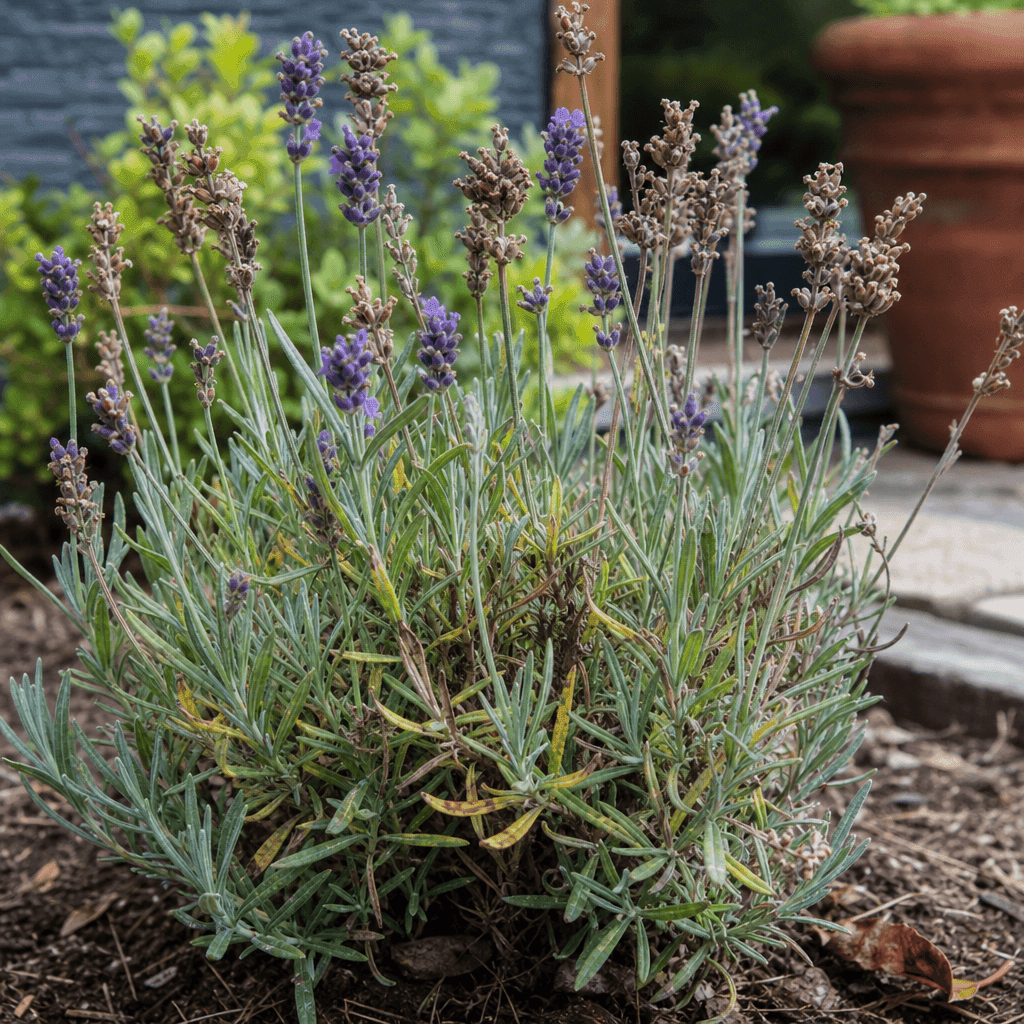
Can I save a lavender that has gone woody?
Only if there is still green growth visible somewhere near the base of the stems. Cut back to just above those green shoots after flowering. If every stem is entirely grey and leafless with no green tissue beneath the bark, the plant cannot regenerate — take cuttings from any surviving green tips and replace the mother plant.
Why has my lavender turned brown?
The most common causes in the UK are poor drainage causing root rot, old woody growth with no new foliage, shab disease (which kills individual stems suddenly), frost damage on new growth, or natural die-back in a very old plant. Check soil drainage first — if the soil stays wet, root rot is the most likely cause.
When should I prune lavender in the UK?
Prune English lavender and lavandin in late summer, immediately after the main flush of flowers fades — usually August to early September. Cut back by about one third into green, leafy growth. Never cut into bare grey wood. A second, very light tidy can be done in early spring. Do not prune in autumn or winter.
How do I know if my lavender has root rot?
Dig carefully near the base and check the roots. Healthy lavender roots are white, firm and fibrous. Rotted roots are brown or black, soft, and may smell sour. The stem base may also be discoloured. If more than half the roots are rotten, the plant is unlikely to recover.
Is French lavender hardy in the UK?
French lavender (Lavandula stoechas) is only borderline hardy in the UK — it can survive mild winters but is killed by sustained frosts below about -5°C. It is best grown in a sheltered spot in the south, brought under cover in cold regions, or replaced each year. English lavender and lavandin are much hardier.
How long does lavender live?
English lavender (Lavandula angustifolia) and lavandin (L. x intermedia) typically live eight to twelve years with good care and annual pruning. French lavender lives four to six years. Plants that have never been pruned may become wholly woody and exhausted within five to six years.
Why is my lavender dying from the base?
Die-back from the base almost always means root rot from waterlogging or Phytophthora infection. Check whether the soil stays wet after rain and whether roots are brown and mushy. There is no cure once root rot is established — improve drainage and replace the plant.