Quick diagnosis
Match the row to what you’re seeing, then jump to the fix.
| What you see | Likely cause | Confidence | How to confirm | What to do now | Urgency |
|---|---|---|---|---|---|
| Flowers drop before setting; plant was moved outside early or is in a poorly ventilated greenhouse in hot weather | Temperature too low or too high | High | Check night temperatures — below 10°C causes flower drop; daytime polytunnel temperatures above 30°C cause sterile pollen. | Move plants under cover at night if below 10°C; ventilate greenhouses on hot days; shade if needed. | High |
| Very vigorous dark green lush leafy growth; few or no flower trusses appearing | Excess nitrogen | High | High-nitrogen general compost or fertiliser used; growth is very leafy and soft; flowering late or absent. | Stop nitrogen feeds; switch immediately to a high-potash tomato fertiliser. | Medium |
| Flowers are present but they drop or fail to set fruit; plant is in a greenhouse or polytunnel | Poor pollination (lack of air movement or insects) | High | Flowers appear healthy but no fruit sets; greenhouse is unventilated; few pollinating insects visiting. | Tap or vibrate flower trusses daily by hand; open vents; grow companion flowers near the door. | Medium |
| Plant is small with few leaves and no flowers | Plant too young or recently transplanted | Medium | Plant is less than 30cm tall or was recently transplanted; main stem is thin. | Give it more time; keep warm (minimum 15°C), water consistently and do not feed with nitrogen yet. | Low |
| Flowers appear briefly then drop; plant wilts between waterings | Irregular watering or drought stress | Medium | Compost dries out significantly between waterings; flowers appear then fall without setting. | Water consistently and evenly; in hot weather, large containers may need watering twice daily. | Medium |
| Long, thin, pale stems reaching toward light; no flower trusses | Insufficient light | Medium | Plant is growing in low light (indoors away from a window, or in deep shade outdoors); stems are etiolated. | Move to the sunniest available position; tomatoes need at least 6–8 hours of direct sun. | Medium |
The causes, in detail
Temperature too low or too high
Most likelyTemperature is the most critical factor in tomato flower initiation and fruit set in the UK. Horticulture Magazine confirms that tomatoes need night temperatures above 10°C to retain their flowers. Below this, flowers drop before they can be pollinated. In early UK springs, even plants in unheated greenhouses or polytunnels routinely experience night temperatures below 10°C into May. At the other extreme, daytime temperatures above 30°C — common in unventilated UK polytunnels in summer — cause pollen to clump and become non-viable, so flowers appear and drop without setting fruit. The optimal range for tomato flowering and fruit set is 18–26°C during the day and 13–18°C at night.
- Flowers drop off cleanly without any small fruitlet forming at the base.
- Check overnight temperatures at plant level in the growing space — if below 10°C, this is the cause.
- In summer, check daytime polytunnel temperature — if above 30°C for extended periods, pollen sterility is likely.
- The problem is worse on the first flower trusses to appear, which often form before the growing conditions are warm enough.
- In spring, keep plants in a frost-free, heated environment until outdoor or greenhouse night temperatures are reliably above 10°C — usually late May to early June in most UK regions.
- Use a thermometer to monitor overnight temperatures in your greenhouse or polytunnel rather than guessing.
- In summer, open all vents and doors in polytunnels on hot days; consider shade cloth to reduce midday temperature peaks.
- For outdoor plants in cold UK summers, growing varieties suited to short seasons (e.g. 'Tigerella', 'Sungold', 'Maskotka') improves reliability.
Stop it coming back:Most UK tomato growers sow seeds indoors in late March and do not move plants to cold greenhouses or outdoors until late May. This gives the best chance of flowering in warm conditions.
move tomatoes outside permanently before the last UK frost risk has passed — in most UK regions this is mid-May at the earliest, later in Scotland and northern England.
Excess nitrogen
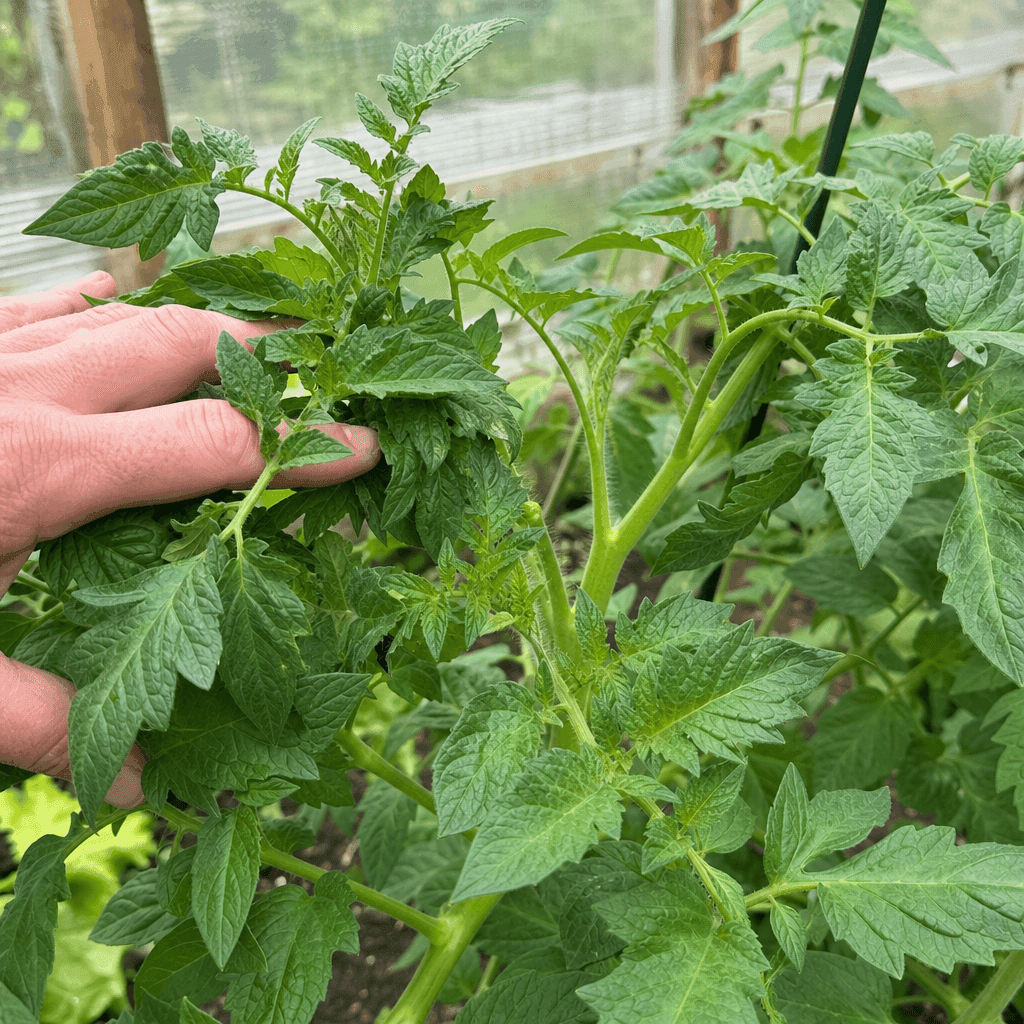
Most likelyTomatoes that receive too much nitrogen — from general-purpose fertilisers, fresh compost or farmyard manure — put their energy into producing leaves and stems rather than flowers. This is one of the most common watering and nutrient problems with UK kitchen garden tomatoes. Horticulture Magazine and the RHS both highlight excess nitrogen as a key cause of non-fruiting in tomatoes. The solution is straightforward: once the first flower truss appears, switch to a high-potassium tomato fertiliser (such as a proprietary liquid tomato feed based on sulphate of potash) and stop all nitrogen-rich feeds.
- Growth is very vigorous, dark green and leafy — side-shoots are thick and numerous.
- A high-nitrogen general fertiliser or fresh compost has been used.
- Flower trusses are appearing late or are very sparse despite the plant being large.
- The plant was grown in growing bags that have recently been opened (some contain high initial nitrogen levels).
- Stop all nitrogen-containing feeds immediately.
- Switch to a proprietary liquid tomato fertiliser (high in potassium and phosphorus) applied at the label rate, typically weekly once flowering has started.
- For plants in fresh compost or rich soil, the excess nitrogen will diminish over time — feed with high-K tomato fertiliser only and be patient.
- Pinch out side-shoots on cordon (indeterminate) varieties to reduce vegetative growth and redirect energy to fruiting.
use general-purpose fertiliser or lawn feed on tomatoes — the nitrogen drives leafy growth at the expense of flowering.
Poor pollination
Most likelyTomatoes are self-fertile — each flower contains both male and female parts and can be pollinated by its own pollen — but they need some agitation to release pollen from the anthers and transfer it to the stigma. Outdoors, wind and bumblebee vibration provide this naturally. Inside an unventilated greenhouse or polytunnel, with no air movement and few insects, flowers remain unpollinated and drop. She Grows Veg and Horticulture Magazine both identify poor pollination as a leading cause of flowers failing to set fruit in UK greenhouse tomatoes. Even a few minutes of hand-vibrating the flower trusses each day makes a significant difference.
- The plant is in a closed greenhouse or polytunnel with no regular ventilation.
- Flowers appear, remain briefly, then drop off without any tiny fruitlet developing at the base.
- The problem is worse in calm weather when vents are closed.
- No bees or other pollinators visit the growing space.
- Once a day, gently tap or vibrate the flower trusses by hand or with a soft paintbrush — this mimics the vibration that bumblebees provide when foraging.
- Open greenhouse vents and doors every morning to allow air movement and insect access.
- Plant companion flowers (borage, marigolds, phacelia) near polytunnel entrances to attract bumblebees inside.
- In commercial growing, 'buzz pollination' wands are used — at home, a battery-powered electric toothbrush held near (not touching) each truss achieves the same result.
assume fruit will set on its own in a closed, poorly ventilated greenhouse — tomatoes almost always need active pollination assistance in enclosed UK growing spaces.
Irregular watering and drought stress
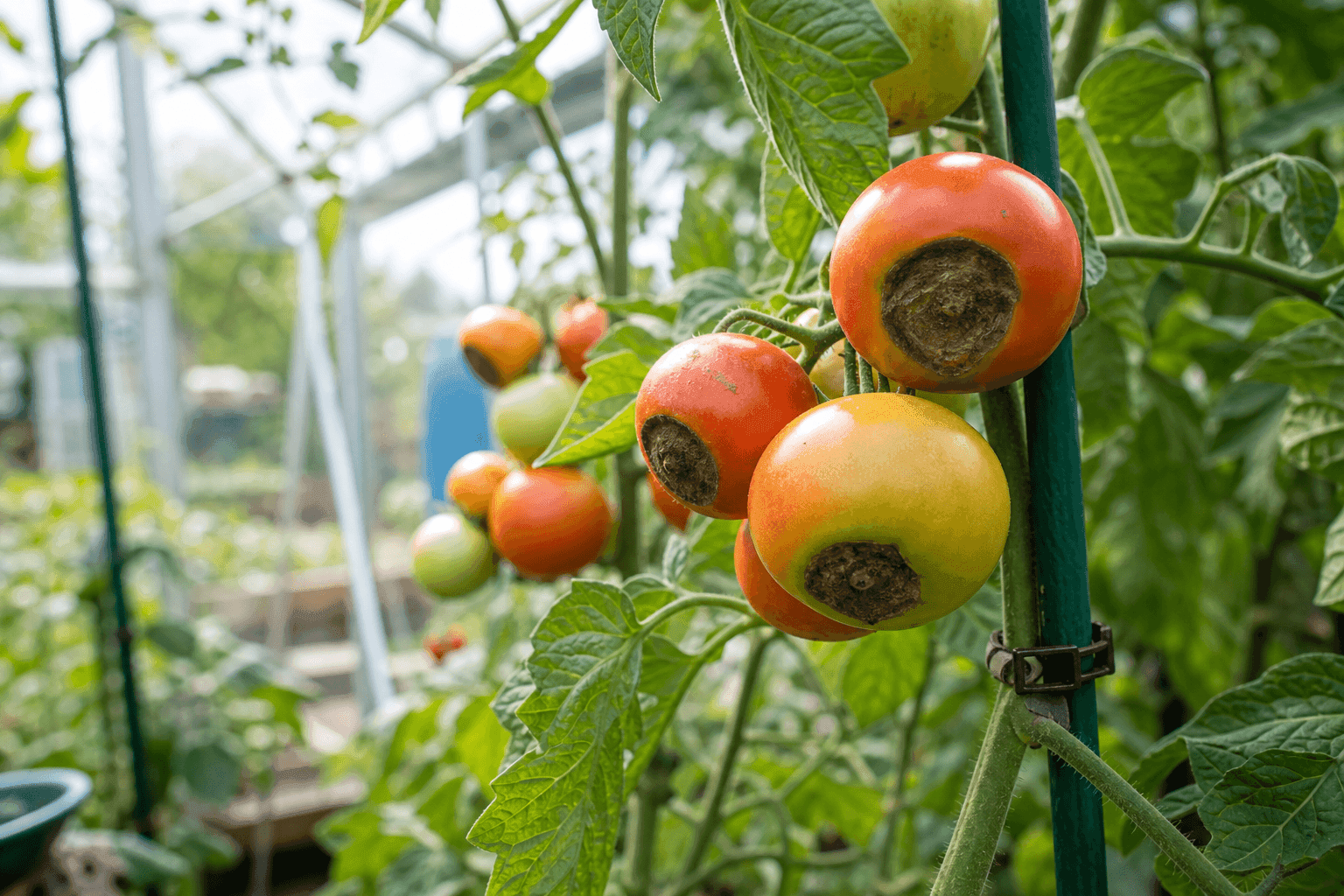
PossibleConsistent, even moisture is essential for tomato flowering and fruit development. Plants that experience repeated wet-dry cycles — common in pots and growing bags in UK summers — drop flowers before they can set. Seed Parade's guide to UK tomato growing notes that a lack of water is one of the main causes of blossom drop. In addition, severe drought stress causes blossom end rot (dark, sunken patches at the fruit tip) from calcium deficiency caused by interrupted water uptake, not from a lack of calcium in the soil.
- The compost in pots or growing bags dries out noticeably between waterings.
- Flowers appear briefly then drop off, or early fruits show dark, sunken patches at the base.
- The plant wilts significantly at some point during the day.
- The growing container is small relative to the plant size.
- Water tomatoes consistently — large plants in pots or growing bags in UK summer warmth may need watering once or twice a day.
- Check by inserting a finger into the compost — it should feel moist 3–5cm down at all times during the growing season.
- For growing bags, use a watering ring or a cut-off plastic bottle as a water reservoir to ensure even moisture penetration.
- Mulch around border-grown plants to retain soil moisture.
- Set up drip irrigation if consistent watering is a challenge.
overwater to compensate for previous drought — going from very dry to very wet causes fruit splitting, root damage and nutrient uptake problems.
Plant too young or recently transplanted
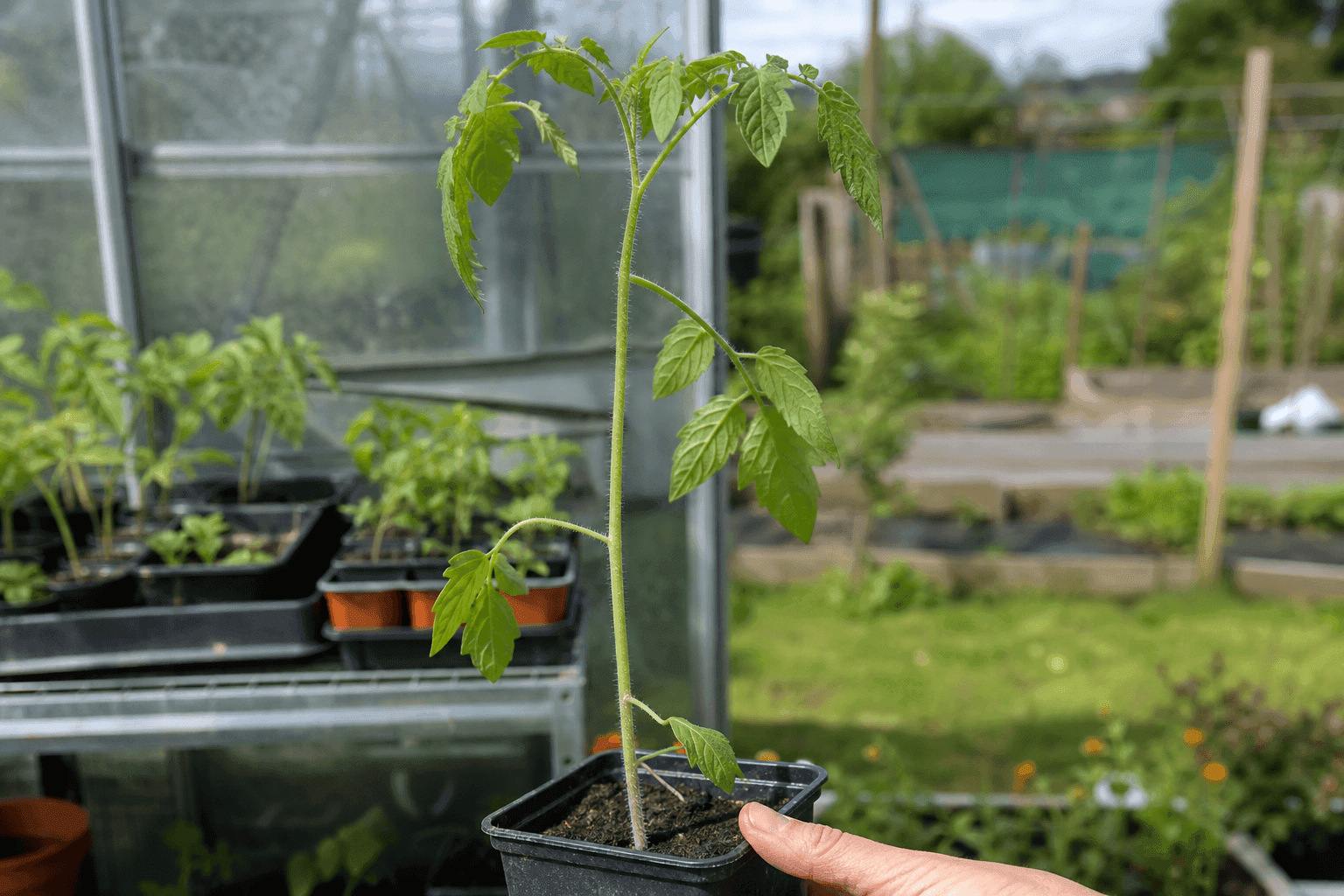
PossibleTomato plants need to reach a certain size and maturity before they begin to initiate flower trusses. Indeterminate (cordon) varieties typically produce their first flower truss after the plant has formed eight to twelve leaves. A plant that is still establishing after transplanting, or one that experienced a cold check in growth, may not yet have reached this threshold. This is especially common when gardeners sow seeds too early in very low light conditions and end up with weak, drawn seedlings that take much longer to reach flowering size.
- The plant is less than 30–40cm tall with fewer than eight fully developed leaves.
- It was recently transplanted and may still be settling in.
- Growth has been slow, perhaps due to cold or low light during early stages.
- Ensure the plant is in the warmest, brightest available position.
- Maintain a minimum growing temperature of 15–18°C.
- Water consistently but do not feed with nitrogen — the plant needs to grow but not become too leafy.
- Pinch out any side shoots on cordon varieties to keep growth directed to the main stem.
- Be patient — flower initiation follows naturally once the plant is established in warm, sunny conditions.
sow tomato seeds before late March in the UK unless you have a heated propagator and supplementary grow lighting — plants sown too early in low light produce weak, unproductive seedlings.
Insufficient light
PossibleTomatoes are one of the most light-demanding vegetables grown in UK gardens. They require at least six to eight hours of direct sun daily to produce the energy needed for flower initiation and fruit development. Plants grown in partial shade, in an area that has become more shaded as surrounding trees have grown, or on a north-facing wall may produce abundant leafy growth but few or no flowers. Insufficient light also causes etiolation — the long, thin, reaching growth that is a clear indicator of the problem.
- The plant is in a location receiving fewer than six hours of direct sun.
- Stems are long, thin and reaching toward the light source.
- There is noticeably less vigorous growth or flowering than on plants in a sunnier position.
- The growing space is north-facing, shaded by buildings, or under a tree canopy.
- Move plants to the sunniest available location immediately if they are in pots.
- For border-grown plants, prune back any overhanging trees or shrubs to let more light in.
- Do not attempt to grow tomatoes in a permanently shaded position — sunlight is non-negotiable for fruiting.
- If indoor light is the only option, use full-spectrum LED grow lights for at least 14–16 hours per day.
expect outdoor tomatoes to produce well in less than six hours of direct sun — cherry varieties are slightly more tolerant of lower light but no tomato does well in real shade.
Still not sure?
Work down these branches — the first one that matches is your answer.
What not to do
- Feed tomatoes with high-nitrogen fertiliser once flowering has started — switch to a high-potash tomato feed.
- Move plants outside before night temperatures are reliably above 10°C in the UK.
- Leave greenhouse tomatoes unventilated with no hand-pollination — fruit will not set.
- Allow growing bags or pots to dry out between waterings — consistent moisture is essential for fruit set.
- Grow tomatoes in a shaded or north-facing position and expect a useful harvest.
Common questions
Why are my tomato plants flowering but not producing fruit?
The most common causes in the UK are: flowers dropping due to night temperatures below 10°C; lack of pollination in closed greenhouses; irregular watering causing blossom drop; or daytime temperatures above 30°C making pollen non-viable. Vibrate flower trusses daily by hand, open greenhouse vents, check night temperatures and water consistently.
Why are my tomato plants not flowering?
Too much nitrogen from general-purpose fertilisers pushes leafy growth at the expense of flowering. Insufficient light is the other main cause. Once plants have at least eight to ten healthy leaves and are growing in a warm, sunny spot, flower trusses should begin to appear. Switch to a tomato-specific high-potash feed.
When do tomatoes start to flower in the UK?
Under good UK conditions, tomato plants typically produce their first flower truss from late May to early June outdoors, or from late April in a heated greenhouse. Unheated greenhouse plants usually flower in May. Cherry varieties tend to begin flowering slightly earlier and more reliably than beefsteak types.
Should I remove tomato flowers to get more fruit later?
For outdoor UK tomatoes, the RHS recommends removing flowers from the first truss in cold seasons to allow the plant to establish, but this is optional. For indoor tomatoes, let all flowers set from the start. For cordon varieties, pinching out the growing tip after four to five trusses have set in outdoor UK conditions encourages remaining fruit to ripen before the season ends.
How do I pollinate tomatoes in a greenhouse?
Gently tap or vibrate each flower truss once a day with your hand, or hold a battery-powered electric toothbrush near each open flower cluster. This mimics the vibration of bumblebees and releases pollen onto the stigma. Do this every day when flowers are open. Open vents to allow air movement and encourage wild bees to enter.
What fertiliser should I use for tomatoes that won't flower?
If the plant is large and leafy but not flowering, stop all nitrogen feeds and apply a high-potassium tomato fertiliser (the standard liquid tomato feeds sold in UK garden centres). Once the first flower truss appears, continue weekly high-potash feeding throughout the season. The typical UK recommendation is to start feeding with tomato fertiliser once the first truss has set small fruits.
Can tomatoes flower without setting fruit?
Yes — flowers can appear, fail to be pollinated, and drop off without forming fruit. This is very common in unventilated greenhouses, in very hot or very cold conditions, or when there are extreme wet-dry cycles. Address temperature, pollination and watering consistency to convert flowers into fruit.