Quick diagnosis
Match the row to what you’re seeing, then jump to the fix.
| What you see | Likely cause | Confidence | How to confirm | What to do now | Urgency |
|---|---|---|---|---|---|
| No flowers but plenty of strong growth; applies to ramblers or once-flowering climbers | Wrong pruning time or technique | High | Check the rose type: ramblers and once-flowering climbers pruned in spring/winter will not flower that year. | Leave alone for this season; prune ramblers immediately after flowering in summer; avoid cutting old wood on once-flowering types. | Low |
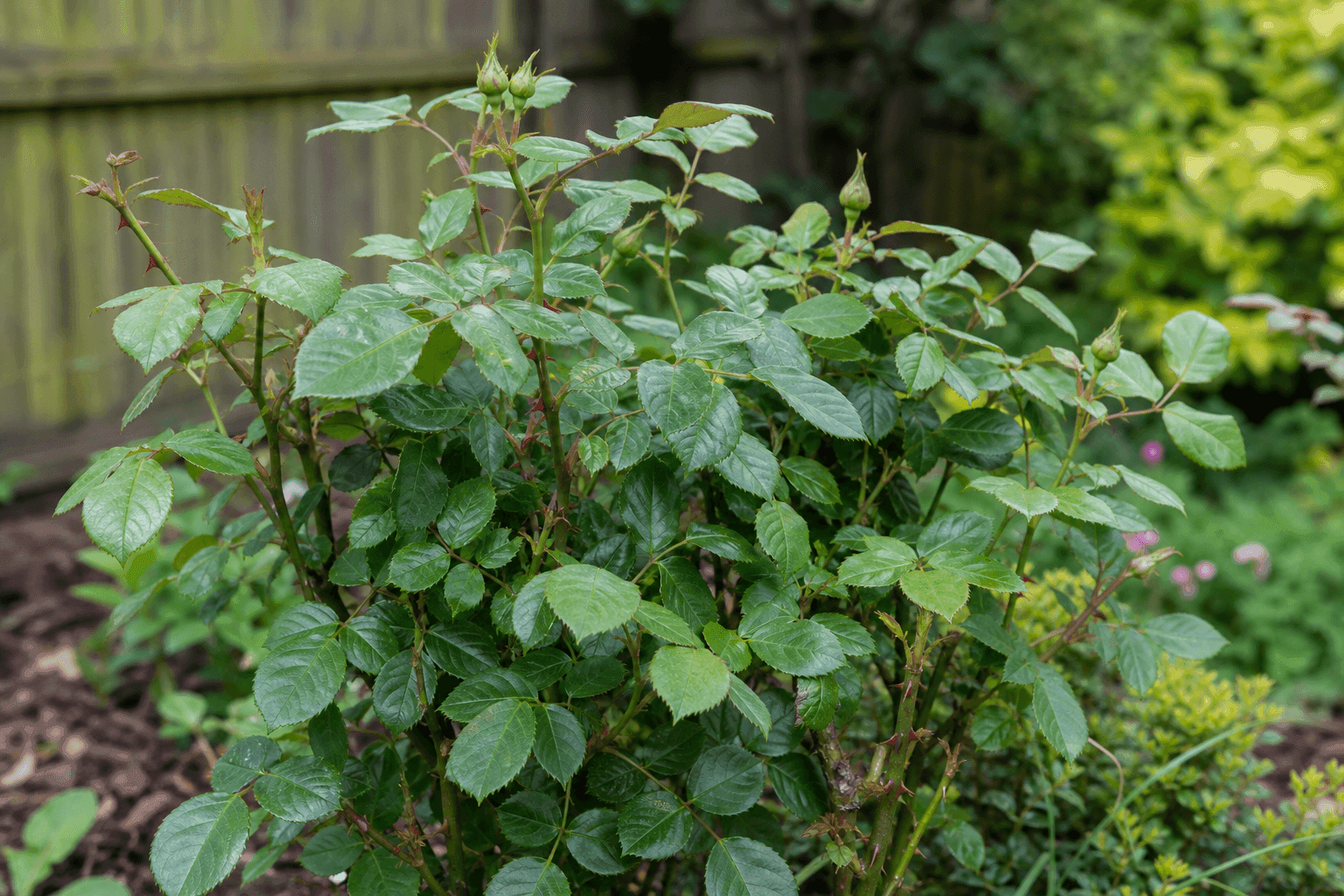
| Very lush, dark green leafy growth, possibly soft and floppy, but no flower buds | Excess nitrogen | High | High-nitrogen feed, lawn feed or fresh manure applied; growth is very vigorous and leafy. | Stop all nitrogen feeds; switch to a high-potassium, high-phosphorus rose or tomato feed to encourage flowering. | Low–medium |
| Thin, pale growth; rose is in a shaded or north-facing spot | Insufficient sunlight | High | Less than six hours of direct sun daily; plant is under trees, beside a north-facing fence or wall. | Prune surrounding trees or shrubs if possible; consider moving the rose in autumn or winter. | Low |
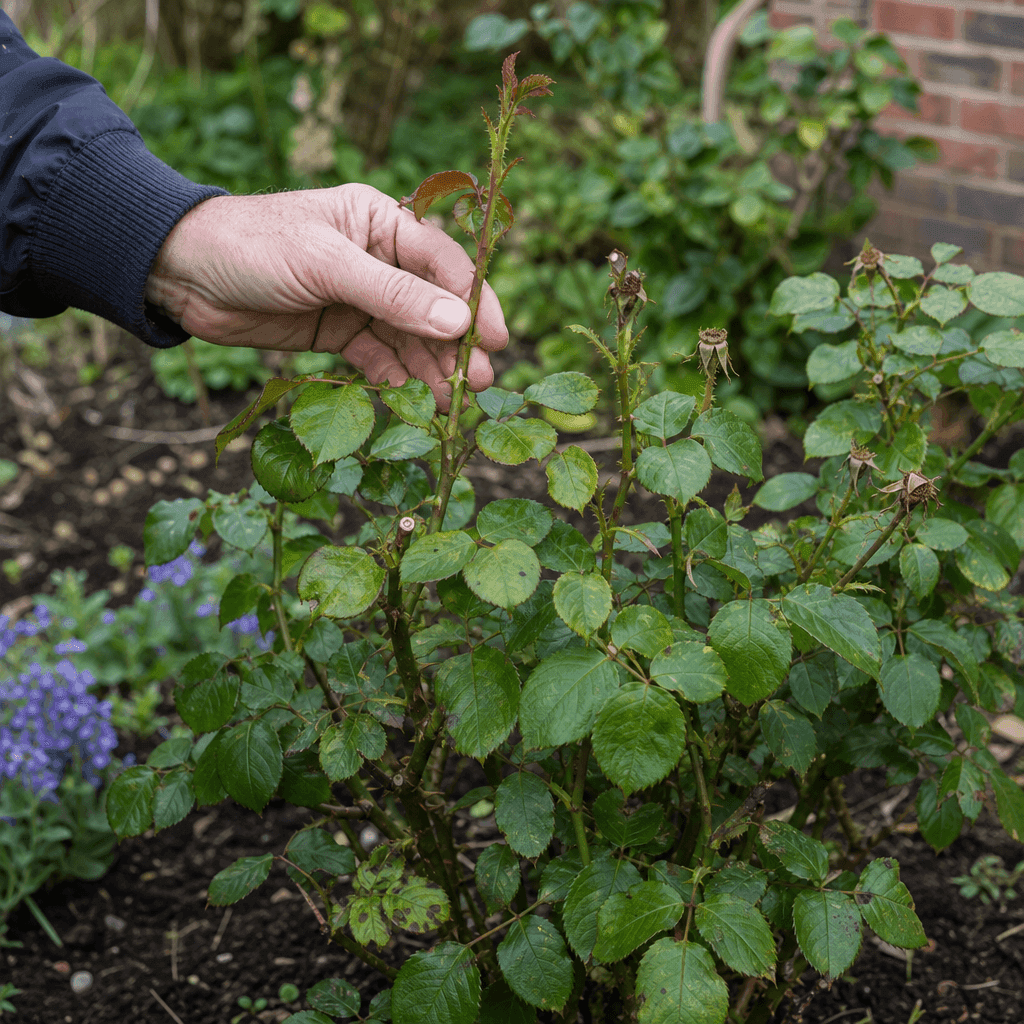
| Stems with leaves grow normally but the buds at the tip fail to open or are absent | Rose blindness | Medium | Blind shoots — stems end in a cluster of leaves with no bud; typically on young plants or after cold spring. | Cut blind shoots back by half to encourage a flowering side shoot; improve light and nutrition. | Low–medium |
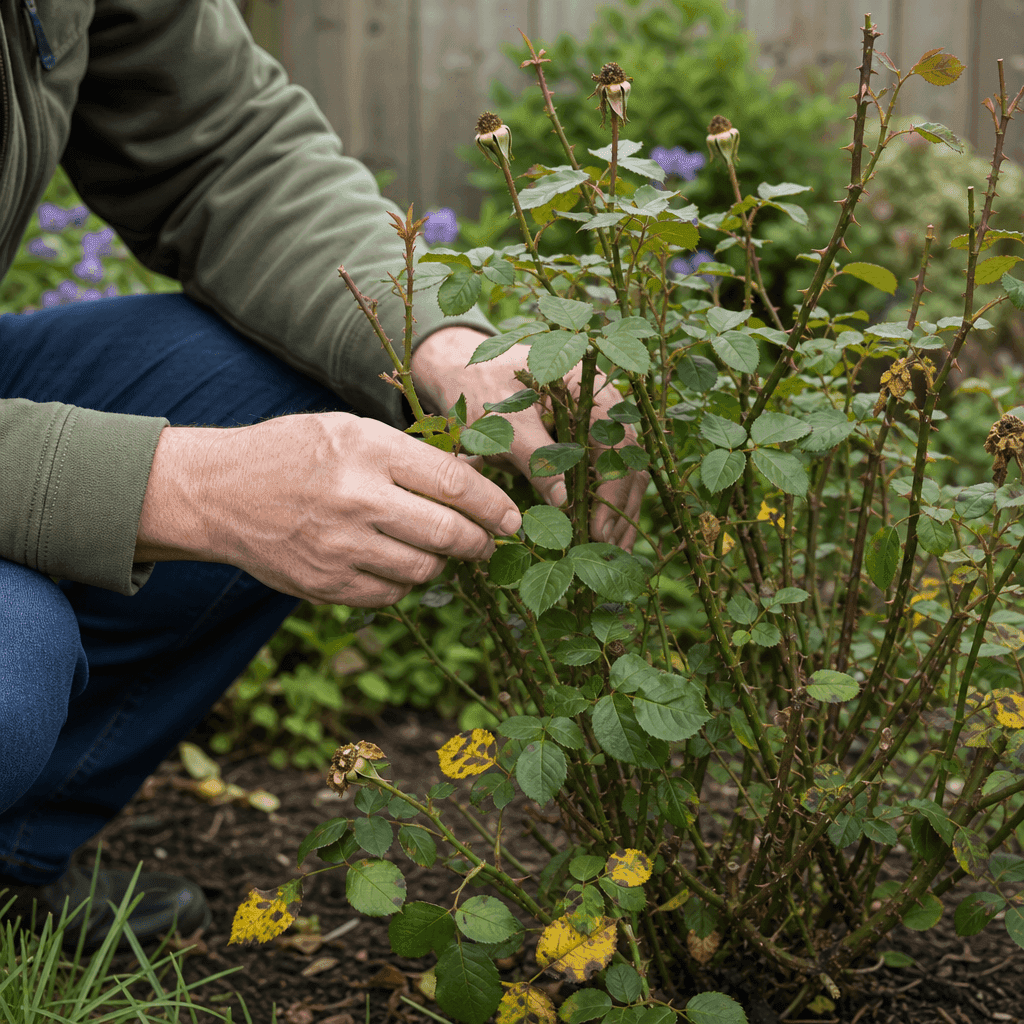
| Weak, thin growth; pale leaves; no flowers despite adequate sun and correct pruning | Poor soil nutrition or root restriction | Medium | Rose has not been fed for several years; soil is sandy or exhausted; pot-grown rose is in the same compost for more than 2 years. | Apply a balanced rose fertiliser in spring and again after the first flush; mulch with well-rotted manure or compost. | Low–medium |
| Newly planted rose with little or no flowering in its first or second year | Young plant establishing | Medium | Rose was planted within the last 12–18 months; roots are not yet fully established. | Give it time; ensure good watering and a rose-specific fertiliser; flowers will increase as the plant matures. | Low |
The causes, in detail
Wrong pruning time or technique
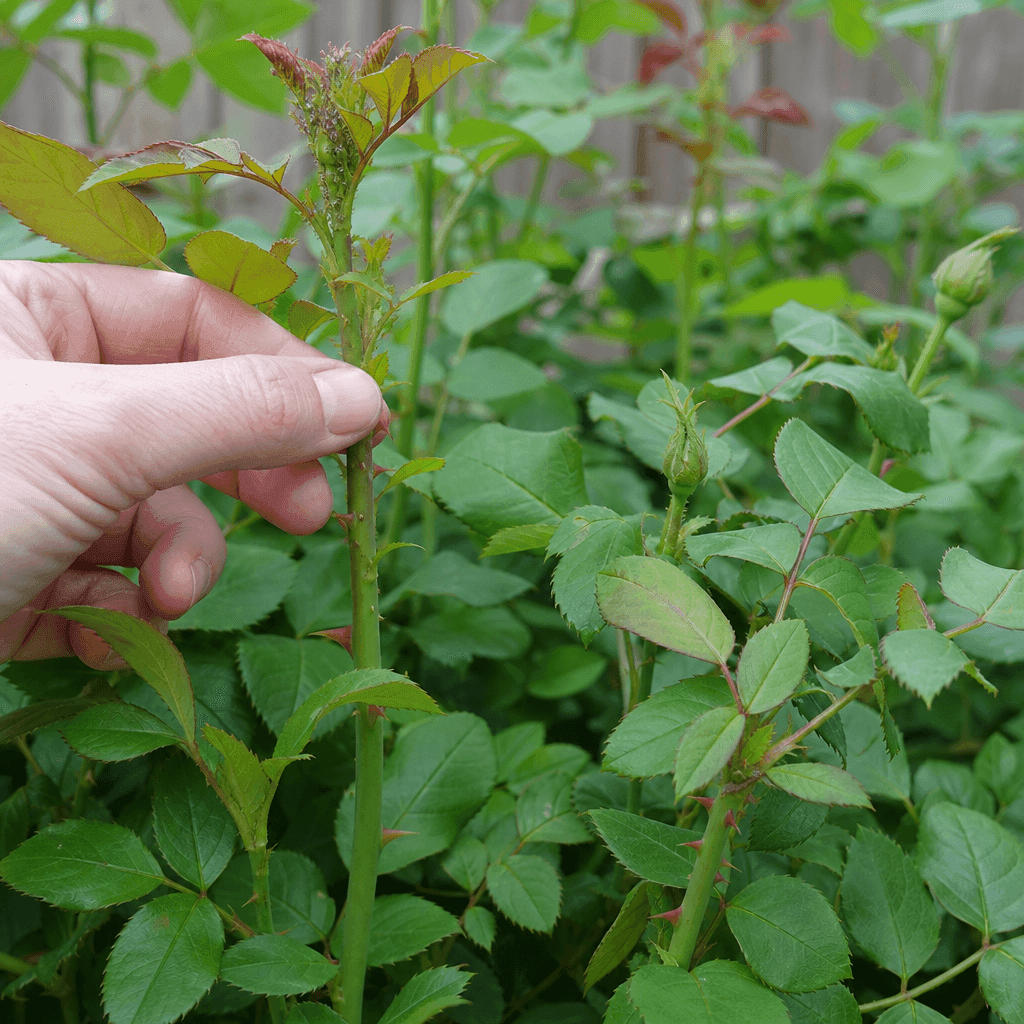
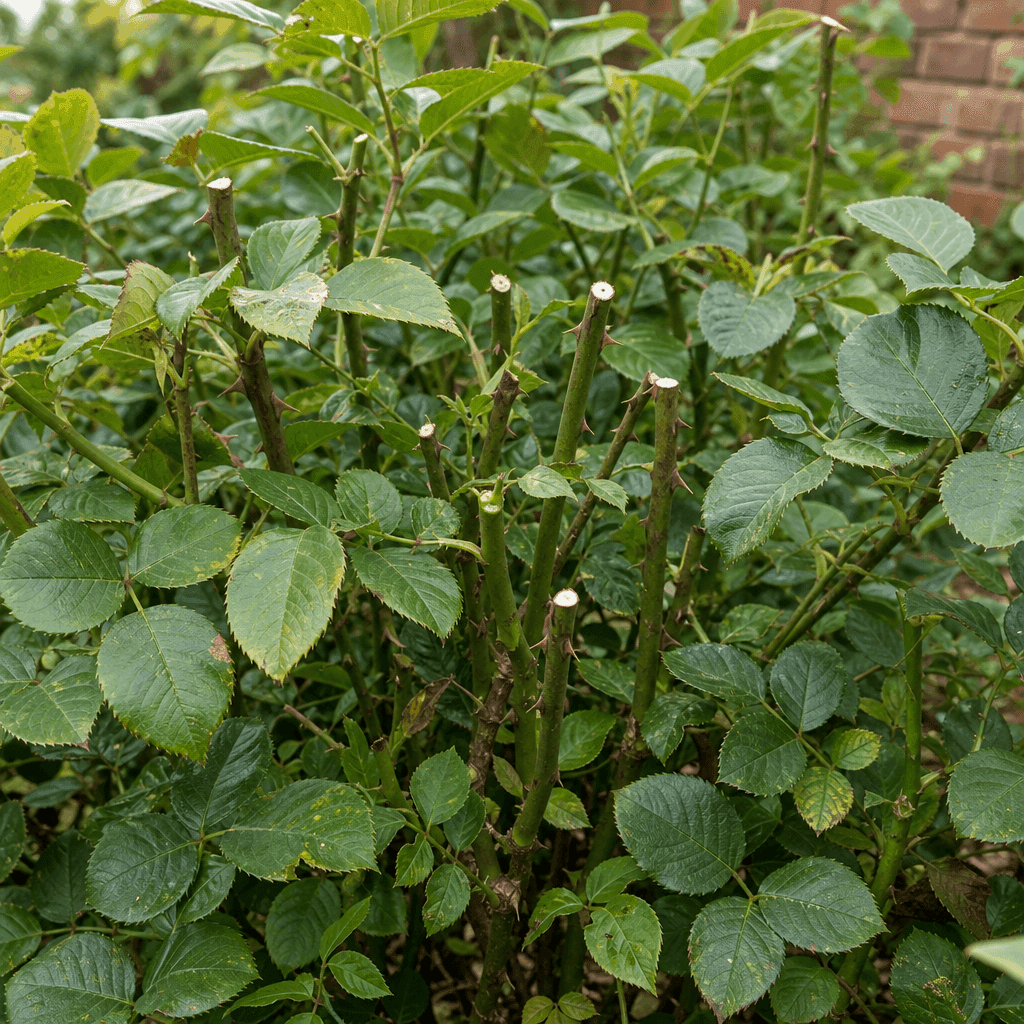
Most likelyPruning mistakes are one of the leading causes of non-flowering in UK roses. The critical factor is the rose type. Most modern bush roses (hybrid teas, floribundas) and repeat-flowering climbers flower on new wood produced in the current season, so pruning in late winter (February–March in most UK regions) encourages new growth that will bear flowers. However, rambling roses and many once-flowering old shrub roses flower only on wood grown in the previous season. The RHS pruning guide is clear: if a rambler is pruned hard in spring, you remove all the stems that would have flowered that summer. Ramblers should be pruned immediately after flowering in summer. The BBC Gardeners' World rose problem guide also lists 'wrong pruning time' as a key cause, particularly for climbing and rambling types.
- The rose is a rambler or once-flowering climber that was pruned in late winter or spring.
- Strong new growth is present but no flower buds are developing.
- The rose flowered normally in previous years.
- Review the pruning you carried out and compare it with the RHS guidance for that specific rose class.
- For this growing season, leave the rose alone — the flowering wood for this year may already have been removed.
- For ramblers: prune immediately after flowering in summer (July–August), removing older flowered stems at the base and tying in new long growth.
- For once-flowering shrubs: prune lightly after flowering only; hard renovation should be spread over three years.
- For repeat-flowering climbers: deadhead spent flowers and prune lightly in late summer; do the main structural prune in late winter.
- For modern bush roses: prune hard to outward-facing buds in late February or March, once the worst frost has passed.
Stop it coming back:Identify your rose type before pruning — whether it is a rambler, once-flowering or repeat-flowering climber, or a modern bush rose changes the entire pruning approach.
prune a rambler or once-flowering climbing rose at the same time as your modern bush roses — they need completely different treatment.
Excess nitrogen
Most likelyExcess nitrogen is a very common cause of leafy, non-flowering roses in UK gardens, and it is worth understanding alongside the broader care needs of roses. The RHS lists excess nitrogen as one of the main factors causing non-flowering in woody plants, and notes it is often a problem where gardeners have applied high-nitrogen feeds, sulphate of ammonia, fresh poultry manure, or where lawn feed has drifted or washed into nearby beds. BBC Gardeners' World confirms that too much nitrogen encourages leafy growth at the expense of flowers in roses. Nitrogen drives vegetative growth; flowering is triggered by a higher ratio of phosphorus (P) and potassium (K) relative to nitrogen (N).
- Growth is very vigorous, lush and dark green — more than is typical for the variety.
- High-nitrogen fertiliser, fresh manure, poultry pellets or lawn feed has been applied recently.
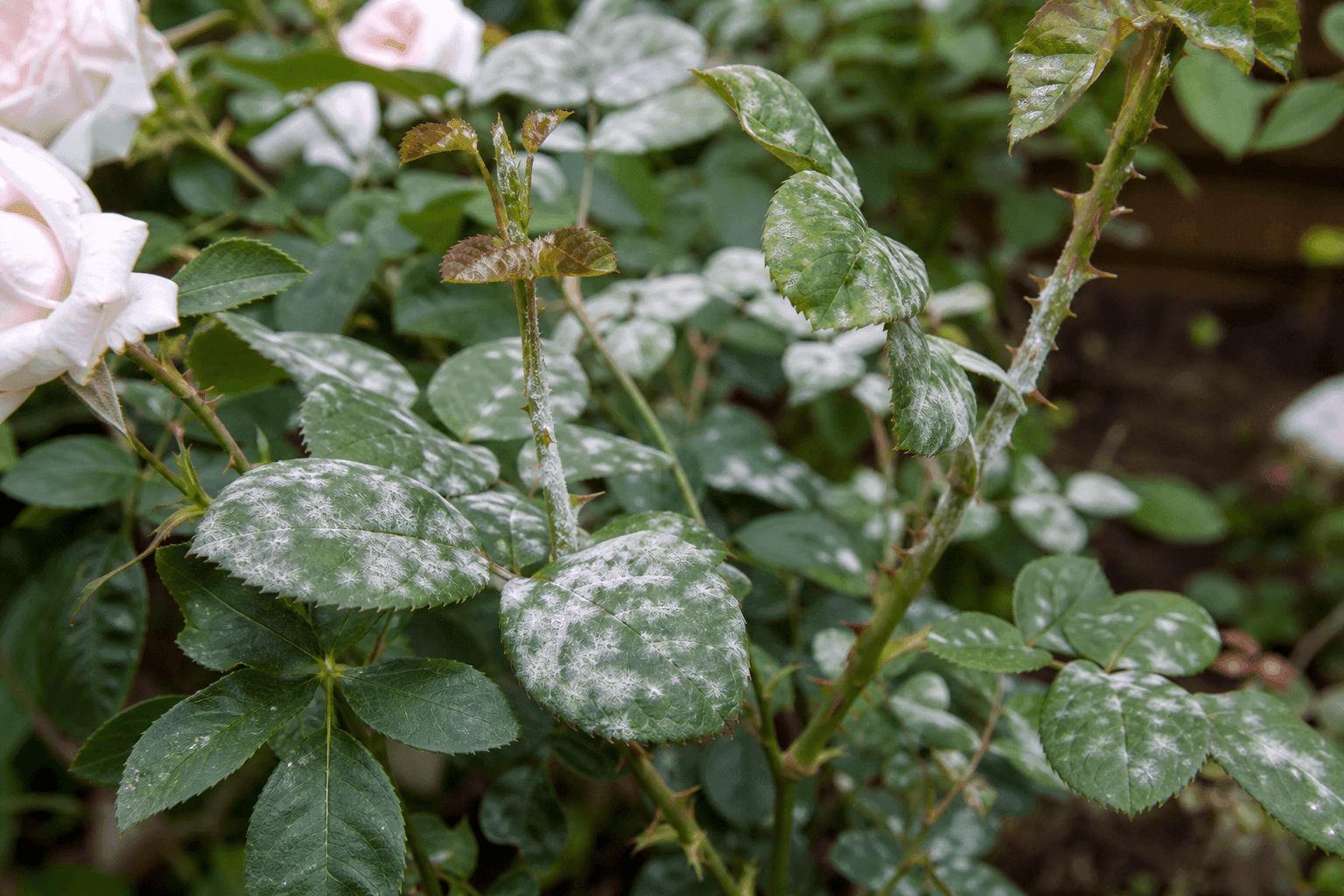
- Stems are soft and possibly floppy or prone to disease such as powdery mildew on roses.
- No flowers despite adequate sunlight and correct pruning.
- Stop all nitrogen-containing feeds immediately.
- Switch to a balanced rose fertiliser with higher P and K (potassium) than N (nitrogen) — proprietary rose fertilisers are formulated for this balance.
- Alternatively, apply a high-potash fertiliser such as sulphate of potash at the manufacturer's recommended rate.
- In future, mulch roses with well-rotted (not fresh) manure to avoid nitrogen overload.
- Apply rose fertiliser twice a year: once in spring as growth begins and once in June after the first flush of flowers, stopping all feeding by August.
apply fresh poultry manure or high-nitrogen lawn feed close to rose beds — these are the most common sources of nitrogen excess in UK gardens.
Insufficient sunlight
Most likelyRoses are sun-loving plants and the RHS recommends they receive at least six hours of direct sunlight per day to produce flowers reliably. In practice, many UK gardens have roses that were planted in sunny spots that have since become shaded by growing trees, tall shrubs or neighbouring structures. A rose in deep shade may still produce leafy growth but will not have the energy to form flower buds. North-facing walls are particularly challenging — they rarely receive enough direct sun for most rose types, though some shade-tolerant varieties (such as certain albas) cope better than others.
- The rose receives fewer than six hours of direct sun per day.
- It is planted against a north-facing fence, wall or under tree canopy.
- Growth is noticeably thinner, paler and more elongated than roses in sunnier positions.
- Surrounding trees or shrubs have grown considerably in the past few years.
- Assess the light: stand at the rose's location at intervals through the day and count the hours of direct sun.
- Prune overhanging trees or tall shrubs to let more light in if that is the source of shading.
- If the site is fundamentally shaded, plan to move the rose to a better position in autumn (for most rose types) when it is dormant.
- If moving is not possible, choose shade-tolerant rose varieties for that spot in future.
feed and water a rose heavily in a shaded position expecting it to flower — it cannot produce flowers without adequate photosynthesis.
Rose blindness
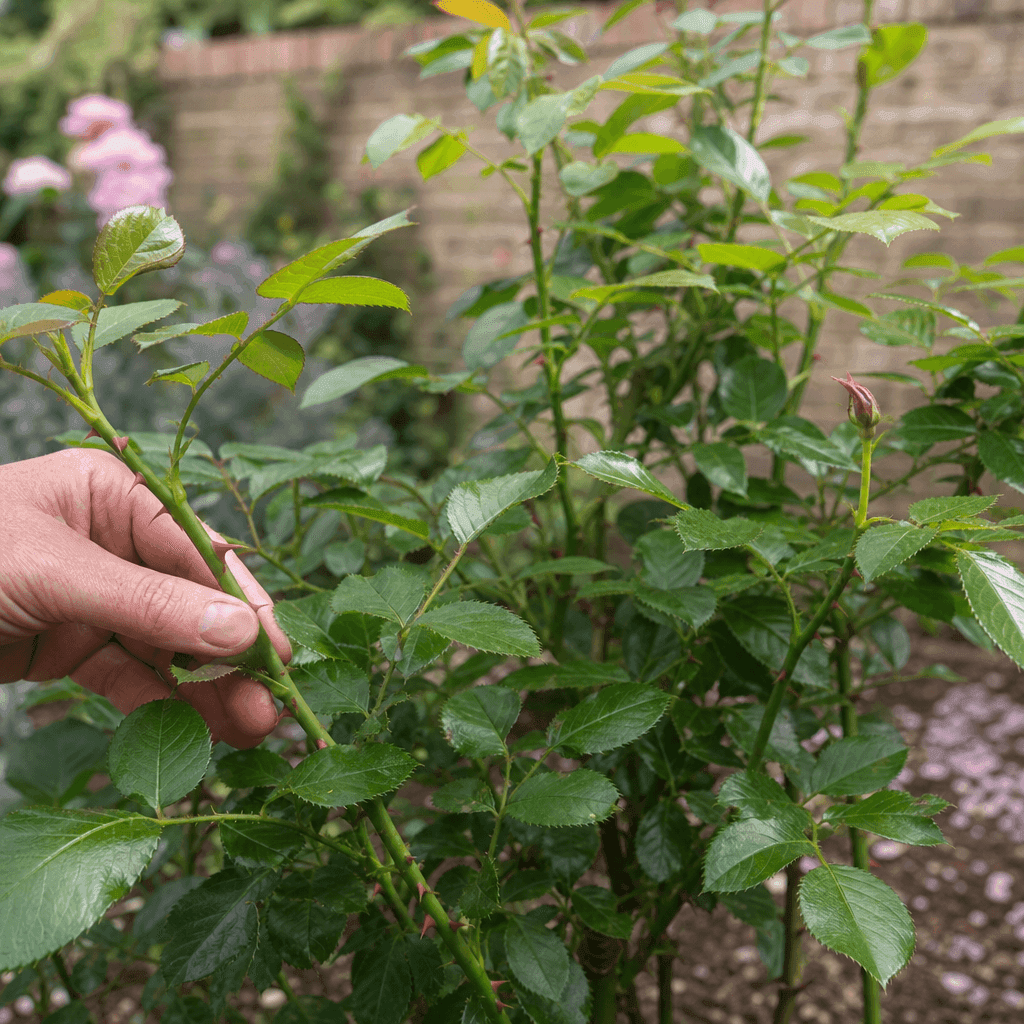
PossibleRose blindness is a specific condition where a shoot grows normally but terminates in a cluster of leaves rather than a flower bud. The RHS has a dedicated entry on rose blindness and lists the causes as cold weather during bud development, insufficient light, insufficient nutrition or simply the natural tendency of some varieties. Blind shoots are most common in early spring on young or newly planted roses, after a cold or late spring, and in poorly lit positions. They are not a disease and are not contagious.
- Individual stems grow normally but end in a rosette of leaves with no bud.
- The remaining stems on the same plant are flowering or developing normally.
- The problem is concentrated on young stems or follows a cold spell in spring.
- The plant is young, recently planted, or has been moved.
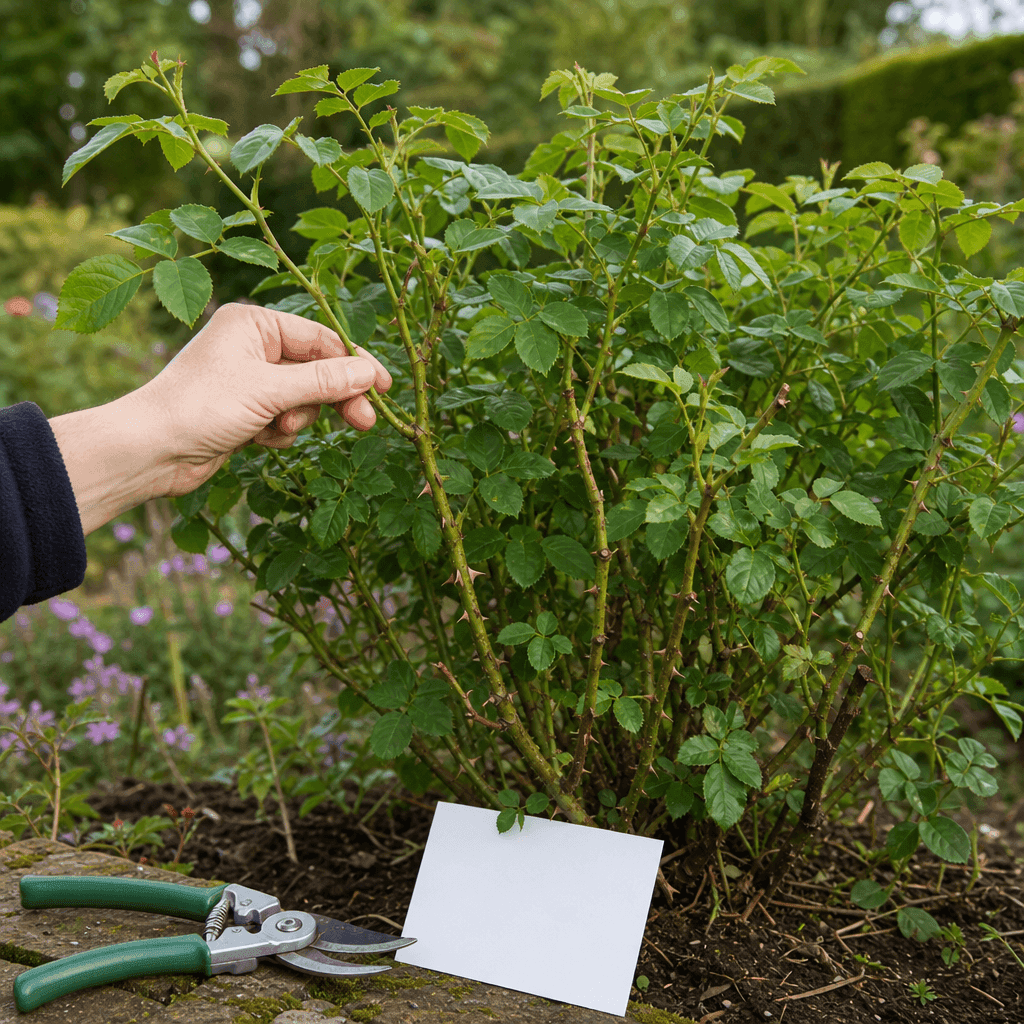
- Cut blind shoots back by approximately half, to just above an outward-facing leaf or bud.
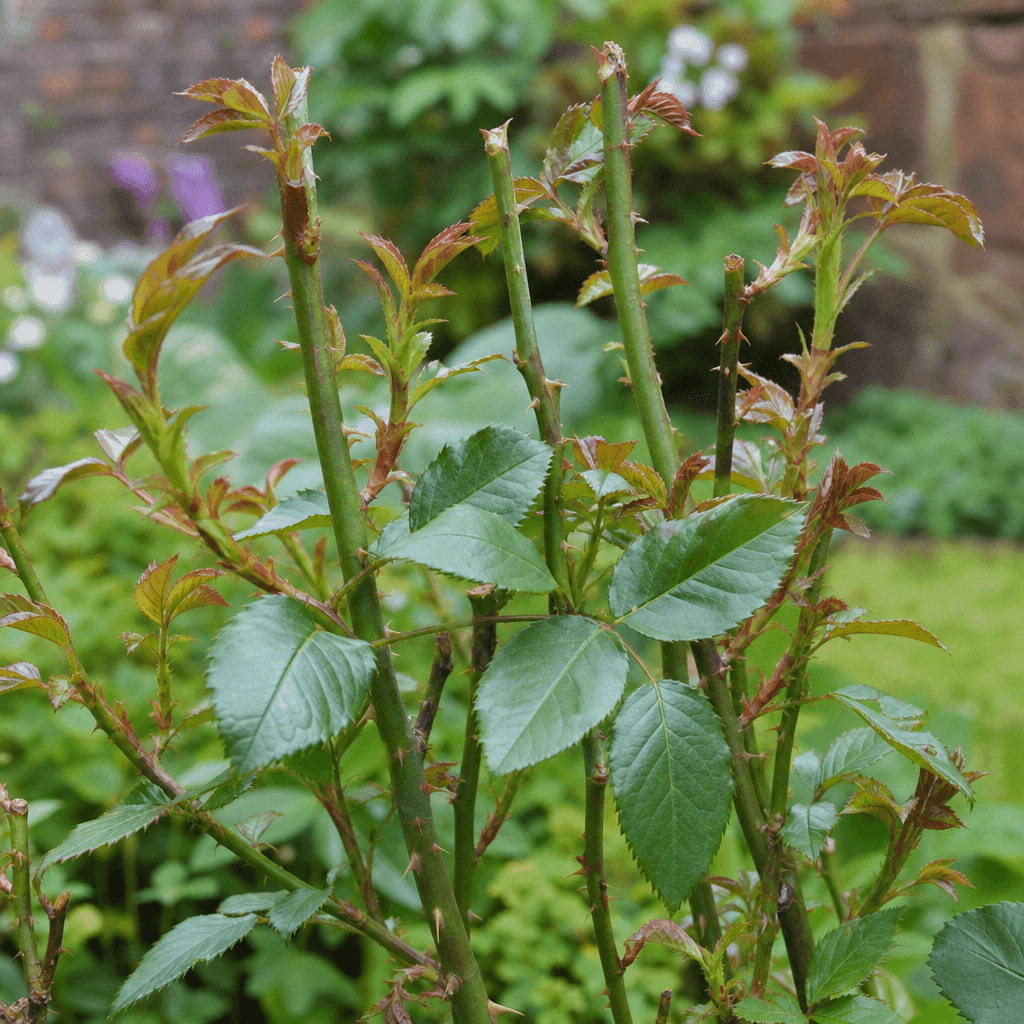
- This usually stimulates a new shoot that will produce a flower within six to eight weeks.
- Improve feeding with a balanced rose fertiliser if nutrition may be a factor.
- Ensure the plant receives adequate sunlight.
- For persistent rose blindness throughout the plant, review light, nutrition and soil drainage.
leave blind shoots in place in the hope they will open — they will not develop a flower; cutting them back is the only remedy.
Poor soil nutrition or root restriction
PossibleEstablished roses in garden borders benefit from annual feeding and mulching, but roses that have not been fed for several years, or that are growing in poor sandy or stony soil, can lack the phosphorus and potassium needed to initiate flower buds. Pot-grown roses in the same compost for more than two growing seasons are especially vulnerable as nutrients are quickly depleted. Root restriction in a too-small pot also limits the plant's ability to take up nutrients regardless of how much is added to the compost.
- The rose has received no supplementary feed for two or more years.
- Soil is sandy, stony or obviously poor.
- A pot-grown rose has not been repotted for two or more years and the compost may be exhausted.
- Growth is generally weak and thin rather than just unfed.
- Apply a balanced rose fertiliser in spring as new growth begins, following the manufacturer's rate.
- Apply a second feed in June after the first flush of flowers to encourage repeat blooming.
- Mulch with a 5–8cm layer of well-rotted garden compost or manure each spring, kept clear of the stem base.
- For pot-grown roses, repot into fresh loam-based compost (John Innes No. 3) every two to three years, or top-dress annually if repotting is not practical.
feed roses after July — late feeding produces soft growth vulnerable to frost damage and fungal disease.
Newly planted rose establishing
PossibleA rose planted in the current or previous growing season is still establishing its root system and will typically flower much less heavily than a mature plant. This is completely normal. The plant's energy priority in the first year is root development rather than flower production. Bare-root roses planted in autumn or winter should begin to flower in the following summer, but performance in the first year is often modest.
- The rose was planted within the last 12–18 months.
- It is producing healthy leaves and new shoots but limited or no flowers.
- No other stress factors (poor pruning, shade, excess nitrogen) are present.
- Water thoroughly in dry periods during the establishment year.
- Apply a balanced rose fertiliser from spring of the first full growing season.
- Remove any flower buds that appear in the first year on some advice — this can encourage stronger root and framework development, though it is not essential.
- Be patient — most roses produce a much better display from the second or third year onwards.
hard prune a newly planted rose in its first year — remove only crossing, dead or very weak stems and let the plant establish its framework.
Still not sure?
Work down these branches — the first one that matches is your answer.
What not to do
- Apply high-nitrogen fertiliser or lawn feed near roses expecting this to improve flowering — it will do the opposite.
- Prune a rambler or once-flowering climber in winter or spring, when you will remove this year's flowering wood.
- Leave blind shoots on the plant hoping they will eventually flower — cut them back by half to trigger a new flowering shoot.
- Plant a rose in a north-facing shaded spot and expect full flowering performance.
- Feed roses after late July — it produces frost-vulnerable soft growth and reduces hardening off.
Common questions
Why is my rose not flowering in the UK?
The most common causes are incorrect pruning (particularly cutting a rambler or once-flowering climber in winter), too much nitrogen from lawn feed or fresh manure, insufficient sun (less than six hours daily), or a young plant still establishing. Work through the diagnosis table above to identify your specific cause.
What is rose blindness?
Rose blindness is when shoots develop normally but terminate in a cluster of leaves rather than a flower bud. It is caused by cold weather, poor nutrition, insufficient light or the natural tendency of some varieties. The fix is to cut the blind shoot back by about half to stimulate a new shoot that will flower.
When should I prune my rose in the UK?
For modern bush roses (hybrid teas, floribundas): prune hard in late February or March, just as buds begin to swell. For repeat-flowering climbing roses: prune lightly in autumn and structurally in late winter. For rambling and once-flowering roses: prune immediately after flowering in summer (July–August). Never prune ramblers in winter or you will remove this year's flowering stems.
How do I get my rose to produce more flowers?
Ensure at least six hours of direct sun, apply a balanced rose fertiliser in spring and again after the first flush, mulch with well-rotted compost, deadhead spent flowers promptly (on repeat-flowering types), and prune at the correct time for your rose type. Stop all nitrogen-rich feeds and switch to a high-potassium formulation.
Should I deadhead roses to encourage more flowers?
Yes — on repeat-flowering roses (hybrid teas, floribundas, modern climbers), deadheading spent flowers removes the stimulus to set seed and encourages the plant to produce new flowering shoots. Cut back to the first leaf with five leaflets below the spent bloom. Do not deadhead once-flowering or hip-bearing roses if you want to enjoy the autumn hips.
Can I move a rose that is not flowering well?
Yes — autumn (October to November) and late winter (February) are the best times to move established roses when they are dormant. Prune the rose by about a third before moving, lift with as much rootball as possible, and replant in a well-prepared sunny bed with a generous hole enriched with well-rotted compost. Water in well.
What fertiliser should I use for roses that won't bloom?
For a non-flowering rose, switch to a formulation with more phosphorus (P) and potassium (K) than nitrogen (N) — proprietary rose fertilisers are specifically balanced for this. Sulphate of potash applied at 30g per square metre can also stimulate flowering. Avoid general all-purpose fertilisers or lawn feeds, which are high in nitrogen. If feeding mistakes have also left the foliage discoloured, see our guide to yellow leaves on rose bushes.