Quick diagnosis
Match the row to what you’re seeing, then jump to the fix.
| What you see | Likely cause | Confidence | How to confirm | What to do now | Urgency |
|---|---|---|---|---|---|
| Lower leaves curl upward like a taco but stay green | Physiological leaf roll from temperature swings | High | Plant is otherwise growing; no sticky residue or mottling; fruit still forming. | Keep watering steady and wait for warmer nights. | Low |
| Leaves curl upward during hot, dry weather | Heat or dry roots | High | Compost is dry 5cm down; the plant perks up after a deep water. | Water deeply, mulch, and shade greenhouse plants in heat. | Medium |
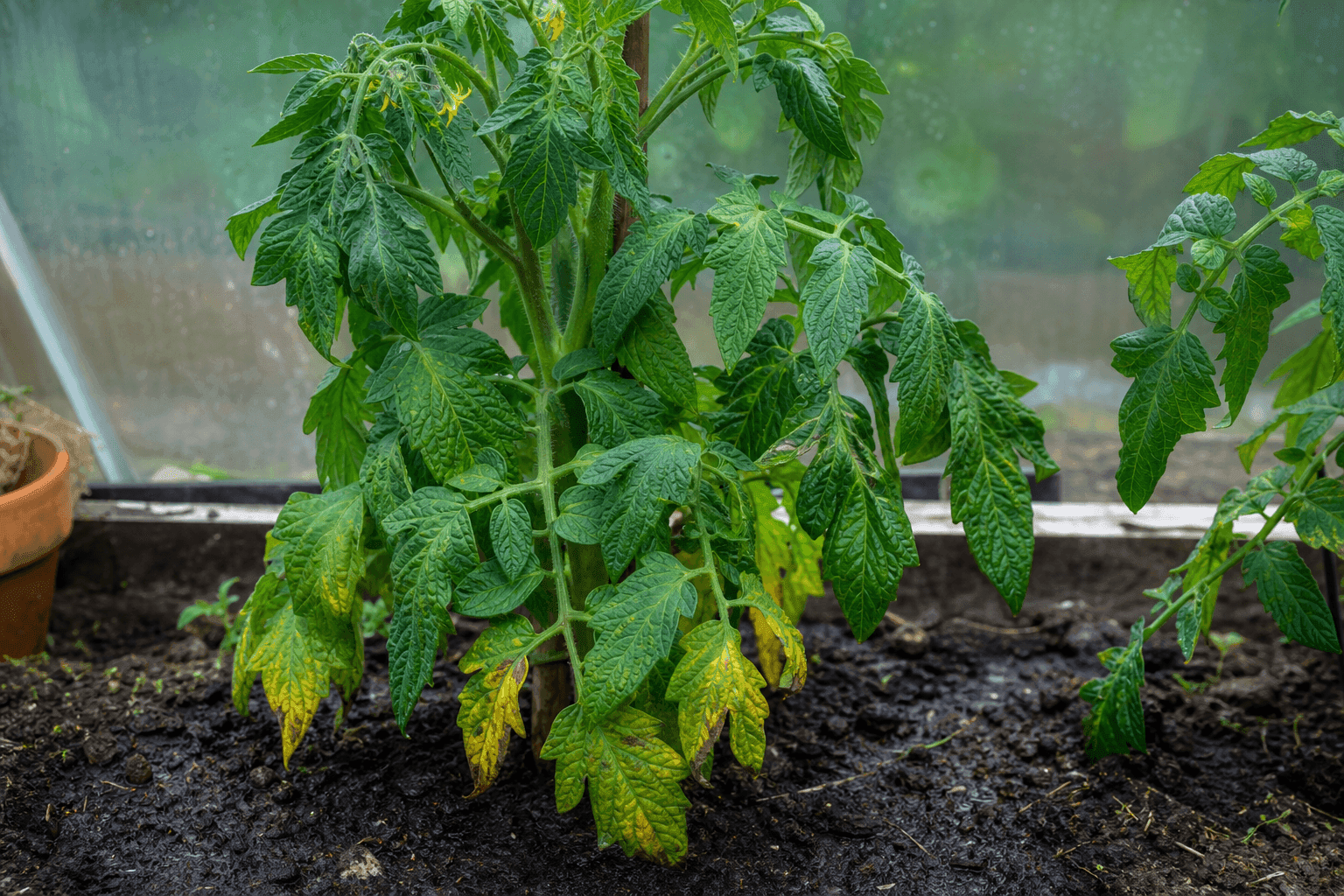
| Leaves curl downward and feel thick or leathery | Water stress, often after wet-then-warm weather | Medium | Soil has swung from wet to dry; lowest leaves affected first. | Even out watering — don't flood a dry pot. | Medium |
| New leaves are twisted, narrow, fern-like or distorted | Hormone weedkiller drift or contaminated compost | High | Lawn weedkiller, feed-and-weed clippings, or herbicide stored nearby. | Remove the source and wait for clean new growth. | High |
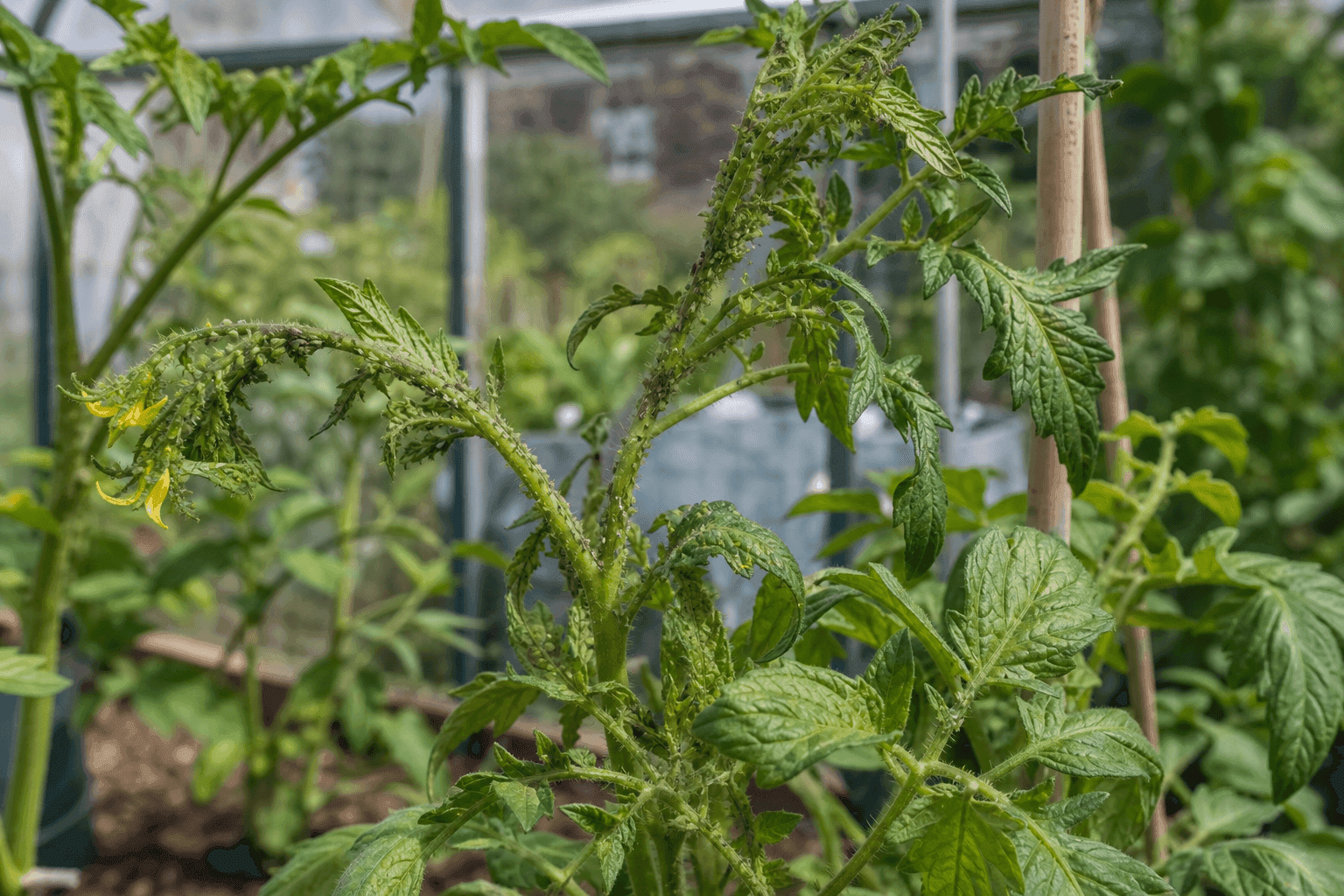
| Curling with sticky residue, white insects, greenfly or sooty mould | Aphids or glasshouse whitefly | High | Check the leaf undersides and the soft shoot tips. | Squash aphids, wash leaves, use biocontrol under glass. | Medium |
| Curling plus yellow edges, stunting, mottling or brittle growth | Tomato virus or pest-vectored disease | Medium | New growth is small, yellowed and distorted across the plant. | Isolate, don't take cuttings, remove badly affected plants. | High |
| Leaves curl soon after planting out | Transplant shock or cold nights | High | Started within a week of moving outside; no pests visible. | Keep evenly watered; fleece on cold nights. | Low–medium |
The causes, in detail
Physiological leaf roll (temperature swings)
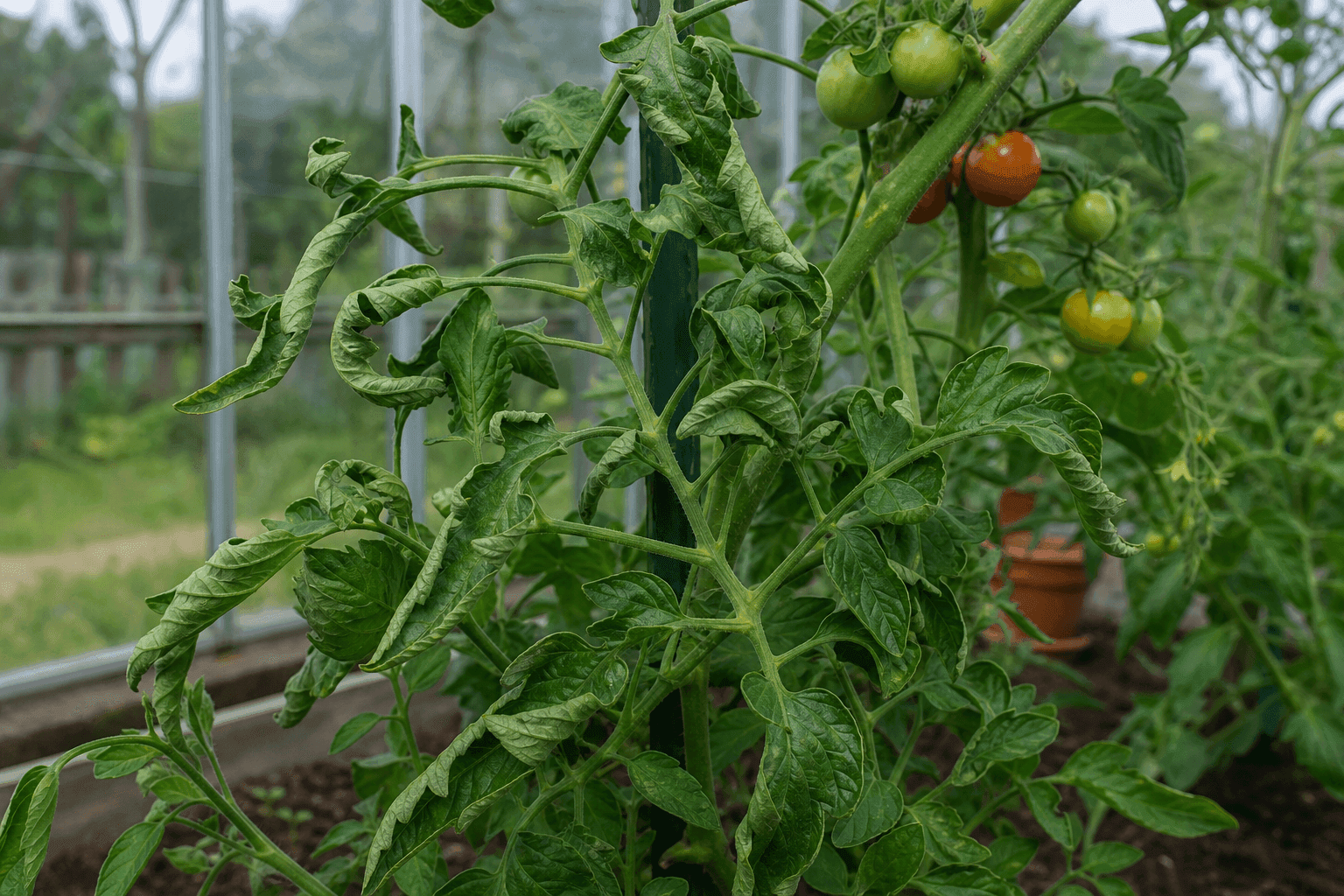
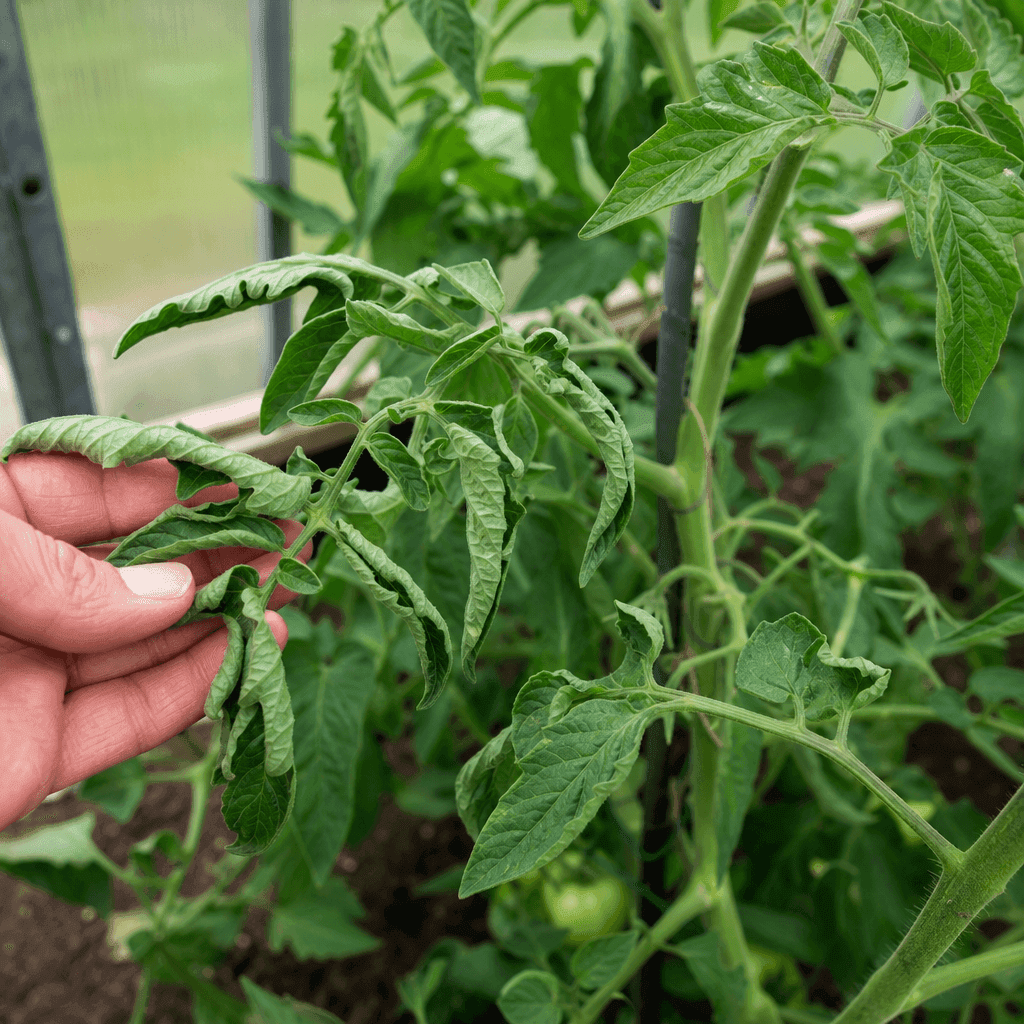
Most likelyUpward 'taco' roll is the classic harmless version of tomato leaf curl. It often starts on the lower leaves after warm days and cold nights — common in small greenhouses, polytunnels, grow bags and exposed sites — because the plant can't process carbohydrates normally overnight. The RHS notes tomatoes won't thrive below 12°C, and early-summer day–night swings can cause alarming curling without real crop loss. If your leaves roll up rather than down, our guide to tomato leaves curling upwards breaks down what each pattern means.
- The leaves stay mostly green.
- The lowest or older leaves are affected first.
- New growth looks normal.
- There is no sticky honeydew, webbing, mottling or pest colony.
- The plant keeps flowering or fruiting.
- Keep the compost evenly moist, not soaked.
- Open greenhouse vents in warm weather to even out the day–night swing.
- Use fleece on cold nights for newly planted outdoor tomatoes.
- Leave the curled leaves on the plant unless they are diseased or dead.
- Wait — new growth should look better once nights settle.
feed heavily just because leaves have curled. Extra fertiliser won't fix temperature stress and pushes soft, leafy growth that's more vulnerable.
Heat, dry roots or water stress
Most likelyWater relations curl leaves two ways: they roll upward in hot, dry spells, or curl downward and feel thick and leathery after the soil has swung between wet and dry. Too much water, too little, or a rootball that's dry even when the surface looks damp can all trigger it — a grow bag often looks dry on top but wet around the roots, and a pot can be watered often yet never deeply. Getting this balance right is at the heart of most watering and nutrient problems.
- The lowest leaves are usually worst.
- In heat, the compost is dry about 5cm down and the plant perks up after a deep water.
- After wet-then-warm weather, leaves feel firm or leathery and curl downward.
- The compost is very dry, waterlogged, or swinging between both.
- There is no clear pest colony on the undersides.
- Push a finger or dibber 5cm into the compost before watering.
- If it's dry, water slowly until the whole root zone is moist, then mulch outdoor plants.
- If it's wet, pause watering and improve drainage.
- Water at the base, not over the leaves, and shade greenhouse plants in fierce heat.
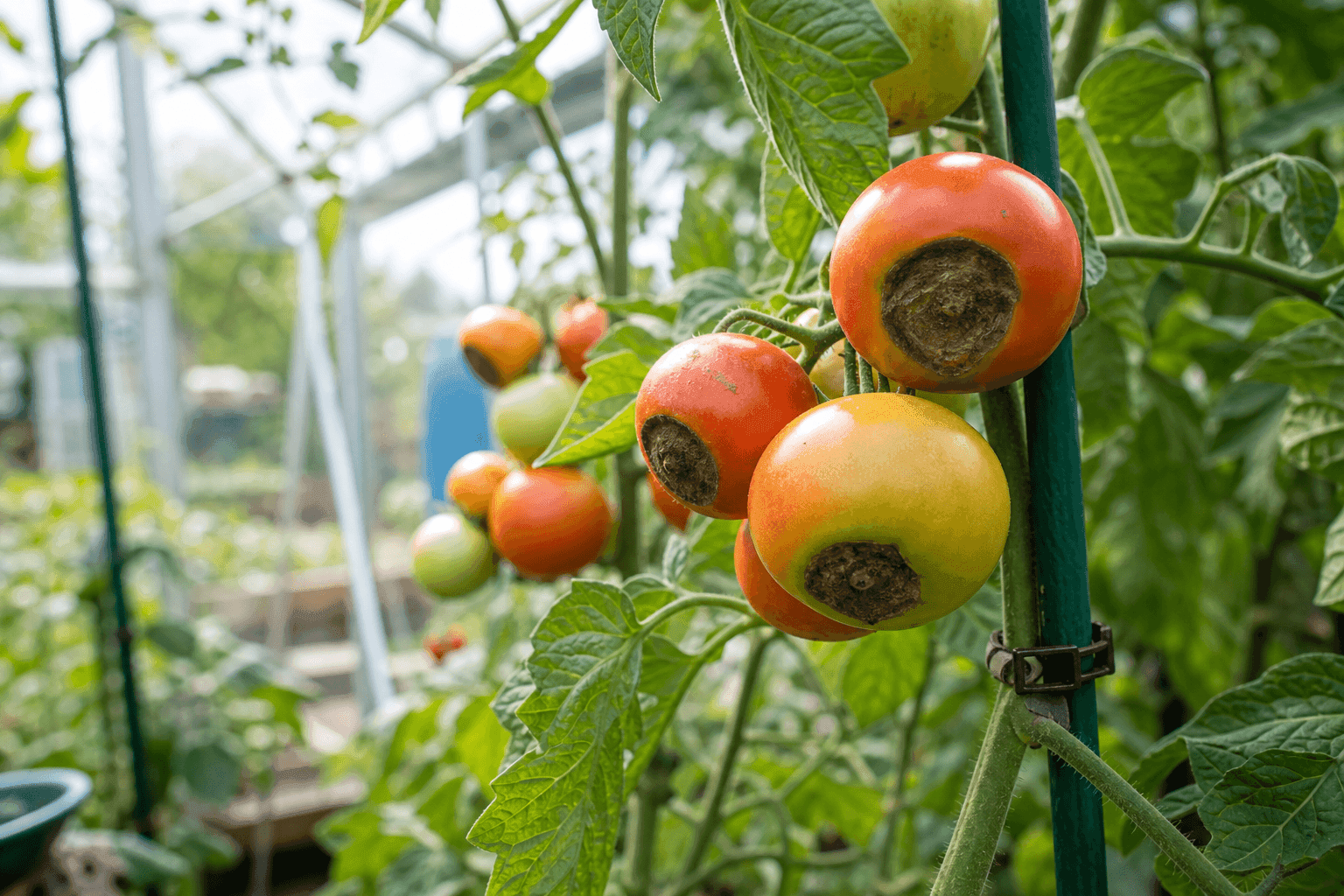
flood a very dry tomato. Bring soil moisture back gradually — sudden soaking after drought causes more root and fruit problems, such as splitting and blossom end rot.
Hormone weedkiller damage
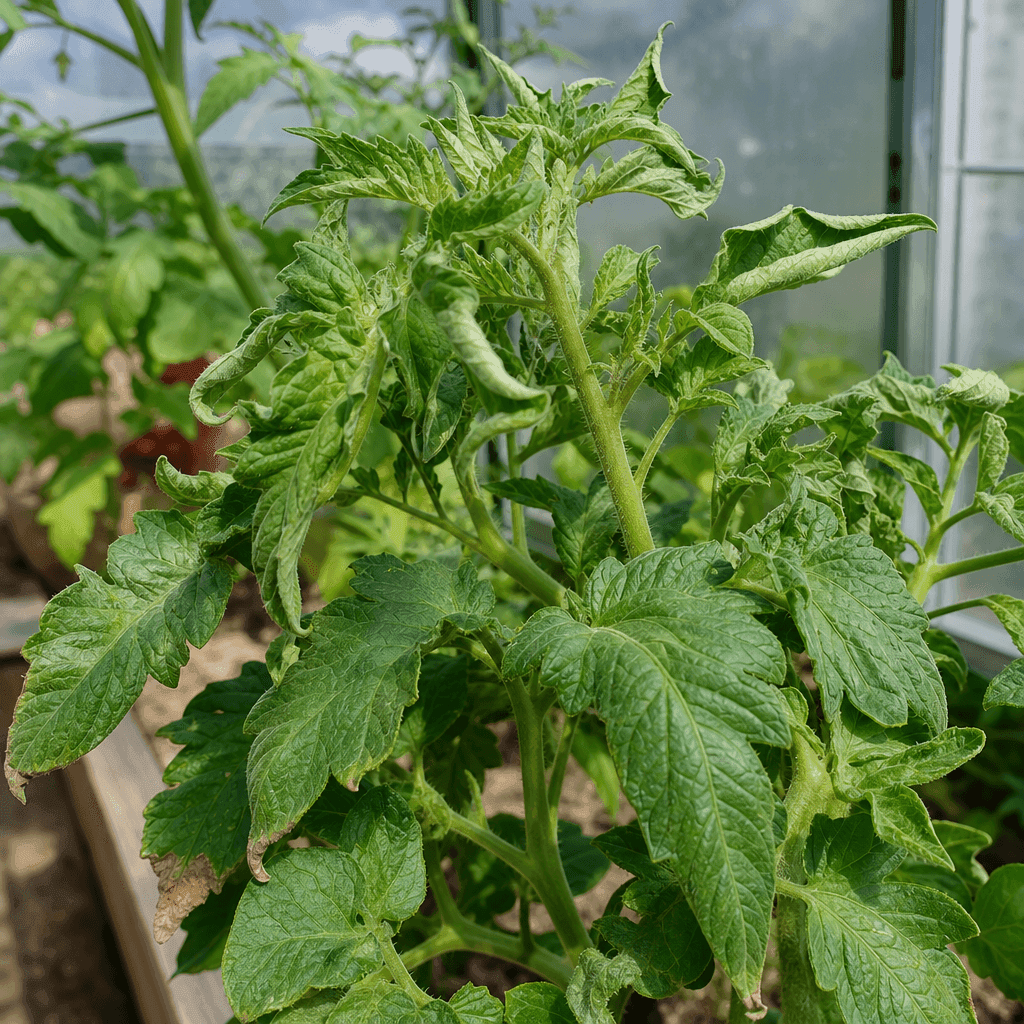
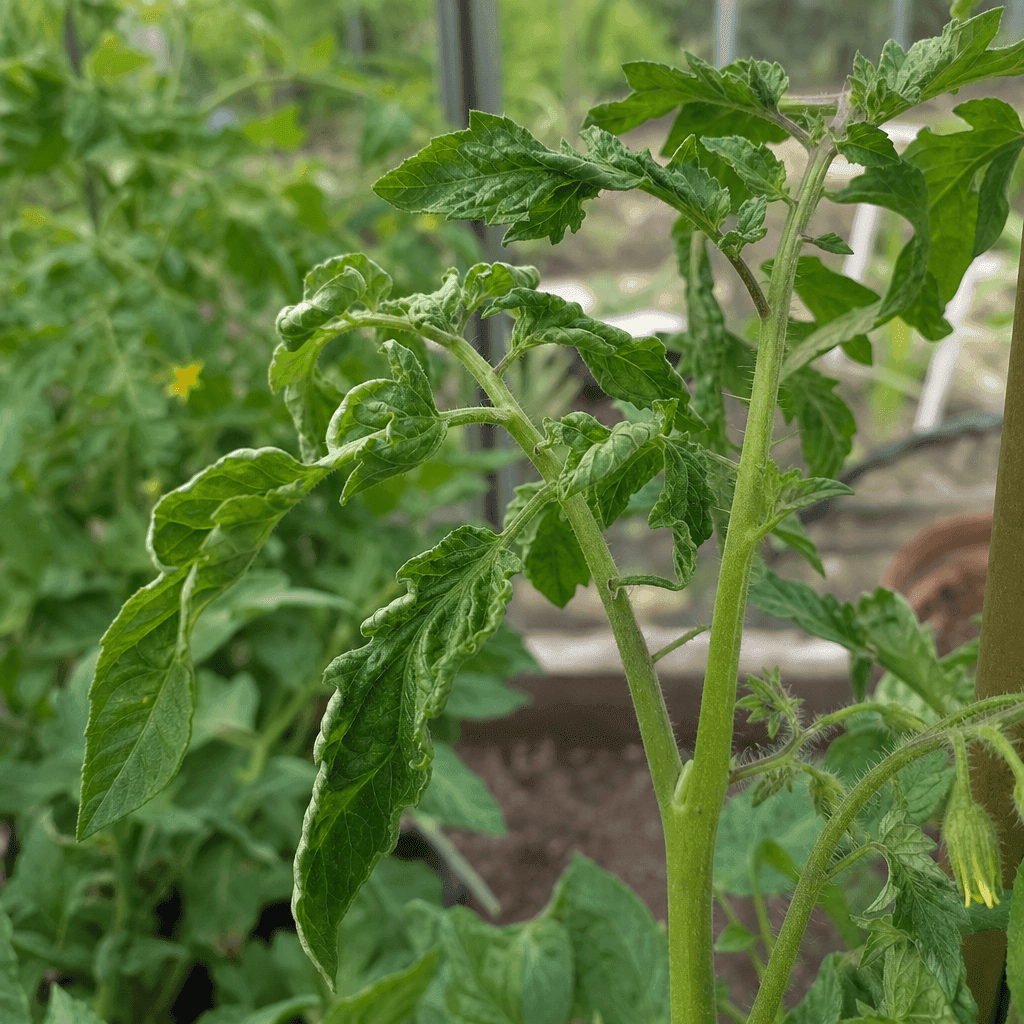
Most likelyTwisted, narrow, fern-like or strap-shaped new growth is not simple leaf roll. Tomatoes are unusually sensitive to hormone (growth-regulator) weedkillers — the RHS warns that even vapour from a loosely capped bottle of lawn feed-and-weed in a hot greenhouse, or clippings from a treated lawn used as mulch or compost, can distort them.
- The newest growth is the worst affected; older leaves can look more normal.
- Leaves are twisted, narrow, cupped or strap-like.
- Several nearby tomato plants show damage at the same time.
- Weedkiller was sprayed nearby, stored in the greenhouse, or used on lawn clippings you've reused.
- Remove weedkiller bottles, treated clippings and any suspect compost from the area.
- Never mulch or compost tomatoes with clippings from a recently treated lawn.
- Keep the plant watered and wait to see what the next growth looks like.
- If clean, normal growth returns, the plant may recover; if distortion continues, replace it and don't reuse the suspect compost.
expect a spray to reverse herbicide injury — there isn't one. The only useful test is whether clean new growth appears once the source is gone.
Aphids and whitefly
Most likelyAphids and glasshouse whitefly curl tomato leaves by sucking sap from the soft growing tips. They leave clues: aphids cluster on shoot tips and leaf undersides, whitefly fly up in small white clouds when disturbed, and both leave sticky honeydew that can turn into black sooty mould. The RHS notes aphids can also transmit plant viruses, so it's worth learning to identify and control aphids on tomato plants early.
- Turn over the curled leaves and inspect the undersides.
- Check the soft growing tips for greenfly, blackfly or whitefly.
- Look for cast skins, sticky honeydew, sooty mould or ants farming the aphids.
- Tap the plant gently and watch for tiny white insects flying up.
- Squash small aphid colonies by hand and wash light infestations off with water.
- Remove badly infested leaves only if plenty of healthy foliage remains.
- In greenhouses, introduce biological controls early, before numbers build.
- Use yellow sticky traps to monitor whitefly — for monitoring, not as your only control.
reach for pesticides casually. The RHS recommends non-chemical control where possible, because many sprays — including some organic ones — harm the natural enemies and pollinators you want to keep.
Tomato virus or pest-vectored disease
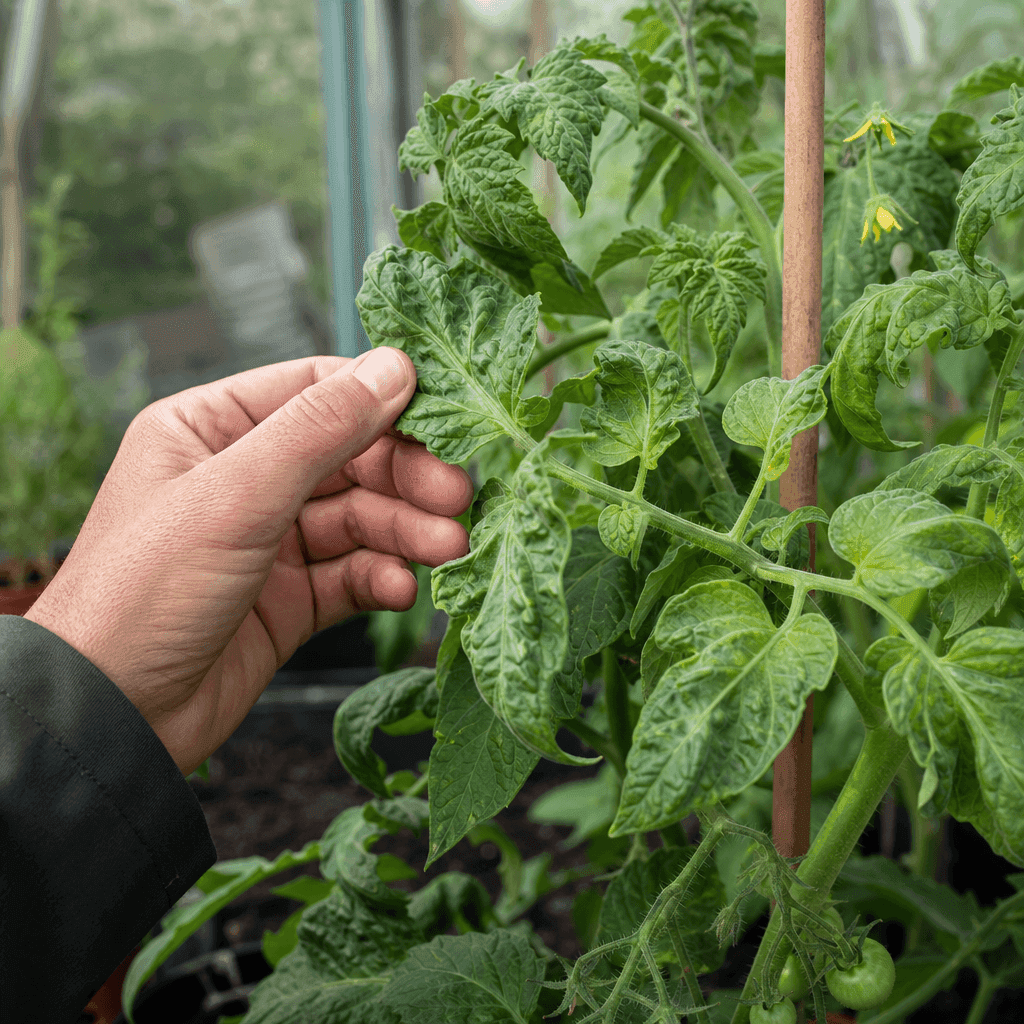
PossibleCurling with yellowing can still be ordinary stress, but it's more worrying when new growth is small, stiff, yellow between the veins, mottled or stunted across the whole plant. Tomato yellow leaf curl virus, for example, shows small leaves that yellow between the veins and curl upward toward the middle. Don't jump to a virus diagnosis from curling alone — in UK gardens, temperature and watering stress are far more common.
- The whole plant looks stunted, not just a few lower leaves.
- The newest growth is small, distorted and yellowed or mottled.
- You've already ruled out cold nights, watering, aphids/whitefly and herbicide exposure.
- Sap-sucking pests (whitefly, aphids, thrips) are present as possible carriers.
- Isolate the plant from other tomatoes if you can.
- Check carefully for whitefly, aphids and thrips, and control them.
- Don't take cuttings from, or compost, a suspect plant.
- Remove severely affected plants if they're stunted and symptoms are spreading.
- Wash hands and tools before handling healthy plants.
expect a home-garden cure — there isn't one for a virus-infected tomato. The practical route is prevention, pest control and removing badly affected plants.
Transplant shock and cold nights
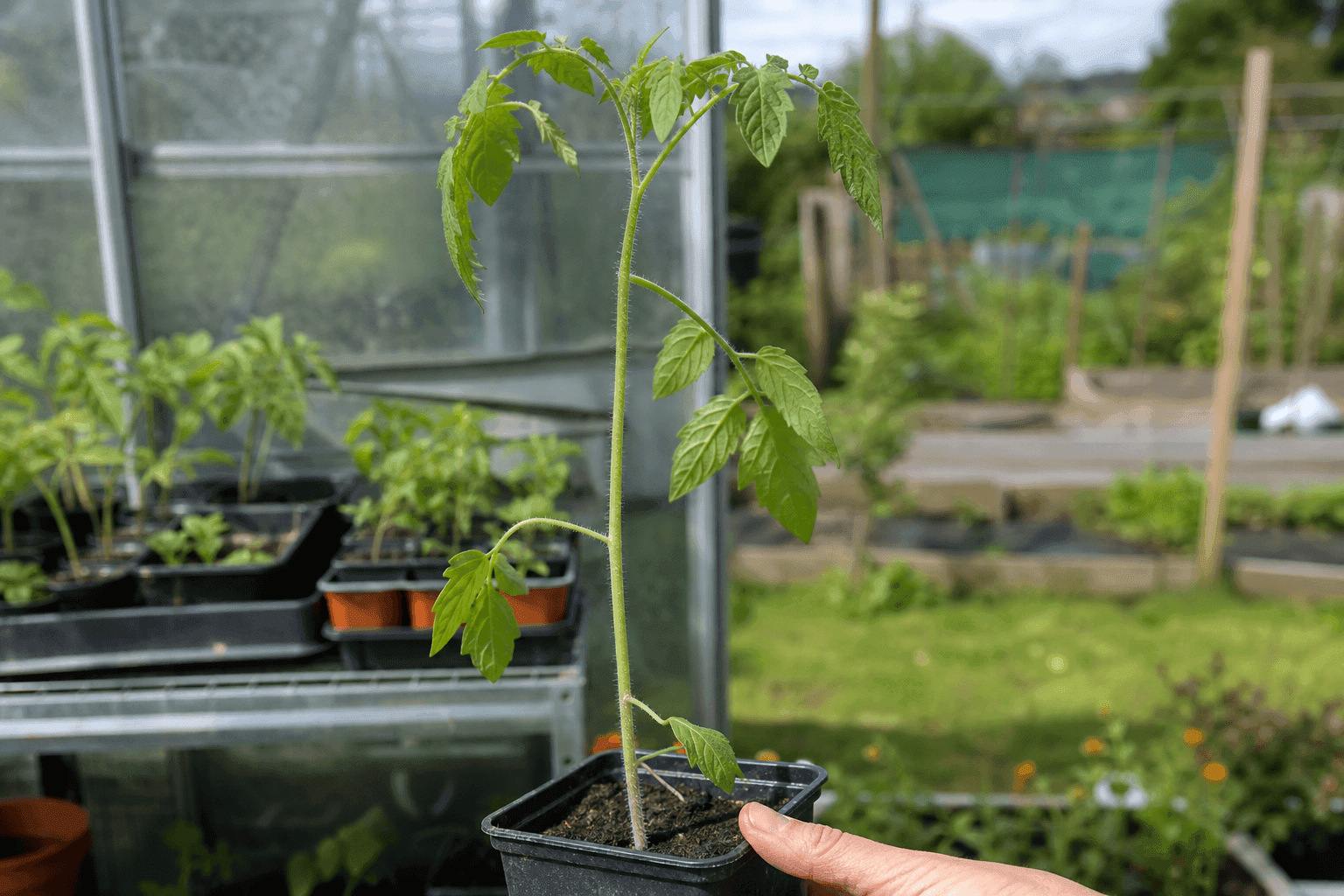
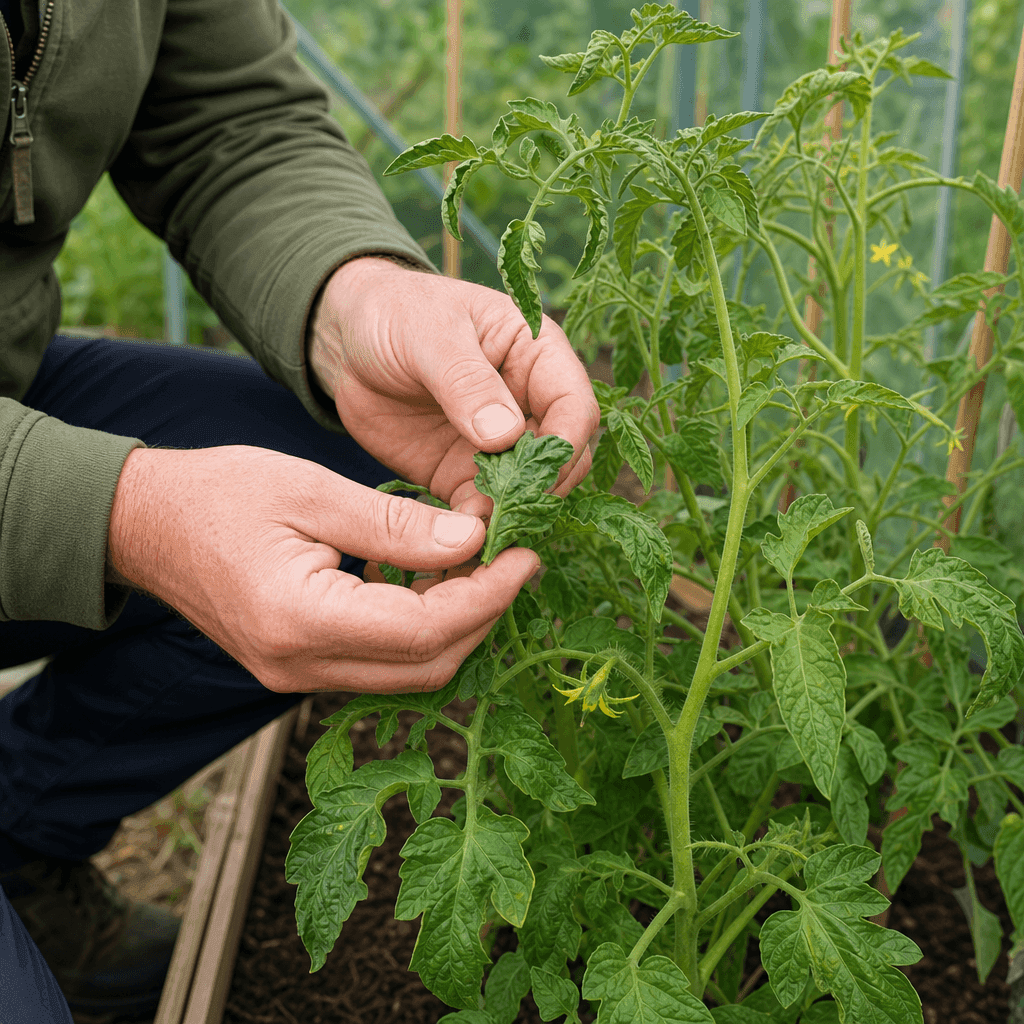
Most likelyLeaf curl in the week or two after planting out is usually a short-term stress response. Young plants react to cold nights, stronger sun, wind, root disturbance and less consistent watering after leaving a sheltered windowsill or greenhouse.
- Curling started within a few days of planting out.
- The plant moved into stronger sun, wind or colder nights.
- The newest leaves aren't severely twisted (which would suggest herbicide).
- No pests are visible under the leaves.
- Keep watering even while the roots settle in.
- Protect outdoor plants with fleece on cold nights and shield very exposed plants from wind.
- Hold off feeding for a few days while the plant is stressed.
- Wait for the next flush of growth before judging recovery — usually one to two weeks.
Stop it coming back:Harden plants off gradually — a week or two of increasing time outdoors — before planting out, and don't rush tender tomatoes outside until nights are reliably above about 12°C.
Still not sure?
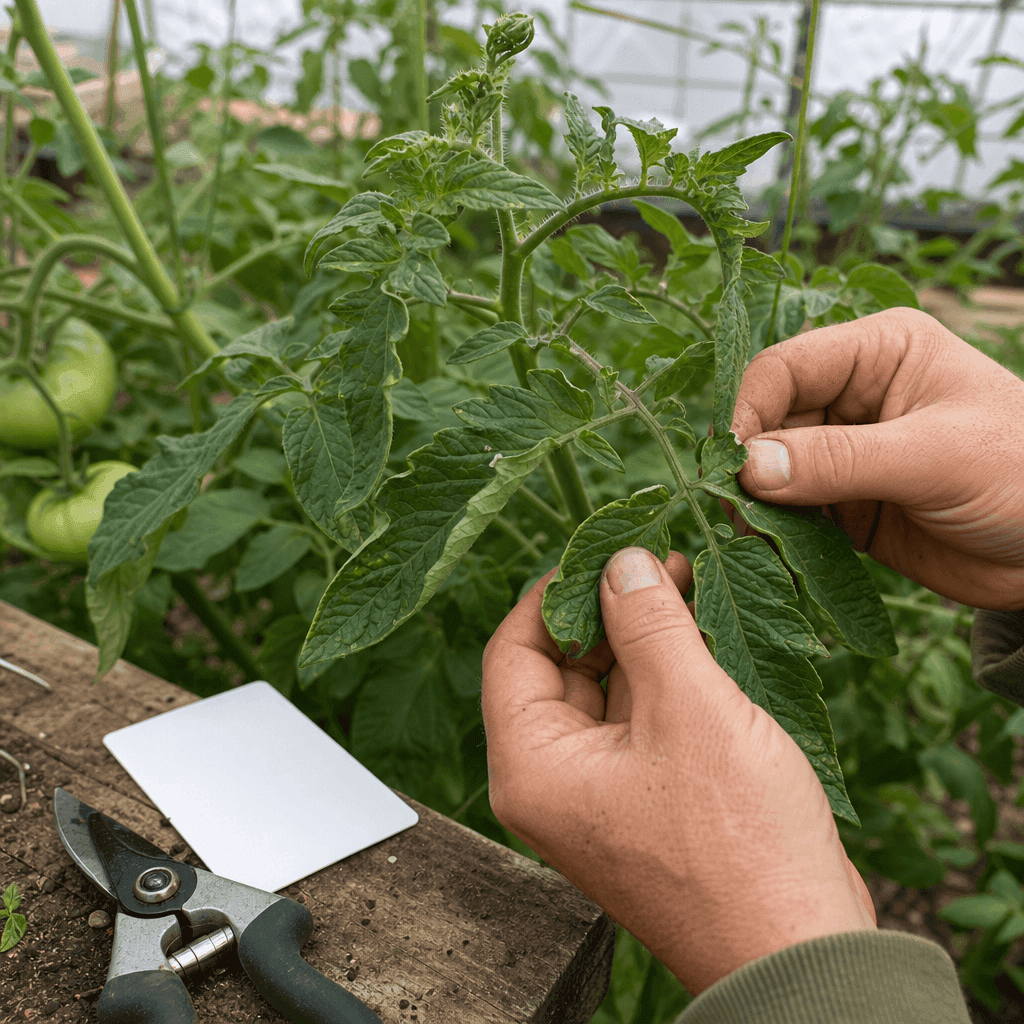
Work down these branches — the first one that matches is your answer.
What not to do
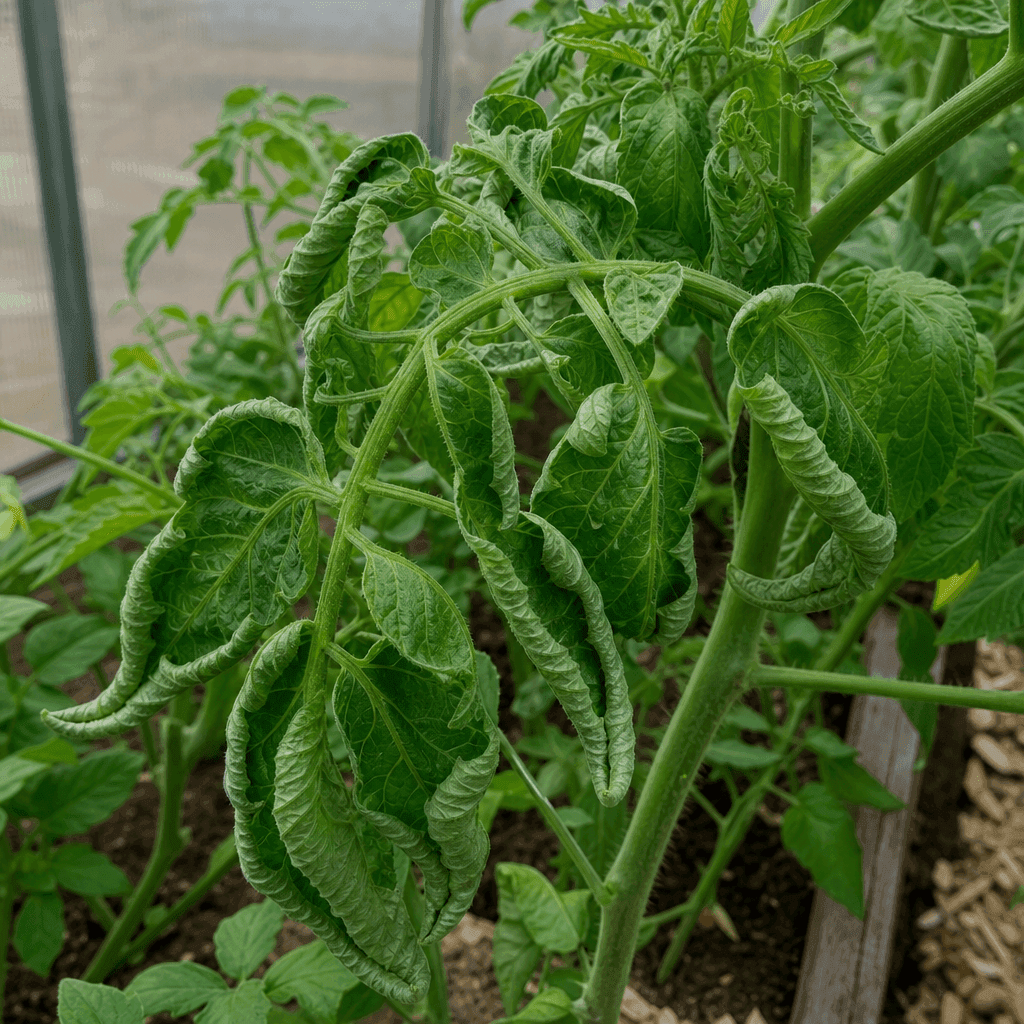
- Remove lots of green, curled leaves — they are still feeding the plant.
- Reach for fertiliser before you've checked water, temperature, pests and herbicide exposure. Feeding the wrong problem wastes time and pushes soft growth.
- Assume all curling is tomato yellow leaf curl virus — in UK gardens, ordinary temperature and watering stress are much more common.
- Use lawn clippings around tomatoes if the lawn has recently been treated with weedkiller.
- Compost a plant that looks virus-infected or badly diseased.
Common questions
How do you treat curling leaves on tomato plants?
Treat the cause, not the curl. Keep watering steady for stress curl, protect plants from cold nights, remove aphids or whitefly if present, and remove the source if herbicide damage is likely.
Can overwatering cause tomato leaves to curl?
Yes. Overwatering can stress tomato roots and make leaves curl, yellow or look tired. Check the compost about 5cm down before watering again — if it's still wet, hold off. If the plant is also wilting or yellowing, see how to recover an overwatered tomato plant.
Should I cut off curled tomato leaves?
Usually no. If the curled leaves are green, leave them on the plant. Remove only dead, badly diseased or heavily pest-infested leaves, and only when the plant has enough healthy foliage left.
Why are tomato leaves curling upward?
Upward curling is often physiological leaf roll caused by temperature swings, heat or uneven watering. If the plant is green and growing, it is usually not urgent.
Why are tomato leaves curling and yellowing?
Curling plus yellowing can mean water stress, nutrient issues, pests or disease. Yellowing on the old lower leaves is far less worrying than yellow, distorted new growth, which can point to a virus.
Can tomato leaf curl fix itself?
Physiological leaf curl often improves once watering and temperatures become steadier. Herbicide damage and virus disease don't simply reverse, although mild herbicide damage may grow out if clean new growth returns.