Quick diagnosis
Match the row to what you’re seeing, then jump to the fix.
| What you see | Likely cause | Confidence | How to confirm | What to do now | Urgency |
|---|---|---|---|---|---|
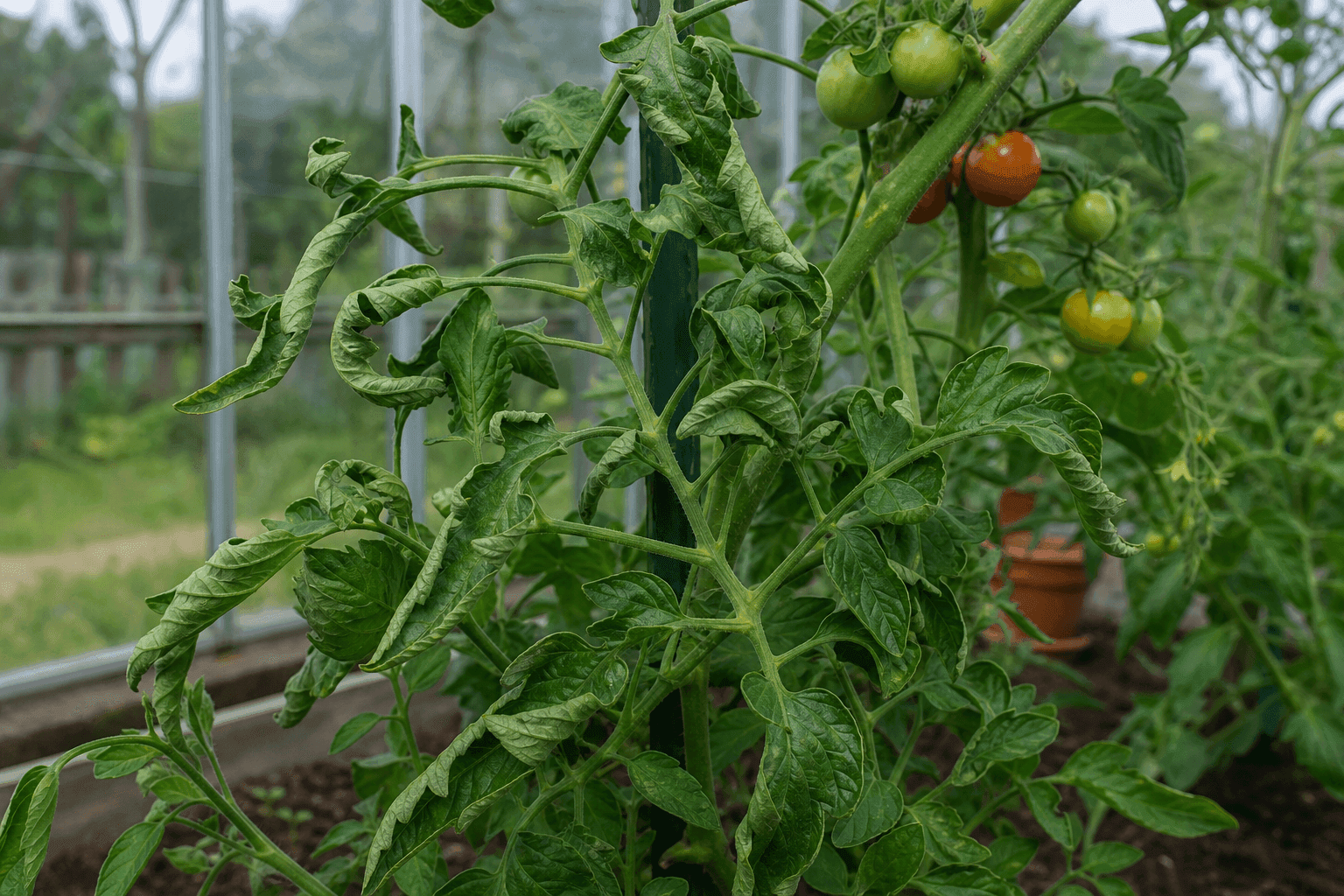
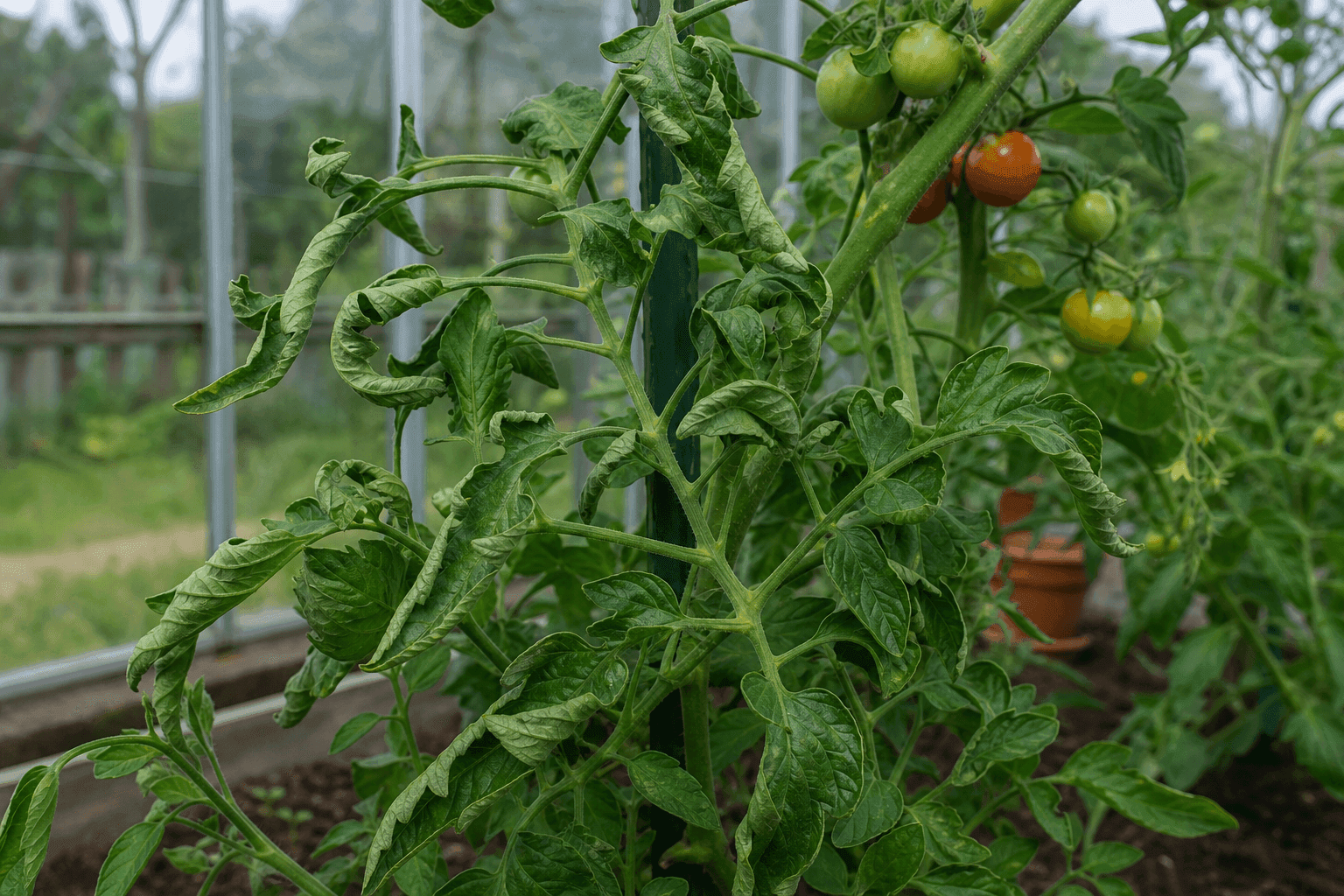
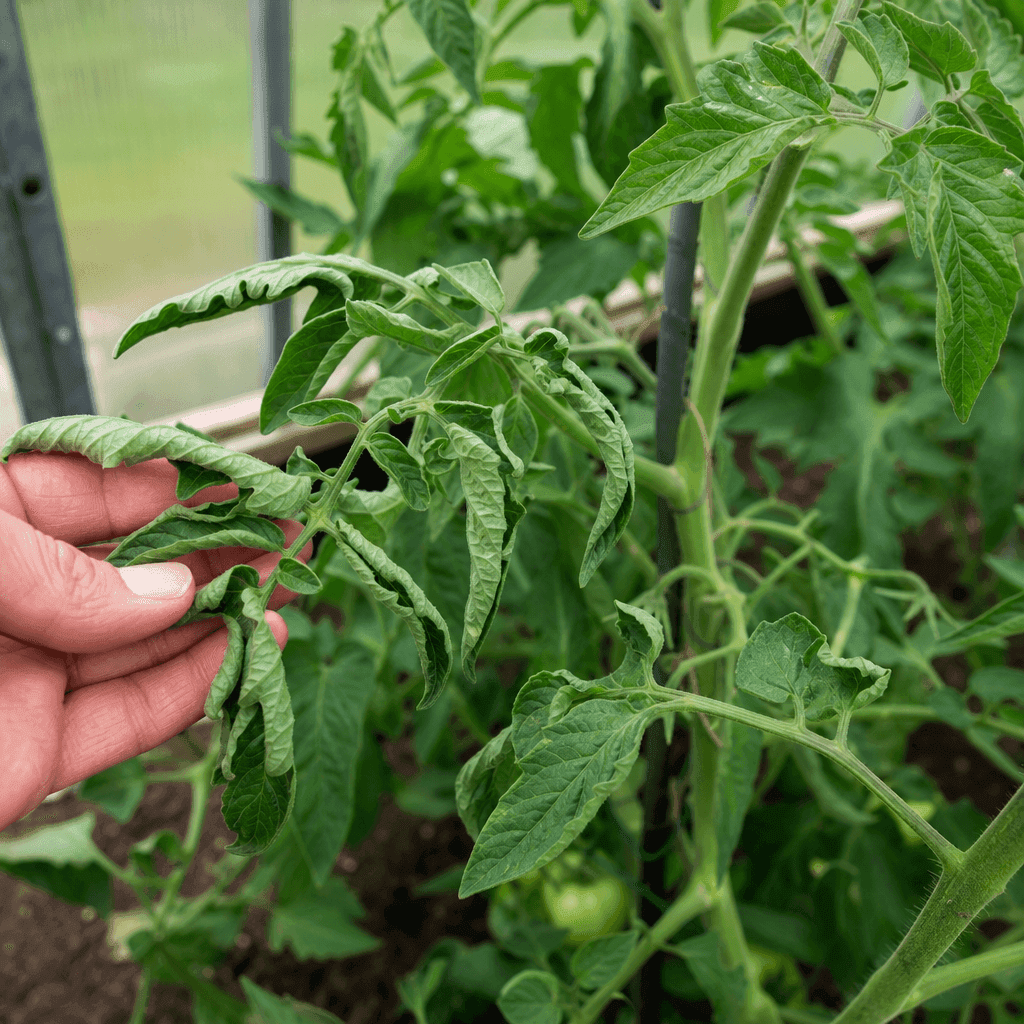
| Older or lower leaves roll upward like a taco; leaves stay green; plant looks vigorous | Hot, dry weather or strong sun | High | Curl is worse in the afternoon, during greenhouse heat, windy spells or after a dry day. | Water deeply, shade during the hottest part of the day, ventilate, mulch containers. | Low |
| Leaves curl upwards after the compost went very dry, then wet, then dry again | Inconsistent watering | High | Compost is dry below the surface or swings between bone dry and saturated; fruit may split or show blossom end rot. | Even out watering, soak gradually, and avoid flooding a dried-out rootball. | Medium |
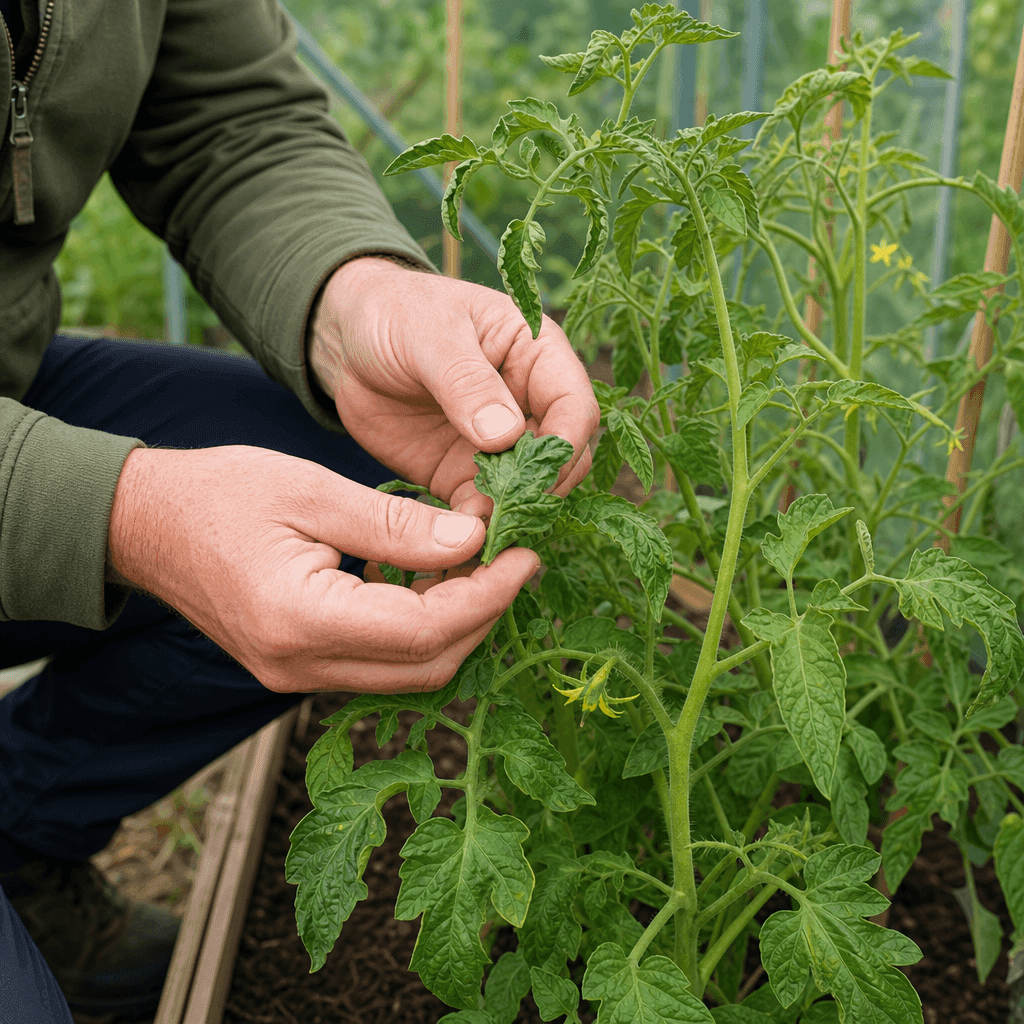
| New soft growth curls or puckers; sticky honeydew, white cast skins or sooty mould present | Aphids or whitefly | Medium | Check shoot tips and leaf undersides; whitefly fly up when disturbed. | Remove small colonies by hand or water spray; use biocontrols under glass; avoid broad pesticides. | Medium |
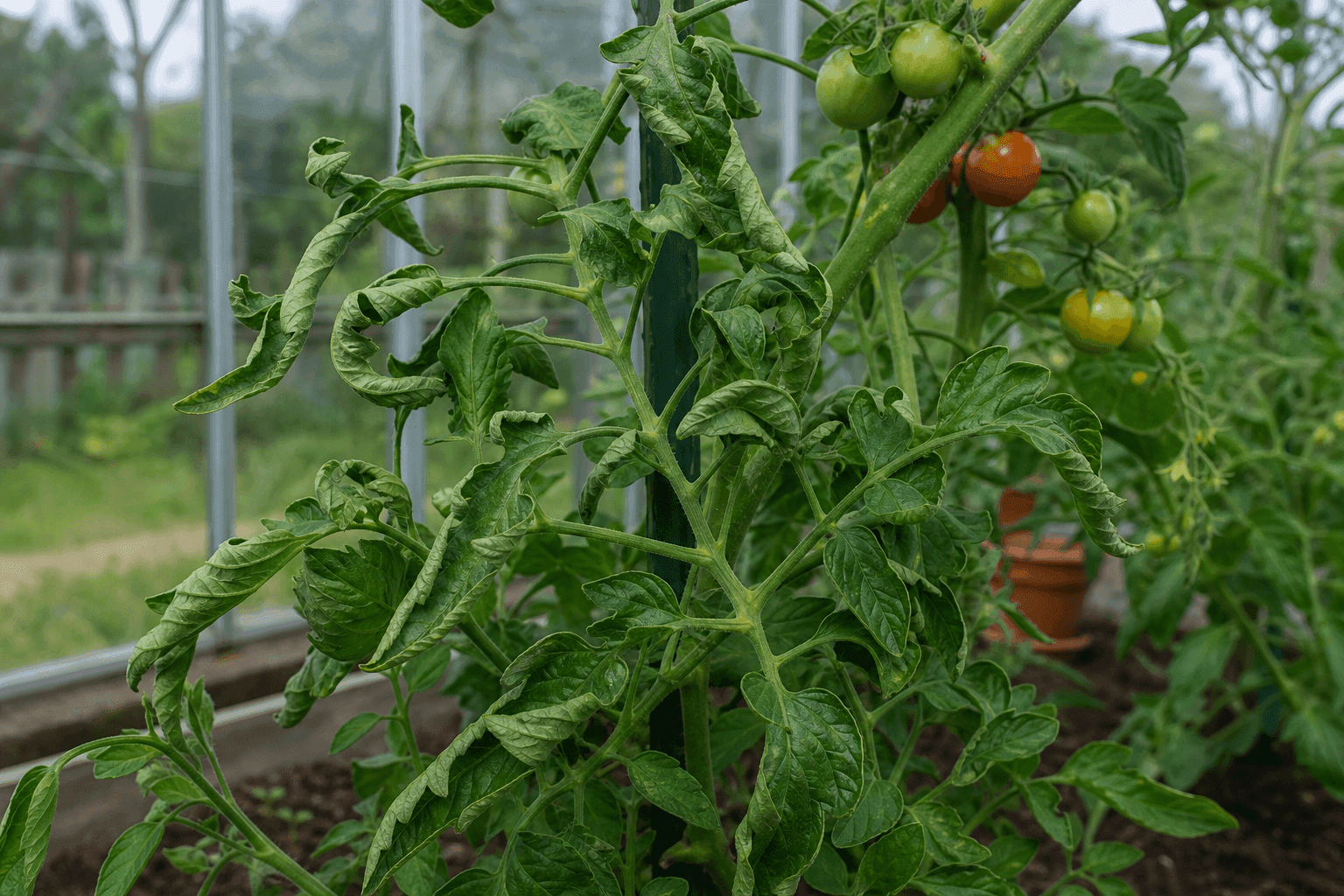
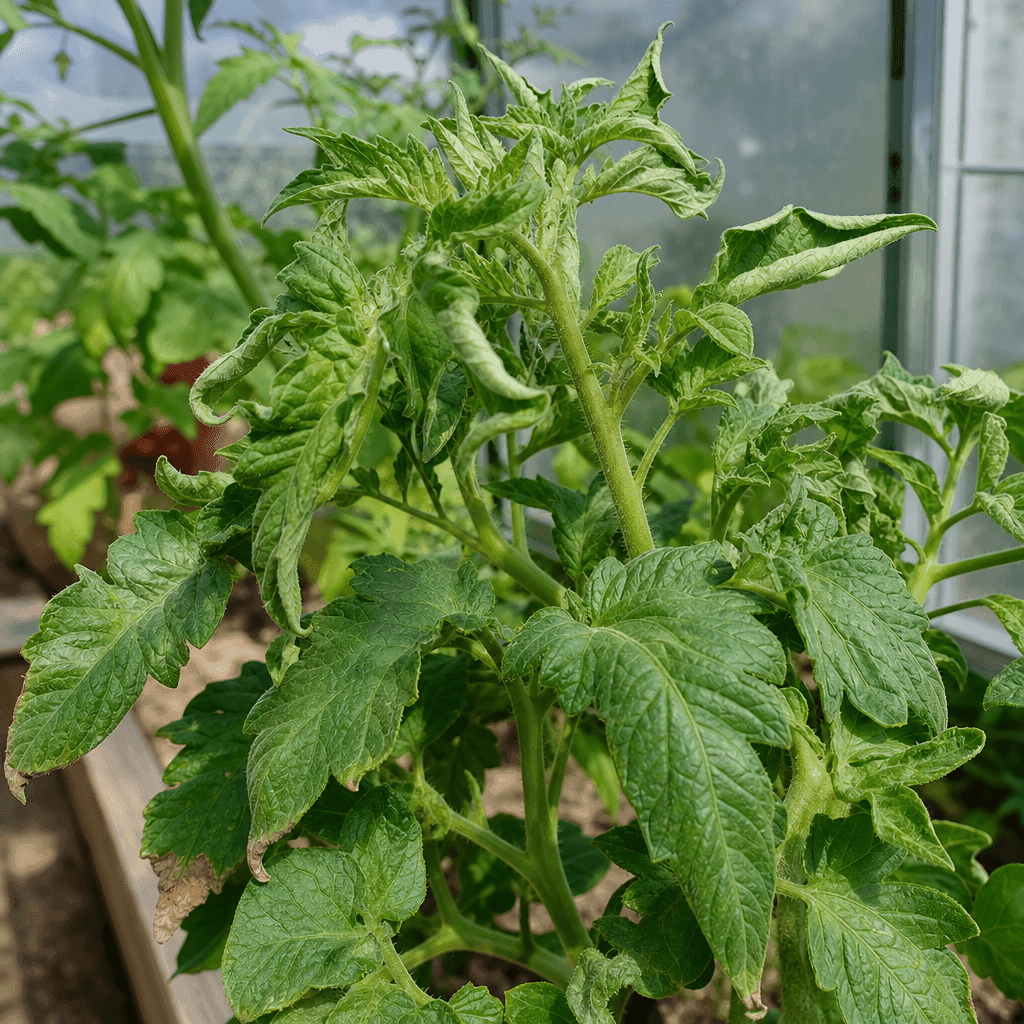
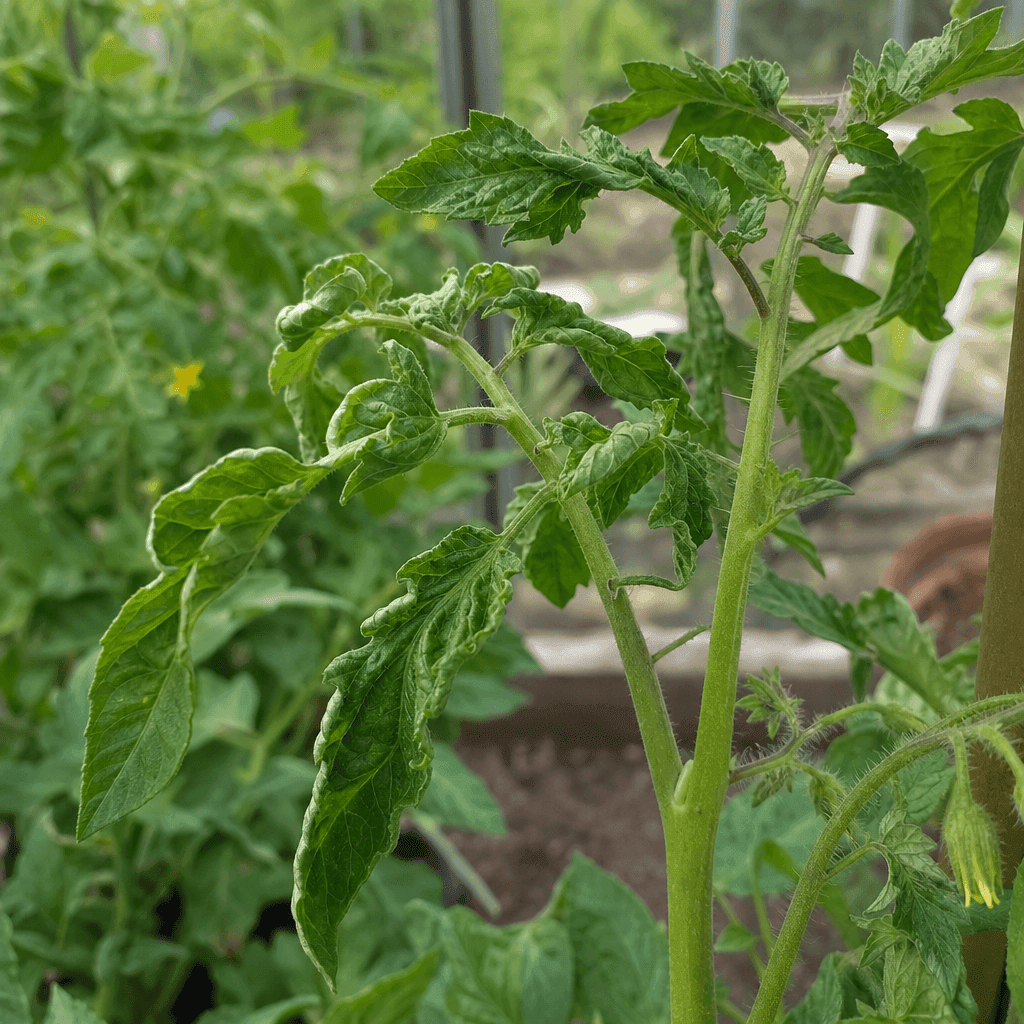
| New leaves are narrow, twisted, fern-like, cupped or strapped soon after nearby weedkiller use | Herbicide drift or contaminated mulch/compost/manure | High | Damage is strongest on newest growth; other sensitive plants nearby may also be distorted. | Remove the exposure source, stop using suspect clippings or compost, wait for clean new growth. | High |
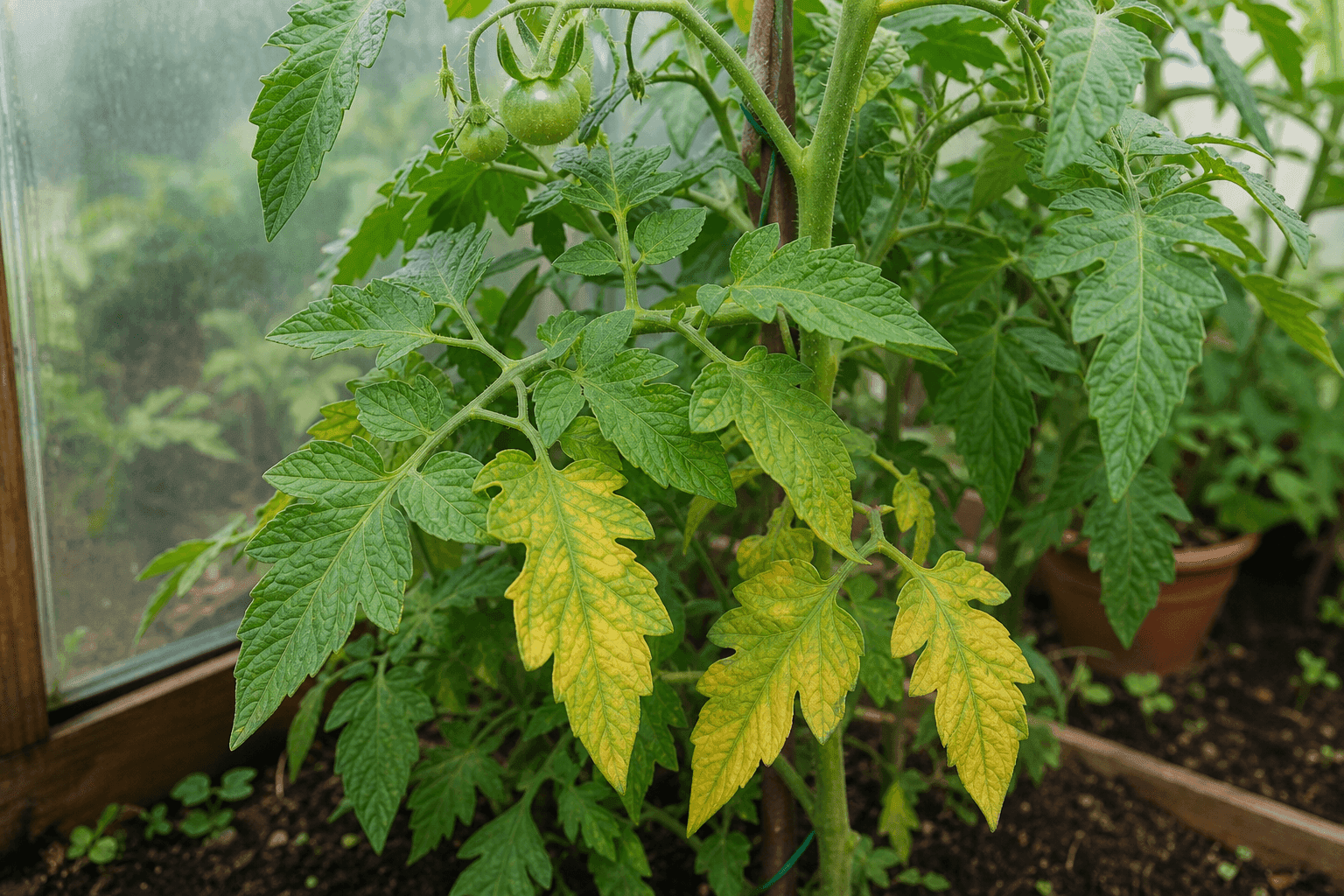
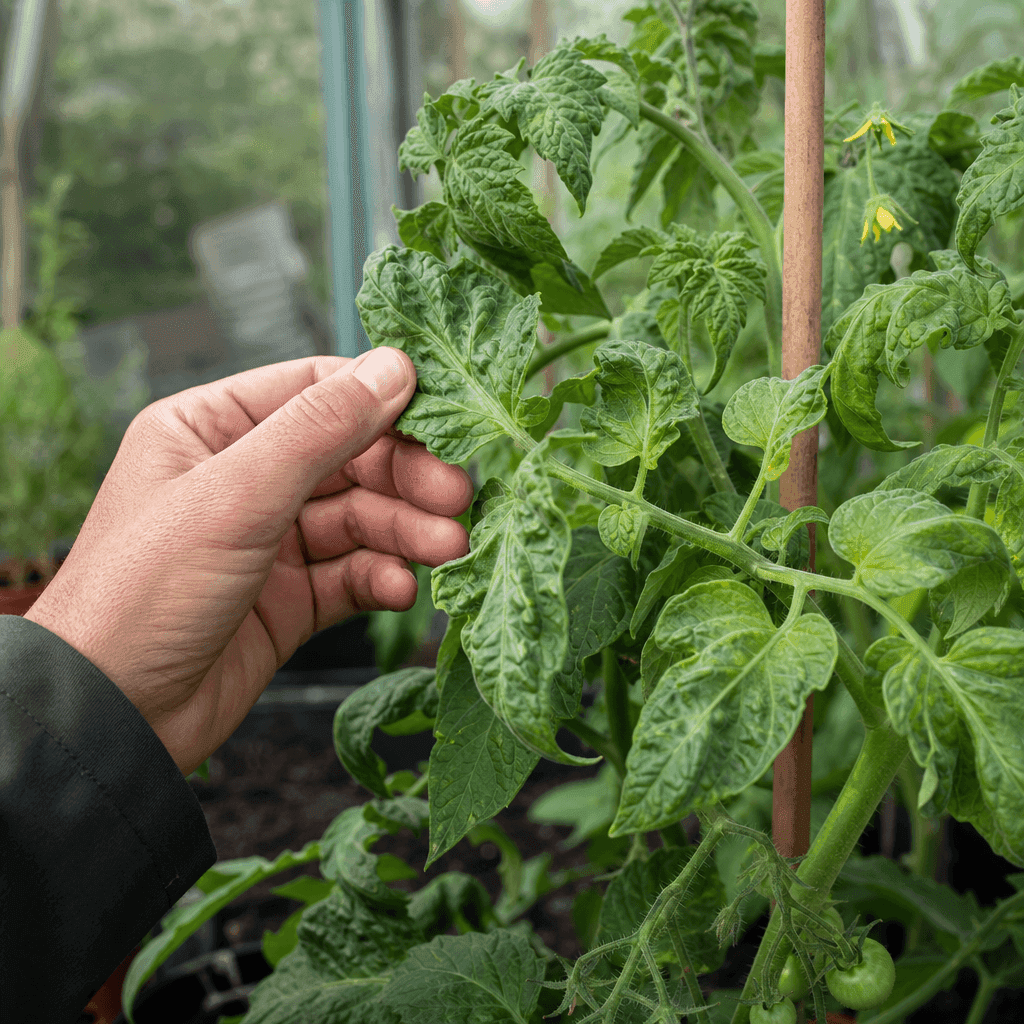
| Upward curl with yellow margins, small crumpled leaves, stunting, poor flowering or bushy growth | Virus, including yellow leaf curl-type symptoms | Medium | Symptoms keep spreading despite good care; plant is stunted rather than just rolled; pests may be present. | Isolate, do not propagate, remove badly affected plants, clean hands and tools. | High |
| Leaves droop downwards, wilt, yellow from the bottom, or the whole plant collapses | Not this problem: check root, waterlogging or wilt stress instead | Medium | Soil is wet, roots smell poor, stems are soft, or the plant wilts despite wet compost. | Use the downward-curl or wilting diagnosis instead of this upward-curl guide. | High |
The causes, in detail
Hot, dry weather and strong sun
Most likelyTomatoes roll their leaves upward to reduce the surface area exposed to sun and dry air, which conserves water. It is especially common while plants are setting fruit and their water demand is high — and in the UK it shows up in small greenhouses, polytunnels, black pots, grow bags and exposed windy sites. Purdue Extension notes that most early-summer tomato leaf curling they see is physiological and does not affect yield unless the stress continues.
- Lower or older leaves roll upward first, but stay green and normally shaped.
- The plant looks worse in the afternoon and better in the morning.
- A greenhouse or polytunnel has swung from cool nights to hot, bright afternoons.
- Only tomatoes in the hottest, windiest or driest spot are affected.
- Water deeply in the morning so the root zone is moist before the hottest part of the day.
- In pots and grow bags, water slowly until the whole rootball is evenly moist — very dry compost can repel water at first.
- Mulch open soil and large containers to cut evaporation.
- Ventilate greenhouses early on sunny days, and use shade netting or shading paint during heatwaves.
- Shelter outdoor plants from drying wind, and move containers out of fierce reflected heat against south-facing walls.
Stop it coming back:Rolled leaves may not flatten fully, but new growth should relax within a few days to two weeks once the plant is under less stress. Fruit already set still ripens normally.
feed heavily just because leaves are curled — excess nitrogen pushes lush growth and can worsen stress, and stripping off curled green leaves only removes working foliage.
Inconsistent watering
Most likelyLeaves curl upward after the plant has swung between dry and wet — common in grow bags, hanging planters, small pots and greenhouses during warm spells. You may also see fruit splitting or blossom end rot on the developing fruit. RHS advice warns against erratic watering and says that if plants get too dry you should not flood them, but bring moisture back gradually.
- The compost is dry below the surface, or wet on top but dry deeper down.
- Pots feel very light before watering and very heavy after.
- Water runs down the side of the pot without soaking in.
- The curl appeared after a missed watering, a heatwave or a sudden heavy soak.
- If the rootball is very dry, water in stages over 20–30 minutes rather than flooding once.
- Keep the root zone evenly moist, not permanently wet, and water the compost, not the leaves.
- Use larger pots where possible — a mature tomato in a small pot dries out very fast.
- Check daily in hot weather, and twice daily for small containers under glass.
- Feed only once watering is steady and the plant is actively growing.
Stop it coming back:If water stress is the only issue, new leaves should look better within one to two weeks. Watch developing fruit for blossom end rot or splitting after an erratic spell.
compensate for missed watering by leaving the plant sitting in water — soggy roots with drooping leaves is a different problem from upward heat roll.
Aphids or whitefly
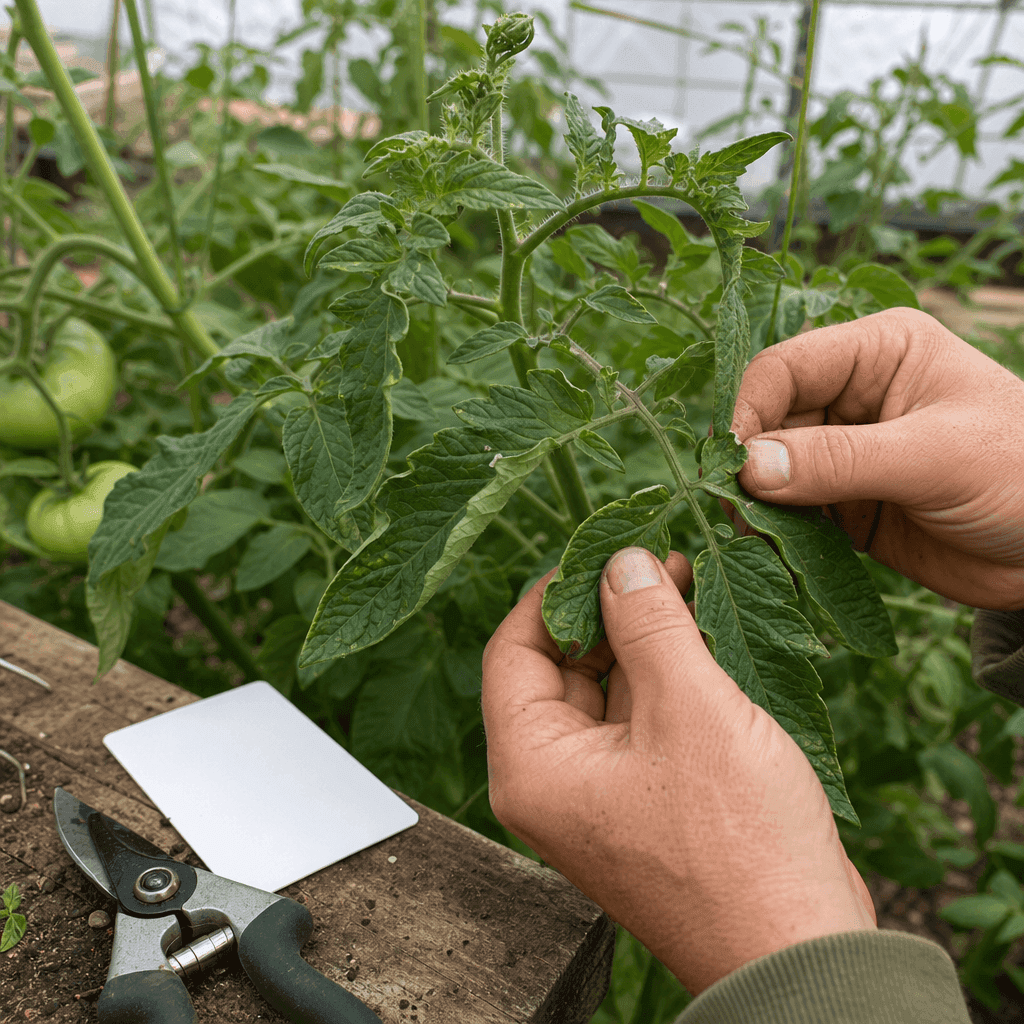
PossiblePest-related curling concentrates on tender new growth, shoot tips and leaf undersides, and is usually puckered, sticky or distorted rather than a neat tube. Aphids on tomato plants may be green, black, yellow or pink; whitefly are tiny white-winged insects that fly up when the plant is disturbed. RHS describes the tell-tale signs as visible colonies, sticky honeydew, sooty mould and white cast skins.
- Look under leaves and at shoot tips with a hand lens or phone zoom.
- Tap the plant — whitefly adults fly up in a small cloud.
- Look for sticky leaves, ants, black sooty mould or white cast skins.
- The newest soft growth is distorted first.
- Squash small aphid colonies by finger and thumb, or wipe off affected tips.
- Dislodge aphids with a gentle water spray, supporting the stem.
- Under glass, introduce biological controls early (e.g. Encarsia formosa for whitefly).
- Improve ventilation and remove weeds or spare host plants harbouring pests.
- Use yellow sticky traps to monitor whitefly, not as the only control.
Stop it coming back:New leaves should be less distorted once pest pressure falls. Check every few days, because aphids and whitefly breed quickly in warm, protected conditions.
spray broad insecticides without confirming the pest — RHS recommends non-chemical options first, as many sprays harm beneficial insects.
Herbicide drift or contaminated material
Most likelyHerbicide damage is more dramatic than ordinary leaf roll: new growth is twisted, narrow, strapped, fern-like, cupped or bubbled, and the clue is distortion rather than just rolling. Tomatoes are very sensitive to hormone-type weedkillers — RHS warns that even vapour from loosely capped weedkiller or lawn feed-and-weed can damage them in hot conditions, and Purdue notes severely twisted top growth can indicate 2,4-D or dicamba injury.
- The newest growth is much worse than older leaves.
- A lawn, path or farm weedkiller was used nearby in the last 1–3 weeks.
- Grass clippings from a treated lawn, or fresh manure/compost/straw, were added.
- Other sensitive plants nearby are also distorted.
- Remove all possible exposure sources from the greenhouse, patio or bed.
- Never use clippings from a recently treated lawn around tomatoes.
- Stop using suspect compost, manure, mulch or straw until you know it is safe.
- If lightly affected, move the pot away from the source and wait for clean new growth.
- If badly distorted, remove the plant rather than nursing weak growth all season.
Stop it coming back:Mild drift can grow out in two to four weeks once the source is removed. Severe damage may permanently cut growth and cropping — there is no spray or feed that reverses herbicide injury.
compost badly affected plants if contaminated material is suspected, or add fertiliser to force recovery — it will not remove herbicide injury.
Virus symptoms
PossibleViruses are less common than weather stress in UK home gardens, but they matter because they spread. Viral leaf curl is not a tidy upward roll — look for a combination of small upward-curling, crumpled leaves, yellowing along margins or between veins, stunted bushy growth and poor flower set. UC IPM describes tomato yellow leaf curl as small upward-curling leaves with strong crumpling, interveinal yellowing, shortened internodes and a bushy, stunted appearance.
- Symptoms keep worsening after watering, shade and pest control are corrected.
- The whole plant is stunted, not just rolled.
- Yellowing, mottling or crumpling appears on new growth.
- Nearby tomatoes start showing similar symptoms, and whitefly/aphids/thrips have been present.
- Isolate the plant from other tomatoes if possible.
- Do not take cuttings or save seed from affected plants.
- Remove badly affected plants promptly, especially under glass where insects move between plants.
- Dispose of infected material carefully rather than home-composting it.
- Control aphids, whitefly and thrips by non-chemical methods, and wash hands and tools.
Stop it coming back:Plants with a true virus do not recover to healthy growth. If one plant is badly stunted and distorted, removal is usually better than risking the rest.
use a fungicide for viral leaf curl — fungicides do not cure viruses, and a stunted, crumpled plant in a greenhouse should not be left while pests move between plants.
Still not sure?
Work down these branches — the first one that matches is your answer.
What not to do
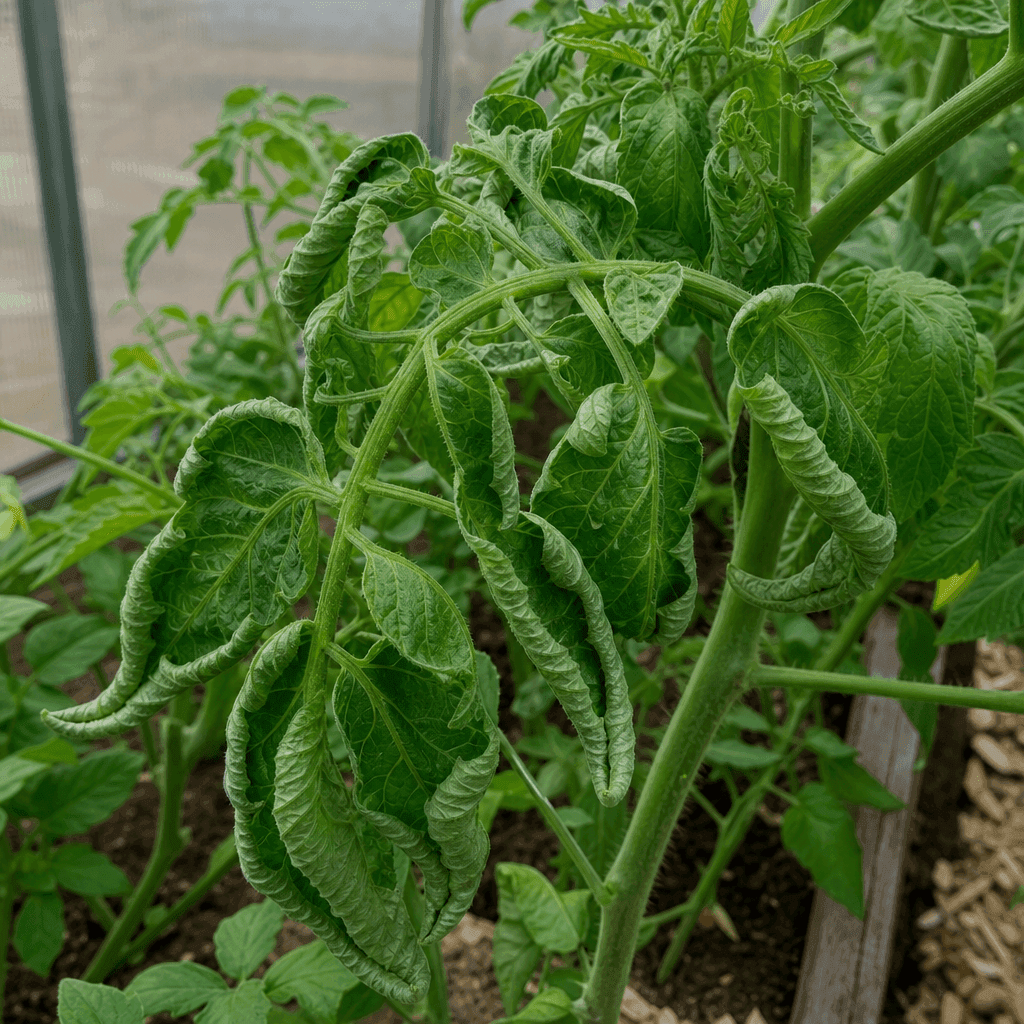
- Strip off green curled leaves because they look untidy — they still photosynthesise.
- Feed heavily before checking water, heat, pests and herbicide exposure.
- Flood a dried-out rootball in one go — rewet it gradually.
- Spray a broad insecticide before you have confirmed a pest.
- Assume all upward curl is virus — in UK gardens, heat and watering stress are far more common.
Common questions
Why are my tomato plant leaves curling upwards?
Most upward curl is a stress response to heat, dry air, wind or inconsistent watering. If leaves are green and only rolled, the plant is usually conserving water. If new growth is twisted, yellow or stunted, check for pests, herbicide injury or virus.
What is the best cure for leaf curl in tomatoes?
There is no single cure because leaf curl is a symptom, not one disease. For normal upward roll, steady watering, heat management, ventilation and shade are the main fixes. For pests, remove aphids or manage whitefly. For virus, remove badly affected plants.
Should I remove curled tomato leaves?
Do not remove green curled leaves just because they look untidy — they still photosynthesise. Remove leaves only if they are heavily pest-infested, diseased, yellowing beyond use, or touching the soil.
Can overwatering make tomato leaves curl upwards?
Yes, overwatering can stress tomatoes and cause curling, but wet compost with drooping, yellowing or wilting is a different sign from simple upward heat roll — see the signs of an overwatered tomato plant if the soil stays soggy. Aim for evenly moist, not saturated.
Do curled tomato leaves mean tomato leaf curl virus?
Usually not. In UK gardens, heat and watering stress are more likely if leaves stay green and the plant grows normally. Suspect virus when upward curl comes with yellowing, crumpled small leaves, stunting and spreading symptoms.
Will tomato leaves uncurl after watering?
Some may relax after the plant is watered and cooled, but older rolled leaves may stay curled. Judge recovery by the new growth and by whether the plant keeps flowering and setting fruit.
Can aphids or whitefly cause tomato leaves to curl?
Yes. Both are sap-sucking insects that can distort or curl growth, and they can be associated with virus spread. Check leaf undersides and new shoot tips before deciding on treatment.