Quick diagnosis
Match the row to what you’re seeing, then jump to the fix.
| What you see | Likely cause | Confidence | How to confirm | What to do now | Urgency |
|---|---|---|---|---|---|
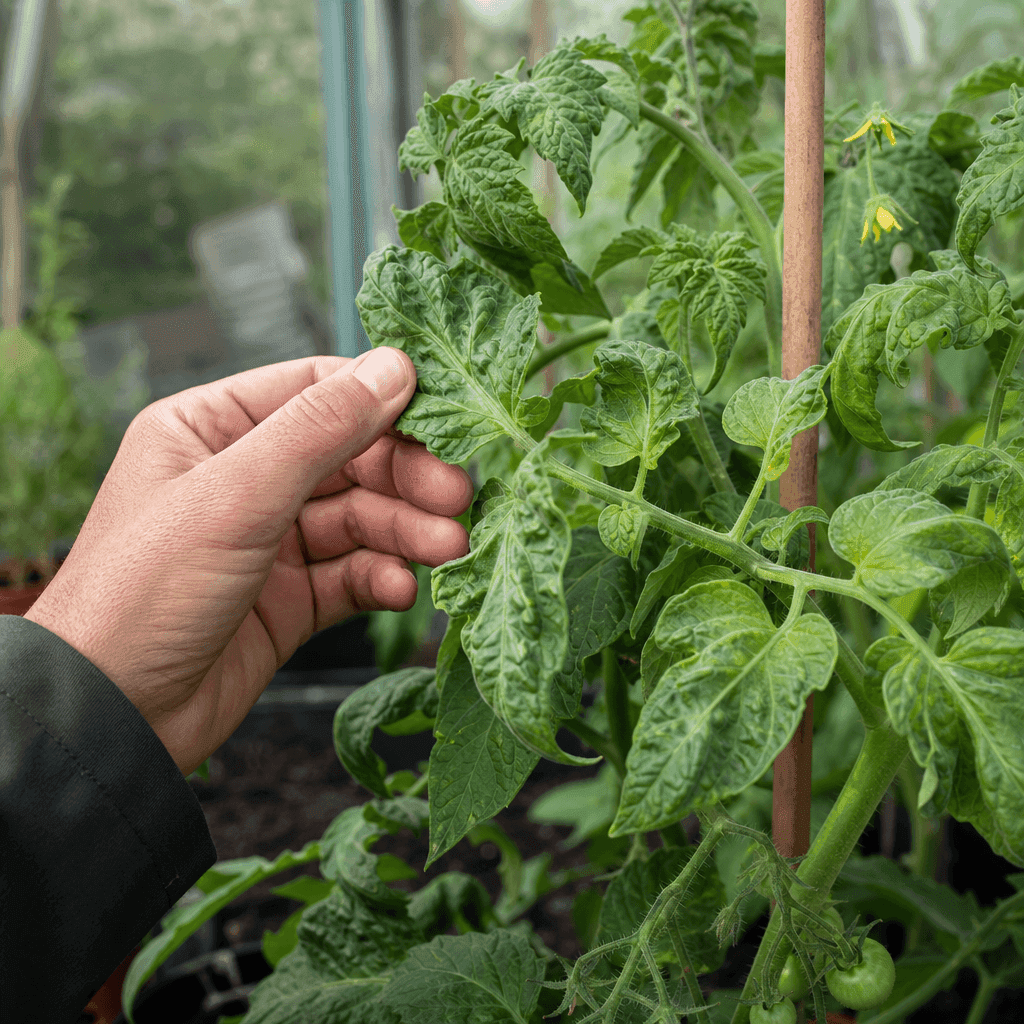
| Leaves curl down and feel limp; compost is wet below the surface; lower leaves may yellow | Overwatering or poor drainage | High | Push a finger 5–8cm into the compost; check the pot, grow bag or bed drains freely. | Pause watering, improve drainage, remove standing water; water only when the top layer dries. | High |
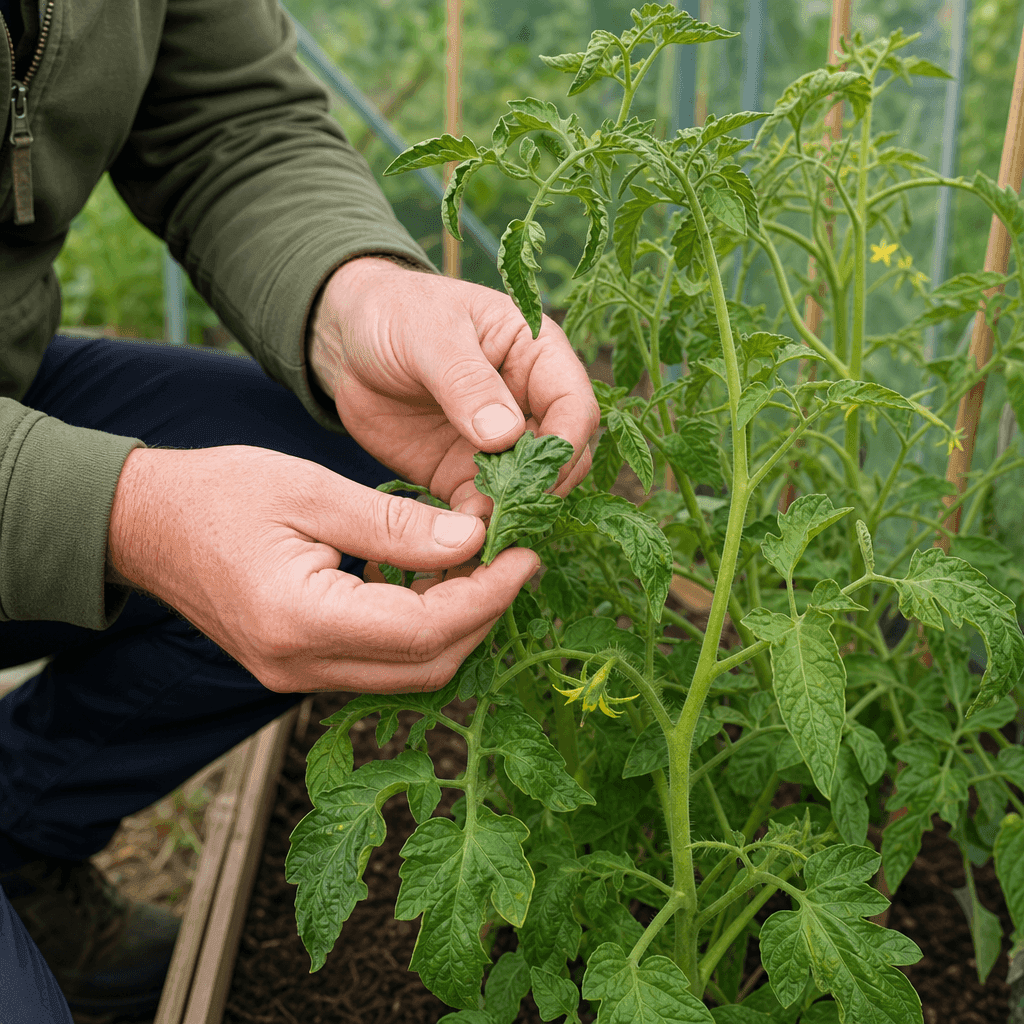
| Whole plant droops after potting on, planting out, staking or root disturbance | Root damage or transplant shock | High | Look for recent handling, broken roots, a small rootball in a large wet pot, or plants rocking in wind. | Firm gently, shade for 24–48 hours if needed, keep evenly moist not soaked, avoid feeding. | Medium |
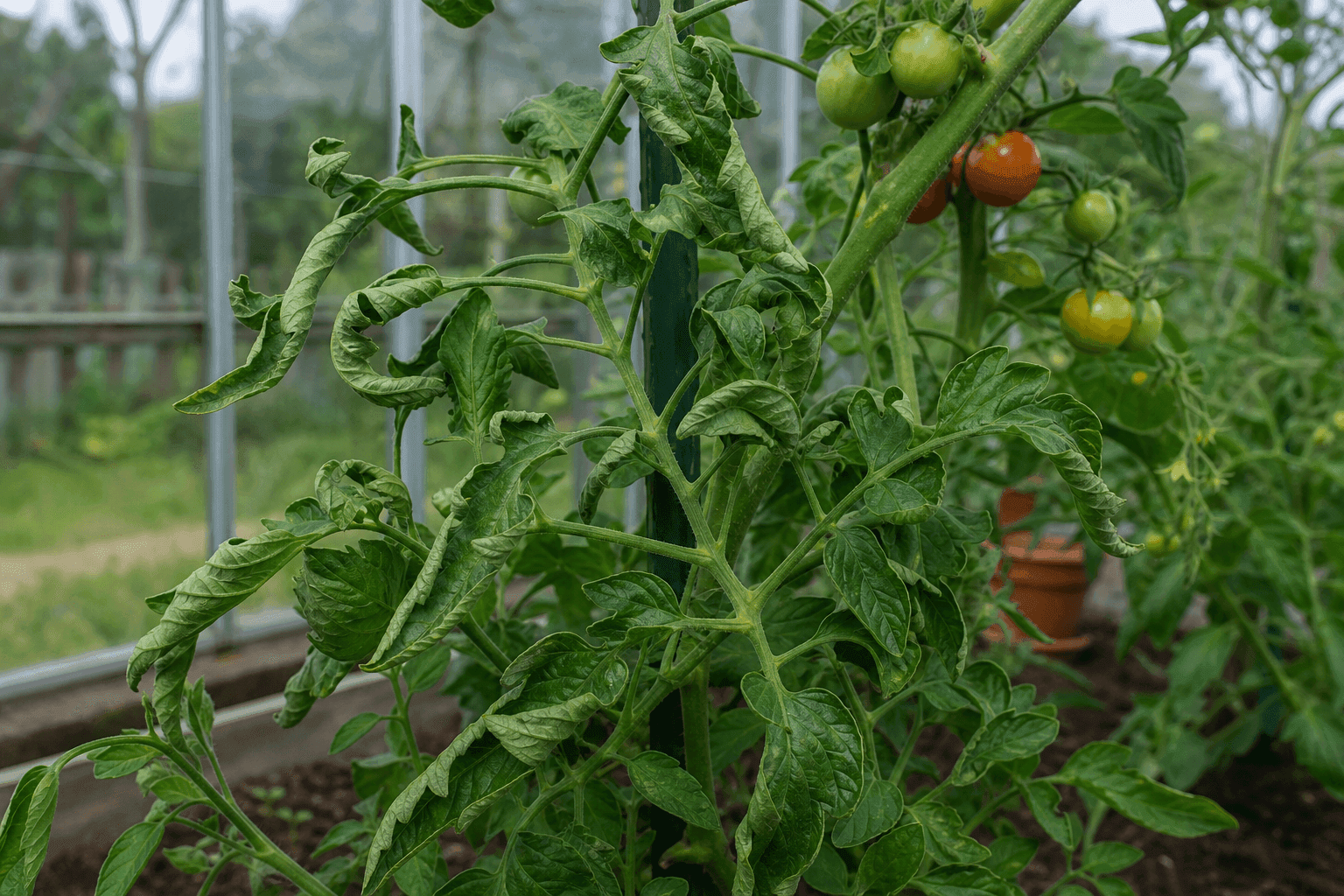
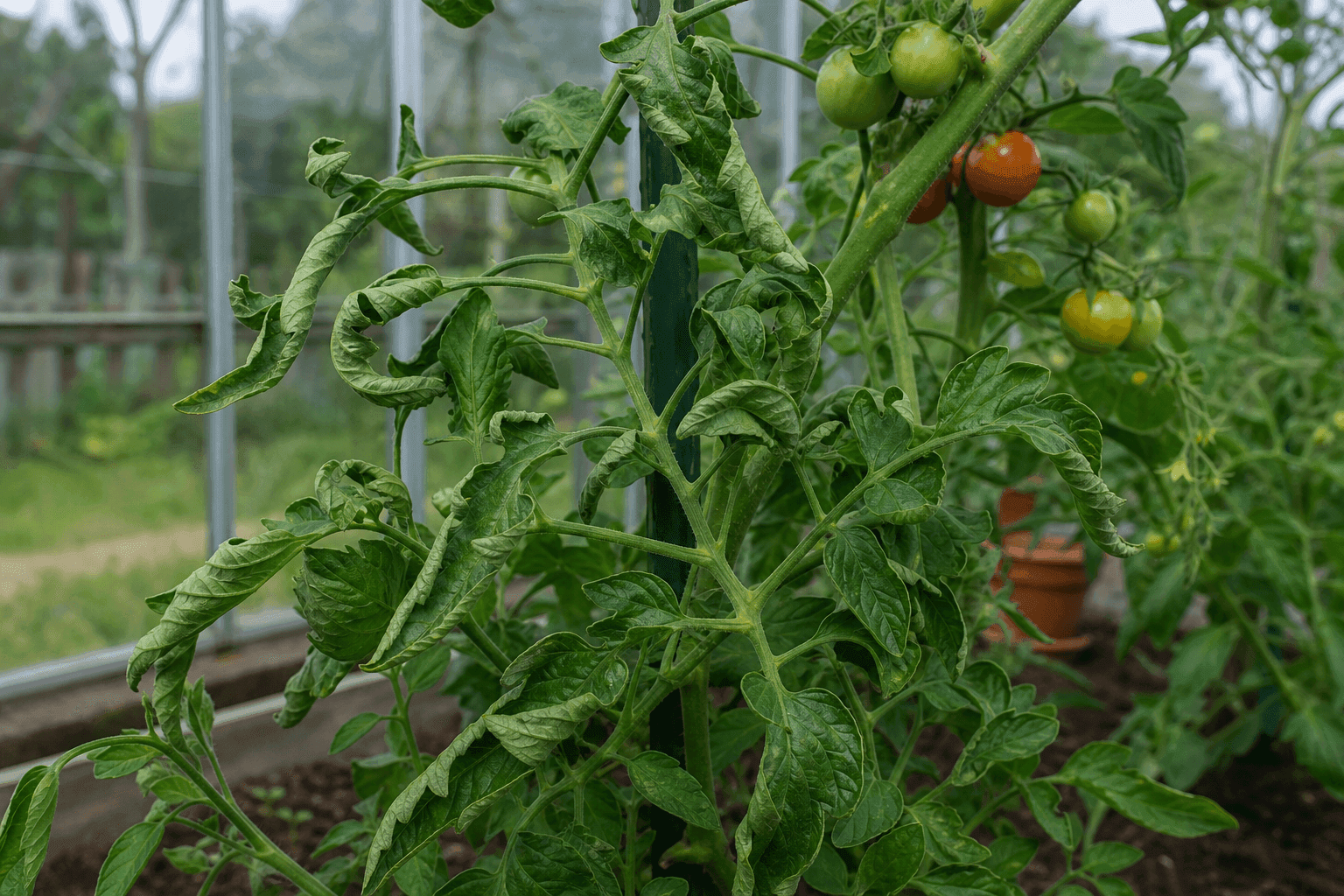
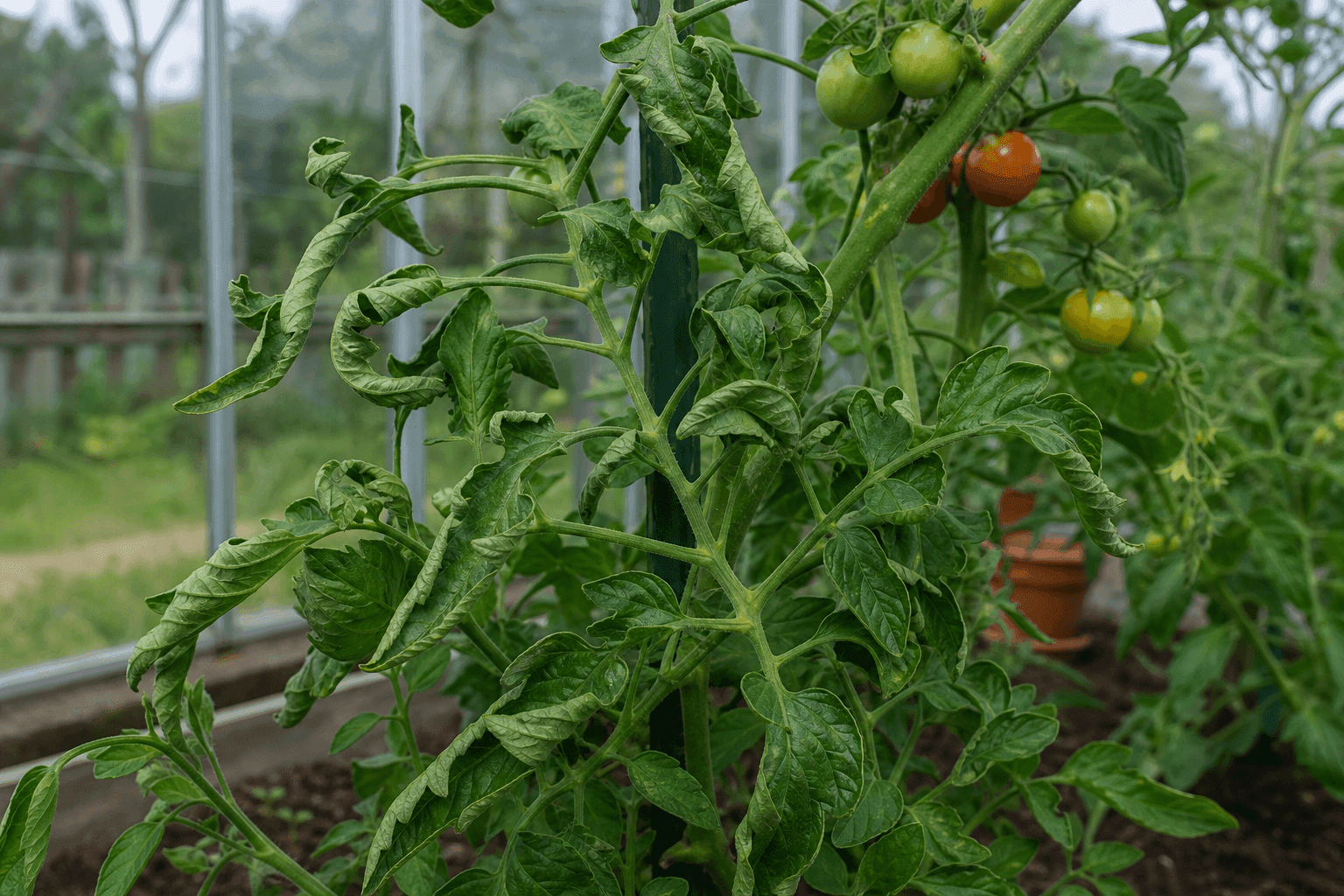
| Dark green, lush, soft growth with leaves curling down like a claw; weak fruit set | Nitrogen excess | High | Recent high-nitrogen feed, manure or lawn fertiliser nearby; leaves very green rather than pale. | Stop high-nitrogen feeding, flush containers once if salts are suspected, switch to balanced tomato feed later. | Medium |
| Curling appears after chilly nights; plants otherwise green; common in early summer or a small greenhouse | Cold nights and temperature swings | High | Check night temperatures; RHS notes tomatoes do not thrive below about 12°C. | Use fleece at night, ventilate by day, avoid planting out too early, wait for warmer nights. | Low–medium |
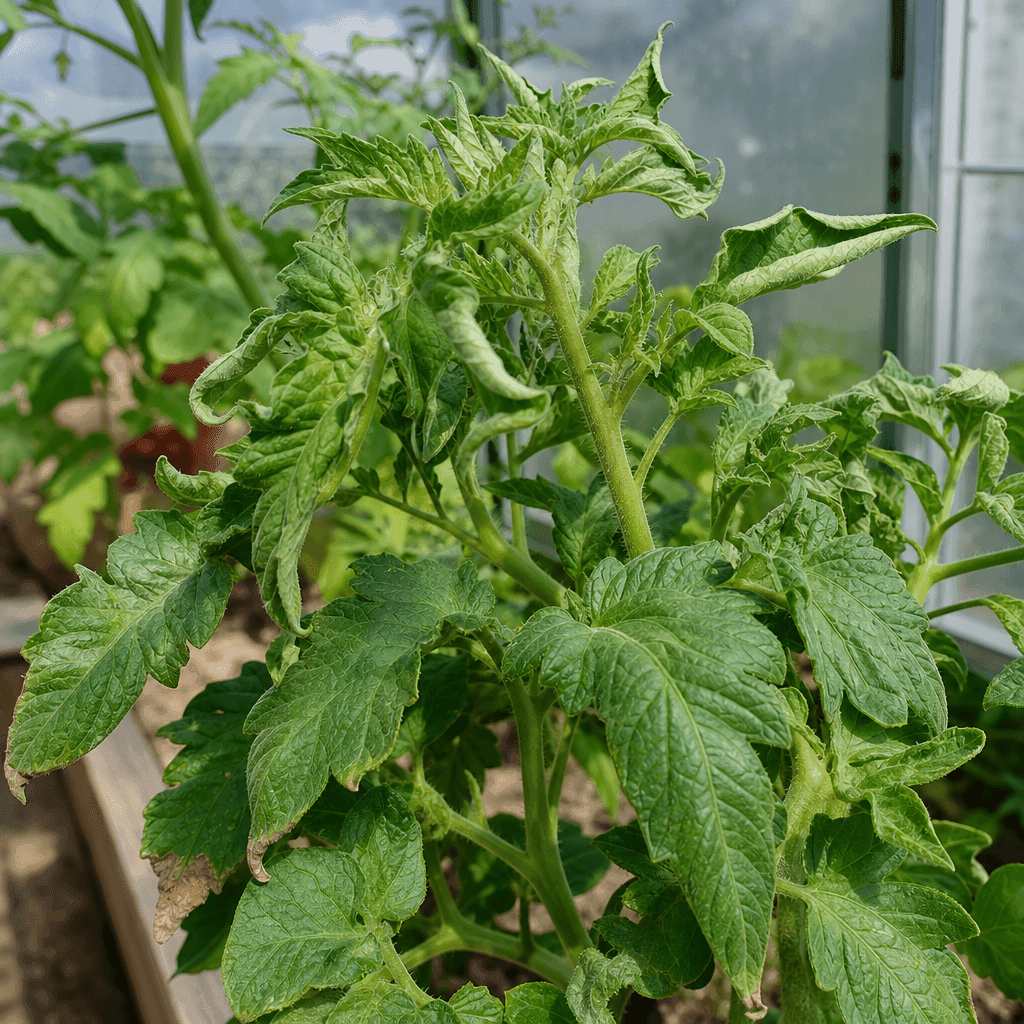
| New growth is twisted, narrow, fern-like or cupped down; nearby sensitive plants also look odd | Herbicide or contaminated compost/manure | Medium | Ask whether weedkiller, lawn clippings, manure, hay or treated grass was used; new growth is hit first. | Remove the suspected source, stop adding contaminated material, repot container plants into fresh compost. | High |
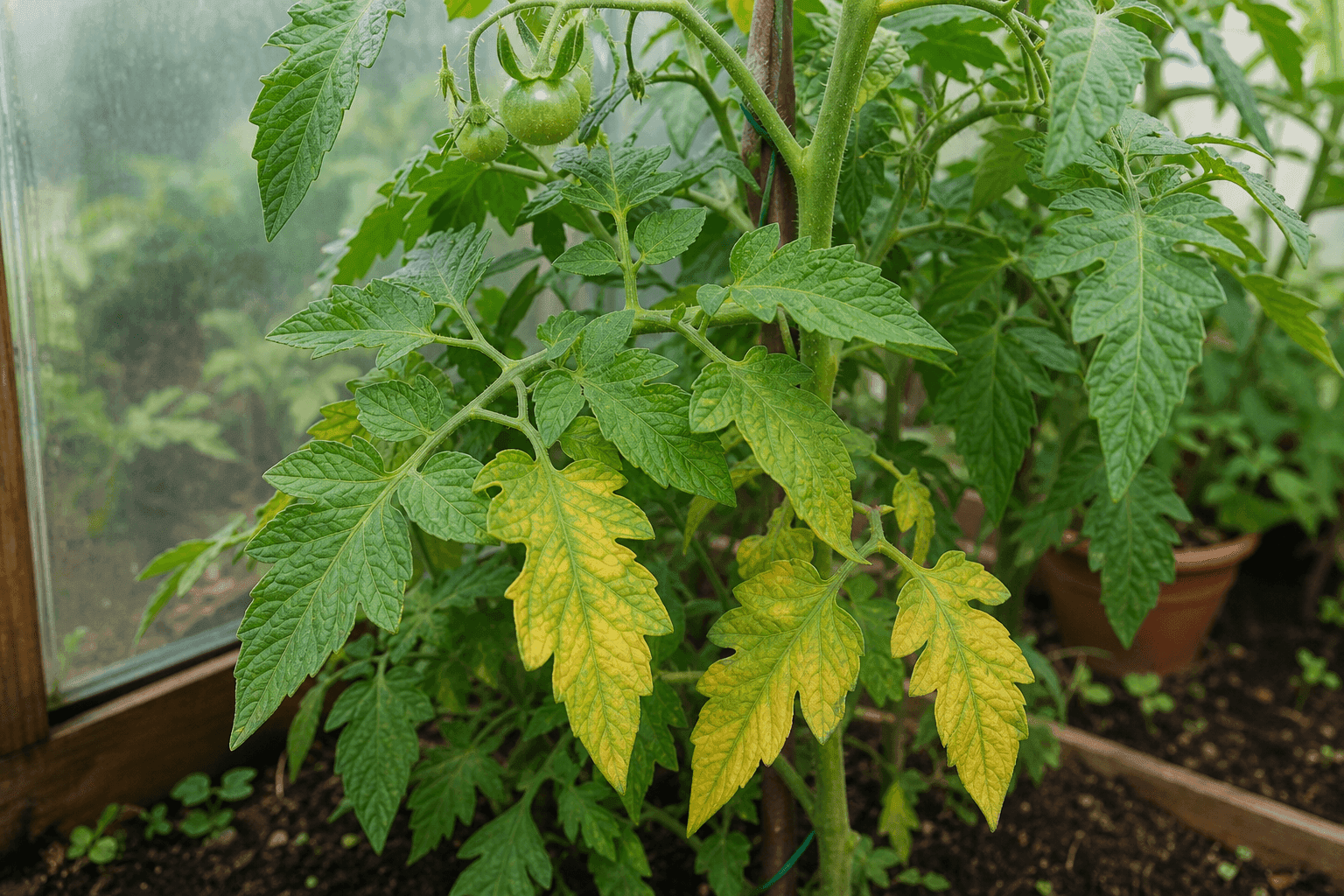
| Curling plus yellow mottling, crumpled small leaves, stunting, sticky leaves or visible whitefly/aphids | Virus, pest-transmitted disease, or sap-sucking pests | Medium | Inspect leaf undersides; compare young and old leaves; look for patchy affected plants. | Isolate under glass, control whitefly/aphids culturally, remove badly stunted virus-suspect plants. | High |
| Leaves roll upward in hot sun, stay green, and the plant grows normally | Upward physiological leaf roll, not this problem | High | Leaflets roll upward/inward rather than curl down; no yellowing, root smell or stunting. | Keep moisture even, mulch, shade in heat; do not over-treat — see the upward-curl guide. | Low |
The causes, in detail
Overwatering or poor drainage
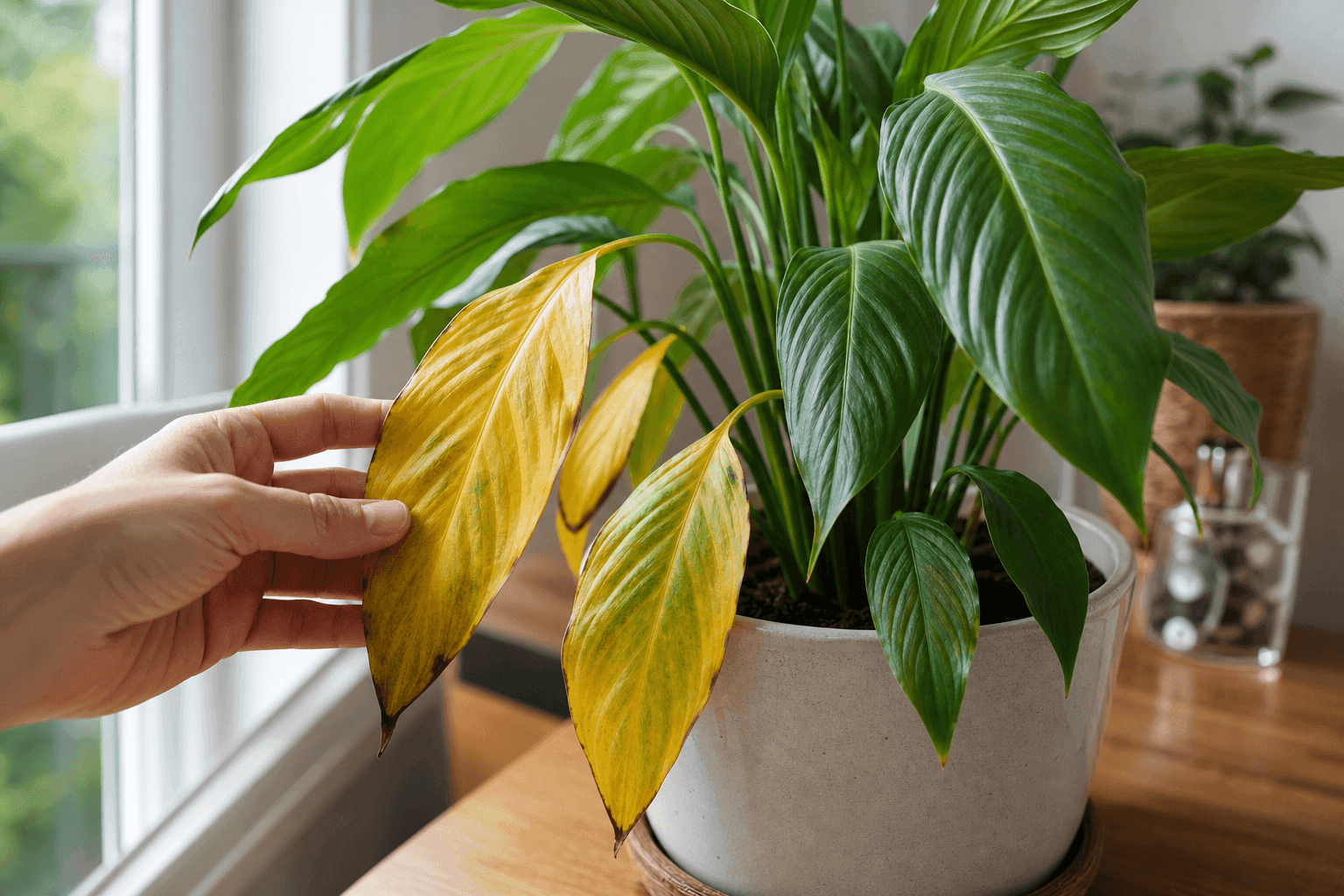
Most likelyOverwatered tomatoes often show downward curling, drooping, dull growth and yellowing lower leaves. In containers, grow bags or peat-free compost that holds water unevenly, the surface can look dry while the root zone stays wet. Roots need oxygen as well as water; in saturated compost they cannot function, so the plant can look both wet and wilted.
- Push a finger 5–8cm into the compost, or lift the pot to judge weight — it is wet and heavy.
- Grow-bag trays hold standing water, or drainage slits are blocked.
- Compost smells sour, or roots look brown and soft.
- The plant stays limp despite wet soil.
- Stop watering until the upper compost dries and the pot feels lighter.
- Make sure every container has clear drainage holes; raise pots on feet if water cannot escape.
- For grow bags, open or add drainage slits and never leave them in standing water.
- Water deeply but less often once growth resumes — aim for even moisture, not daily topping-up.
- Move a small plant out of a large, cold, wet pot to a warmer, brighter spot and let it dry gradually.
Stop it coming back:Mild cases improve within 2–5 days once the roots get air again. Older curled or yellow leaves may not uncurl — judge recovery by firm new growth and no further yellowing.
feed a waterlogged tomato — fertiliser cannot fix oxygen-starved roots and extra salts make it worse; and do not flood a dry-then-wet plant in panic.
Root damage after planting, potting on or disturbance
Most likelyRoot damage can make tomato leaves curl down, droop or look tired soon after transplanting — common after potting on seedlings, planting out, moving a grow-bag plant, hoeing too close, or tying so tightly that wind rocks the rootball. Leaves often stay green at first, which helps separate this from many diseases.
- Curling started after handling, moving, planting out, or a cold windy night.
- The plant is loose in the compost and rocks in the wind.
- The compost is moist, yet the plant still looks tired.
- New growth, not the whole plant, is the part that recovers first.
- Firm the compost gently around the rootball without hard compaction.
- Stake or support the plant so wind does not keep tearing fine new roots.
- Keep the compost evenly moist — avoid both drying out and soaking.
- Give light shade for a day or two if the plant moved from indoors to full sun.
- Wait before feeding; let new roots form first.
Stop it coming back:Expect improvement in 3–10 days if the growing point is healthy. Transplant-damaged leaves may stay curled, but new leaves should look flatter and stronger.
keep lifting the plant to inspect the roots — that repeats the damage; and do not prune off lots of green curled leaves.
Too much nitrogen or overly rich compost
Most likelyNitrogen excess produces very dark green, soft, leafy growth. Leaves can curl downward or claw, stems look lush, and the plant makes lots of foliage with fewer flowers. It is more likely after high-nitrogen liquid feed, fresh manure, rich compost, or using a lawn or leafy-plant feed instead of a tomato feed. University of Missouri IPM lists excess nitrogen among stresses linked to tomato leaf curl.
- You fed several times, added manure, or used a feed with a high first (N) number on the label.
- Leaves are very dark green and vigorous rather than pale.
- There is lots of foliage but fewer flowers.
- The roots are not wet, smelly or stunted (which would point to root stress instead).
- Stop all high-nitrogen feeding.
- In free-draining containers, water thoroughly once so excess soluble salts drain away, then return to normal moisture.
- Resume feeding only when new growth looks normal, using a tomato fertiliser at label rate.
- In a very rich bed, water evenly and wait rather than adding more amendments.
Stop it coming back:New growth should look less clawed within 1–3 weeks. Flowering and fruiting often improve once feeding is balanced and the plant is not pushed into soft, leafy growth.
add Epsom salts as a default cure — magnesium only helps a true magnesium deficiency, not nitrogen excess, overwatering, root damage or disease.
Cold nights and sharp temperature swings
Most likelyCold-night stress often shows as curling or distorted leaves on otherwise healthy plants, especially in late spring and early summer in the UK. RHS explains that variable night temperatures often cause tomato leaf curling, and that tomatoes do not thrive below about 12°C. Small greenhouses and polytunnels swing from warm days to cold nights, which makes the symptom look sudden.
- Recent nights have been cold, even if days were warm.
- Plants went outside early, sat near an open greenhouse door, or grew in an unheated greenhouse on cold nights.
- Several plants show curling at once.
- There are no pests, no sour wet compost and no yellow mottling.
- Use horticultural fleece on cold nights.
- Close greenhouse doors before the evening chill, then ventilate during warm days.
- Avoid planting tomatoes outside until nights are reliably mild.
- Keep container plants off cold paving where possible.
- Use a max-min thermometer so you know what the plant actually experienced.
Stop it coming back:Cold-related curling usually improves as nights warm, with better new growth within 1–2 weeks. Older leaves may stay curled but are not a problem if the plant flowers and grows normally.
increase watering or overfeed after cold nights — cold, wet compost slows recovery; wait until growth is active.
Herbicide exposure or contaminated material
PossibleHerbicide injury can cause downward bending, cupping, twisting, narrow leaves, stunting and strange new growth, and tomatoes are especially sensitive. RHS warns that even vapour from hormone weedkillers or lawn feed-and-weed can damage them, and Mississippi State Extension lists distortion, cupping, twisting, wilting, chlorosis and stunting among herbicide symptoms.
- Damage follows a pattern — worst on the side nearest a fence, path, road or neighbouring lawn.
- Contaminated compost, manure, straw, hay or clippings affect several sensitive plants in the same bed.
- New growth is worse than old growth.
- Plants in other families nearby also look distorted.
- Remove any suspected clippings, manure, straw or compost source from around the plant.
- For container tomatoes, repot into fresh, known-safe compost if symptoms are recent and severe.
- Do not use manure, hay or grass clippings unless you know they are free of persistent herbicides.
- Never reuse a weedkiller sprayer for tomatoes — keep a dedicated one.
Stop it coming back:Light exposure may grow out in 2–4 weeks once the source is removed; severe exposure can permanently reduce yield. New, normal growth is the only reliable sign of recovery.
eat or give away fruit from plants exposed to herbicides not labelled for tomatoes — MSU Extension advises such fruit should not be sold or consumed.
Disease, viruses and pest-transmitted leaf curl
PossibleDisease is less likely when the only symptom is green leaves curling down. It becomes more likely with yellow mottling, crumpled young leaves, stunting, bushy growth, sticky leaves, visible whitefly or aphids, or rapid decline. Tomato yellow leaf curl virus can cause upward and downward curl, yellowing of young leaves, crumpling, stunting and flower drop; NC State notes symptoms can take up to three weeks to appear and that lookalikes are common. If you also see brown lesions or blackened stems, rule out tomato blight rather than treating it as simple curl.
- Inspect leaf undersides for whitefly, aphids, honeydew or cast skins.
- Compare young leaves with older leaves — virus often hits young growth and is patchy across plants.
- Nutrient or temperature problems are usually more uniform and tied to the same compost, feed or weather.
- Brown lesions, blackened stems or mould mean a different disease, not simple curl.
- Remove and bin (do not compost) badly stunted, virus-suspect plants.
- Under glass, isolate suspicious plants and reduce whitefly/aphids with non-chemical controls first.
- Use any plant-protection product strictly to the UK label, against the confirmed pest — not as a leaf-curl cure.
- Clean tools after handling suspect plants, and buy healthy transplants.
Stop it coming back:A plant with temporary pest feeding may improve once pests are controlled, though damaged leaves stay curled. A systemic virus is not cured — management is prevention and removal.
spray fungicide, insecticide or neem just because leaves curl down — match the action to a confirmed pest or disease, and do not compost virus-suspect greenhouse plants.
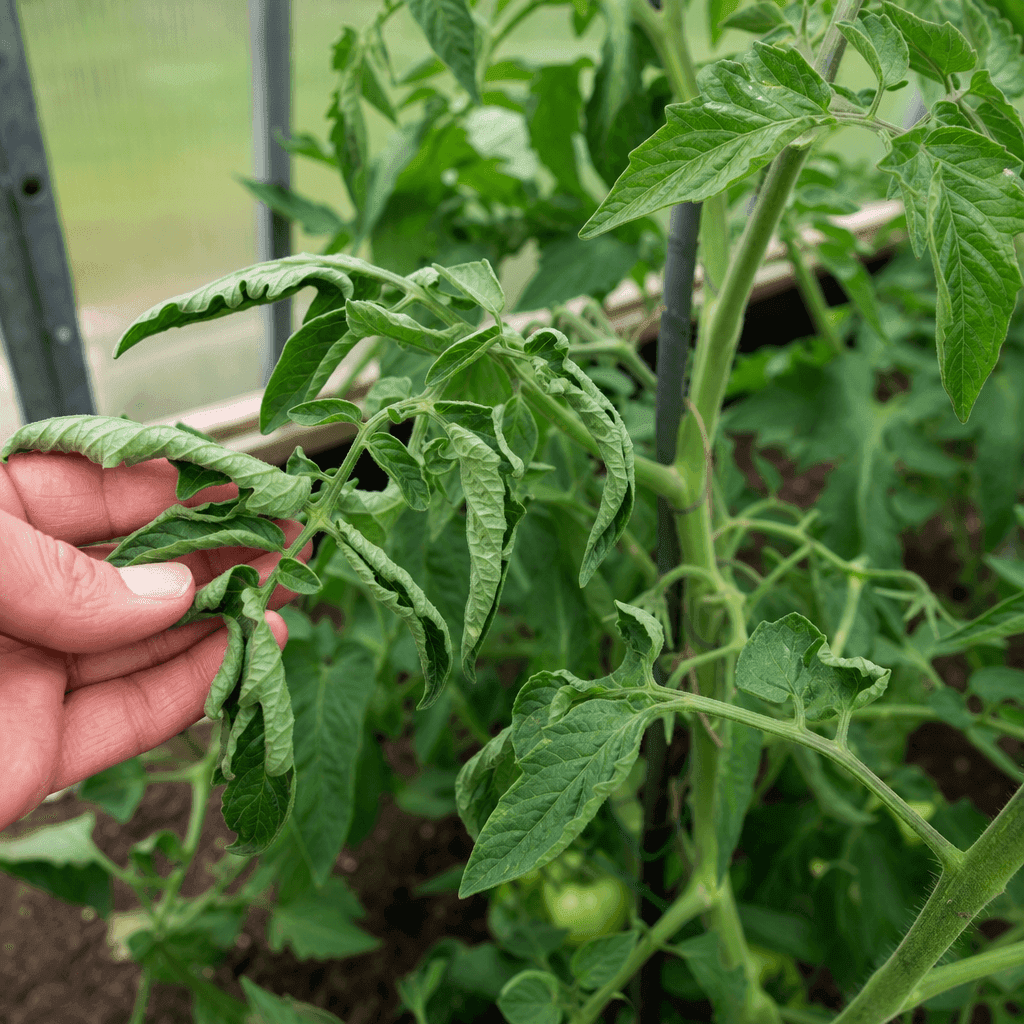
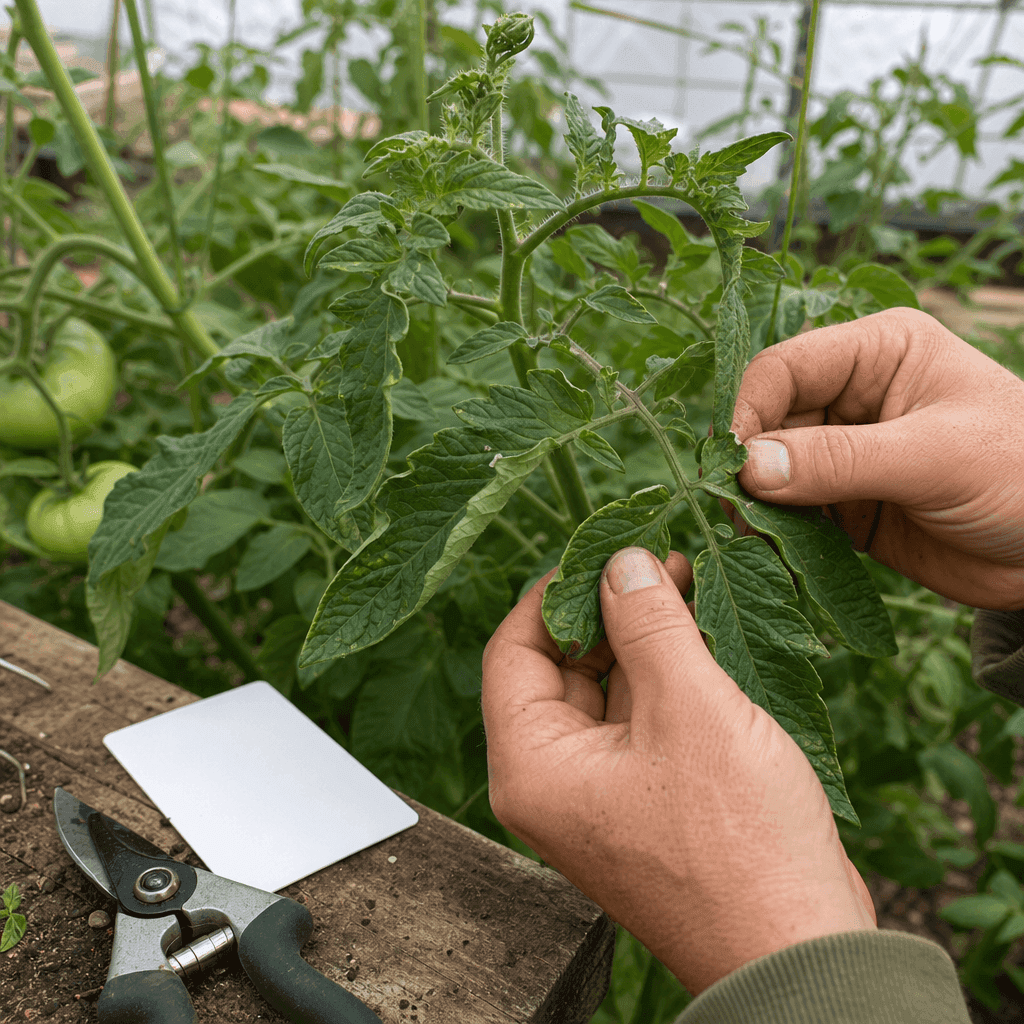
Still not sure?
Work down these branches — the first one that matches is your answer.
What not to do
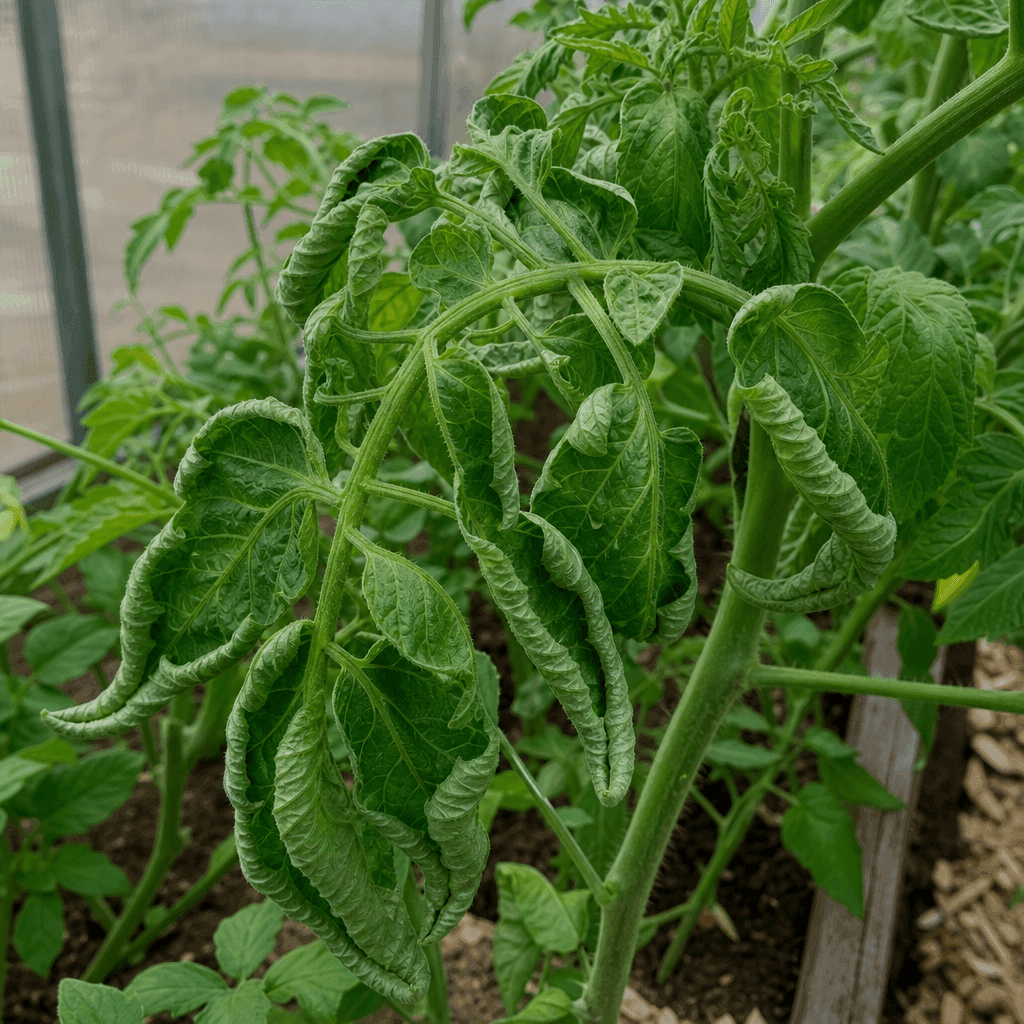
- Water more before checking the compost at root depth — if it is wet, more water makes the most common cause worse.
- Feed a waterlogged or stressed plant to perk it up.
- Use Epsom salts as a default cure for downward curl.
- Prune off lots of green curled leaves — they still feed the plant.
- Spray fungicide or insecticide without a confirmed pest or disease.
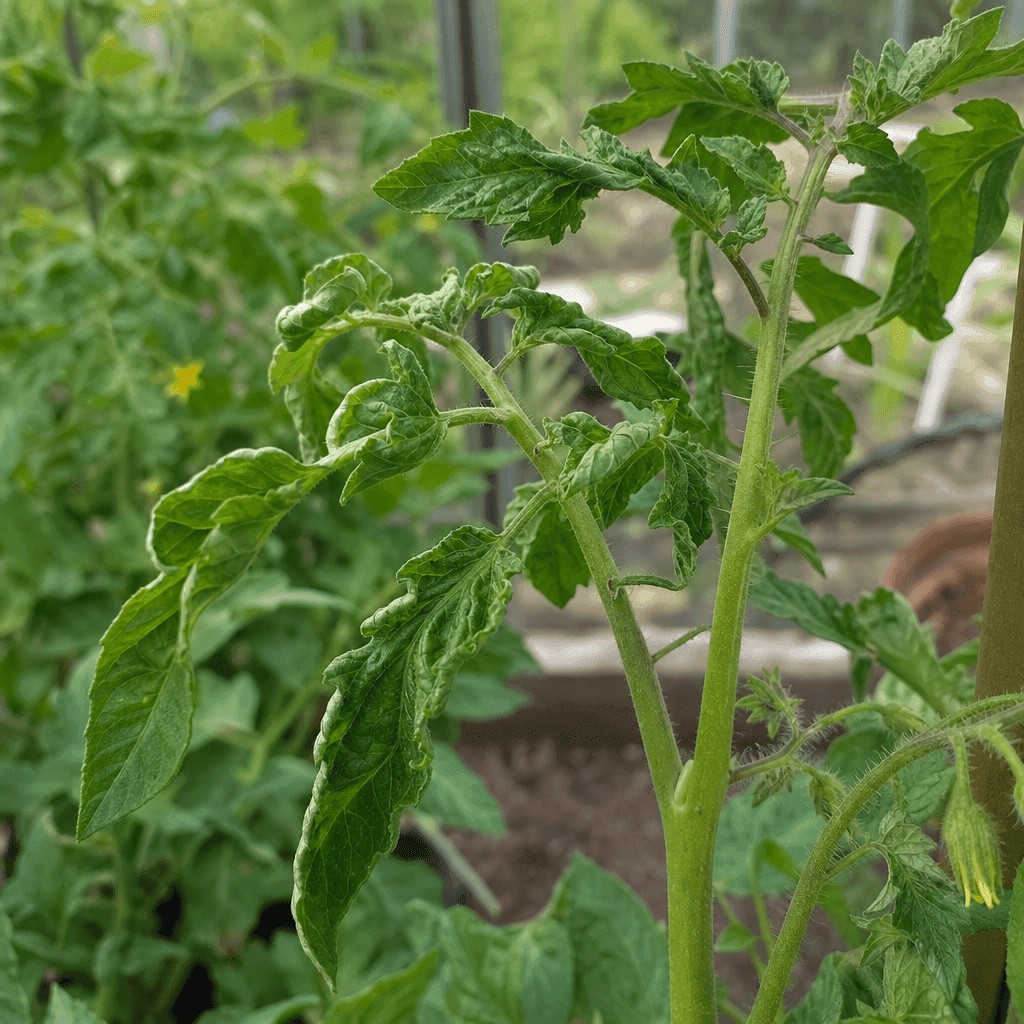
Common questions
Why are my tomato leaves curling down?
Downward curl most often means stress at the roots — usually overwatering, poor drainage, transplant disturbance, excess nitrogen or cold nights. If it comes with yellowing, stunting, distorted new growth or pests, check for herbicide exposure or disease.
Can overwatering make tomato leaves curl down?
Yes. Wet compost reduces oxygen around the roots, so the plant cannot take up water properly even though the soil is wet. Leaves may curl down, droop and yellow from the bottom.
Should I water more if tomato leaves curl down?
Not until you check the compost at root depth. If it is dry, water deeply. If it is wet, watering more will make the most common downward-curl problem worse.
Is downward tomato leaf curl the same as heat curl?
Not usually. Heat and dry wind more often cause tomato leaves curling upwards or inward on green leaves. Downward curl is more suspicious for root stress, nitrogen excess, cold shock, herbicide injury or disease.
Should I prune curled tomato leaves?
Do not remove green curled leaves just because they look odd — they still feed the plant. Remove leaves that are dead, badly diseased or touching the soil, and avoid heavy pruning while the plant is stressed.
Can tomatoes recover from leaves curling down?
Yes, if the cause is watering, drainage, cold nights, mild root damage or excess nitrogen. Existing curled leaves may not flatten, so watch for healthy new growth. Virus infection or severe herbicide exposure is much less likely to recover fully.
Is Epsom salt good for tomato leaves curling down?
Only if you have a confirmed magnesium deficiency, which usually shows interveinal yellowing on older leaves. Epsom salt does not fix overwatering, root rot in waterlogged compost, excess nitrogen, cold stress, herbicide exposure or viruses.