Quick diagnosis
Match the row to what you’re seeing, then jump to the fix.
| What you see | Likely cause | Confidence | How to confirm | What to do now | Urgency |
|---|---|---|---|---|---|
| Soft, yellow or translucent leaves dropping, possibly sour compost smell | Overwatering or root rot | High | Compost is wet or damp well below the surface; pot feels heavy; roots may be brown and mushy. | Stop watering immediately; check roots; repot into dry gritty compost if roots are rotting. | High |
| Mass leaf drop, often sudden, leaves may be firm and greenish when they fall | Cold draught or sudden temperature drop | High | Plant is near a cold window, draughty door or single-glazed pane in winter; temperature has fallen below 10°C. | Move to a warmer position away from cold glass; minimum 10–12°C; avoid cold windowsills in winter. | Medium |
| Shrivelled, wrinkled leaves that feel papery before dropping | Underwatering | Medium | Compost is bone dry throughout; pot feels very light; leaves are shrivelled before falling. | Soak the compost thoroughly and allow to drain fully; resume watering when the top half of compost is dry. | Medium |
| Leaf drop after the plant has been moved, bought or repositioned | Environmental change / relocation stress | High | Plant was recently moved, bought or placed in a noticeably different light or temperature. | Find a stable, bright position and leave the plant undisturbed; do not immediately repot or feed. | Low |
| Slow, soft, elongated new growth; lower leaves turn pale and drop over several months | Insufficient light | Medium | Plant is in a dark or north-facing room; stems are etiolating (stretching towards light). | Move to the brightest available windowsill; a south- or east-facing position is ideal in a UK home. | Low |
| Salt crust on compost surface; leaf tips or edges turn brown then leaves drop | Overfeeding or fertiliser salt build-up | Low | White crystalline crust on compost surface; plant has been fed heavily or frequently; compost smells of fertiliser. | Flush compost with plain water several times to leach excess salts; stop feeding until active growth resumes. | Low |
The causes, in detail
Overwatering and root rot
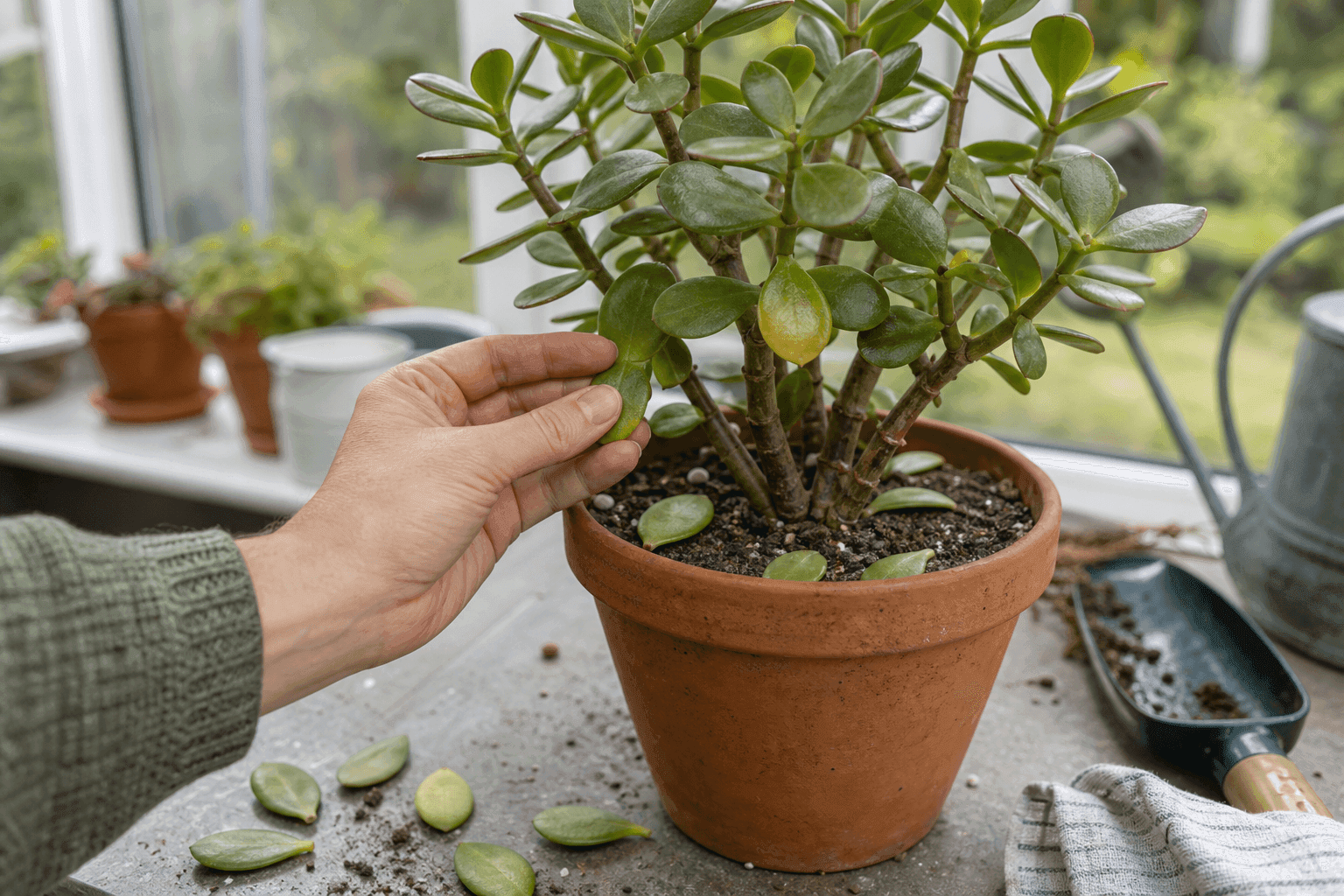
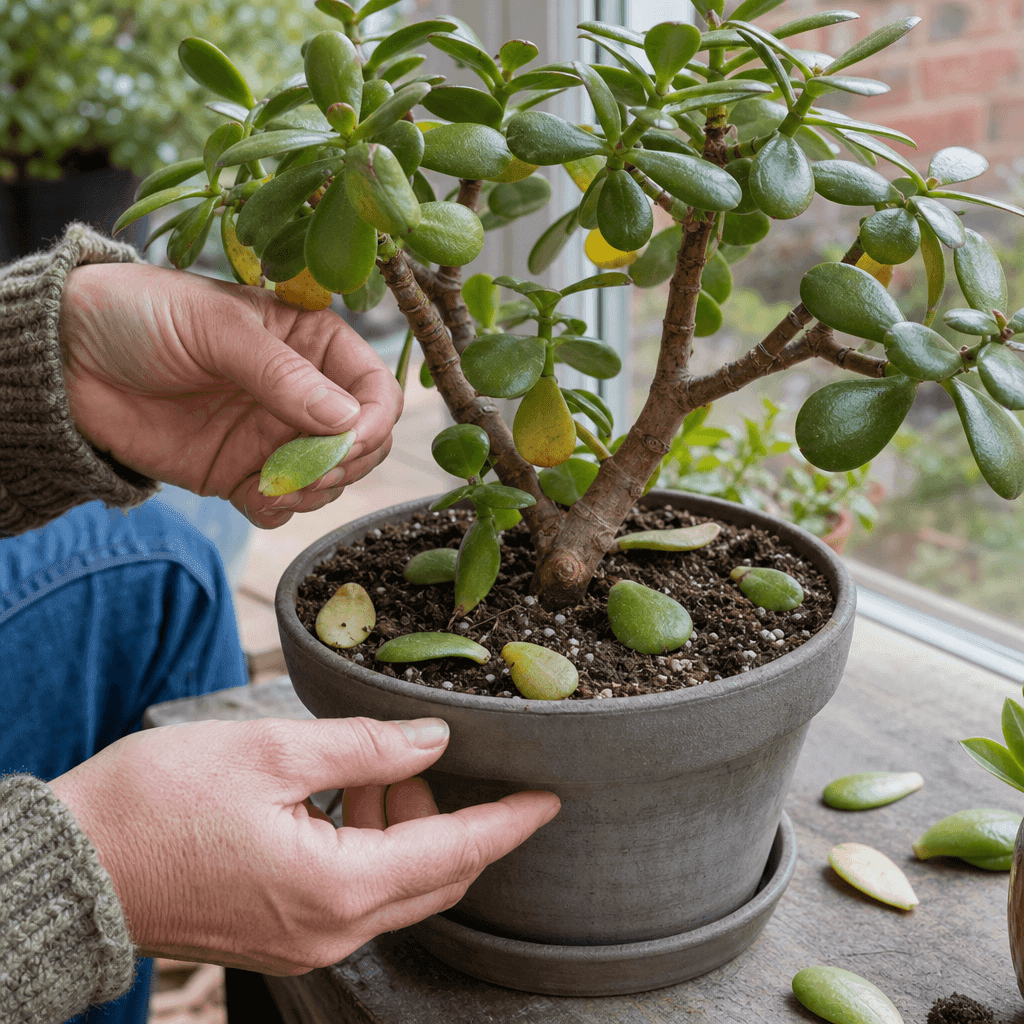
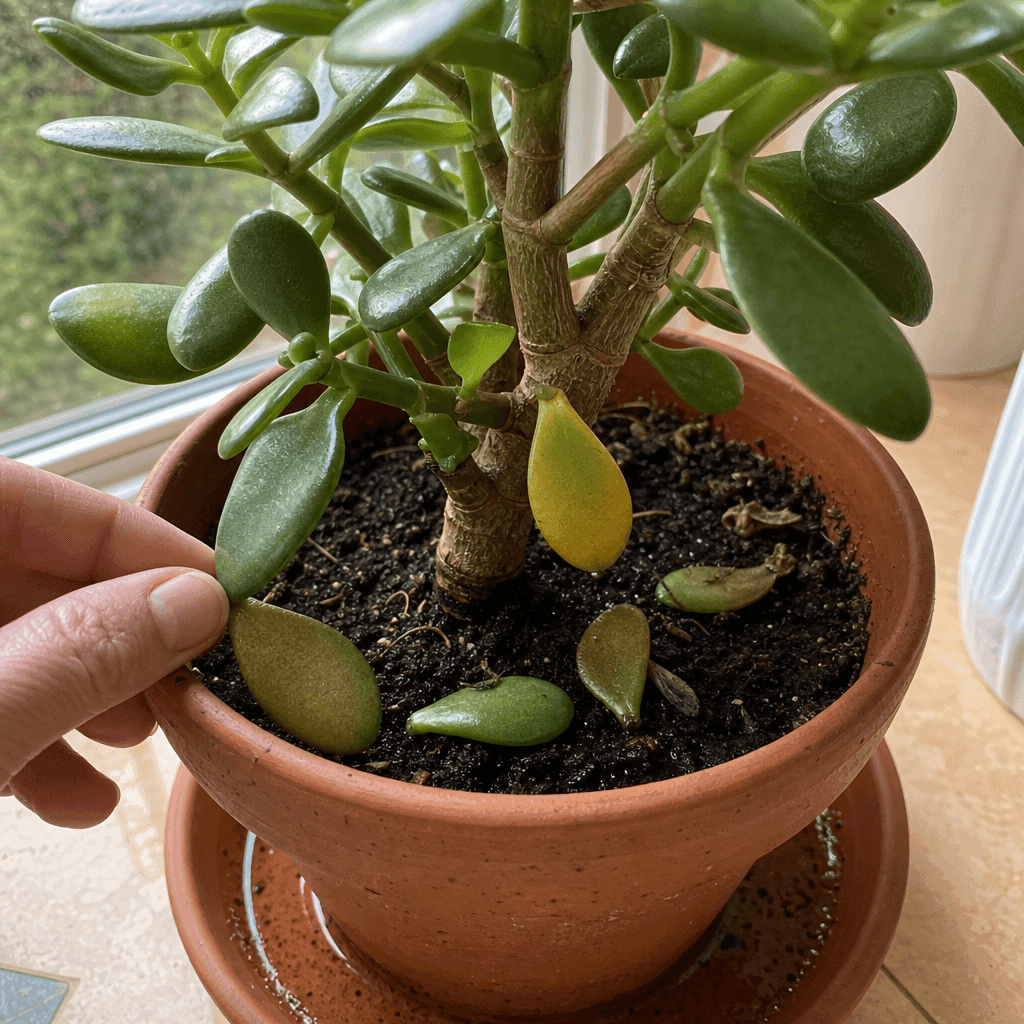
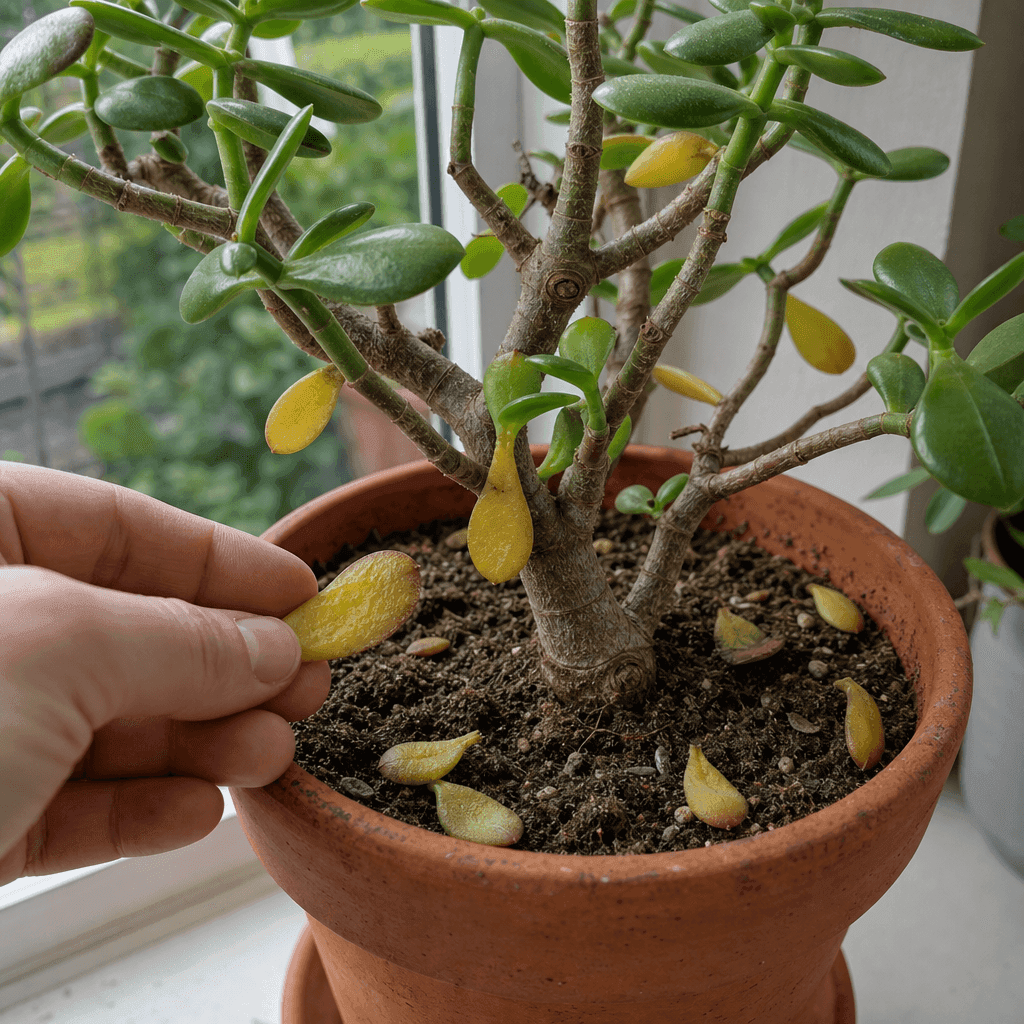
Most likelyOverwatering is the leading killer of jade plants in UK homes and the most common cause of leaf drop. Ottershaw Cacti, a specialist UK succulent nursery, confirms that overwatering is the top cause of death in jade plants. As a succulent, the jade plant (Crassula ovata) stores water in its thick leaves and stems, and its roots are very sensitive to sitting in wet compost. In winter particularly, when the plant's growth slows, even watering every two weeks can be excessive. The first sign is usually soft, yellow or slightly translucent leaves that fall with the lightest touch. If root rot has set in, the compost will smell sour and the roots will be brown and mushy rather than firm and pale.
- Compost is wet or damp several centimetres below the surface.
- Leaves are soft, yellow, translucent or mushy rather than firm and glossy.
- The pot feels heavy for its size.
- A sour or unpleasant smell comes from the compost.
- Roots are brown, slimy or mushy when the plant is removed from the pot.
- Stop watering immediately and do not water again until the compost is completely dry.
- If leaves are still firm despite the wet compost, allow the pot to dry out in a warm place before assessing further.
- Remove the plant from its pot and inspect the roots. Cut away any brown, mushy or black roots with clean scissors — see our step-by-step root rot treatment guide for the full process.
- Repot into fresh, gritty, well-draining succulent or cactus compost and a pot with clear drainage holes.
- Leave the plant in a warm, bright position without watering for a week to allow any cut surfaces to callus.
- In winter, water jade plants only once a month or less — check the compost is completely dry first.
Stop it coming back:Jade plants need much less water in UK winters. A good guide is: allow the top half of the compost to dry out completely before watering in the growing season, and the entire compost to dry out before watering in winter (October to March).
repot a jade plant in wet compost — always allow the compost to dry first and inspect the roots before choosing a new pot.
Cold draught or temperature shock
Most likelyCold air is one of the most common triggers for mass leaf drop in UK jade plants, particularly in autumn and winter. Jade plants are subtropical in origin and dislike temperatures below 10°C. In UK homes, windowsills over single-glazed glass can drop to near-outdoor temperatures on cold nights, even if the room feels warm during the day. A draughty gap under a door, a fan blowing cold air, or moving a plant from a heated shop to an unheated hallway can all cause rapid leaf drop. According to growing guides from Petal Republic and World of Succulents, cold draughts or sudden heat changes are among the most reliable triggers for mass leaf loss.
- The plant is positioned within 30cm of single-glazed glass or a draughty window or door.
- Temperatures in the plant's location drop below 10°C at night.
- Leaf drop occurred suddenly overnight or within a few days of a cold spell.
- The dropped leaves are otherwise firm and green, not soft or shrivelled.
- The plant was recently moved from a warmer to a cooler location.
- Move the plant immediately to a warmer position, away from cold glass and draughts.
- A south- or west-facing indoor windowsill in a heated room (minimum 10–12°C) is ideal.
- Do not place jade plants on windowsills in unheated rooms during winter.
- Give the plant a few weeks to stabilise before expecting new leaves to replace those lost.
- Avoid placing plants directly on a cold stone or tile floor.
Stop it coming back:Position jade plants in a consistently warm, bright spot year-round. In winter, move pots inward from the windowsill on very cold nights or add insulation between the plant and cold glass.
move a cold-shocked jade plant to a very hot or sunny position immediately — a gradual transition to better conditions is less stressful than a sudden extreme change.
Underwatering
PossibleAlthough overwatering is more common, a jade plant that is never watered at all will eventually begin to draw on reserves stored in its leaves. The leaves shrivel and wrinkle as the plant dehydrates, and the oldest lower leaves are usually the first to drop. This is more likely in summer when the plant is in active growth and evaporation is higher, or when a plant has been forgotten during a holiday. The distinction from overwatering is the leaf texture: underwatered leaves are firm but shrivelled and leathery; overwatered leaves are soft, mushy or translucent.
- Compost is bone dry throughout when tested with a finger or skewer.
- The pot feels very light.
- Leaves are shrivelled, wrinkled and leathery — not soft or yellow.
- The plant has not been watered for several weeks in the growing season.
- Water the plant thoroughly, allowing water to drain freely from the bottom of the pot.
- If the compost is very dry and hydrophobic (water runs straight off the surface), sit the pot in a tray of water for 20 minutes to rehydrate the compost slowly.
- Resume a consistent watering routine: in spring and summer, water when the top half of the compost has dried out.
- After proper watering, leaves should feel firmer within a few days.
overcompensate by soaking the plant repeatedly — one thorough watering is enough; wait until the compost dries before watering again.
Relocation stress and environmental change
Most likelyJade plants are sensitive to sudden changes in light, temperature or humidity. Buying a plant from a shop or garden centre, moving it from one room to another, or repositioning it on a different windowsill can all trigger a stress response that manifests as leaf drop over the following two to four weeks. This is often alarming but is a normal adjustment response rather than a sign of disease or terminal decline. As long as the new position offers good light (at least three to four hours of direct or very bright indirect light daily) and consistent warmth, the plant will typically stabilise.
- Leaf drop started within days to weeks of the plant being moved, bought or repositioned.
- The dropped leaves are otherwise firm and healthy-looking.
- The new position is stable, with adequate light and warmth.
- No signs of overwatering, cold or pests.
- Leave the plant undisturbed in its new position for several weeks.
- Resist the urge to repot, feed or change the compost at the same time — multiple stresses compound the problem.
- Ensure the new position has good bright light (south- or east-facing window in the UK).
- Water sparingly during the adjustment period and only when the compost is dry.
keep moving a stressed jade plant in search of the perfect position — pick one good spot and leave it there.
Insufficient light
PossibleJade plants need strong, bright light to thrive. In a UK home, they perform best on a south- or east-facing windowsill with some direct sun. In a north-facing room or set back from windows, they will gradually weaken: new growth becomes elongated and floppy (etiolation), lower leaves lose colour and drop, and the plant becomes increasingly susceptible to overwatering and root rot. Low light also reduces the plant's ability to use the water it receives, further increasing waterlogging risk.
- The plant is in a north-facing room, set back from a window, or in a dark corner.
- New stems are long, thin and reaching towards the light source.
- Lower leaves are pale, yellowish or dropping without obvious signs of over- or underwatering.
- Move the plant to the brightest available position — ideally a south- or east-facing windowsill.
- In the UK, jade plants can also be moved outdoors in summer (after hardening off) if the spot is sheltered and receives direct sun for at least a few hours.
- Reduce watering immediately when moving to a darker spot, as the plant will use water more slowly.
- Use a grow light (full-spectrum LED) if no suitable natural light is available.
move a light-deprived plant directly into full harsh midday summer sun — this will scorch the leaves; acclimatise gradually over one to two weeks.
Overfeeding and fertiliser salt build-up
Less likelyJade plants are slow-growing, low-nutrient succulents. Feeding them frequently or with strong fertiliser concentrations causes excess mineral salts to accumulate in the compost, which can damage roots and cause leaf browning at the tips or edges, followed by leaf drop. A white crust on the compost surface is the visual sign of salt accumulation. This problem is more common when tap water with high mineral content is used alongside regular fertiliser applications.
- A white or pale crust appears on the compost surface or at the pot rim.
- Brown tips or edges develop on otherwise healthy leaves before they drop.
- The plant has been fed frequently (more than once a month in the growing season).
- Concentrated liquid feed has been applied to dry compost.
- Flush the compost thoroughly with plain water several times to leach excess salts from the pot.
- Stop feeding until the plant is showing healthy active growth.
- In future, feed jade plants only once every four to six weeks in spring and summer, using a dilute balanced succulent or cactus fertiliser at half the stated dose.
- Apply feed only to moist compost, never to dry compost.
feed a jade plant in winter — this is its dormant or semi-dormant period and feeding at this time is likely to do more harm than good.
Still not sure?
Work down these branches — the first one that matches is your answer.
What not to do
- Water a jade plant on a fixed schedule regardless of whether the compost is already wet.
- Place a jade plant on a cold windowsill or against single-glazed glass in a UK winter.
- Repot, feed and change position all at the same time when the plant is stressed.
- Assume leaf drop means the plant needs more water — check the compost first.
- Feed a jade plant in winter — it barely uses nutrients during its dormant period.
Common questions
Why is my jade plant dropping leaves in winter?
The most common reasons are overwatering (jade plants need much less water in winter) and cold draughts from windows. In winter, water only when the compost is completely dry, keep the plant away from cold glass, and maintain a minimum temperature of 10°C.
Why is my jade plant dropping leaves after repotting?
Repotting disrupts roots and changes the growing medium, which can trigger a temporary stress response. Make sure the new pot has good drainage, use a gritty cactus or succulent compost, and avoid watering for a week after repotting to let any damaged roots callus. Do not feed until the plant shows new growth.
How often should I water a jade plant in the UK?
In spring and summer, water when the top half of the compost has dried out — this might be every one to two weeks in a warm room. In autumn and winter, water only when the entire compost has dried out, which can mean once every three to four weeks or less. Always check before watering, and always allow excess water to drain away.
Can a jade plant recover from root rot?
Yes, if caught early enough. Remove the plant from its pot, cut away all brown or mushy roots with clean scissors, dust the cuts with powdered cinnamon or activated charcoal, and repot into fresh dry succulent compost. Keep in a warm bright spot and do not water for a week. The same approach that saves monstera root rot applies here. Recovery depends on how much healthy root tissue remains.
What temperature is too cold for a jade plant in the UK?
Jade plants should be kept above 10°C at all times. In practice, this means keeping them in heated rooms in winter, away from cold windowsills, single-glazed glass and draughts. They can tolerate brief drops to around 5°C but prolonged cold, especially combined with wet compost, will cause significant leaf drop and may kill the plant.
Should I remove fallen jade plant leaves?
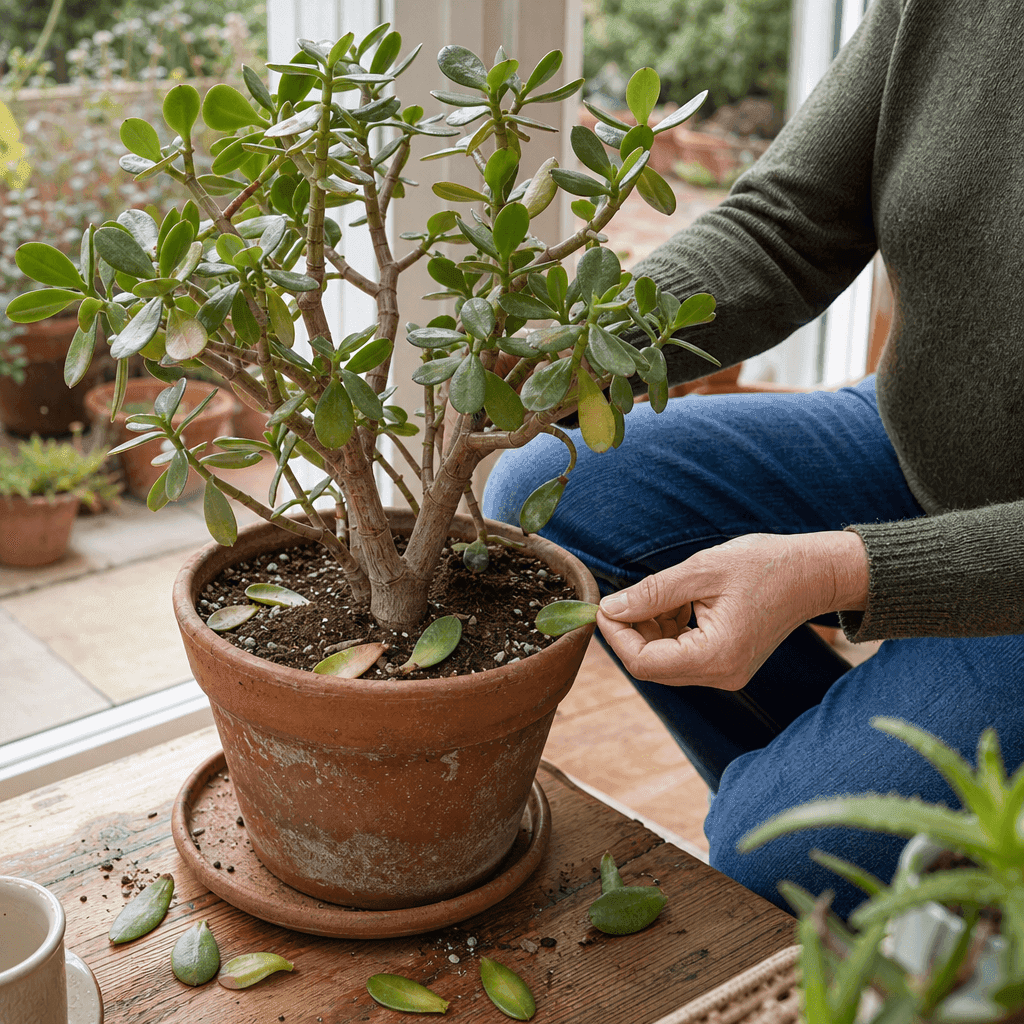
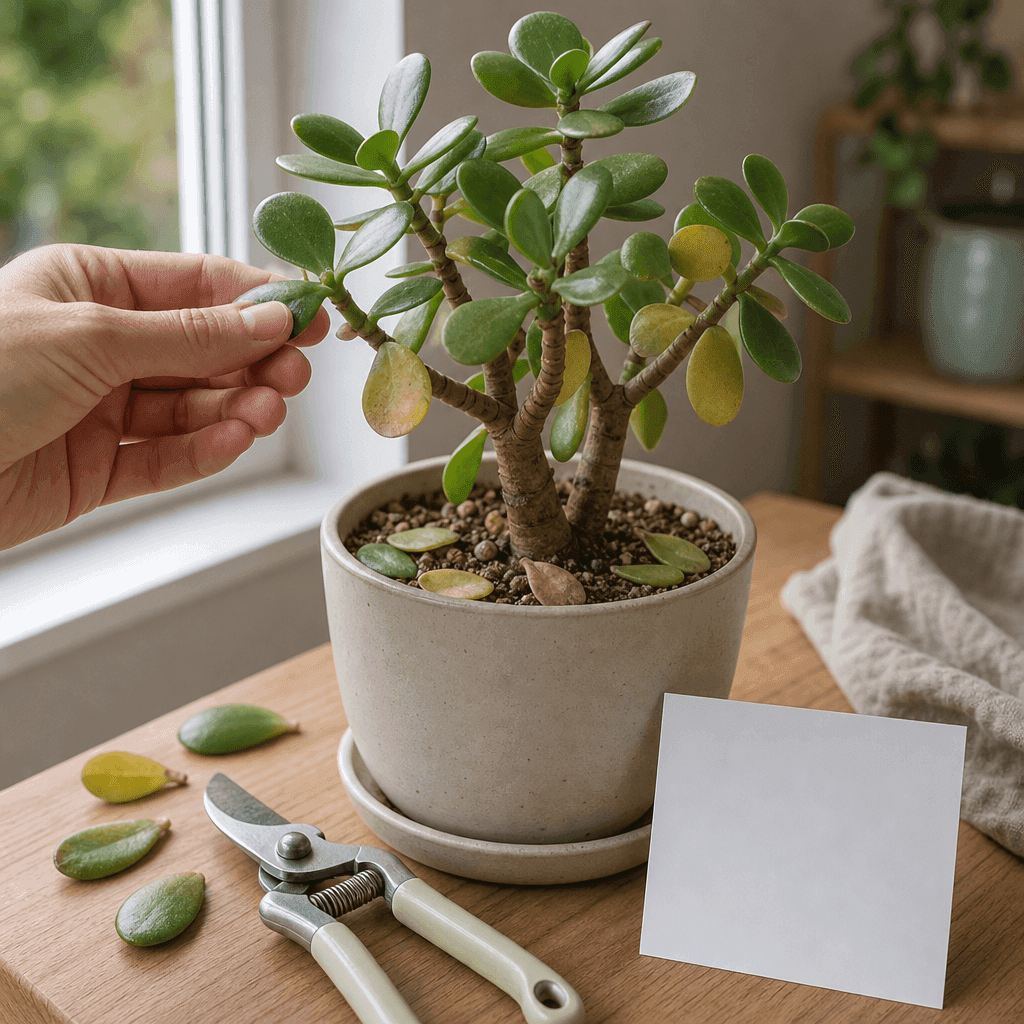
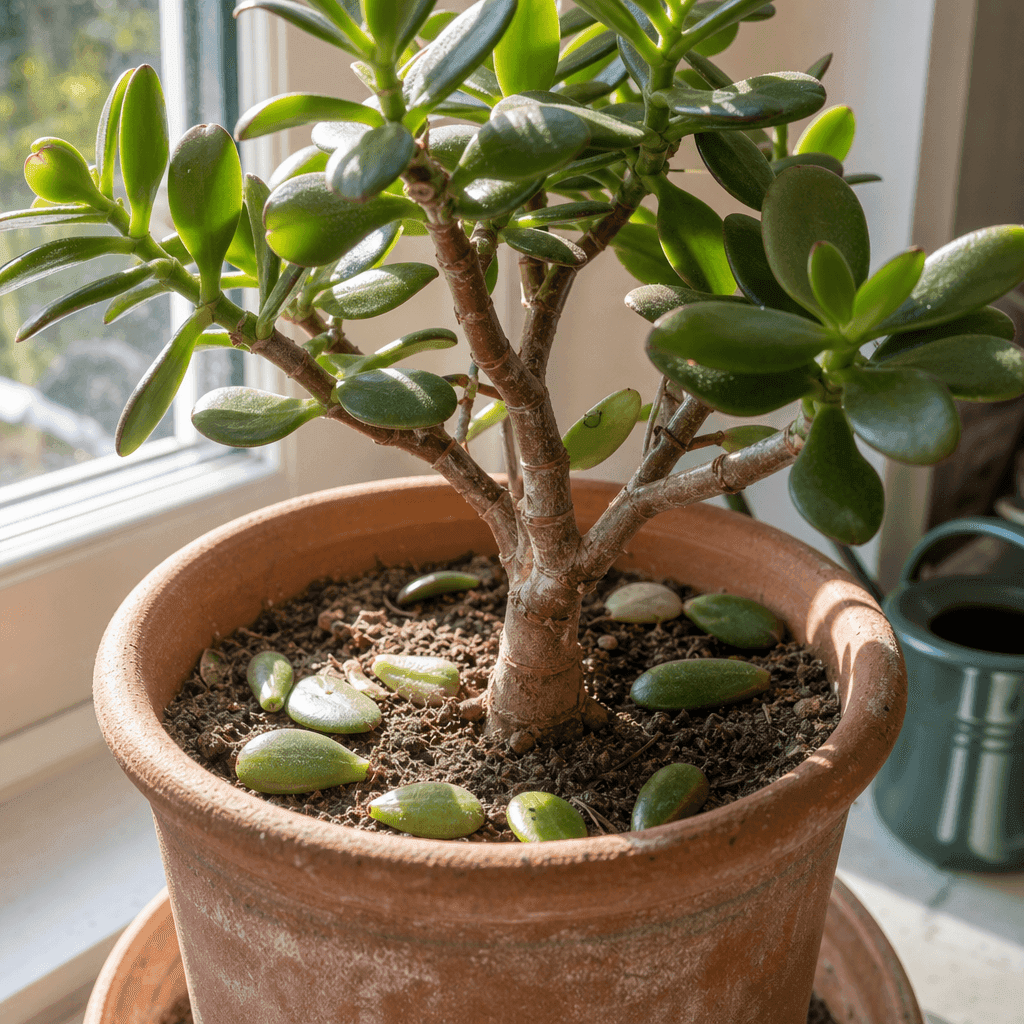
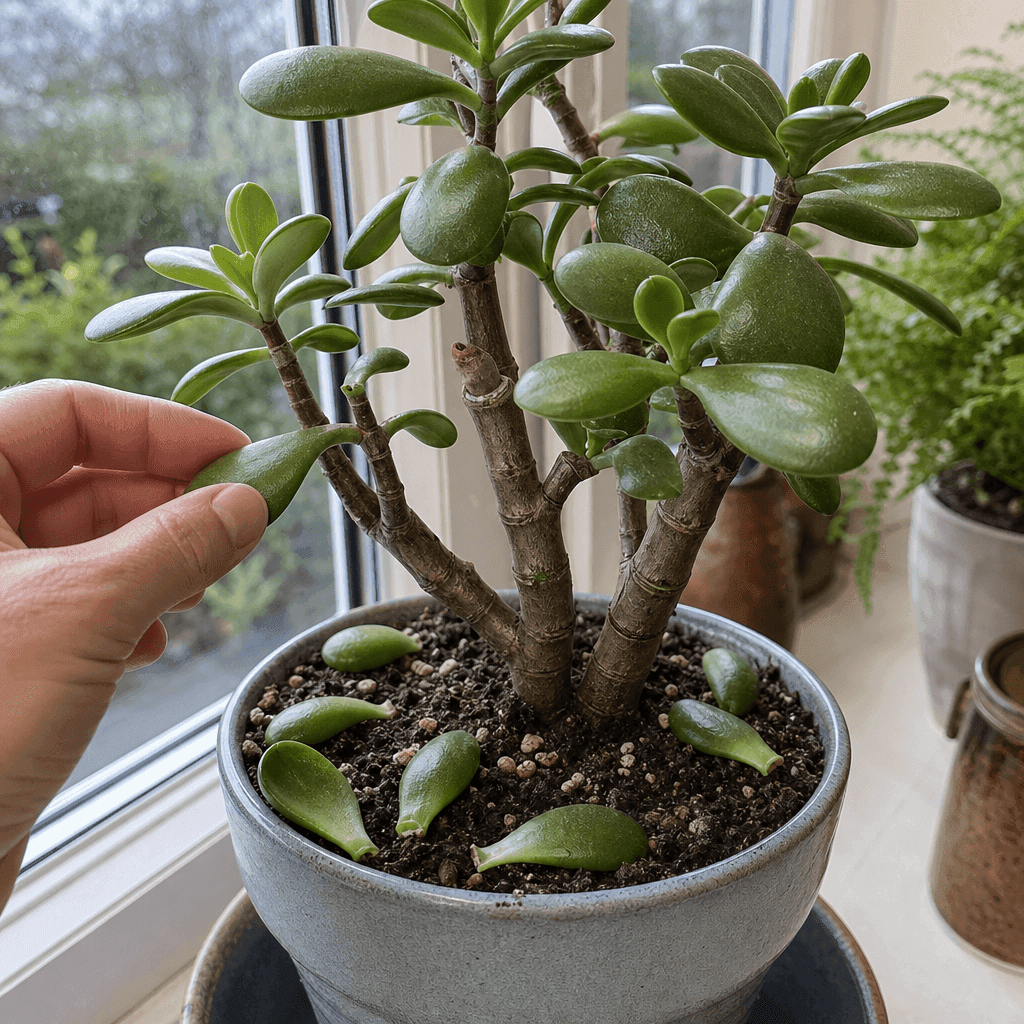
Yes — remove fallen leaves promptly from the surface of the compost, as they can harbour fungal issues, particularly if overwatering has already stressed the plant. Healthy fallen leaves can be propagated by laying them on the surface of dry cactus compost in a bright, warm spot.
Why are my jade plant leaves turning yellow and falling off?
Yellow, soft leaves that fall off are usually a sign of overwatering or root rot. Check the compost: if it is wet, stop watering immediately and inspect the roots. If the compost is dry and the leaves are shrivelled rather than soft, the plant may be underwatered. For a wider rundown of why houseplants discolour, see our guide to yellow leaves on indoor plants.