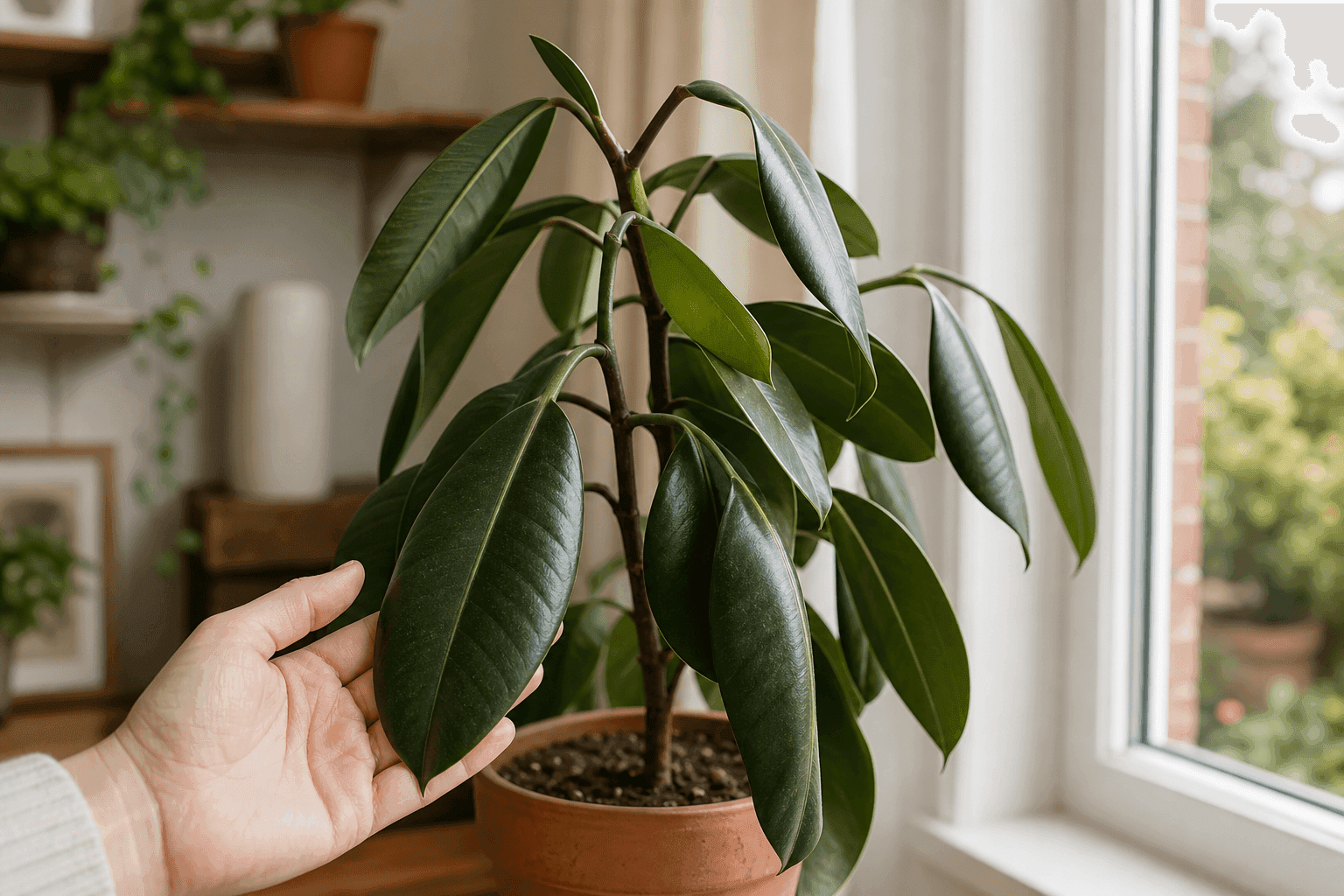
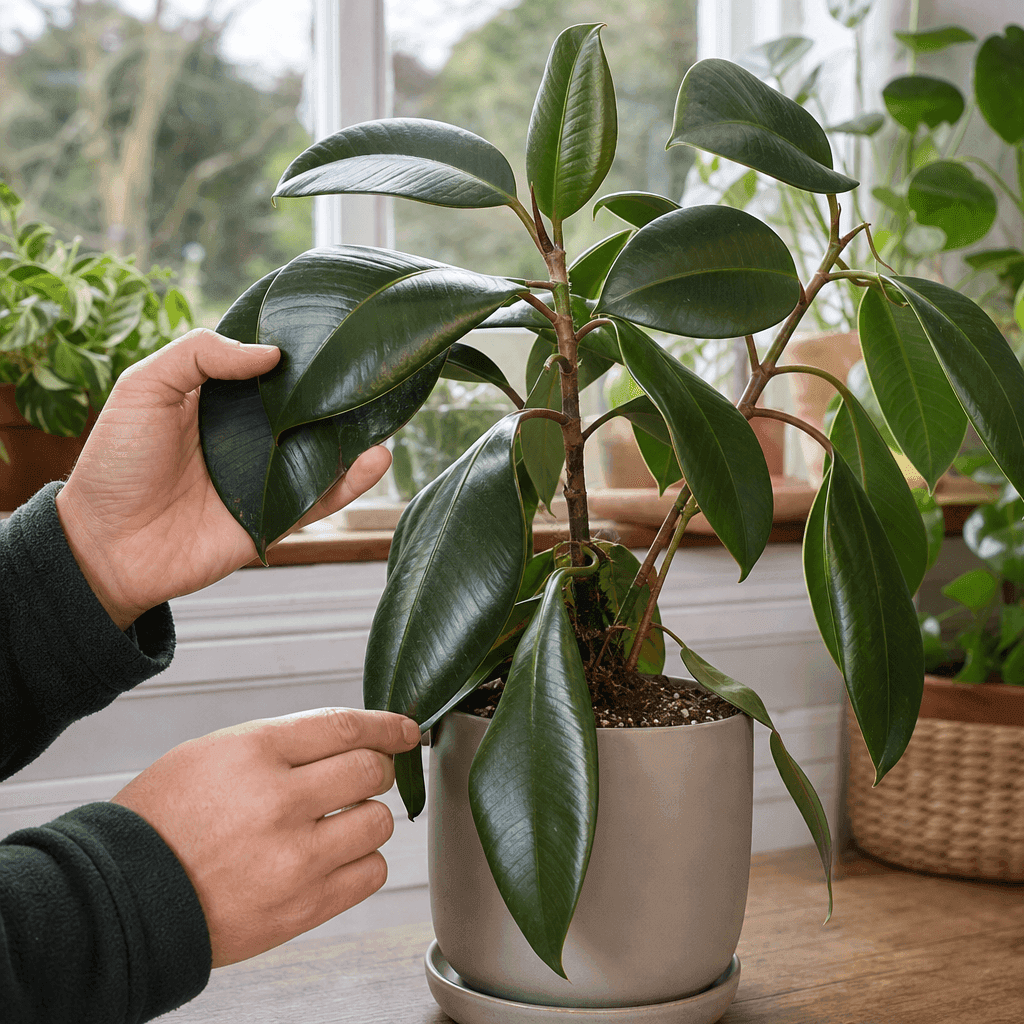
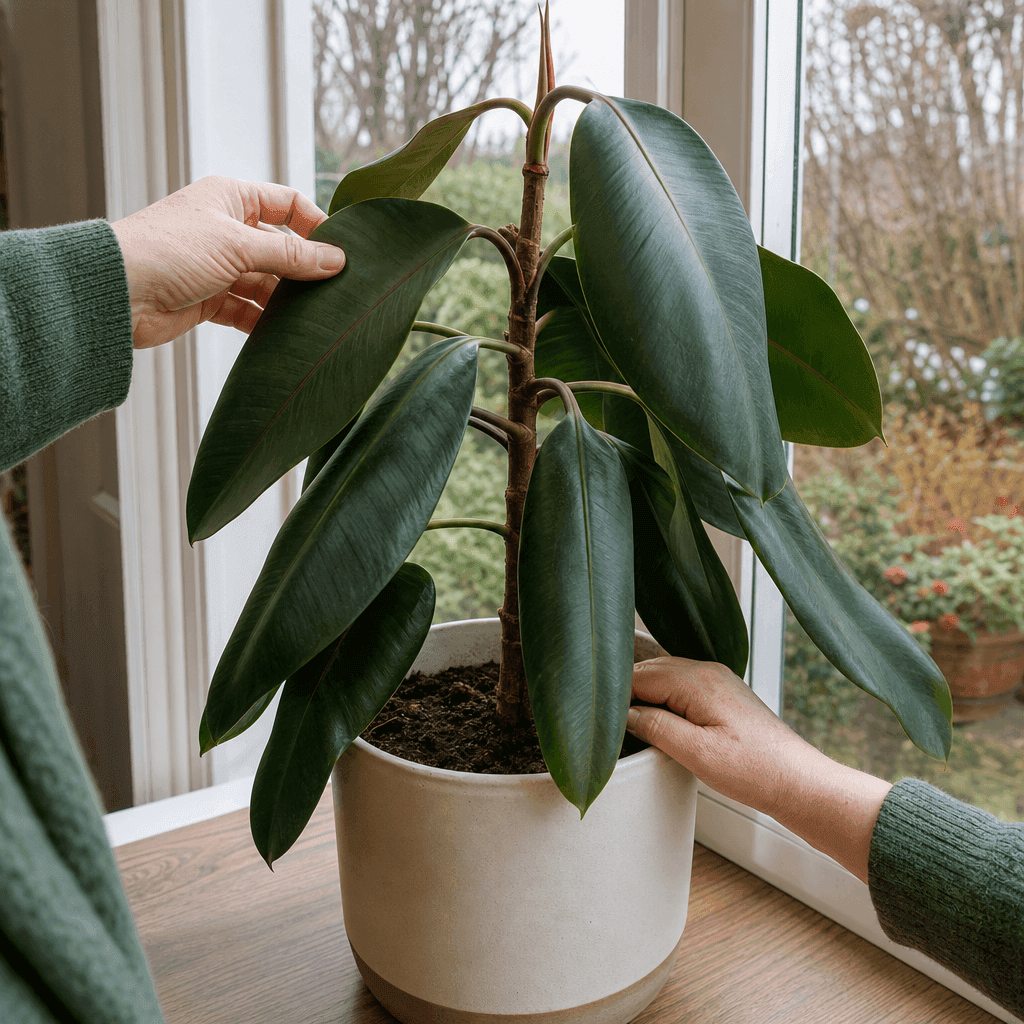
Quick diagnosis
Match the row to what you’re seeing, then jump to the fix.
| What you see | Likely cause | Confidence | How to confirm | What to do now | Urgency |
|---|---|---|---|---|---|
| Leaves hang limply; compost is wet and has stayed wet; pot feels heavy | Overwatering / root oxygen starvation | High | Press a finger 5–8cm into the compost — it is clearly wet. The pot has been watered recently or on a fixed schedule. | Stop watering; check drainage holes; allow compost to dry to barely moist before watering again. | High |
| Leaves droop; compost is very dry; pot feels very light; leaf edges may be browning | Underwatering / drought stress | High | Compost is dry and dusty more than 5cm down; pot feels extremely light; leaves feel thin and papery. | Water thoroughly until water drains from the base; allow to drain fully; do not let it sit in water. | High |
| Gradual drooping over weeks; new leaves are smaller than older ones; stems lean toward light | Insufficient light | High | Plant is more than 1–2 metres from a window; position faces north; it is winter in the UK. | Move to within 1 metre of the brightest available window; avoid direct hot summer sun on leaves. | Medium |
| Drooping appeared suddenly after moving the plant or after a cold night | Cold draught, temperature shock or sudden environmental change | High | Plant was recently moved; positioned near a draughty window or door; outside temperatures have dropped. | Move to a stable, warm position away from draughts; do not overwater while recovering. | Medium |
| Drooping persists despite stopping watering; musty smell; leaves yellowing and falling | Root rot from prolonged overwatering | Medium | Remove from pot — roots are brown, mushy or slimy rather than firm and cream-coloured. | Trim dead roots; repot into fresh, free-draining compost; withhold water until compost is barely moist. | High |
| Drooping appeared in the days after repotting; plant otherwise looked healthy | Transplant shock after repotting | Medium | Plant was repotted recently; roots were significantly disturbed; the new pot may be much larger than the old one. | Keep conditions stable; avoid direct sun and draughts; do not feed until recovery is visible. | Low–medium |
| Leaf tips brown and curling; drooping combined with dry, papery edges; central heating is on | Low humidity from central heating | Medium | The plant is near a radiator or heating vent; room is very warm and dry; winter heating is running. | Move away from direct heat sources; mist occasionally or place on a pebble tray with water. | Low–medium |
The causes, in detail
Overwatering and root oxygen starvation
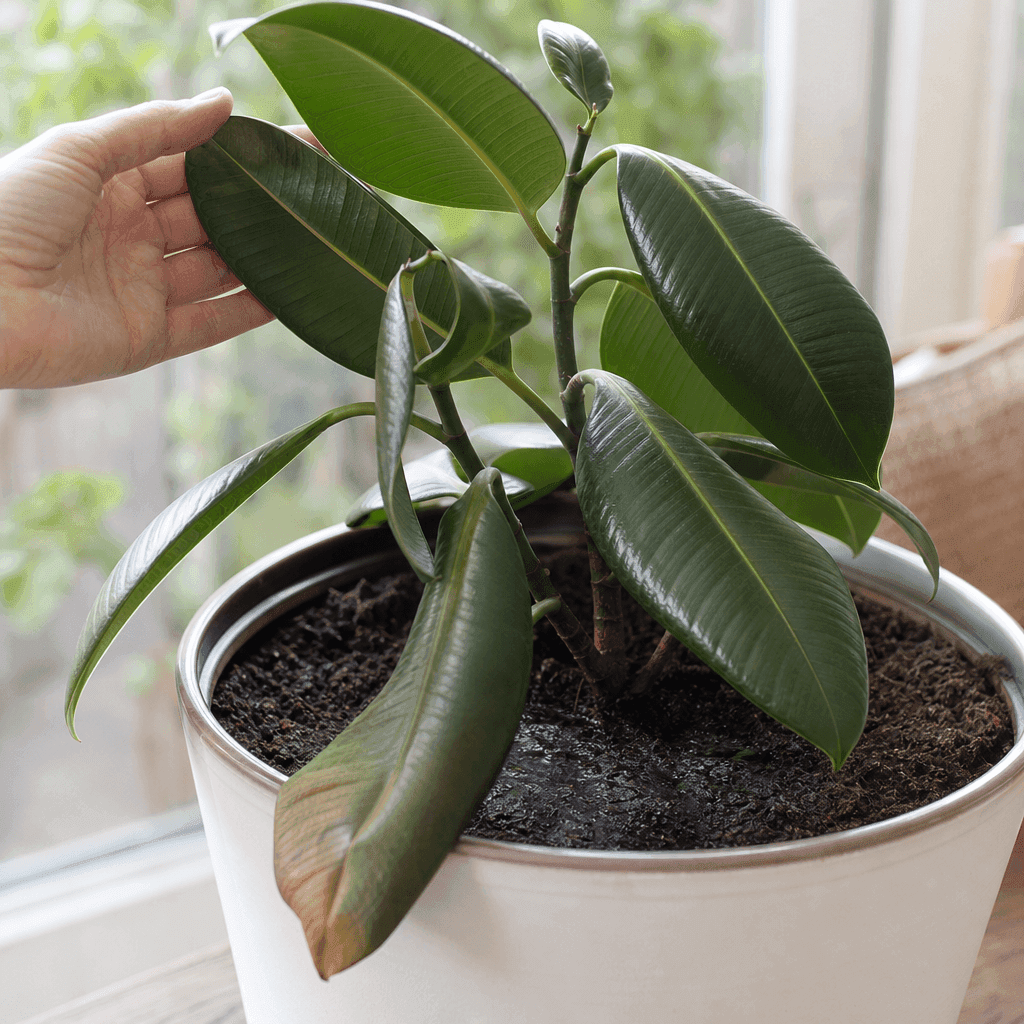
Most likelyOverwatering is the most frequent cause of rubber plant drooping in UK homes. Ficus elastica originates in subtropical forest environments with distinct wet and dry seasons — it is adapted to drying out between waterings. When grown in the lower light of a UK interior, especially in autumn and winter, growth slows dramatically and the plant uses very little water. Maintaining a summer watering schedule through winter leads to persistently wet compost, root oxygen starvation, and drooping. Fiddle and Thorn (a leading UK houseplant resource) confirms overwatering as the primary cause of drooping in rubber plants. For broader Ficus elastica care advice, see our full rubber plant guide.
- The compost is wet or damp when pressed at 5cm depth.
- The pot feels heavy when lifted.
- The plant has been watered on a fixed regular schedule.
- The room is cool or receives little natural light, reducing water use.
- Stop watering immediately.
- Check drainage holes — clear any blockages and empty saucers.
- Allow the compost to dry to barely moist (dry at 2–3cm, slightly damp at 5–8cm) before watering again.
- In future, water only when the top third of the compost has dried out.
- Reduce watering frequency significantly in autumn and winter.
Stop it coming back:Judge watering by the weight of the pot and moisture in the compost, not by a fixed schedule. In winter, a UK rubber plant in a 20cm pot may only need watering every 2–3 weeks.
water on a fixed weekly schedule year-round — the plant's needs drop dramatically in winter when growth slows.
Underwatering and drought stress
Most likelyAlthough overwatering is more common, underwatering also causes rubber plant leaves to droop — and the two can be difficult to distinguish without checking the compost. An underwatered rubber plant has bone-dry compost that may have pulled away from the pot edges, very light pot weight, and leaves that feel thin and papery. In UK summers when central heating is off and windows are open, evaporation increases and plants may need watering more frequently. Plants near south-facing windows in summer can dry out quickly.
- Compost is completely dry more than 5cm down.
- The pot feels very light when lifted.
- The compost has pulled away from the pot edge.
- Leaves feel thin and papery rather than firm and glossy.
- Water thoroughly — slowly pour water until it drains from the base.
- Allow the pot to drain fully; do not let it sit in pooled water.
- If the compost is very dry and water-repellent, set the pot in a bowl of lukewarm water for 20–30 minutes to rehydrate.
- Resume normal watering when the top third of the compost has dried out.
let a rubber plant sit in a saucer of water after rehydrating — the roots need to drain and access oxygen.
Insufficient light
Most likelyFicus elastica needs around 6–8 hours of bright, indirect light daily to photosynthesize efficiently and maintain upright, firm leaves. In the UK, from October to March, even a south-facing double-glazed window may not provide adequate light — particularly if the plant is more than 1–2 metres from the glass. In low light the plant cannot make enough energy to maintain leaf turgor and the leaves droop and eventually yellow and fall. Plants in north-facing rooms or far from windows are most at risk.
- The plant is more than 1–2 metres from the nearest window.
- The window faces north or north-east.
- Drooping has developed gradually over weeks, particularly since autumn.
- New leaves are noticeably smaller than older ones.
- Move to within 1 metre of the brightest available window.
- South or east-facing windows are best in UK homes.
- Avoid placing in direct hot summer sun on large south-facing windows — leaves can scorch.
- In winter, consider a full-spectrum LED grow light for 10–12 hours per day if moving closer to a window is not possible.
- Clean dusty leaves with a damp soft cloth — dust significantly reduces light absorption.
place a UK rubber plant in a north-facing room and expect it to thrive without supplemental lighting — the light level is simply insufficient for active growth.
Cold draught, temperature shock or sudden environmental change
Most likelyRubber plants are tropical in origin and thrive in stable temperatures of 15–24°C. In UK homes, they are most at risk from: cold draughts around single-glazed windows in winter, positioning near external doors, being placed on a cold floor or windowsill above a cold radiator alcove, being moved from a warm room to a cold one, or being near an air conditioning unit. The plant often responds to temperature shock by drooping, yellowing and dropping leaves even if the roots are in good condition. Quirky Plants UK confirms that cold draughts are one of the main environmental triggers.
- Drooping appeared suddenly after the plant was moved.
- The plant is near a draughty window, door or air conditioning vent.
- Temperatures drop below 15°C near the plant at night.
- The plant is positioned on a cold floor or against a cold external wall.
- Move the plant to a stable position away from draughts and cold spots.
- Keep room temperature between 15°C and 24°C — avoid placing near external doors.
- Do not water immediately after moving — let the plant stabilise in its new position first.
- Avoid positioning above or next to radiators — the dry heat is also damaging.
water with cold tap water in winter — use lukewarm water to avoid cold root shock, which can trigger the same drooping response as cold air draughts.
Root rot from prolonged overwatering
PossibleIf overwatering continues for an extended period, the roots begin to rot — typically due to fungal-like Pythium or Phytophthora organisms that colonise oxygen-starved root tissue. Following a structured step-by-step root rot treatment gives a waterlogged rubber plant the best chance of recovery. Rotted roots are unable to take up water or nutrients even after the compost dries out. The drooping persists and may be accompanied by yellowing leaves, leaf drop and a sour, musty smell from the compost. Removing the plant from its pot reveals brown, mushy or slimy roots rather than firm, cream-coloured ones.
- Remove the plant from its pot — roots are brown, mushy, slimy or black.
- Compost smells sour or unpleasant.
- Drooping persists even after watering has stopped and compost has partially dried.
- Leaves are yellowing and dropping.
- Remove the plant from its pot gently.
- Tease away sodden compost and rinse roots.
- Trim all brown, mushy or slimy roots with clean, sharp scissors.
- Let roots air for 20–30 minutes before repotting.
- Repot into fresh, well-draining compost — a mix of peat-free multipurpose and perlite works well.
- Water only when the compost has dried to barely moist.
reuse compost from a pot where root rot developed — it may harbour pathogens that will re-infect the new root system.
Transplant shock after repotting
PossibleA rubber plant may droop in the days following repotting as its roots adjust to a new environment. Significant root disturbance, a much larger pot (which holds more moisture than the roots can absorb), or repotting at the wrong time of year (autumn or winter) are common triggers. Plants for All Seasons UK notes that spring is the best time to repot Ficus elastica, when the plant is actively growing. Watering the plant 24 hours before repotting reduces transplant stress.
- The plant was repotted in the past 1–3 weeks.
- Roots were significantly disturbed during repotting.
- The new pot is much larger than the old one.
- Repotting was done in autumn or winter.
- Move to a stable, warm position out of direct sun and draughts.
- Do not feed until active growth resumes.
- Water cautiously — the larger compost volume may stay moist longer than expected.
- Give the plant 2–4 weeks to settle before judging the outcome.
repot into an excessively large pot — too much unused compost around the roots stays wet and increases the risk of root rot.
Low humidity from central heating
PossibleUK central heating, running from October to April, dries indoor air significantly — sometimes down to 30–40% relative humidity, well below the 50–60% that Ficus elastica prefers. Low humidity causes increased water loss from leaves, which can lead to drooping, browning leaf tips and eventual leaf loss. Plants positioned directly beside radiators or heating vents are most at risk. The Stem Plant Care (UK) guide recommends misting leaves or placing the pot on a pebble tray to locally raise humidity.
- The central heating is running; the room feels dry.
- The plant is near a radiator or heating vent.
- Leaf tips are brown and dry as well as drooping.
- Symptoms are worse in winter.
- Move at least 1 metre away from any radiator or heating vent.
- Place the pot on a shallow tray filled with pebbles and water — the evaporating water raises local humidity.
- Wipe leaves with a damp cloth to remove dust and provide some surface moisture.
- Group with other houseplants — transpiration from neighbouring plants raises local humidity.
mist the leaves excessively in poor light conditions — sitting moisture on leaves in cold, low-light UK winters can encourage fungal issues.
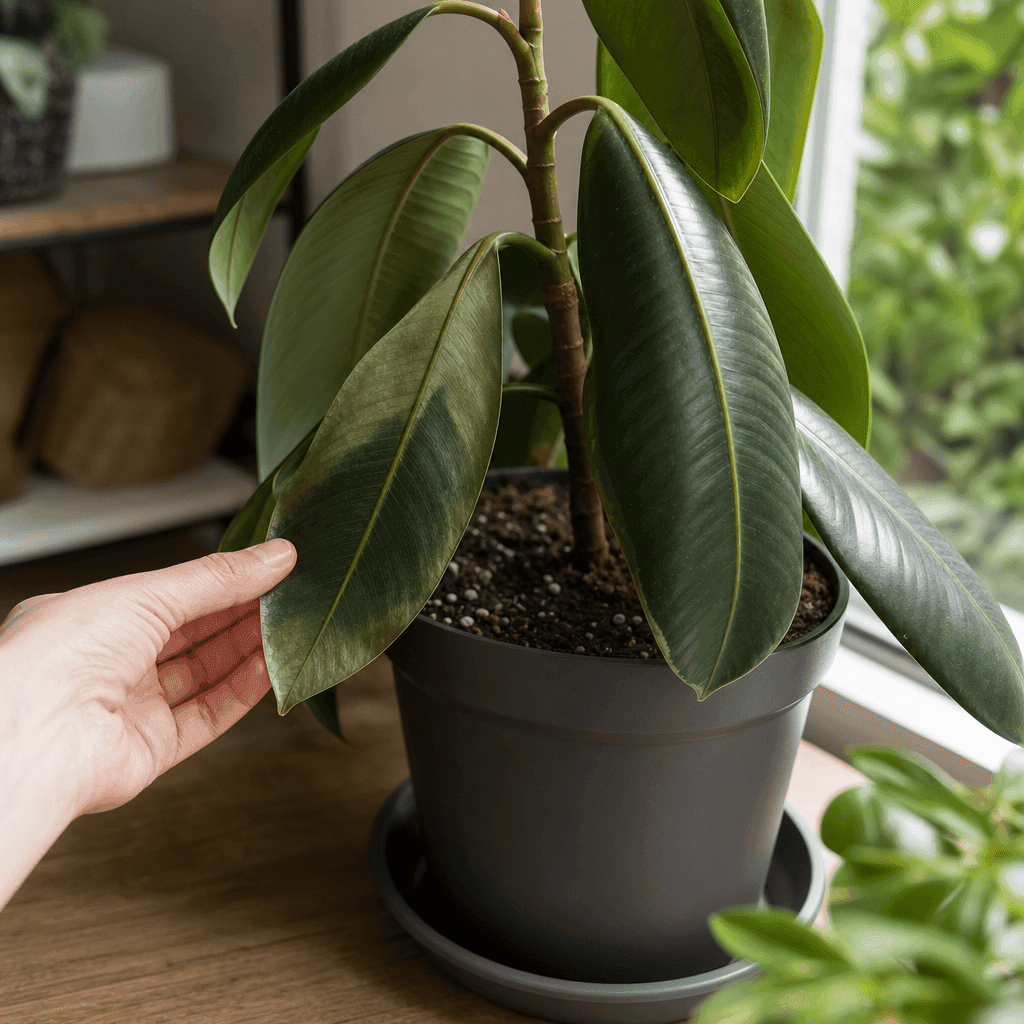
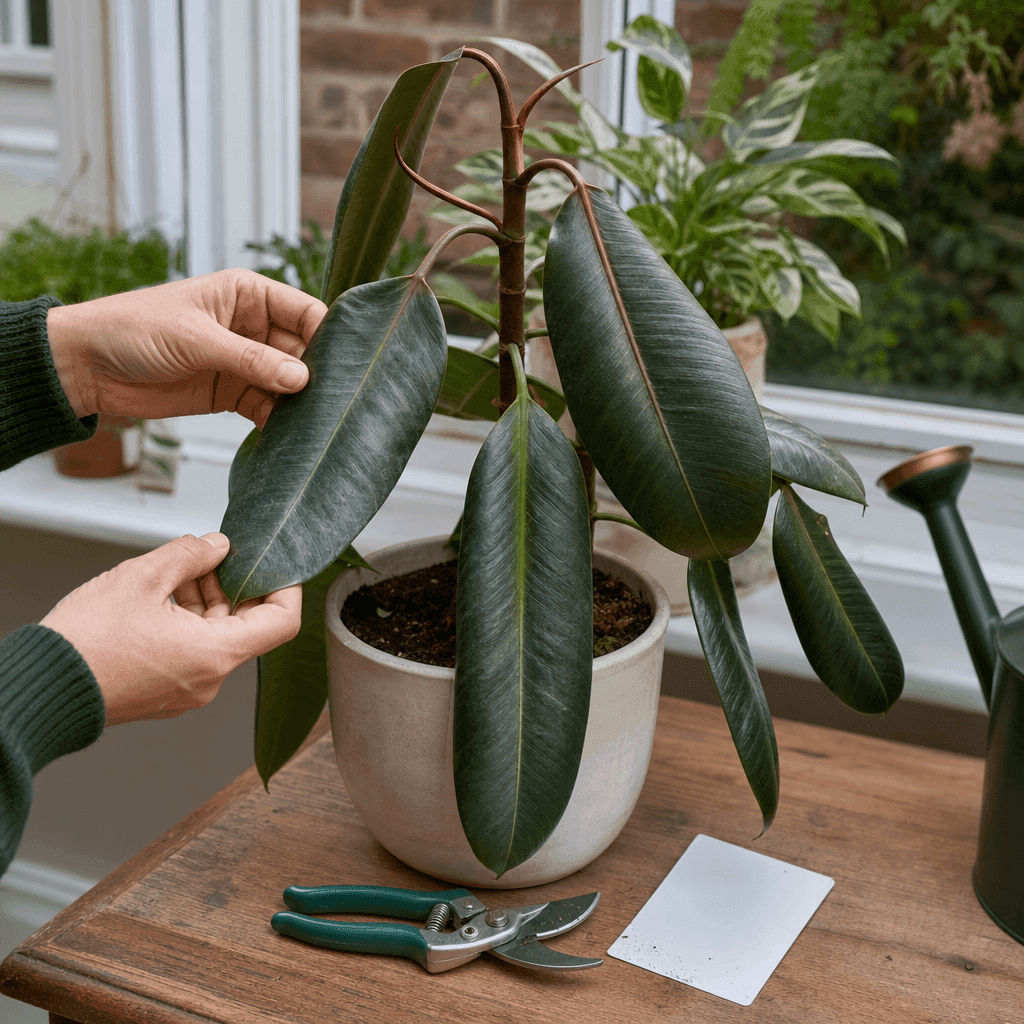
Still not sure?
Work down these branches — the first one that matches is your answer.
What not to do
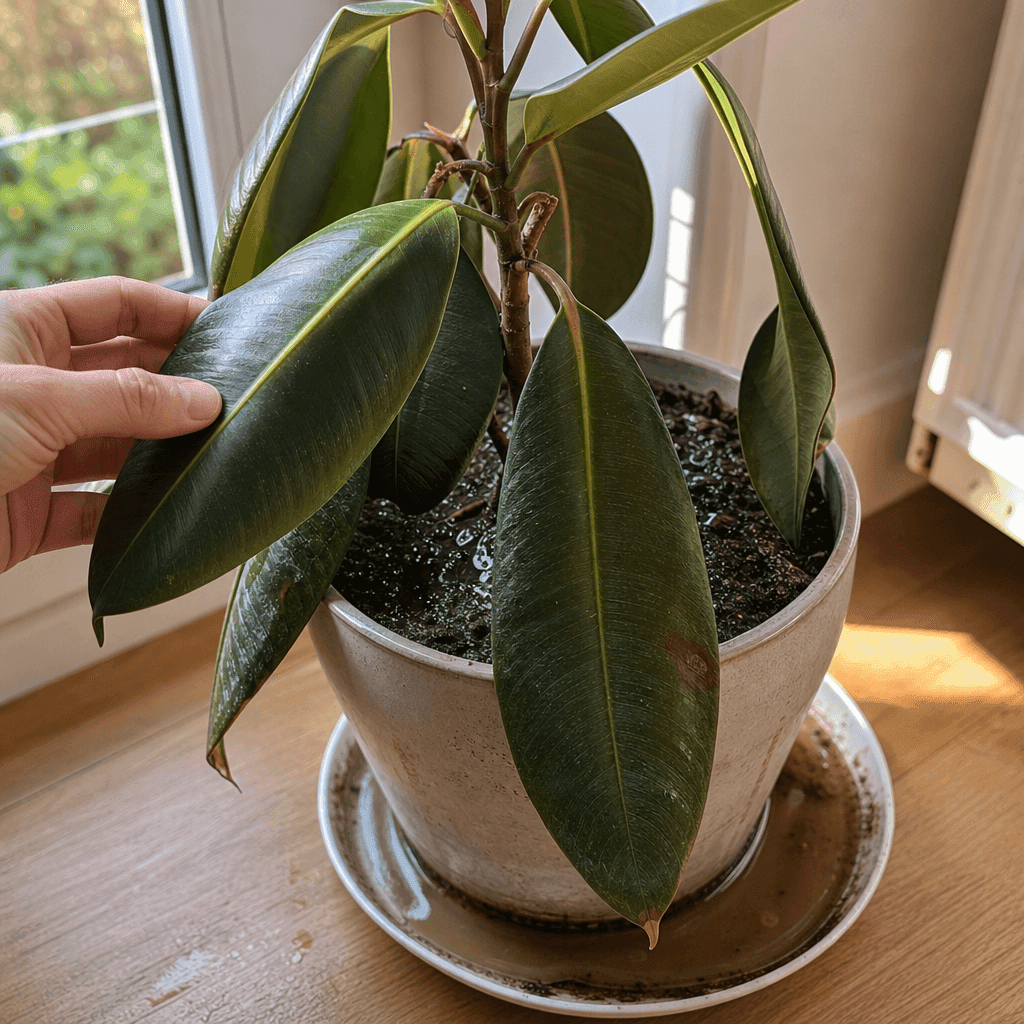
- Water on a fixed schedule regardless of season — rubber plants need far less water in the UK winter than in summer.
- Assume drooping means thirst and water more — check the compost first; it may already be too wet.
- Place near a cold draughty window or directly above a hot radiator — both extremes cause drooping.
- Repot in autumn or winter unless absolutely necessary — spring is the correct time for Ficus elastica.
- Use cold tap water in winter — water at room temperature to avoid cold root shock.
Common questions
Why are my rubber plant leaves drooping?
The most common causes in UK homes are overwatering (especially in winter), low light, cold draughts, or underwatering. Check the compost first: wet and heavy suggests overwatering; bone dry and light suggests drought. If the plant was recently moved, temperature shock may be the cause.
How do I revive a drooping rubber plant?
Identify the cause first. If the compost is wet, stop watering and improve drainage. If it is dry, water thoroughly. If the plant is in a dark corner or near a cold draught, move it to a brighter, warmer, more stable position. The revival steps are similar across tropical houseplants — the same checks apply when reviving drooping orchid leaves. Avoid repotting or feeding until the plant stabilises.
How often should I water a rubber plant in the UK?
In summer, when the plant is actively growing, water every 1–2 weeks — when the top third of the compost has dried out. In autumn and winter, reduce to every 2–4 weeks. Always check the compost by weight and finger depth rather than watering on a fixed schedule.
Can a rubber plant recover from overwatering?
If caught early, yes. Stop watering, clear drainage, and let the compost dry. If root rot has developed, repot into fresh compost after trimming dead roots. Recovery can take 4–8 weeks. If drooping is followed by yellowing leaves on your indoor plants, that often signals the damage has progressed. A plant with severely rotted roots and soft stems is harder to save.
Why is my rubber plant drooping in winter?
Winter drooping in UK rubber plants is usually caused by a combination of reduced light (short days, low sun angle), overwatering (the plant uses much less water when growth slows), or cold draughts from windows. The same cold-and-dark stress causes a jade plant to drop its leaves over winter. Cut watering frequency significantly and move closer to the brightest window available.
Do rubber plants need humidity in UK homes?
They prefer 50–60% relative humidity, but UK central heating can drop indoor humidity to 30–40%. Positioning near a radiator dries the air further. Place on a pebble tray with water or group with other houseplants to raise local humidity, and move away from direct heat sources.
Should I repot a drooping rubber plant?
Only if root rot or extreme root restriction is confirmed. Repotting a stressed plant adds further shock. If the issue is watering, light or temperature, correct those first. If root rot is confirmed, careful repotting into fresh compost (with dead roots removed) is the correct fix.